

New care workers in Britain typically struggle to understand, on their initial encounters, people who communicate atypically due to their intellectual disabilities. But they are required to provide care that is attuned to these individuals’ desires and intentions. Why, then, does a care organization called L'Arche UK make it harder for carers to learn what is going on inside these people's minds? I argue that doing so does not prevent the acquisition of essential knowledge, but rather trains new carers to relate to those with intellectual disabilities as opaque. This creates a more involved relationship that opens up the possibility of forms of status and intimacy otherwise closed to such people—thereby raising questions about the supposedly fundamental role that transparency and knowledge play in knowing others.
The Dunning-Kruger effect in accessibility - Craig Abbott
Why your confidence in accessibility could be a sign of how little you know

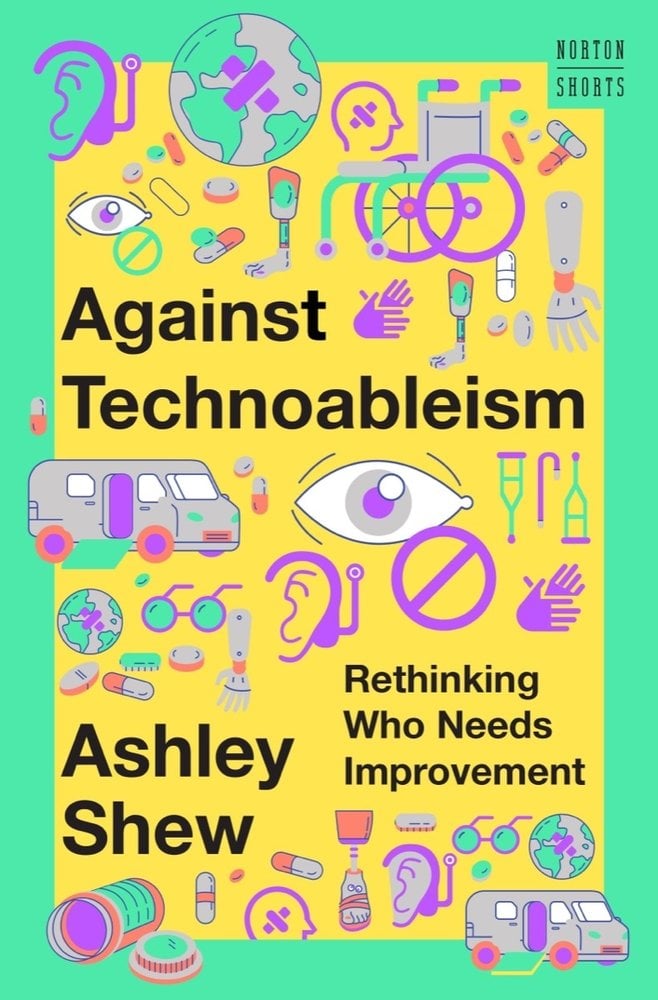
Against Technoableism
When bioethicist and professor Ashley Shew became a self-described "hard-of-hearing chemobrained amputee with Crohn's disease and tinnitus," there was no returning to "normal." Suddenly well-meaning people called her an "inspiration" while grocery shopping or viewed her as a needy recipient of technological wizardry. Most disabled people don't want what the abled assume they want--nor are they generally asked. Almost everyone will experience disability at some point in their lives, yet the abled persistently frame disability as an individual's problem rather than a social one. In a warm, feisty voice and vibrant prose, Shew shows how we can create better narratives and more accessible futures by drawing from the insights of the cross-disability community. To forge a more equitable world, Shew argues that we must eliminate "technoableism"--the harmful belief that technology is a "solution" for disability; that the disabled simply await being "fixed" by technological wizardry; that making society more accessible and equitable is somehow a lesser priority. This badly needed introduction to disability expertise considers mobility devices, medical infrastructure, neurodivergence, and the crucial relationship between disability and race. The future, Shew points out, is surely disabled--whether through changing climate, new diseases, or even through space travel. It's time we looked closely at how we all think about disability technologies and learn to envision disabilities not as liabilities, but as skill sets enabling all of us to navigate a challenging world.
Researchers Confront an Epidemic of Loneliness (Published 2016)
Social isolation is linked to physical illness and to functional and cognitive decline. Programs to reach out to the elderly are growing, particularly in Britain.

Welcome: Mapping the Architecture of Autistic Cognition
Most people experience their minds as opaque.
Understanding Without Defectiveness:
Why Autistic Self-Ignorance Is Interference, Not Failure
Autistic People Care Too Much, Research Says » NeuroClastic
Autistic people care too much. Autism research pathologizes autistic people when autistic people stick to their morals and are selfless people

Belonging Is a Right, Not a Reward
CW: Ableism Disabled people have been made to prove their worth for too long. Society sees value in work, earnings, or productivity, and anyone who doesn’t meet these standards is expected to…

Anthropology and ableism
Abstract This article continues the tradition of writing about embodied knowledge production to highlight the underanalyzed issue of ableism, providing an opening for a disciplinary reckoning with oppressive legacies towards creating collective access in anthropology and academia. Building on the creative and collaborative labor of disabled and allied anthropologists, I argue that ableism is inherent to anthropology's disciplinary formations—especially expectations pertaining to fieldwork. I make a series of claims related to this argument: The continuation of fieldwork practices from the colonial model naturalizes able bodyminds, and without intervention, reproduces ableist anthropology. The normate anthropologist has always had a “nondisabled” bodymind, but once disability became a proper object for anthropology, a line was solidified between “anthropologist” and “the disabled,” thereby making disabled anthropologist a seemingly conceptual impossibility. The effect of the anthropological gaze turning towards disability introduced a “corporeal unconscious” in the discipline; the specter of becoming disabled (becoming subject to the anthropological gaze rather than being its source) haunts fieldwork and heightens the anxious relation of anthropology to disability. Illuminating the normative underpinnings of anthropology and embracing the unbearable possibility that we all might be(come) disabled should move us to collectively consider what anthropology might be otherwise. , Resumen Este artículo continúa la tradición de escribir acerca de la producción de conocimiento corporeizado para enfatizar la cuestión insuficientemente analizada de la discriminación o prejuicio contra los discapacitados, capacitismo, proveyendo una apertura para un lidiar disciplinario con legados opresivos hacia la creación de acceso colectivo en antropología y la academia. Construyendo sobre la labor creativa y colaborativa de antropólogos discapacitados y aliados, argumento que el capacitismo es inherente a las formaciones disciplinarias de la antropología –especialmente las expectativas pertenecientes al trabajo de campo–. Realizo una serie de aseveraciones relacionadas con este argumento: la continuación de las prácticas de trabajo de campo del modelo colonial naturaliza los cuerposmentes capaces, y sin intervención, reproduce una antropología capacitista. El antropólogo normate ha sido siempre un cuerpomente “no discapacitado”, pero una vez la discapacidad se convirtió en un objeto propio para la antropología, una línea fue solidificada entre “el antropólogo” y “el discapacitado”, haciendo de este modo al antropólogo discapacitado aparentemente una imposibilidad conceptual. El efecto de la mirada antropológica dirigiéndose hacia la discapacidad introdujo un “inconsciente corporal” en la disciplina; el espectro de llegar a ser discapacitado (llegar a estar sujeto a la mirada antropológica en vez de ser su fuente) ronda el trabajo de campo y realza la relación ansiosa de la antropología con la discapacidad. Iluminar los fundamentos normativos de la antropología y aceptar la insoportable posibilidad que todos podemos (llegar) a ser discapacitados debería movernos a considerar colectivamente lo que podría ser la antropología de otra manera. [ capacitismo, discapacidad, trabajo de campo, ethnograph, accesibilidad ]

Out of Sight; Out of Mind - Ewan’s Blog
Disability did not become fashionable. Disabled people became harder to ignore.
The Tragedy of the Cognitive Commons: How AI Could Disrupt the Regeneration of Professional Expertise
Artificial intelligence is reshaping cognitive work, but Human Resource Development scholarship has treated this transformation as an organizational training challenge, leaving the collective regeneration of professional expertise unexamined. This conceptual paper introduces the Cognitive Commons framework, integrating commons theory, HRD scholarship, and distributed cognition to explain how rational AI adoption decisions can deplete the shared expertise pool professions require for renewal. The framework distinguishes Internalized Mastery (deep domain knowledge from sustained practice) from Distributed Mastery (orchestrating human-AI systems), and develops the Validation Tether: effective AI oversight depends on the expertise AI adoption may undermine. Early labor market and clinical evidence suggests possible disruption to expertise-regeneration pathways in highly AI-exposed sectors, though adoption is recent and the strongest signals come from leading sectors rather than all professions. Five factors determine occupational vulnerability, and governance arrangements may form across organizational, professional-association, and policy levels. The paper reframes expertise development as collective stewardship rather than organizational optimization, with implications for HRD theory and workforce policy.

Avoiding Ableist Language: Suggestions for Autism Researchers - Kristen Bottema-Beutel, Steven K. Kapp, Jessica Nina Lester, Noah J. Sasson, Brittany N. Hand, 2021
In this commentary, we describe how language used to communicate about autism within much of autism research can reflect and perpetuate ableist ideologies (i.e....

Challenging Ableism: A Critical Turn Toward Disability Justice in HCI
A reflection on our learnings from the CHI 2022 "Dreaming Disability Justice in HCI" workshop, and why we continue to call for disability justice, despite the limitations of how we practice it within academia and industry.
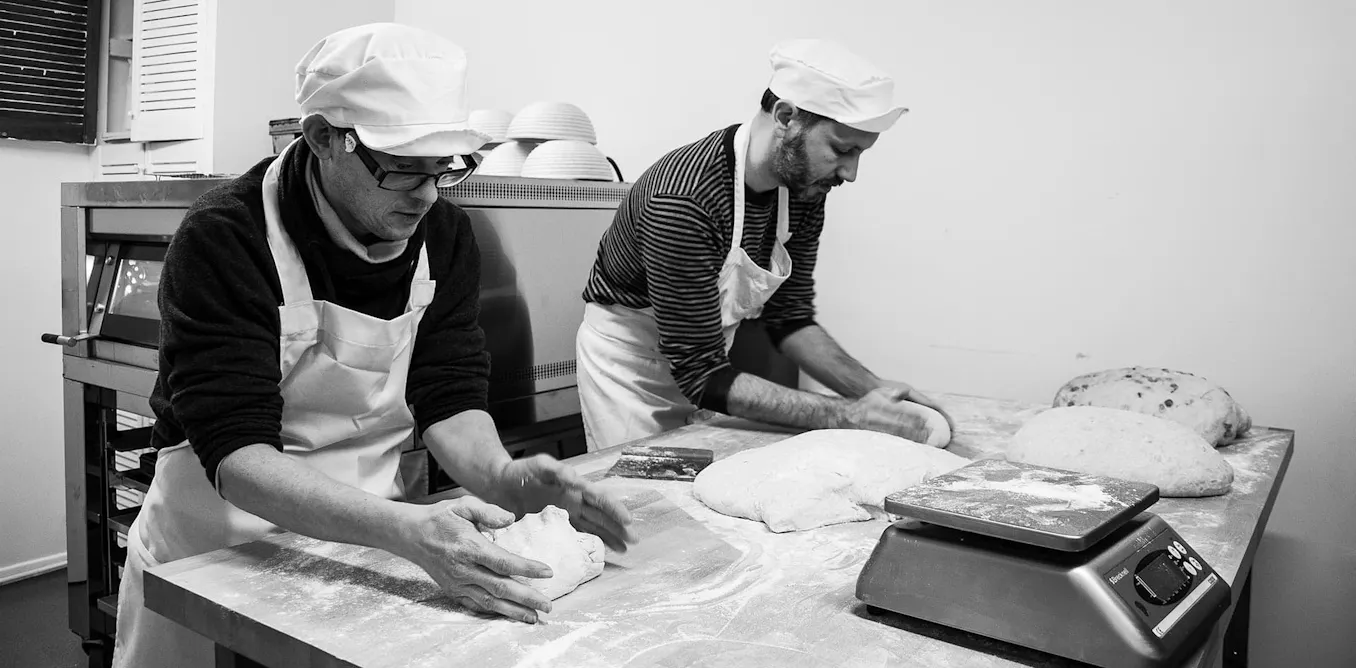
What if we stopped treating social care like a service? A small village community in Yorkshire showed me another way
A visit to my friend in a remote Yorkshire village led me into a three-month immersion in one of Britain’s most remarkable forms of social care.
The influence of artificial intelligence on individuals with disabilities
The rapid advancement of artificial intelligence (AI) is reshaping assistive technologies, offering new possibilities for enhancing the independence, communication and quality of life of individuals with disabilities. This study presents a qualitative scoping review of 47 peer-reviewed articles published between 2018 and 2025, examining how AI has been integrated into assistive tools across domains such as mobility, communication, cognitive support, education and independent living. Specific AI applications include object recognition, gesture-based control, navigation assistance, emotion detection and natural language processing. The review highlights significant progress in personalization and real-time adaptation, while also identifying persistent challenges such as algorithmic bias, cost barriers, data privacy concerns and unequal access, particularly in low-resource settings. Ethical considerations and the need for inclusive, user-centered design approaches are emphasized. The study also underscores future research priorities, including standardization of development protocols, empirical evaluation of long-term effectiveness and policy frameworks to ensure equitable access. By synthesizing recent developments and critical gaps, this review contributes to understanding how AI can responsibly and effectively support assistive technologies, ultimately promoting more inclusive environments for people with disabilities.
One of my long held convictions is most people don't care about concepts like "openness" or "decentralization" or "interoperability" (people are busy!) but they do care about what those enable. It's the job of the much smaller number of people who do care to build the experience people will love.
Livetweet @mcxfrank.bsky.social talk: If we care about intelligence and cognition, AI has recently allowed a change; we now have two ways to study them. AI is of course allowing us a lot that we wouldn't dare on our Children (brain surgery, never tell a child about cats...) #acl #conll

