


This paper contains a narrative overview of the past 20-years of environmental research on anomalous experiences attributed to “haunted houses.” This exercise served as a much-needed update to an anthology of noteworthy overviews on ghosts, haunts, and poltergeists (Houran & Lange, 2001b). We also considered whether new studies had incorporated certain recommendations made in this anthology. Our search revealed a relative paucity of studies (n = 66) on environmental factors that ostensibly stimulate haunt-type experiences. This literature was diverse and often lacked methodological consistency and adherence to the prior suggestions. However, critical consideration of the content revealed a recurring focus on six ambient variables: embedded (static) cues, lighting levels, air quality, temperature, infrasound, and electromagnetic fields. Their relation to the onset or structure of witness reports showed mostly null, though sometimes inconsistent or weak outcomes. However, such research as related to haunts is arguably in its infancy and new designs are needed to account better for environmental and architectural phenomenology. Future studies should therefore address four areas: (i) more consistent and precise measurements of discrete ambient variables; (ii) the potential role of “Gestalt influences” that involve holistic environment-person interactions; (iii) individual differences in attentional or perceptual sensitivities of percipients to environmental variables; and (iv) the role of attitudinal and normative influences in the interpretation of environmental stimuli. Focused scrutiny on these issues should clarify the explanatory power of evolutionary-environmental models for these and related anomalous experiences.
An investigation into alleged ‘hauntings’
In cases of alleged hauntings, a large number of seemingly trustworthy witnesses consistently report experiencing unusual phenomena (e.g. apparitions, sudden changes in temperature, a strong sense of presence) in certain locations. The two studies reported here explored the psychological mechanisms that underlie this apparent evidence of ‘ghostly’ activity. The experiments took place at two locations that have a considerable reputation for being haunted—Hampton Court Palace (Surrey, England) and the South Bridge Vaults (Edinburgh, Scotland). Both studies involved participants walking around these locations and reporting where they experienced unusual phenomena. Results revealed significantly more reports of unusual experiences in areas that had a reputation for being haunted. This effect was not related to participants' prior knowledge about the reputation of these areas. However, the location of participants' experiences correlated significantly with various environmental factors, including, for example, the variance of local magnetic fields and lighting levels. These findings strongly suggest that alleged hauntings may not necessarily represent evidence for ‘ghostly’ activity, but could be, at least in part, the result of people responding to ‘normal’ factors in their surroundings.

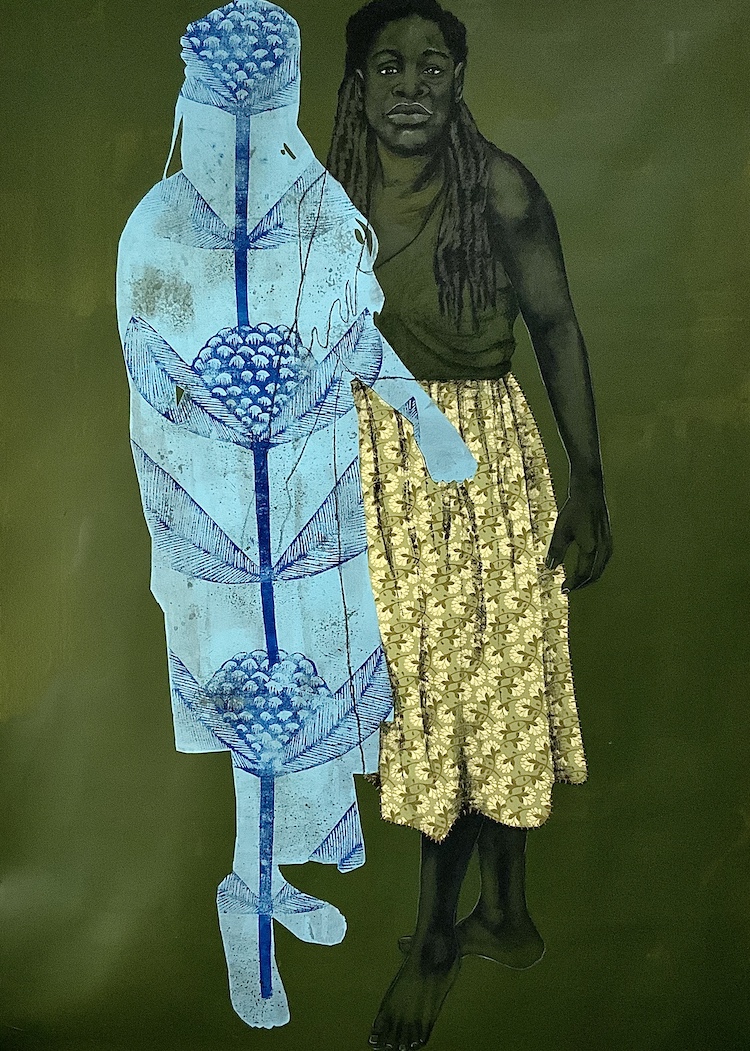
Haints, Hollers, and Hoodoo
A dark spirit lives on your porch,” the medium told me. Excuse me? Prickles of dread and fear blossomed in my chest. What the hell am I supposed to do about that? I was only beginning my journey in…
Predictive processing frameworks for perception can explain recent drone sightings in the United States
We draw on the predictive processing theory of perception to explain why healthy, intelligent, honest, and psychologically normal people might easily misperceive lights in the sky as threatening or extraordinary objects, especially in the context of WEIRD (western, educated, industrial, rich, and democratic) societies. We argue that the uniquely sparse properties of skyborne and celestial stimuli make it difficult for an observer to update prior beliefs, which can be easily fit to observed lights. Moreover, we hypothesize that humans have likely evolved to perceive the sky and its perceived contents as deeply meaningful. Finally, we briefly discuss the possible role of generalized distrust in scientific institutions and ultimately argue for the importance of astronomy education for producing a society with prior beliefs that support veridical perception.

Ghost in the Shell (Ghost in the Shell, #1)
In the rapidly converging landscape of the 21st century…

Resources used in the 1988 Mystery
Posts: www.techmonitor.ai/technology/ghost_in_the_machine eclectariumshuker.blogspot.com/2012/01/ghosts-in-machines-haunted-hardware-and.html?m=1 Newspapers: Stockport Express: www.newspapers.com/image/817289826/?match=1&terms=haunted%20computer South Wales Evening Post: www.newspapers.com/image/996085357/?match=1&terms=haunted%20computer Clarion-Ledger: www.newspapers.com/image/181320728/?match=1&terms=haunted%20computer “Ken Hughes” in Burnley Express: www.britishnewspaperarchive.co.uk/search/results/1990-01-01/1999-12-31?basicsearch=ken%20hughes&exactsearch=false&retrievecountrycounts=false&page=0...
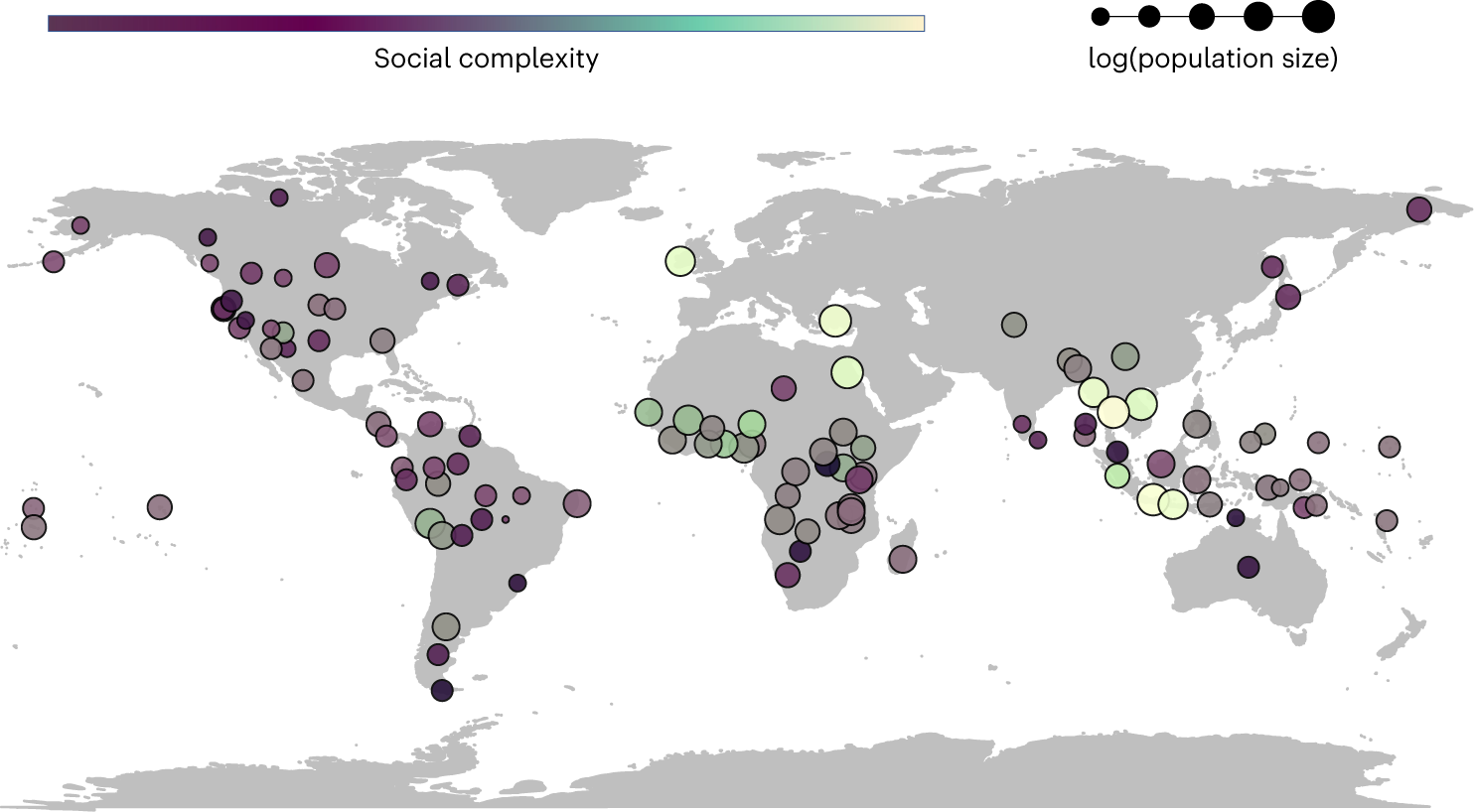
Supernatural explanations across 114 societies are more common for natural than social phenomena
Humans across the globe use supernatural beliefs to explain the world around them. This article explores whether cultural groups invoke the supernatural more to explain natural phenomena (for example, storms, disease outbreaks) or social phenomena (for example, murder, warfare). Quantitative analysis of ethnographic text across 114 geographically and culturally diverse societies found that supernatural explanations are more prevalent for natural than for social phenomena, consistent with theories that ground the origin of religious belief in a human tendency to perceive intent and agency in the natural world. Despite the dominance of supernatural explanations of natural phenomena, supernatural explanations of social phenomena were especially prevalent in urbanized societies with more socially complex and anonymous groups. Our results show how people use supernatural beliefs as explanatory tools in non-industrial societies, and how these applications vary across small-scale communities versus large and urbanized groups.
The Relation of Environment to Anti-Environment
The ground rules, the pervasive structure, the overall pattern eludes perception except in so far as there is an anti-environment or a counter-situation constructed to provide a means of direct attention. Paradoxically, the ten percent of the typical situation that Drucker designates as the area of effective cause and as the area of opportunity, this small factor is the environment. The new TV environment is an electric circuit that takes as its content the earlier environment, the photograph and the movie in particular. Thus to put the artefacts from such a culture into a museum or anti-environment is an act of nullification rather than of revelation. To create an anti-environment for such electric technology would seem to require a technological extension of consciousness itself. The structural features of environment and anti-environment appear in the age-old clash between professionalism and amateurism, whether in sport or in studi.

The Demon-Haunted World
The Demon-Haunted World: Science as a Candle in the Dark is a 1995 book by the astronomer and science communicator Carl Sagan. In it, Sagan aims to explain the scientific method to laypeople and to encourage people to learn critical and skeptical thinking. He explains methods to help distinguish between ideas that are considered valid science and those that can be considered pseudoscience. Sagan states that when new ideas are offered for consideration, they should be tested by means of skeptical thinking and should stand up to rigorous questioning.

What Did Ancient Humans Do at Night?
An Explanation (Which I Would Be Very Grateful If You Took The Time To Read)
What follows is a minor modern horror story.
Welcome to Reverie House
Dreamers across our wild mindscape call Reverie House their home between dreams. Join them, explore, and learn the secret art of dreamweaving for the benefit of all.
State of the Atmosphere (CONF 2026) - Brookie’s Blog
I should be cleaning the house right now but instead I'm writing about the ~Atmosphere~ again... It's been a full week since I first arrived in Vancouver, for A...
picture this: we're all demons, and the atmosphere is our world. haunt.at is our compendium. it assembles traces from across the atmosphere. all of you are assigned a unique color scheme, layout, and sigil based on your DID. summon your friends. summon the ops. manifest something. have fun!

haunted.at — an atmosphere compendium
haunt.ati'm starting a diary on atmospheric login as a way to explore the topic in some depth. our login experience is how everyday folks will form their understanding of what the atmosphere even is—and the design space is super rich. the web may also have some tricks up its sleeve for us...

Atmospheric Login Diary 1: On the Button - the divy zone
divyzone.pckt.blogATmosphereConf 2026 Reflections

Blog posts from attendees reflecting on their experience at #ATmosphereConf2026
Shareouts from ATScience 2026 in Vancouver - ATScience Notes

ATmosphereConf 2026 Is Not Over | Offprint
State of the Atmosphere (CONF 2026) - Brookie’s Blog
Atmosphere conference report - Mathew's newsletter

ROOST at AtmosphereConf 2026
ATmosphereConf 2026 - Sooraj's Scribbles

