

Information that initially is presumed to be correct, but that is later retracted or corrected, often continues to influence memory and reasoning. This occurs even if the retraction itself is well remembered. The present study investigated whether the continued influence of misinformation can be reduced by explicitly warning people at the outset that they may be misled. A specific warning— giving detailed information about the continued influence effect (CIE)—succeeded in reducing the continued reliance on outdated information but did not eliminate it. A more general warning—reminding people that facts are not always properly checked before information is disseminated—was even less effective. In an additional experiment, a specific warning was combined with the provision of a plausible alternative explanation for the retracted information. This combined manipulation further reduced the CIE but still failed to eliminate it altogether.
A Meta-Analytic Examination of the Continued Influence of Misinformation in the Face of Correction: How Powerful Is It, Why Does It Happen, and How to Stop It?
A meta-analysis was conducted to examine the extent of continued influence of misinformation in the face of correction and the theoretical explanations of this phenomenon. Aggregation of results from 32 studies ( N = 6,527) revealed that, on average, correction does not entirely eliminate the effect of misinformation ( r = –.05, p = .045). Corrective messages were found to be more successful when they are coherent, consistent with the audience’s worldview, and delivered by the source of the misinformation itself. Corrections are less effective if the misinformation was attributed to a credible source, the misinformation has been repeated multiple times prior to correction, or when there was a time lag between the delivery of the misinformation and the correction. These findings are consistent with predictions based on theories of mental models and offer concrete recommendations for practitioners.

Debunking: A Meta-Analysis of the Psychological Efficacy of Messages Countering Misinformation
This meta-analysis investigated the factors underlying effective messages to counter attitudes and beliefs based on misinformation. Because misinformation can lead to poor decisions about consequential matters and is persistent and difficult to correct, debunking it is an important scientific and public-policy goal. This meta-analysis ( k = 52, N = 6,878) revealed large effects for presenting misinformation ( ds = 2.41–3.08), debunking ( ds = 1.14–1.33), and the persistence of misinformation in the face of debunking ( ds = 0.75–1.06). Persistence was stronger and the debunking effect was weaker when audiences generated reasons in support of the initial misinformation. A detailed debunking message correlated positively with the debunking effect. Surprisingly, however, a detailed debunking message also correlated positively with the misinformation-persistence effect.
Capturing our Attention
What are the harms of misinformation? It’s widely believed that it causes false belief, including false beliefs in quite bizarre claims. I argue that this threat is greatly exaggerated: while plaus...

Epistemic Vigilance
Humans massively depend on communication with others, but this leaves them open to the risk of being accidentally or intentionally misinformed. To ensure that, despite this risk, communication remain...

Warning labels shift perceptions of sycophantic AI, but not its influence
Recent work has raised concerns about the influence of sycophantic AI on user judgment and relationships. One proposed mitigation, which has received regulatory attention, is to warn users about potentially harmful AI behaviors such as sycophancy. In a preregistered experiment in which participants (N = 2,610) discussed real interpersonal conflicts with an AI system, we test whether warning labels mitigate sycophancy's influence. We find that a basic AI disclosure (``This chatbot is AI'') has no detectable effect. Labeling the system as sycophantic (``...may agree with you and validate you even when you are wrong...'') does shift users' perceptions, reducing perceived objectivity and trust, but it does not reliably reduce sycophancy's influence on users' self-perceived rightness or their willingness to repair the conflict. Our results reveal a gap between AI perception and AI influence: by shifting perception without reducing influence, warning-based interventions may offer a false sense of protection. Addressing the harms of sycophancy will therefore require understanding the specific mechanisms through which it shapes judgment, and improving model behavior itself.

The Dynamics of Distortion: How Successive Summarization Alters the Retelling of News
This work advances and tests a theory of how news information evolves as it is successively retold by consumers. Drawing on data from over 11,000 participants across ten experiments, the authors offer evidence that when news is repeatedly retold, it undergoes a stylistic transformation termed “disagreeable personalization,” wherein original facts are increasingly supplanted by opinions and interpretations with a slant toward negativity. The central thesis is that when retellers believe they are more (vs. less) knowledgeable than their recipient about the information they are relaying, they feel more compelled to provide guidance on its meaning and to do so in a persuasive manner. This enhanced motivation to guide persuasively, in turn, leads retellers to not only select the subset of facts they deem most essential but, critically, to provide their interpretations and opinions on those facts, with negativity being used as a means of grabbing their audience’s attention. Implications of this work for research on retelling and consumer information diffusion are explored.
When Corrections Fail: The Persistence of Political Misperceptions
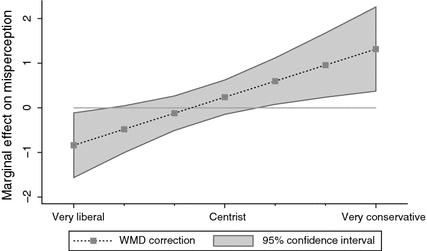
An extensive literature addresses citizen ignorance, but very little research focuses on misperceptions. Can these false or unsubstantiated beliefs about politics be corrected? Previous studies have not tested the efficacy of corrections in a realistic format. We conducted four experiments in which subjects read mock news articles that included either a misleading claim from a politician, or a misleading claim and a correction. Results indicate that corrections frequently fail to reduce misperceptions among the targeted ideological group. We also document several instances of a “backfire effect” in which corrections actually increase misperceptions among the group in question.
Facts and Myths about Misperceptions
Misperceptions threaten to warp mass opinion and public policy on controversial issues in politics, science, and health. What explains the prevalence and persistence of these false and unsupported beliefs, which seem to be genuinely held by many people? Though limits on cognitive resources and attention play an important role, many of the most destructive misperceptions arise in domains where individuals have weak incentives to hold accurate beliefs and strong directional motivations to endorse beliefs that are consistent with a group identity such as partisanship. These tendencies are often exploited by elites who frequently create and amplify misperceptions to influence elections and public policy. Though evidence is lacking for claims of a “post-truth” era, changes in the speed with which false information travels and the extent to which it can find receptive audiences require new approaches to counter misinformation. Reducing the propagation and influence of false claims will require further efforts to inoculate people in advance of exposure (for example, media literacy), debunk false claims that are already salient or widespread (for example, fact-checking), reduce the prevalence of low-quality information (for example, changing social media algorithms), and discourage elites from promoting false information (for example, strengthening reputational sanctions).
Disclosure: Psychology Changes Everything
We review literature examining the effects of laws and regulations that require public disclosure of information. These requirements are most sensibly imposed in situations characterized by misaligned incentives and asymmetric information between, for example, a buyer and seller or an advisor and advisee. We review the economic literature relevant to such disclosure and then discuss how different psychological factors complicate, and in some cases radically change, the economic predictions. For example, limited attention, motivated attention, and biased assessments of probability on the part of information recipients can significantly diminish, or even reverse, the intended effects of disclosure requirements. In many cases, disclosure does not much affect the recipients of the information but does significantly affect the behavior of the providers, sometimes for the better and sometimes for the worse. We review research suggesting that simplified disclosure, standardized disclosure, vivid disclosure, and social comparison information can all be used to enhance the effectiveness of disclosure policies.

The Elusive Backfire Effect: Mass Attitudes’ Steadfast Factual Adherence
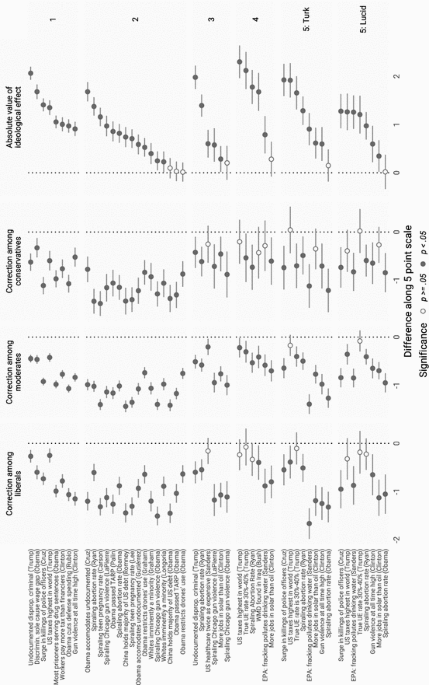
Can citizens heed factual information, even when such information challenges their partisan and ideological attachments? The “backfire effect,” described by Nyhan and Reifler (Polit Behav 32(2):303–330. https://doi.org/10.1007/s11109-010-9112-2, 2010), says no: rather than simply ignoring factual information, presenting respondents with facts can compound their ignorance. In their study, conservatives presented with factual information about the absence of Weapons of Mass Destruction in Iraq became more convinced that such weapons had been found. The present paper presents results from five experiments in which we enrolled more than 10,100 subjects and tested 52 issues of potential backfire. Across all experiments, we found no corrections capable of triggering backfire, despite testing precisely the kinds of polarized issues where backfire should be expected. Evidence of factual backfire is far more tenuous than prior research suggests. By and large, citizens heed factual information, even when such information challenges their ideological commitments.
The Role of Media in Political Polarization| Inoculation Can Reduce the Perceived Reliability of Polarizing Social Media Content
Little research is available on psychological interventions that counter susceptibility to polarizing online content. We conducted 3 studies (n1 = 472, n2 = 193, n3 = 772) to evaluate whether psychological resistance against polarizing social media content can be conferred, using the Bad News game, a “technique-based inoculation” intervention that simulates a social media feed. We investigate (1) whether technique-based inoculation can reduce susceptibility to content designed to fuel intergroup polarization; (2) whether technique-based inoculation can offer cross-protection against misinformation techniques that people were not inoculated against; and (3) whether political ideology plays a role in how people engage with anti-misinformation interventions. In Studies 1 and 3 (but not Study 2), we found that technique-based inoculation significantly reduces the perceived reliability of polarizing content and offers partial cross-protection against untreated misinformation techniques. We found no effect for attitudinal certainty and news-sharing intentions. Finally, we report preliminary evidence that people may choose to engage with politically congruent news topics within the intervention.
The Liar’s Dividend: Can Politicians Claim Misinformation to Evade Accountability?
This study addresses the phenomenon of misinformation about misinformation, or politicians "crying wolf"' over fake news. Strategic and false claims that stories are fake news or deepfakes may benefit politicians by helping them maintain support after a scandal. We posit that this benefit, known as the "liar's dividend," may be achieved through two politician strategies: by invoking informational uncertainty or by encouraging oppositional rallying of core supporters. We administer five survey experiments to over 15,000 American adults detailing hypothetical politician responses to stories describing real politician scandals. We find that claims of misinformation representing both strategies raise politician support across partisan subgroups. These strategies are effective against text-based reports of scandals, but are largely ineffective against video evidence and do not reduce general trust in media. Finally, these false claims produce greater dividends for politicians than alternative responses to scandal, such as remaining silent or apologizing.
Let's normalize debunking each other
The spread of misinformation has become an epidemic, but information hygiene can help.

Dialogues on Democracy: Belief-Tailored AI Conversations Reduce Inaccurate Election Denial Beliefs
Elections, while central to democratic functioning, have become increasingly threatened by beliefs about election fraud. Artificial intelligence (AI) provides a novel opportunity to address such false beliefs through dynamic conversation and debunking. Through two experiments (N = 1,802 Republicans from Lucid who endorsed election fraud claims), we examined the use of AI to fact-check 2020 election conspiracies prior to the 2024 US Presidential election. We tested the effects of two treatments (an information-tailored and values-tailored AI dialogue) in which AI fact-checked their claims and tailored arguments to the specific election conspiracy that the participant themselves articulated. Both treatment conditions, when compared to a control dialogue and a simple statement that the conspiracy was incorrect, reduced confidence in their election conspiracy claims. There was no significant difference between information-tailored and values-tailored feedback. Promisingly, participants with the strongest baseline denialism experienced the largest decreases in denialism beliefs. These studies highlight the potential of AI-driven interventions to address election misinformation.

An article about data visualization was retracted 1.5 years after I pointed out errors. The notice says that "concerns were raised". I spend dozens of hours contacting authors and editors, reproducing analyses, and following up on ignored emails. But I'm not mentioned in the retraction notice.

RETRACTED: A Perception Study for Unit Charts in the Context of Large-Magnitude Data Representation
www.mdpi.com