


Bisphosphonates are primary agents in the current pharmacological arsenal against osteoclast-mediated bone loss due to osteoporosis, Paget disease of bone, malignancies metastatic to bone, multiple myeloma, and hypercalcemia of malignancy. In addition to currently approved uses, bisphosphonates are commonly prescribed for prevention and treatment of a variety of other skeletal conditions, such as low bone density and osteogenesis imperfecta. However, the recent recognition that bisphosphonate use is associated with pathologic conditions including osteonecrosis of the jaw has sharpened the level of scrutiny of the current widespread use of bisphosphonate therapy.
Bone metastases
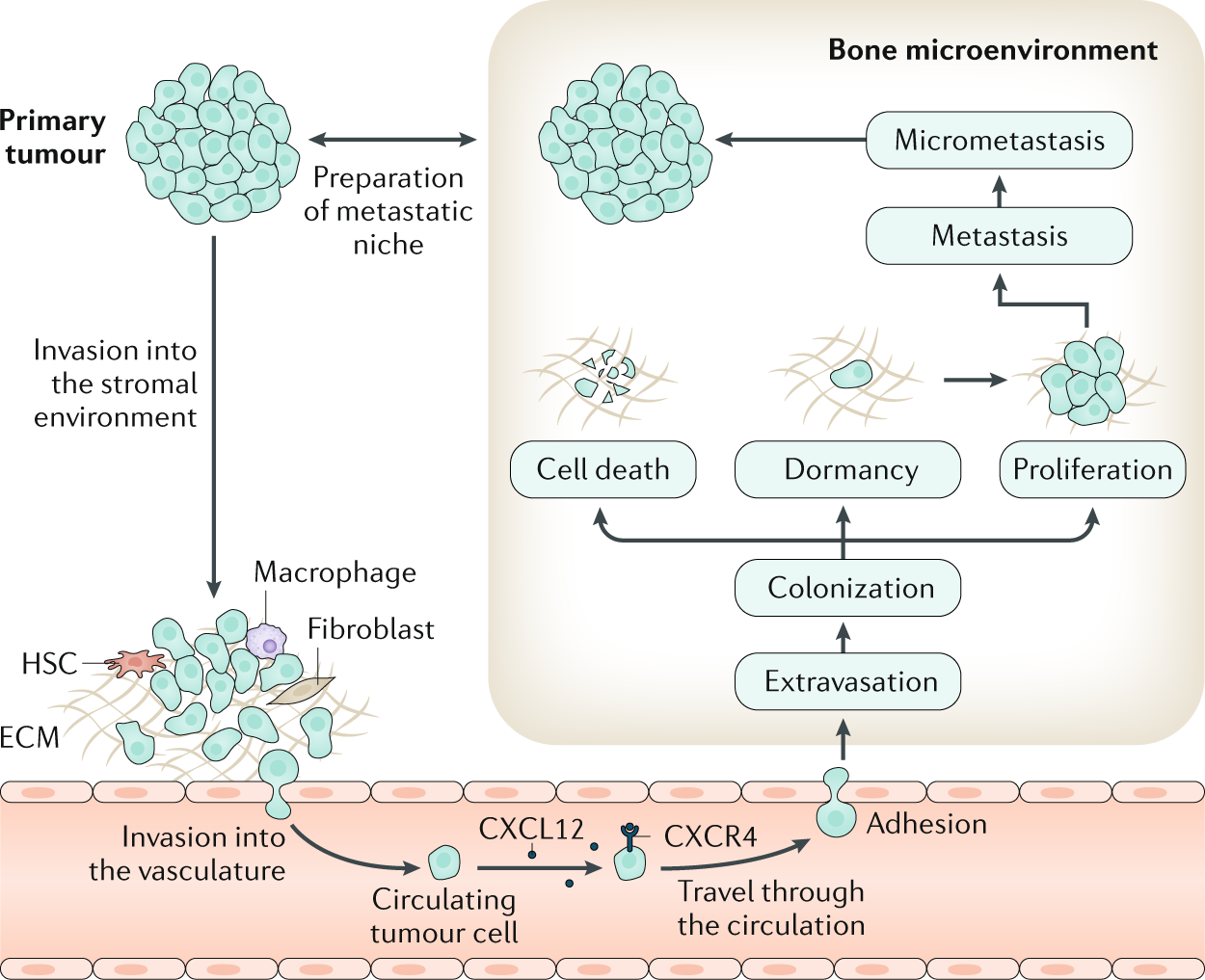
Bone is the most frequent site for metastasis for many cancers, notably for tumours originating in the breast and the prostate. Tumour cells can escape from the primary tumour site and colonize the bone microenvironment. Within the bone, these disseminated tumour cells, as well as those arising in the context of multiple myeloma, may assume a state of dormancy, remaining quiescent for years before resuming proliferation and causing overt metastasis, which causes bone destruction via activation of osteoclast-mediated osteolysis. This structural damage can lead to considerable morbidity, including pain, fractures and impaired quality of life. Although treatment of bone metastases and myeloma bone disease is rarely curative, disease control is often possible for many years through the use of systemic anticancer treatments on a background of multidisciplinary supportive care. This care should include bone-targeted agents to inhibit tumour-associated osteolysis and prevent skeletal morbidity as well as use of appropriate local treatments such as radiation therapy, orthopaedic surgery and specialist palliative care to minimize the impact of metastatic bone disease on physical functioning. In this Primer, we provide an overview of the clinical features, the pathophysiology and the specific treatment approaches to prevent and treat bone metastases from solid tumours as well as myeloma bone disease.
Integrated model for denosumab and ibandronate pharmacodynamics in postmenopausal women
ABSTRACT This study aims to characterize the pharmacodynamic properties of denosumab, a RANK ligand inhibitor, and ibandronate, a bisphosphonate, using an integrated bone homeostasis model in postmenopausal women. Mean temporal profiles of denosumab, serum and urine N‐telopeptide (sNTX, uNTX), lumbar spine bone mineral density (BMD) following denosumab administration, and urine C‐telopeptide (uCTX) and lumbar spine BMD upon ibandronate administration were extracted from the literature. A mechanistic model was developed that integrates denosumab pharmacokinetics with binding to RANK ligand and ibandronate inhibition of osteoclast precursor differentiation to active osteoclasts (AOC). Biomarker concentrations were linked to the AOC pool. The BMD was characterized by a turnover model with stimulation of bone formation and degradation by AOB (active osteoblasts) and AOC pools. The estimated basal sNTX, uNTX and uCTX concentrations were 7.24 n m , 14.4 nmol/mmolCr and 31 µg/mmolCr. The BMD degradation rate was 0.00161 day ‐1 with stimulation constants associated with AOB and AOC of 1214 and 790 p m ‐1 . The plasma ibandronate concentration producing 50% of maximum inhibition of osteoclast differentiation was 522 ng/l. The integrated model, which incorporates multiple pathways of therapeutic intervention, quantitatively describes changes in clinical biomarkers of bone turnover and BMD after denosumab and ibandronate exposures in postmenopausal women. Copyright © 2011 John Wiley & Sons, Ltd.

Cardiovascular Outcomes of Romosozumab and Protective Role of Alendronate: A Conundrum or Clarification
Osteoporosis and cardiovascular diseases are major public health issues. Bone and cardiovascular remodeling share multiple biological markers and pathways. Medical intervention, such as using romosozumab, an antisclerostin antibody, improves the clinical outcome of osteoporosis. However, blocking sclerostin leads to Wnt (wingless/integrated) activation and participation in the cardiovascular remodeling process, which could potentially lead to adverse events. Based on the opposing roles of bisphosphonates and the Wnt pathway on endothelial dysfunction, lipid accumulation and calcification of the vessel walls, the combination of romosozumab and bisphosphonates could be a new therapeutic approach to reducing the risks of adverse cardiovascular events in romosozumab receivers. Visual Overview— An online visual overview is available for this article.

Systems Modeling of Bortezomib and Dexamethasone Combinatorial Effects on Bone Homeostasis in Multiple Myeloma Patients
Osteolytic bone disease is one of the most debilitating manifestations of multiple myeloma (MM). Bortezomib is a proteasome inhibitor that shows both anticancer and bone anabolic properties and is being evaluated for its positive effects in MM patients with skeletal complications. Dexamethasone is a potent corticosteroid that is often given in combination with bortezomib for its antineoplastic effects; however, bone loss and osteoporosis are major adverse effects of long-term steroid-based therapies.

Long-term use of denosumab and its association with skeletal-related events and osteonecrosis of the jaw
Denosumab, an inhibitor of receptor activator of nuclear factor kappa-B ligand, reduces skeletal-related events (SREs) and is approved for solid tumors with bone metastases. We studied long-term denosumab efficacy and safety because real-world data is scarce. This single-arm, single-center retrospective study included denosumab-treated breast cancer patients with bone metastases. Kaplan–Meier survival curves assessed exposure, SREs, osteonecrosis of the jaw (ONJ), and death. 132 patients were enrolled. The median denosumab exposure was 28.3 months (range 1.0–84.9). In the first year, 11.1% experienced SREs. This increased to 18.6% in the second, 21% in the third, and 35.1% in the fourth year and beyond. The median time to first on-study SRE has not been reached. 10 denosumab users (7.6%) developed ONJ. ONJ incidence was 0.9% in the first year, 6.2% in the second, 13.6% in the third, and 16.2% in subsequent years. The median time to first on-study ONJ has not been reached yet. Seven patients resumed denosumab after careful management of ONJ. Our data suggest that long-term treatment with denosumab may further prevent or postpone SREs at the cost of an increased risk of ONJ. The majority of patients who resumed denosumab did not experience a recurrence of ONJ.

A computational framework and sensitivity analysis for the hormonal treatment of bone
It is concluded that intermittent administration of calcitonin is an effective therapy for the treatment of osteoporosis.

The Development of Molecular Biology of Osteoporosis
Osteoporosis is one of the major bone disorders that affects both women and men, and causes bone deterioration and bone strength. Bone remodeling maintains bone mass and mineral homeostasis through the balanced action of osteoblasts and osteoclasts, which are responsible for bone formation and bone resorption, respectively. The imbalance in bone remodeling is known to be the main cause of osteoporosis. The imbalance can be the result of the action of various molecules produced by one bone cell that acts on other bone cells and influence cell activity. The understanding of the effect of these molecules on bone can help identify new targets and therapeutics to prevent and treat bone disorders. In this article, we have focused on molecules that are produced by osteoblasts, osteocytes, and osteoclasts and their mechanism of action on these cells. We have also summarized the different pharmacological osteoporosis treatments that target different molecular aspects of these bone cells to minimize osteoporosis.

Denosumab Compared With Zoledronic Acid for the Treatment of Bone Metastases in Patients With Advanced Breast Cancer: A Randomized, Double-Blind Study
Purpose This randomized study compared denosumab, a fully human monoclonal antibody against receptor activator of nuclear factor κ B (RANK) ligand, with zoledronic acid in delaying or preventing skeletal-related events (SREs) in patients with breast cancer with bone metastases. Patients and Methods Patients were randomly assigned to receive either subcutaneous denosumab 120 mg and intravenous placebo (n = 1,026) or intravenous zoledronic acid 4 mg adjusted for creatinine clearance and subcutaneous placebo (n = 1,020) every 4 weeks. All patients were strongly recommended to take daily calcium and vitamin D supplements. The primary end point was time to first on-study SRE (defined as pathologic fracture, radiation or surgery to bone, or spinal cord compression). Results Denosumab was superior to zoledronic acid in delaying time to first on-study SRE (hazard ratio, 0.82; 95% CI, 0.71 to 0.95; P = .01 superiority) and time to first and subsequent (multiple) on-study SREs (rate ratio, 0.77; 95% CI, 0.66 to 0.89; P = .001). Reduction in bone turnover markers was greater with denosumab. Overall survival, disease progression, and rates of adverse events (AEs) and serious AEs were similar between groups. An excess of renal AEs and acute-phase reactions occurred with zoledronic acid; hypocalcemia occurred more frequently with denosumab. Osteonecrosis of the jaw occurred infrequently (2.0%, denosumab; 1.4%, zoledronic acid; P = .39). Conclusion Denosumab was superior to zoledronic acid in delaying or preventing SREs in patients with breast cancer metastatic to bone and was generally well tolerated. With the convenience of a subcutaneous injection and no requirement for renal monitoring, denosumab represents a potential treatment option for patients with bone metastases.

Modeling osteoporosis to design and optimize pharmacological therapies comprising multiple drug types
For the treatment of postmenopausal osteoporosis, several drug classes with different mechanisms of action are available. Since only a limited set of dosing regimens and drug combinations can be tested in clinical trials, it is currently unclear whether common medication strategies achieve optimal bone mineral density gains or are outperformed by alternative dosing schemes and combination therapies that have not been explored so far. Here, we develop a mathematical framework of drug interventions for postmenopausal osteoporosis that unifies fundamental mechanisms of bone remodeling and the mechanisms of action of four drug classes: bisphosphonates, parathyroid hormone analogs, sclerostin inhibitors, and receptor activator of NF-κB ligand inhibitors. Using data from several clinical trials, we calibrate and validate the model, demonstrating its predictive capacity for complex medication scenarios, including sequential and parallel drug combinations. Via simulations, we reveal that there is a large potential to improve gains in bone mineral density by exploiting synergistic interactions between different drug classes, without increasing the total amount of drug administered.

Gut, inflammation and osteoporosis: basic and clinical concepts
Chronic inflammatory disorders such as inflammatory bowel diseases (IBD) affect bone metabolism and are frequently associated with the presence of osteoporosis. Bone loss is regulated by various mediators of the immune system such as the pro-inflammatory cytokines tumour necrosis factor-alpha (TNF-α), interleukin-1beta (IL-1β), IL-6, or interferon-gamma. TNF-α, a master cytokine in human IBD, causes bone erosions in experimental models and these effects are exerted by osteoclasts. Other TNF-related cytokines such as receptor activator of nuclear factor kappa B (RANK), its ligand, RANKL, and osteoprotegerin are important mediators in inflammatory processes in the gut and are critically involved in the pathophysiology of bone loss. The awareness and early diagnosis of osteoporosis in states of chronic inflammation, together with applied therapies such as bisphosphonates, may be beneficial in inflammation-associated osteoporosis. Although several mechanisms may contribute to osteoporosis in patients with IBD and coeliac disease, inflammation as an important factor has so far been neglected. As key inflammatory mediators in IBD such as TNF-α are involved in the disease process both in gut and bone, we hypothesise that neutralisation of TNF-α could prove an efficient strategy in the treatment of inflammation-related osteoporosis in the future.
Current Status of the Diagnosis and Management of Osteoporosis
Osteoporosis has been defined as the silent disease of the 21st century, becoming a public health risk due to its severity, chronicity and progression and affecting mainly postmenopausal women and older adults. Osteoporosis is characterized by an imbalance between bone resorption and bone production. It is diagnosed through different methods such as bone densitometry and dual X-rays. The treatment of this pathology focuses on different aspects. On the one hand, pharmacological treatments are characterized by the use of anti-resorptive drugs, as well as emerging regenerative medicine treatments such as cell therapies and the use of bioactive hydrogels. On the other hand, non-pharmacological treatments are associated with lifestyle habits that should be incorporated, such as physical activity, diet and the cessation of harmful habits such as a high consumption of alcohol or smoking. This review seeks to provide an overview of the theoretical basis in relation to bone biology, the existing methods for diagnosis and the treatments of osteoporosis, including the development of new strategies.
Randomized, Double-Blind Study of Denosumab Versus Zoledronic Acid in the Treatment of Bone Metastases in Patients With Advanced Cancer (Excluding Breast and Prostate Cancer) or Multiple Myeloma
Purpose This study compared denosumab, a fully human monoclonal anti-receptor activator of nuclear factor kappa-B ligand antibody, with zoledronic acid (ZA) for delaying or preventing skeletal-related events (SRE) in patients with advanced cancer and bone metastases (excluding breast and prostate) or myeloma. Patients and Methods Eligible patients were randomly assigned in a double-blind, double-dummy design to receive monthly subcutaneous denosumab 120 mg (n = 886) or intravenous ZA 4 mg (dose adjusted for renal impairment; n = 890). Daily supplemental calcium and vitamin D were strongly recommended. The primary end point was time to first on-study SRE (pathologic fracture, radiation or surgery to bone, or spinal cord compression). Results Denosumab was noninferior to ZA in delaying time to first on-study SRE (hazard ratio, 0.84; 95% CI, 0.71 to 0.98; P = .0007). Although directionally favorable, denosumab was not statistically superior to ZA in delaying time to first on-study SRE (P = .03 unadjusted; P = .06 adjusted for multiplicity) or time to first-and-subsequent (multiple) SRE (rate ratio, 0.90; 95% CI, 0.77 to 1.04; P = .14). Overall survival and disease progression were similar between groups. Hypocalcemia occurred more frequently with denosumab. Osteonecrosis of the jaw occurred at similarly low rates in both groups. Acute-phase reactions after the first dose occurred more frequently with ZA, as did renal adverse events and elevations in serum creatinine based on National Cancer Institute Common Toxicity Criteria for Adverse Events grading. Conclusion Denosumab was noninferior (trending to superiority) to ZA in preventing or delaying first on-study SRE in patients with advanced cancer metastatic to bone or myeloma. Denosumab represents a potential novel treatment option with the convenience of subcutaneous administration and no requirement for renal monitoring or dose adjustment.

Forecasting the critical role of intermittent therapies for the control of bone resorption
Osteoporosis is a chronic metabolic disease characterized by an imbalance of bone resorption and formation, leading to bone fragility and increased susceptibility to fracture. Parathyroid hormone is approved therapy for the treatment of osteoporosis.

Denosumab versus zoledronic acid in bone disease treatment of newly diagnosed multiple myeloma: an international, double-blind, double-dummy, randomised, controlled, phase 3 study
In patients with newly diagnosed multiple myeloma, denosumab was non-inferior to zoledronic acid for time to skeletal-related events. The results from this study suggest denosumab could be an additional option for the standard of care for patients with multiple myeloma with bone disease.

Biology of Bone Tissue: Structure, Function, and Factors That Influence Bone Cells
Bone tissue is continuously remodeled through the concerted actions of bone cells, which include bone resorption by osteoclasts and bone formation by osteoblasts, whereas osteocytes act as mechanosensors and orchestrators of the bone remodeling process. This process is under the control of local (e.g., growth factors and cytokines) and systemic (e.g., calcitonin and estrogens) factors that all together contribute for bone homeostasis. An imbalance between bone resorption and formation can result in bone diseases including osteoporosis. Recently, it has been recognized that, during bone remodeling, there are an intricate communication among bone cells. For instance, the coupling from bone resorption to bone formation is achieved by interaction between osteoclasts and osteoblasts. Moreover, osteocytes produce factors that influence osteoblast and osteoclast activities, whereas osteocyte apoptosis is followed by osteoclastic bone resorption. The increasing knowledge about the structure and functions of bone cells contributed to a better understanding of bone biology. It has been suggested that there is a complex communication between bone cells and other organs, indicating the dynamic nature of bone tissue. In this review, we discuss the current data about the structure and functions of bone cells and the factors that influence bone remodeling.

Regulation of Bone Remodeling by Parathyroid Hormone
Parathyroid hormone (PTH) exerts profound effects on skeletal homeostasis through multiple cellular and molecular mechanisms. Continuous hyperparathyroidism causes net loss of bone mass, despite accelerating bone formation by osteoblasts. Intermittent treatment with PTH analogs represents the only Food and Drug Administration (FDA)-approved bone anabolic osteoporosis treatment strategy. Functional PTH receptors are present on cells of the osteoblast lineage, ranging from early skeletal stem cells to matrix-embedded osteocytes. In addition, bone remodeling by osteoclasts liberates latent growth factors present within bone matrix. Here, we will provide an overview of the multiple cellular and molecular mechanisms through which PTH influences bone homeostasis. Notably, net skeletal effects of continuous versus intermittent can differ significantly. Where possible, we will highlight mechanisms through which continuous hyperparathyroidism leads to bone loss, and through which intermittent hyperparathyroidism boosts bone mass. Given the therapeutic usage of intermittent PTH (iPTH) treatment for osteoporosis, particular attention will be paid toward mechanisms underlying the bone anabolic effects of once daily PTH administration.