


We propose a categorical framework for processes which interact bidirectionally with both an environment and a 'controller'. Examples include open learners, in which the controller is an optimiser...
Design Cybernetics
This book offers practical guidance for cybernetic processes of design and innovation. It also develops theoretical principles. The authors use accessible, non-technical language, which will help a wide range of readers gain knowledge of this important field.

Cybernetics for the Twenty-First Century: An Interview with Philosopher Yuk Hui - Journal #102
…
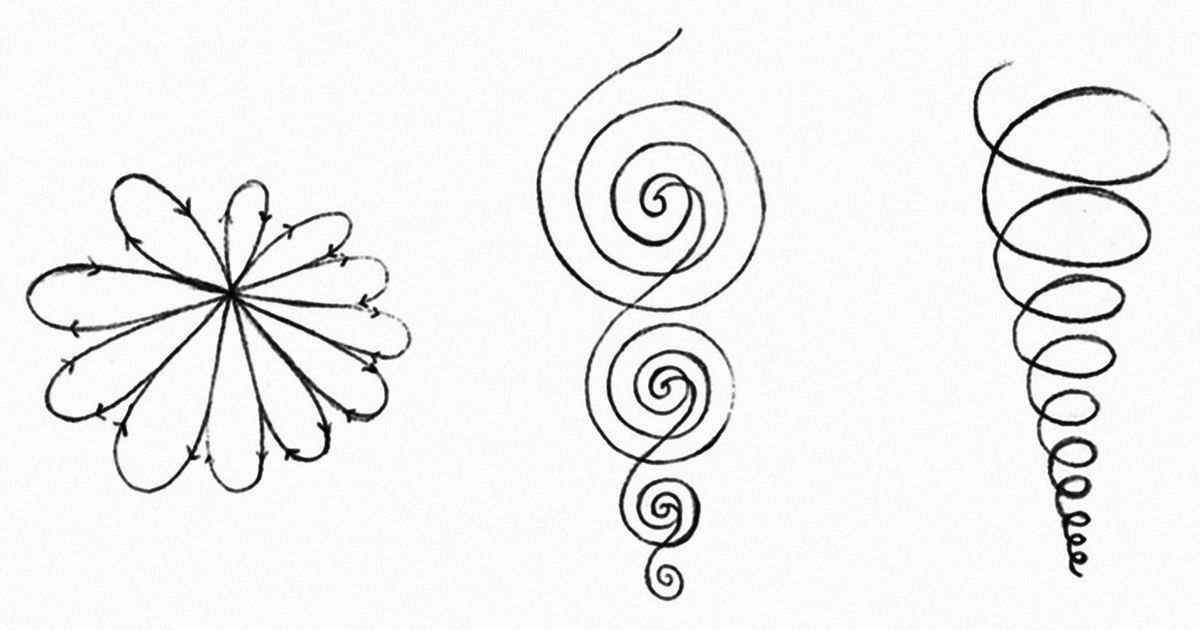
Eryk Salvaggio: Critical AI & Culture | Glossary — Cybernetic Forests.
Stochastic Flocks, Systems From Nowhere and other citable terms for describing AI systems without borrowing from cognition, by Eryk Salvaggio.


Environments Hub: A Community Hub To Scale RL To Open AGI
RL environments are the playgrounds where agents learn. Until now, they’ve been fragmented, closed, and hard to share. We are launching the Environments Hub to change that: an open, community-powered platform that gives environments a true home.Environments define the world, rules and feedback loop of state, action and reward. From games to coding tasks to dialogue, they’re the contexts where AI learns, without them, RL is just an algorithm with nothing to act on.

Own your AI with local models and open protocols | Tiles Blog
A Local-First Conf talk about local models, open protocols, and user-owned AI.

Co-Creation: Systems Thinking Beyond the Machine
Complexity thinking is all the rage — in the arts and sciences. Yet, there are two different strands of thinking about complexity, which are often confounded. The first comes from cybernetics, focussing on control in complex situations. The second is ecological, aiming at sustainable participation in a reality beyond control. Their difference rests on a fundamental distinction: is complexity rooted in feedback regulation or collective co-creation? While feedback remains mechanistic, co-creation generates new spaces of possibilities. We need it to understand life and its evolution. And it empowers us to rewrite our future, to escape our mechanistic cage without abandoning scientific rigor. In this paper, we illustrate how we implement these powerful yet abstract principles through our artistic and philosophical practice.
Agentic AI, explained | MIT Sloan
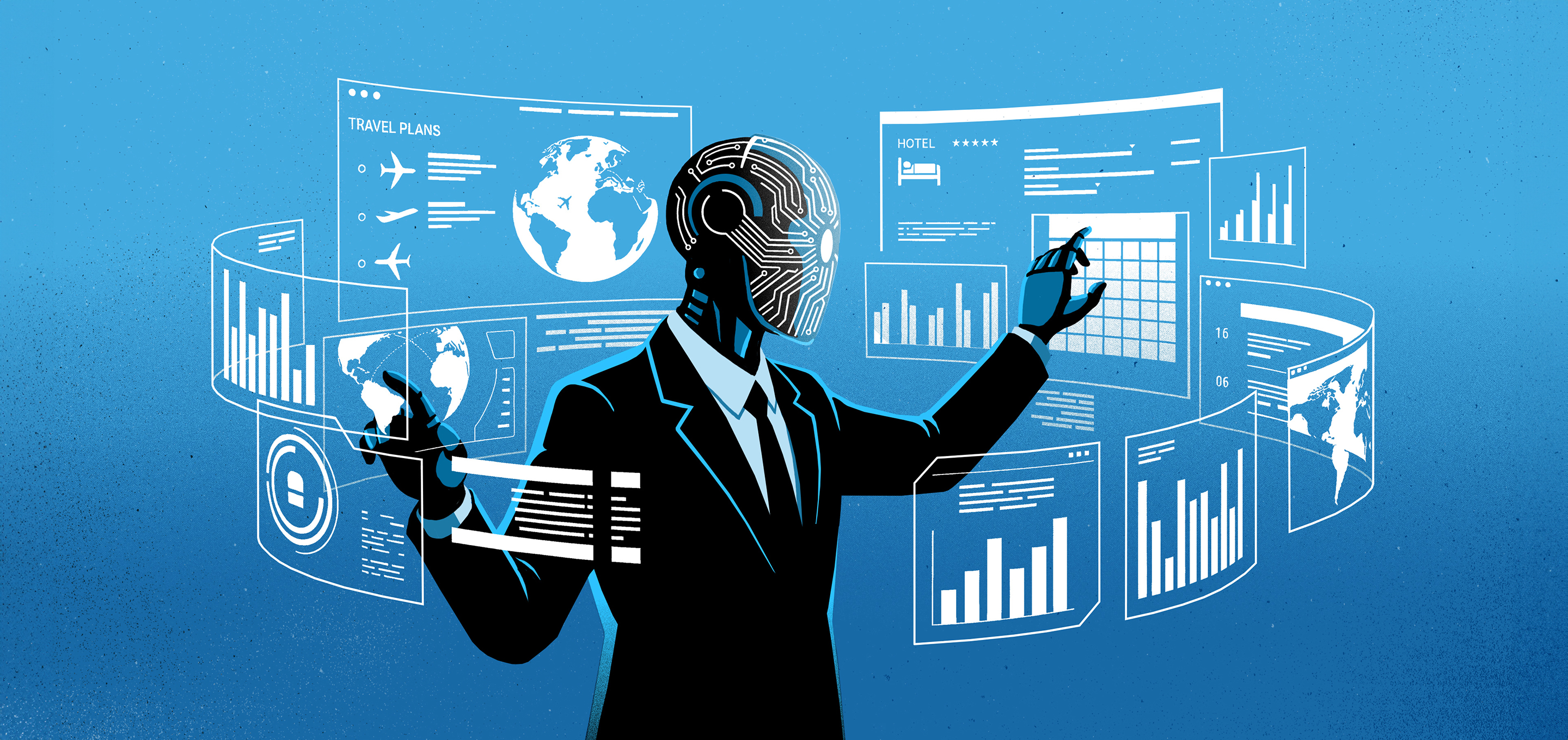
The age of agentic AI — systems that are semi- or fully autonomous and can act on their own — has arrived. Here’s what you need to know, according to MIT experts.
Interactions that reshape the interfaces of the interacting parties
Polynomial functors model systems with interfaces: each polynomial specifies the outputs a system can produce and, for each output, the inputs it accepts. The bicategory $\mathbb{O}\mathbf{rg}$ of dynamic organizations \cite{spivak2021learners} gives a notion of state-driven interaction patterns that evolves over time, but each system's interface remains fixed throughout the interaction. Yet in many systems, the outputs sent and inputs received can reshape the interface itself: a cell differentiating in response to chemical signals gains or loses receptors; a sensor damaged by its input loses a channel; a neural network may grow its output resolution during training. Here we introduce *polynomial trees*, elements of the terminal $(u\triangleleft u)$-coalgebra where $u$ is the polynomial associated to a universe of sets, to model such systems: a polynomial tree is a coinductive tree whose nodes carry polynomials, and in which each round of interaction -- an output chosen and an input received -- determines a child tree, hence the next interface. We construct a monoidal closed category $\mathbf{PolyTr}$ of polynomial trees, with coinductively-defined morphisms, tensor product, and internal hom. We then build a bicategory $\mathbb{O}\mathbf{rgTr}$ generalizing $\mathbb{O}\mathbf{rg}$, whose hom-categories parametrize morphisms by state sets with coinductive action-and-update data. We provide a locally fully faithful functor $\mathbb{O}\mathbf{rg}\to\mathbb{O}\mathbf{rgTr}$ via constant trees, those for which the interfaces do not change through time. We illustrate the generalization by suggesting a notion of progressive generative adversarial networks, where gradient feedback determines when the image-generation interface grows to a higher resolution.
Tiles: Own your AI with local models and open protocols
Tiles: Own your AI with local models and open protocols is a Lightning Talk proposal for PuneFOSS 4.0. As AI becomes central to how we work and communicate, I believe we’re seeing a new form of technological feudalism, where a handful of platforms [...]
Cybernetics is the science of the polycrisis
What Stafford Beer and Dan Davies say and why you need to read them

Amazon Created The Socialist Dream
✨🙌 AI that helps communities thrive on their own terms
Open protocols + AI-enabled coding = building what we need for ourselves
✨🙌 AI that helps communities thrive on their own terms
Open protocols + AI-enabled coding = building what we need for ourselves