


Large Language Models (LLMs) excel in handling general knowledge tasks, yet they struggle with user-specific personalization, such as understanding individual emotions, writing styles, and preferences. Personalized Large Language Models (PLLMs) tackle these challenges by leveraging individual user data, such as user profiles, historical dialogues, content, and interactions, to deliver responses that are contextually relevant and tailored to each user's specific needs. This is a highly valuable research topic, as PLLMs can significantly enhance user satisfaction and have broad applications in conversational agents, recommendation systems, emotion recognition, medical assistants, and more. This survey reviews recent advancements in PLLMs from three technical perspectives: prompting for personalized context (input level), finetuning for personalized adapters (model level), and alignment for personalized preferences (objective level). To provide deeper insights, we also discuss current limitations and outline several promising directions for future research. Updated information about this survey can be found at the https://github.com/JiahongLiu21/Awesome-Personalized-Large-Language-Models.
On the Way to LLM Personalization: Learning to Remember User Conversations
This paper was accepted at the Workshop on Large Language Model Memorization (L2M2) 2025. Large Language Models (LLMs) have quickly become…
On the Way to LLM Personalization: Learning to Remember User Conversations
Large Language Models (LLMs) have quickly become an invaluable assistant for a variety of tasks. However, their effectiveness is constrained by their ability to tailor responses to human preferences and behaviors via personalization. Prior work in LLM personalization has largely focused on style transfer or incorporating small factoids about the user, as knowledge injection remains an open challenge. In this paper, we explore injecting knowledge of prior conversations into LLMs to enable future work on less redundant, personalized conversations. We identify two real-world constraints: (1) conversations are sequential in time and must be treated as such during training, and (2) per-user personalization is only viable in parameter-efficient settings. To this aim, we propose PLUM, a pipeline performing data augmentation for up-sampling conversations as question-answer pairs, that are then used to finetune a low-rank adaptation adapter with a weighted cross entropy loss. Even in this first exploration of the problem, we perform competitively with baselines such as RAG, attaining an accuracy of 81.5% across 100 conversations.
Do language models accommodate their users? A study of linguistic convergence
While large language models (LLMs) are generally considered proficient in generating language, how similar their language usage is to that of humans remains understudied. In this paper, we test whether models exhibit linguistic convergence, a core pragmatic element of human language communication: do models adapt, or converge, to the linguistic patterns of their user? To answer this, we systematically compare model completions of existing dialogues to original human responses across sixteen language models, three dialogue corpora, and various stylometric features. We find that models strongly converge to the conversation's style, often significantly overfitting relative to the human baseline. While convergence patterns are often feature-specific, we observe consistent shifts in convergence across modeling settings, with instruction-tuned and larger models converging less than their pretrained and smaller counterparts. Given the differences in human and model convergence patterns, we hypothesize that the underlying mechanisms driving these behaviors are very different.
Do language models accommodate their users? A study of linguistic convergence
While large language models (LLMs) are generally considered proficient in generating language, how similar their language usage is to that of humans remains understudied. In this paper, we test whether models exhibit linguistic convergence, a core pragmatic element of human language communication: do models adapt, or converge, to the linguistic patterns of their user? To answer this, we systematically compare model completions of existing dialogues to original human responses across sixteen language models, three dialogue corpora, and various stylometric features. We find that models strongly converge to the conversation's style, often significantly overfitting relative to the human baseline. While convergence patterns are often feature-specific, we observe consistent shifts in convergence across modeling settings, with instruction-tuned and larger models converging less than their pretrained and smaller counterparts. Given the differences in human and model convergence patterns, we hypothesize that the underlying mechanisms driving these behaviors are very different.
The potential of generative AI for personalized persuasion at scale
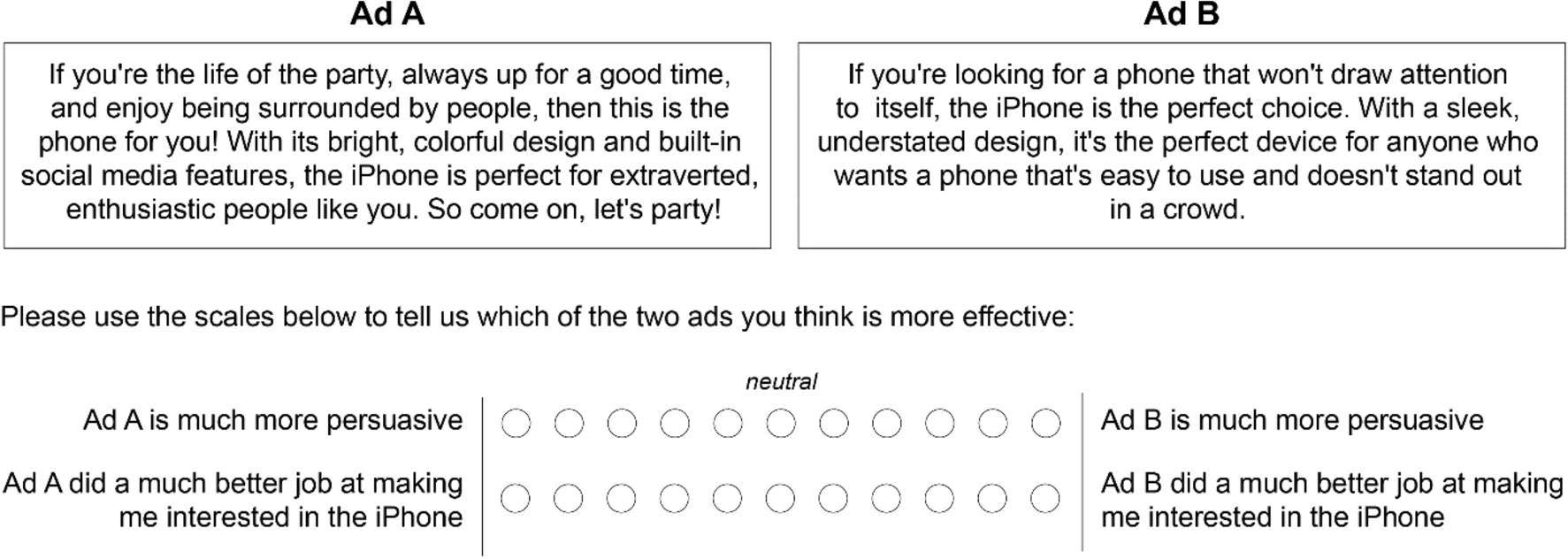
Matching the language or content of a message to the psychological profile of its recipient (known as “personalized persuasion”) is widely considered to be one of the most effective messaging strategies. We demonstrate that the rapid advances in large language models (LLMs), like ChatGPT, could accelerate this influence by making personalized persuasion scalable. Across four studies (consisting of seven sub-studies; total N = 1788), we show that personalized messages crafted by ChatGPT exhibit significantly more influence than non-personalized messages. This was true across different domains of persuasion (e.g., marketing of consumer products, political appeals for climate action), psychological profiles (e.g., personality traits, political ideology, moral foundations), and when only providing the LLM with a single, short prompt naming or describing the targeted psychological dimension. Thus, our findings are among the first to demonstrate the potential for LLMs to automate, and thereby scale, the use of personalized persuasion in ways that enhance its effectiveness and efficiency. We discuss the implications for researchers, practitioners, and the general public.
Quantifying the Persona Effect in LLM Simulations
Large language models (LLMs) have shown remarkable promise in simulating human language and behavior. This study investigates how integrating persona variables—demographic, social, and behavioral factors—impacts LLMs' ability to simulate diverse perspectives. We find that persona variables account for \ensuremath<10% variance in annotations in existing subjective NLP datasets. Nonetheless, incorporating persona variables via prompting in LLMs provides modest but statistically significant improvements. Persona prompting is most effective in samples where many annotators disagree, but their disagreements are relatively minor. Notably, we find a linear relationship in our setting: the stronger the correlation between persona variables and human annotations, the more accurate the LLM predictions are using persona prompting. In a zero-shot setting, a powerful 70b model with persona prompting captures 81% of the annotation variance achievable by linear regression trained on ground truth annotations. However, for most subjective NLP datasets, where persona variables have limited explanatory power, the benefits of persona prompting are limited.
Personalization Increases Affective Alignment but Has Role-Dependent Effects on Epistemic Independence in LLMs
Large Language Models (LLMs) are prone to sycophantic behavior, uncritically conforming to user beliefs. As models increasingly condition responses on user-specific context (personality traits, preferences, conversation history), they gain information to tailor agreement more effectively. Understanding how personalization modulates sycophancy is critical, yet systematic evaluation across models and contexts remains limited. We present a rigorous evaluation of personalization's impact on LLM sycophancy across nine frontier models and five benchmark datasets spanning advice, moral judgment, and debate contexts. We find that personalization generally increases affective alignment (emotional validation, hedging/deference), but affects epistemic alignment (belief adoption, position stability, resistance to influence) with context-dependent role modulation. When the LLM's role is to give advice, personalization strengthens epistemic independence (models challenge user presuppositions). When its role is that of a social peer, personalization decreases epistemic independence. In this role, extensively personalized user challenges causing LLMs to abandon their position at significantly higher rates. Robustness tests confirm that the effects are driven by personalized conditioning, not by additional input tokens per se or demographic information alone. Our work provides measurement frameworks for evaluating personalized AI systems, demonstrates the necessity of role-sensitive evaluation, and establishes a novel benchmark to assess goal alignment.
Do Large Language Models Perform the Way People Expect? Measuring the Human Generalization Function
What makes large language models (LLMs) impressive is also what makes them hard to evaluate: their diversity of uses. To evaluate these models, we must understand the purposes they will be used for. We consider a setting where these deployment decisions are made by people, and in particular, people's beliefs about where an LLM will perform well. We model such beliefs as the consequence of a human generalization function: having seen what an LLM gets right or wrong, people generalize to where else it might succeed. We collect a dataset of 19K examples of how humans make generalizations across 79 tasks from the MMLU and BIG-Bench benchmarks. We show that the human generalization function can be predicted using NLP methods: people have consistent structured ways to generalize. We then evaluate LLM alignment with the human generalization function. Our results show that -- especially for cases where the cost of mistakes is high -- more capable models (e.g. GPT-4) can do worse on the instances people choose to use them for, exactly because they are not aligned with the human generalization function.
Macaron-A2UI: A Model for Generative UI in Personal Agents
As personal agents evolve to handle complex, user-centric tasks, static plain-text chat is rapidly becoming a bottleneck. Generative UI emerges as the necessary new interface layer, dynamically synthesizing the right controls, options, and state from the interaction context in real time. We present Macaron-A2UI, a model for Generative UI in personal agents. Our goal is to move beyond text-only interaction by enabling agents to generate natural language together with lightweight, executable UI actions for information collection, preference refinement, confirmation, and multi-goal organization. We build a large-scale Generative UI corpus from heterogeneous dialogue sources, introduce A2UI-Bench for controlled evaluation, and train 30B, 235B and 754B models with parameter-efficient LoRA-based supervised fine-tuning followed by reward-driven reinforcement learning. The best Macaron-A2UI model reaches 75.6 overall on A2UI-Bench without explicit schema hints, surpassing the strongest full-schema frontier baseline. We release the models, benchmark, and evaluation protocol to support future work on Generative UI for personal agents.
The benefits, risks and bounds of personalizing the alignment of large language models to individuals
Large language models (LLMs) undergo ‘alignment’ so that they better reflect human values or preferences, and are safer or more useful. However, alignment is intrinsically difficult because the hundreds of millions of people who now interact with LLMs have different preferences for language and conversational norms, operate under disparate value systems and hold diverse political beliefs. Typically, few developers or researchers dictate alignment norms, risking the exclusion or under-representation of various groups. Personalization is a new frontier in LLM development, whereby models are tailored to individuals. In principle, this could minimize cultural hegemony, enhance usefulness and broaden access. However, unbounded personalization poses risks such as large-scale profiling, privacy infringement, bias reinforcement and exploitation of the vulnerable. Defining the bounds of responsible and socially acceptable personalization is a non-trivial task beset with normative challenges. This article explores ‘personalized alignment’, whereby LLMs adapt to user-specific data, and highlights recent shifts in the LLM ecosystem towards a greater degree of personalization. Our main contribution explores the potential impact of personalized LLMs via a taxonomy of risks and benefits for individuals and society at large. We lastly discuss a key open question: what are appropriate bounds of personalization and who decides? Answering this normative question enables users to benefit from personalized alignment while safeguarding against harmful impacts for individuals and society.

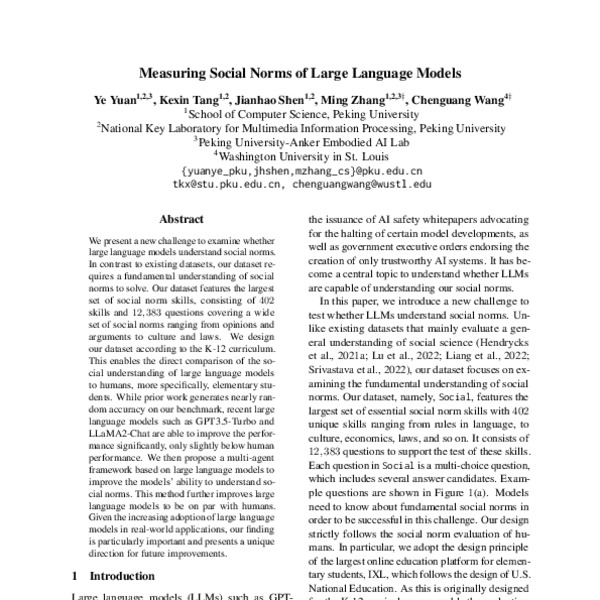
Measuring Social Norms of Large Language Models
We present a new challenge to examine whether large language models understand social norms. In contrast to existing datasets, our dataset requires a fundamental understanding of social norms to solve. Our dataset features the largest set of social norm skills, consisting of 402 skills and 12,383 questions covering a wide set of social norms ranging from opinions and arguments to culture and laws. We design our dataset according to the K-12 curriculum. This enables the direct comparison of the social understanding of large language models to humans, more specifically, elementary students. While prior work generates nearly random accuracy on our benchmark, recent large language models such as GPT3.5-Turbo and LLaMA2-Chat are able to improve the performance significantly, only slightly below human performance. We then propose a multi-agent framework based on large language models to improve the models' ability to understand social norms. This method further improves large language models to be on par with humans. Given the increasing adoption of large language models in real-world applications, our finding is particularly important and presents a unique direction for future improvements.
Models overview
Claude is a family of state-of-the-art large language models developed by Anthropic. This guide introduces the available models and compares their performance.
The shrinking landscape of linguistic diversity in the age of large language models
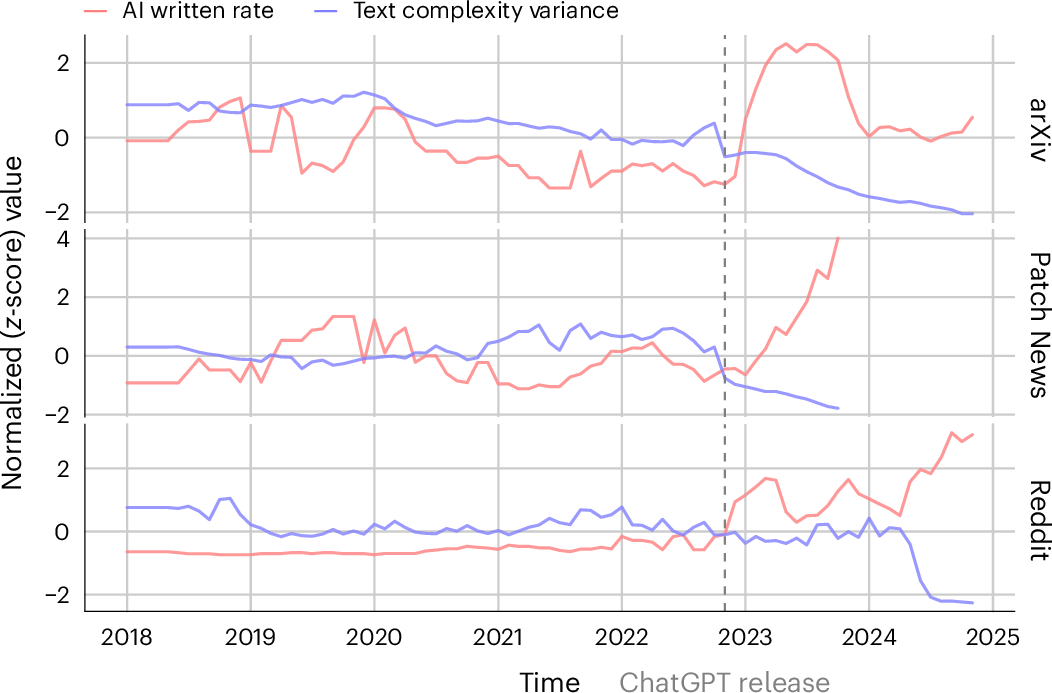
Language is far more than a communication tool; it encodes a wealth of information about a person’s identity, psychological state and social context, providing valuable insights for diverse fields including psychology, marketing and healthcare. Across three studies spanning seven datasets in different domains and over 880,000 texts, we show that the widespread adoption of large language models (LLMs) as writing assistants is linked to declines in linguistic diversity, interfering with the societal and psychological insights language provides. While core content is retained when LLMs polish and rewrite texts, LLMs also homogenize writing styles, reducing writing-complexity variance by a statistically significant 21–50% across datasets and models (P ≤ 0.05), and amplify patterns associated with dominant characteristics while suppressing others, emphasizing conformity over individuality. These trends hold across different LLMs, prompts and contexts, with potential implications for diagnostic processes, personalization efforts, hiring assessments and cultural preservation.
On the Conversational Persuasiveness of Large Language Models: A Randomized Controlled Trial
The development and popularization of large language models (LLMs) have raised concerns that they will be used to create tailor-made, convincing arguments to push false or misleading narratives online. Early work has found that language models can generate content perceived as at least on par and often more persuasive than human-written messages. However, there is still limited knowledge about LLMs' persuasive capabilities in direct conversations with human counterparts and how personalization can improve their performance. In this pre-registered study, we analyze the effect of AI-driven persuasion in a controlled, harmless setting. We create a web-based platform where participants engage in short, multiple-round debates with a live opponent. Each participant is randomly assigned to one of four treatment conditions, corresponding to a two-by-two factorial design: (1) Games are either played between two humans or between a human and an LLM; (2) Personalization might or might not be enabled, granting one of the two players access to basic sociodemographic information about their opponent. We found that participants who debated GPT-4 with access to their personal information had 81.7% (p < 0.01; N=820 unique participants) higher odds of increased agreement with their opponents compared to participants who debated humans. Without personalization, GPT-4 still outperforms humans, but the effect is lower and statistically non-significant (p=0.31). Overall, our results suggest that concerns around personalization are meaningful and have important implications for the governance of social media and the design of new online environments.
Small Language Models are the Future of Agentic AI
Large language models (LLMs) are often praised for exhibiting near-human performance on a wide range of tasks and valued for their ability to hold a general conversation. The rise of agentic AI systems is, however, ushering in a mass of applications in which language models perform a small number of specialized tasks repetitively and with little variation. Here we lay out the position that small language models (SLMs) are sufficiently powerful, inherently more suitable, and necessarily more economical for many invocations in agentic systems, and are therefore the future of agentic AI. Our argumentation is grounded in the current level of capabilities exhibited by SLMs, the common architectures of agentic systems, and the economy of LM deployment. We further argue that in situations where general-purpose conversational abilities are essential, heterogeneous agentic systems (i.e., agents invoking multiple different models) are the natural choice. We discuss the potential barriers for the adoption of SLMs in agentic systems and outline a general LLM-to-SLM agent conversion algorithm. Our position, formulated as a value statement, highlights the significance of the operational and economic impact even a partial shift from LLMs to SLMs is to have on the AI agent industry. We aim to stimulate the discussion on the effective use of AI resources and hope to advance the efforts to lower the costs of AI of the present day. Calling for both contributions to and critique of our position, we commit to publishing all such correspondence at https://research.nvidia.com/labs/lpr/slm-agents.
Intent Mismatch Causes LLMs to Get Lost in Multi-Turn Conversation
Multi-turn conversation has emerged as a predominant interaction paradigm for Large Language Models (LLMs). Users often employ follow-up questions to refine their intent, expecting LLMs to adapt dynamically. However, recent research reveals that LLMs suffer a substantial performance drop in multi-turn settings compared to single-turn interactions with fully specified instructions, a phenomenon termed ``Lost in Conversation'' (LiC). While this prior work attributes LiC to model unreliability, we argue that the root cause lies in an intent alignment gap rather than intrinsic capability deficits. In this paper, we first demonstrate that LiC is not a failure of model capability but rather a breakdown in interaction between users and LLMs. We theoretically show that scaling model size or improving training alone cannot resolve this gap, as it arises from structural ambiguity in conversational context rather than representational limitations. To address this, we propose to decouple intent understanding from task execution through a Mediator-Assistant architecture. By utilizing an experience-driven Mediator to explicate user inputs into explicit, well-structured instructions based on historical interaction patterns, our approach effectively bridges the gap between vague user intent and model interpretation. Experimental results demonstrate that this method significantly mitigates performance degradation in multi-turn conversations across diverse LLMs.