


Artificial intelligence tools are accelerating manuscript production far faster than peer review capacity can expand. Applying the theory of constraints from manufacturing science, we formalize...
Publish and Perish: How AI-Accelerated Writing Without Proportional Verification Investment Degrades Scientific Knowledge
Artificial intelligence tools are accelerating manuscript production far faster than peer review capacity can expand. Applying the theory of constraints from manufacturing science, we formalize this asymmetry through a minimal two-variable ordinary differential equation model coupling review queue evolution and verification quality degradation via an endogenous, queue-pressure-driven review AI adoption mechanism. The causal chain is: writing AI adoption increases submissions, growing the review queue, which drives reviewer AI adoption under pressure, degrading verification quality and reducing net knowledge output. Under empirically informed parameters (writing acceleration γ = 2.0, review acceleration δ = 0.5), the model predicts a deceptive honeymoon where knowledge output peaks at 1.10K0 (circa 2026), followed by paradox onset at t = 6 years (2028) and long-term degradation to 0.68K0 (32% loss), approaching a steady state of 0.60K0 (40% loss). The critical condition for net benefit is δ > γ; the current operating point lies deep in the paradox regime. Empirical validation against NeurIPS, ICLR, arXiv, and bioRxiv submission data shows qualitative consistency with observed post-ChatGPT acceleration patterns. Policy analysis reveals that only combined interventions such as review infrastructure investment paired with institutional quality standards can restore positive knowledge production.
Publish and Perish: How AI-Accelerated Writing Without Proportional Verification Investment Degrades Scientific Knowledge
Artificial intelligence tools are accelerating manuscript production far faster than peer review capacity can expand. Applying the theory of constraints from manufacturing science, we formalize this asymmetry through a minimal two-variable ordinary differential equation model coupling review queue evolution and verification quality degradation via an endogenous, queue-pressure-driven review AI adoption mechanism. The causal chain is: writing AI adoption increases submissions, growing the review queue, which drives reviewer AI adoption under pressure, degrading verification quality and reducing net knowledge output. Under empirically informed parameters (writing acceleration γ = 2.0, review acceleration δ = 0.5), the model predicts a deceptive honeymoon where knowledge output peaks at 1.10K0 (circa 2026), followed by paradox onset at t = 6 years (2028) and long-term degradation to 0.68K0 (32% loss), approaching a steady state of 0.60K0 (40% loss). The critical condition for net benefit is δ > γ; the current operating point lies deep in the paradox regime. Empirical validation against NeurIPS, ICLR, arXiv, and bioRxiv submission data shows qualitative consistency with observed post-ChatGPT acceleration patterns. Policy analysis reveals that only combined interventions such as review infrastructure investment paired with institutional quality standards can restore positive knowledge production.
AI in scientific publishing: Slower, worse, and more expensive
There’s a saying in the management world, popularized by NASA administrator Daniel Goldin in the 1990s, that the goal of technological improvements is to make products faster, better, and cheaper. Although this strategy had some success in the aerospace industry, the zealots of artificial intelligence (AI) have been making the same argument regarding how it will transform work, claiming that so little human effort will be required that humanity will enter an era of radical abundance, free from disease, drudgery, and danger, among other benefits, leaving society with more time for creative pursuits. But history tells a different story. When machines began to increase productivity during the second industrial revolution, American engineer Frederick Winslow Taylor’s The Principles of Scientific Management encouraged corporations to use surveillance to get employees to work harder and longer, an approach that exhausted and discouraged workers and led to the transfer of knowledge and any decision-making from workers to management, while enriching the profits for only those at the top. Yet, it remains foundational to the American economic enterprise. Indeed, scientific publishing is starting to experience some Taylorism with the insertion of AI. Rigorous human checking of AI-generated research papers is creating bottlenecks as publishers strive to maintain the integrity of the scientific record. The challenge is requiring even more human effort, making the whole endeavor slower and more expensive.

Protocolized Writing Workshop
Your chance to race to the frontier of modern AI-forward writing and publishing

Accelerating Science with Human+AI Review
This issue of NEJM AI features the first two articles published through our accelerated human+AI review process. In this editorial, we describe the invitation-only “Fast Track” process used to revi...

From bench to bot: Why AI-powered writing may not deliver on its promise
Efficiency isn’t everything. The cognitive work of struggling with prose may be a crucial part of what drives scientific progress.

PaperOrchestra: A Multi-Agent Framework for Automated AI Research Paper Writing
Synthesizing unstructured research materials into manuscripts is an essential yet under-explored challenge in AI-driven scientific discovery. Existing autonomous writers are rigidly coupled to specific experimental pipelines, and produce superficial literature reviews. We introduce PaperOrchestra, a multi-agent framework for automated AI research paper writing. It flexibly transforms unconstrained pre-writing materials into submission-ready LaTeX manuscripts, including comprehensive literature synthesis and generated visuals, such as plots and conceptual diagrams. To evaluate performance, we present PaperWritingBench, the first standardized benchmark of reverse-engineered raw materials from 200 top-tier AI conference papers, alongside a comprehensive suite of automated evaluators. In side-by-side human evaluations, PaperOrchestra significantly outperforms autonomous baselines, achieving an absolute win rate margin of 50%-68% in literature review quality, and 14%-38% in overall manuscript quality.
AI’s Growing Role as Scientific Peer Reviewer | Stanford HAI
Stanford computer scientist James Zou is exploring how AI can accelerate scientific research and peer review. His finding: AI excels at spotting gaps, but judgment calls still need humans.

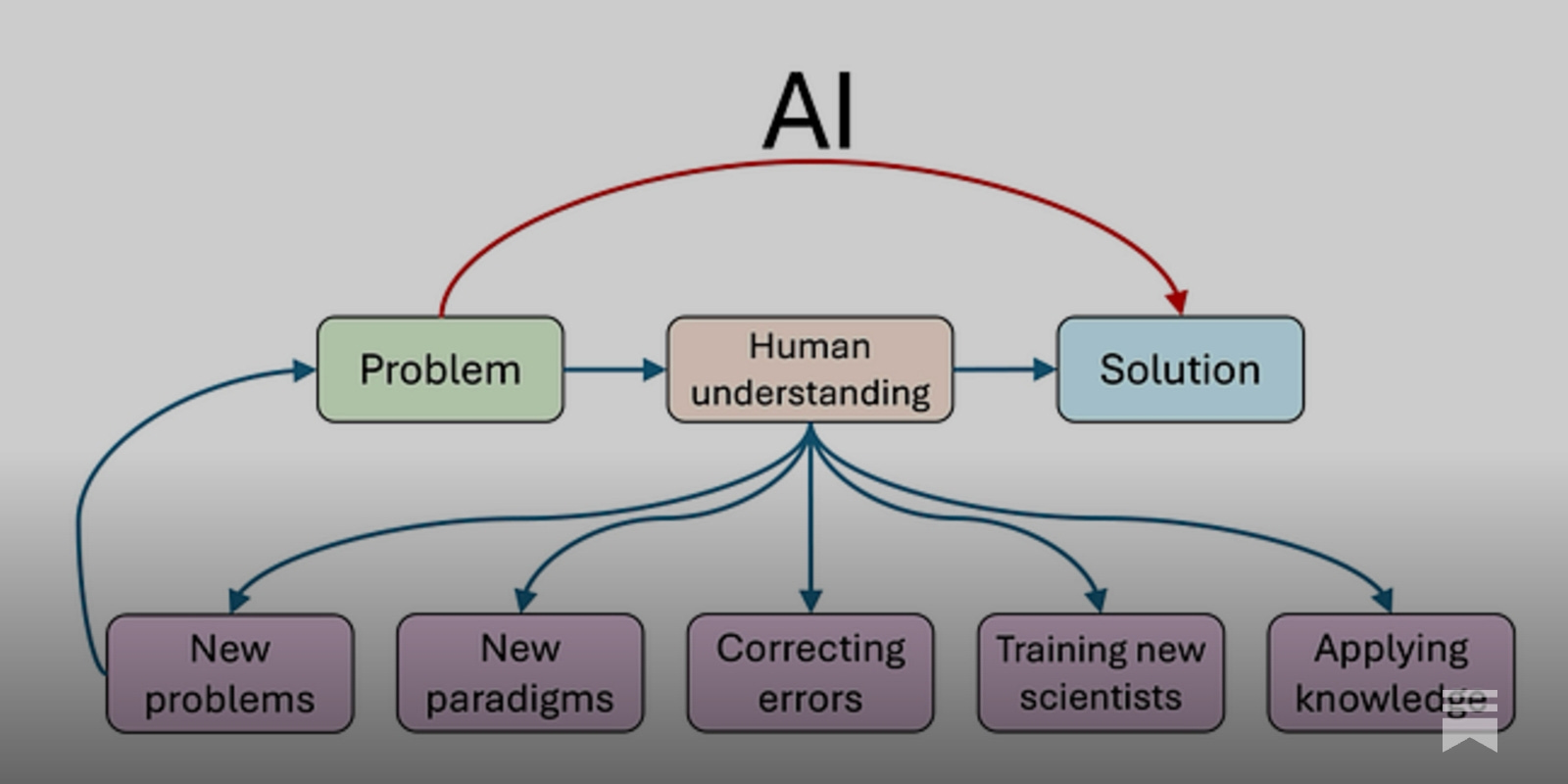
Guest Post — Now is the Time for AI in Peer Review, and Publishing Policies Need to Recognize This - The Scholarly Kitchen
Today's post asks us to acknowledge the role of AI in peer review and ensure practical guidance and policies that help scholars respond with consistency and confidence.

(PDF) Peer Reviewers Should be Allowed to Upload Manuscripts to AI
PDF | Publishers bar peer reviewers-but not authors or editors-from feeding manuscripts to AI. Cited confidentiality concerns don't survive scrutiny.... | Find, read and cite all the research you need on ResearchGate

More Versus Better: Artificial Intelligence, Incentives, and the Emerging Crisis in Peer Review | Organization Science
As the AI Task Force for Organization Science, we provide an early account of artificial intelligence’s (AI) impact on both submissions and reviews at a major academic journal. Submission volume ha...

Writing With AI Is Harder Than You Think
It takes rigor, judgment, and willingness to be told your work isn't good enough.

Peer review is facing a death spiral, and AI production tools are speeding it up. AI-assisted reviewing is necessary and should be open. We built OpenAIReview: open AI reviewing for everyone, for the cost of a coffee. openaireview.github.io/blog.html 🧵

AI-assisted Reviewing is Necessary and Should be Open
openaireview.github.io