


Large language models (LLMs) are increasingly used for scientific hypothesis generation. However, evaluating generated hypotheses remains a challenge for trustworthy AI-enabled scientific workflows. Existing approaches often use LLMs as judges or rely on semantic similarity, which can favor familiar ideas over novel ones. We propose a logit-based energy scoring method that evaluates hypotheses using a language model's intrinsic confidence rather than comparative judgment. We benchmarked seven language models on 1,323 papers across 12 disciplines. Each paper was paired with its hypothesis and fifteen incorrect alternatives. Intrinsic scoring reached 33.0% Hit@1 pooled across both scorers, compared with 16.6% for prompted listwise ranking. The strongest configuration, a 1-billion-parameter model using logit-based energy scoring, reached 53.1%, though this was the maximum across 14 model-by-scorer combinations selected post hoc. Overall, intrinsic model confidence shows potential for scientific hypothesis evaluation. This study also motivates future research on confidence-based methods for trustworthy AI-enabled scientific discovery.
Unveiling the Merits and Defects of LLMs in Automatic Review Generation for Scientific Papers
The surge in scientific submissions has placed increasing strain on the traditional peer-review process, prompting the exploration of large language models (LLMs) for automated review generation. While LLMs demonstrate competence in producing structured and coherent feedback, their capacity for critical reasoning, contextual grounding, and quality sensitivity remains limited. To systematically evaluate these aspects, we propose a comprehensive evaluation framework that integrates semantic similarity analysis and structured knowledge graph metrics to assess LLM-generated reviews against human-written counterparts. We construct a large-scale benchmark of 1,683 papers and 6,495 expert reviews from ICLR and NeurIPS in multiple years, and generate reviews using five LLMs. Our findings show that LLMs perform well in descriptive and affirmational content, capturing the main contributions and methodologies of the original work, with GPT-4o highlighted as an illustrative example, generating 15.74% more entities than human reviewers in the strengths section of good papers in ICLR 2025. However, they consistently underperform in identifying weaknesses, raising substantive questions, and adjusting feedback based on paper quality. GPT-4o produces 59.42% fewer entities than real reviewers in the weaknesses and increases node count by only 5.7% from good to weak papers, compared to 50% in human reviews. Similar trends are observed across all conferences, years, and models, providing empirical foundations for understanding the merits and defects of LLM-generated reviews and informing the development of future LLM-assisted reviewing tools. Data, code, and more detailed results are publicly available at https://github.com/RichardLRC/Peer-Review.
Can large language models provide useful feedback on research papers? A large-scale empirical analysis
Expert feedback lays the foundation of rigorous research. However, the rapid growth of scholarly production and intricate knowledge specialization challenge the conventional scientific feedback mechanisms. High-quality peer reviews are increasingly difficult to obtain. Researchers who are more junior or from under-resourced settings have especially hard times getting timely feedback. With the breakthrough of large language models (LLM) such as GPT-4, there is growing interest in using LLMs to generate scientific feedback on research manuscripts. However, the utility of LLM-generated feedback has not been systematically studied. To address this gap, we created an automated pipeline using GPT-4 to provide comments on the full PDFs of scientific papers. We evaluated the quality of GPT-4's feedback through two large-scale studies. We first quantitatively compared GPT-4's generated feedback with human peer reviewer feedback in 15 Nature family journals (3,096 papers in total) and the ICLR machine learning conference (1,709 papers). The overlap in the points raised by GPT-4 and by human reviewers (average overlap 30.85% for Nature journals, 39.23% for ICLR) is comparable to the overlap between two human reviewers (average overlap 28.58% for Nature journals, 35.25% for ICLR). The overlap between GPT-4 and human reviewers is larger for the weaker papers. We then conducted a prospective user study with 308 researchers from 110 US institutions in the field of AI and computational biology to understand how researchers perceive feedback generated by our GPT-4 system on their own papers. Overall, more than half (57.4%) of the users found GPT-4 generated feedback helpful/very helpful and 82.4% found it more beneficial than feedback from at least some human reviewers. While our findings show that LLM-generated feedback can help researchers, we also identify several limitations.
LLMs Can Assist with Proposal Selection at Large User Facilities
We explore how large language models (LLMs) can enhance the proposal selection process at large user facilities, offering a scalable, consistent, and cost-effective alternative to traditional human review. Proposal selection depends on assessing the relative strength among submitted proposals; however, traditional human scoring often suffers from weak inter-proposal correlations and is subject to reviewer bias and inconsistency. A pairwise preference-based approach is logically superior, providing a more rigorous and internally consistent basis for ranking, but its quadratic workload makes it impractical for human reviewers. We address this limitation using LLMs. Leveraging the uniquely well-curated proposals and publication records from three beamlines at the Spallation Neutron Source (SNS), Oak Ridge National Laboratory (ORNL), we show that the LLM rankings correlate strongly with the human rankings (Spearman $ρ\simeq 0.2-0.8$, improving to $\geq 0.5$ after 10\% outlier removal). Moreover, LLM performance is no worse than that of human reviewers in identifying proposals with high publication potential, while costing over two orders of magnitude less. Beyond ranking, LLMs enable advanced analyses that are challenging for humans, such as quantitative assessment of proposal similarity via embedding models, which provides information crucial for review committees.
Literature Meets Data: A Synergistic Approach to Hypothesis Generation
AI holds promise for transforming scientific processes, including hypothesis generation. Prior work on hypothesis generation can be broadly categorized into theory-driven and data-driven approaches. While both have proven effective in generating novel and plausible hypotheses, it remains an open question whether they can complement each other. To address this, we develop the first method that combines literature-based insights with data to perform LLM-powered hypothesis generation. We apply our method on five different datasets and demonstrate that integrating literature and data outperforms other baselines (8.97\% over few-shot, 15.75\% over literature-based alone, and 3.37\% over data-driven alone). Additionally, we conduct the first human evaluation to assess the utility of LLM-generated hypotheses in assisting human decision-making on two challenging tasks: deception detection and AI generated content detection. Our results show that human accuracy improves significantly by 7.44\% and 14.19\% on these tasks, respectively. These findings suggest that integrating literature-based and data-driven approaches provides a comprehensive and nuanced framework for hypothesis generation and could open new avenues for scientific inquiry.
Language agents achieve superhuman synthesis of scientific knowledge
Language models are known to hallucinate incorrect information, and it is unclear if they are sufficiently accurate and reliable for use in scientific research. We developed a rigorous human-AI comparison methodology to evaluate language model agents on real-world literature search tasks covering information retrieval, summarization, and contradiction detection tasks. We show that PaperQA2, a frontier language model agent optimized for improved factuality, matches or exceeds subject matter expert performance on three realistic literature research tasks without any restrictions on humans (i.e., full access to internet, search tools, and time). PaperQA2 writes cited, Wikipedia-style summaries of scientific topics that are significantly more accurate than existing, human-written Wikipedia articles. We also introduce a hard benchmark for scientific literature research called LitQA2 that guided design of PaperQA2, leading to it exceeding human performance. Finally, we apply PaperQA2 to identify contradictions within the scientific literature, an important scientific task that is challenging for humans. PaperQA2 identifies 2.34 +/- 1.99 contradictions per paper in a random subset of biology papers, of which 70% are validated by human experts. These results demonstrate that language model agents are now capable of exceeding domain experts across meaningful tasks on scientific literature.
Can AI Agents Synthesize Scientific Conclusions?
Scientific AI agents increasingly retrieve evidence, reason across sources, and synthesize conclusions used in consequential decisions. Yet, their ability to do so in high-stakes domains such as health remains unclear. We introduce SciConBench, a large-scale live benchmark of 9.11K questions and expert-written conclusions from systematic reviews to evaluate open-domain scientific conclusion synthesis. The benchmark draws on an expert-validated automated evaluation pipeline that decomposes conclusions into atomic facts and measures correctness and comprehensiveness via factual precision and recall. To mitigate data leakage, we further introduce SciConHarness, a clean-room evaluation harness that equips agents with controlled web interaction to ensure valid measurement. Evaluating 8 frontier models and deep research agents, we find that factual quality remains low: under clean-room settings, the best agent achieves only a factual F1 of 0.337. Our clean-room setting consistently reduces performance relative to unconstrained evaluation, suggesting that leakage inflates estimates of models' true synthesis capabilities. Finally, we audit consumer-facing agents (e.g., Google AI Overview, OpenEvidence) and find they frequently generate incomplete and sometimes contradictory conclusions, even when the ground-truth answer is available. Overall, our results show that reliable synthesis of scientific conclusions remains an open challenge, and that clean-room evaluation is essential for assessing open-domain AI agents.
Generative AI bias against scientific novelty: a cautionary tale from a small-sample evaluation of research proposals
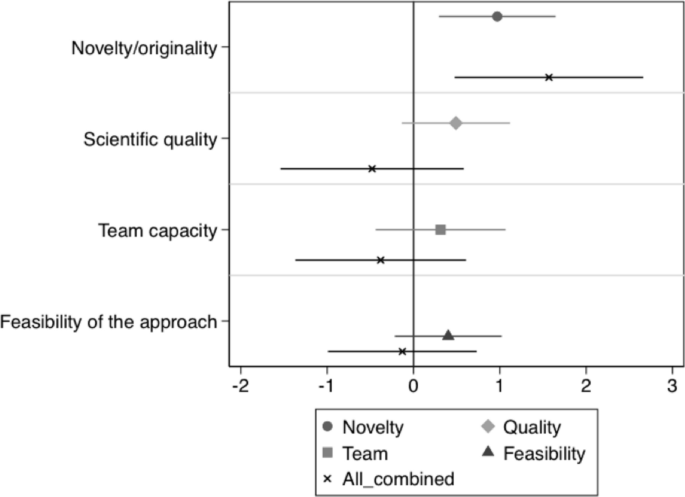
Generative AI (GenAI) tools, and large language models (LLMs) in particular, are being rapidly adopted across the scientific research process, including in funding evaluation and peer review. While their efficiency gains are well documented, their systematic biases remain comparatively understudied. A central concern is whether LLMs can recognise and value scientific novelty, an essential property for the long-run productivity of science. This paper examines 139 monodisciplinary research proposals submitted in 2021 to the Austrian Science Fund (FWF) in mathematics, physics and astronomy, chemistry, and biology. Each proposal carries expert-assigned scores for novelty, scientific quality, team capacity, and feasibility, along with the actual binary funding decision. Using GPT-4o, we generate AI-based funding decisions through within-field pairwise comparisons aggregated into field-level rankings, simulating a competitive selection process. AI-based funding decisions matched human funding decisions in 60% of cases. Conditional logistic regression with field fixed effects shows that, among the four review dimensions, novelty is the only one significantly associated with disagreement. Conditional and multinomial logit analyses further show that novelty systematically predicts the direction of disagreement. Proposals rated as more novel by human reviewers are substantially more likely to be funded by humans and not by the LLM. The observed pattern is consistent with a conservative tendency in LLM-based evaluation, potentially reflecting the statistical logic of next-token prediction trained on past scientific outputs. While the design does not allow us to identify the underlying mechanism, the results raise concerns that LLM-assisted evaluation may under-select proposals that human reviewers identify as highly novel.
ReviewBench: An Extensible Framework for Benchmarking Human and AI Manuscript Review
The volume of scientific manuscripts is rising faster than the available pool of expert reviewers, and AI tools are emerging as a possible response, ranging from frontier large language models applied directly to peer review to purpose-built multi-agent systems. Scalable, standardized benchmarks are needed to regularly evaluate how these tools compare to one another and to human reviewers. We present ReviewBench, an open-source, venue-agnostic framework that compares human and AI reviews across structure, alignment with a paper’s major claims, impact, and critique category. We apply ReviewBench to 145,021 review comments from human reviewers, frontier large language models (GPT-5.2, and Gemini 3 Pro), and Reviewer3.com (R3), a multi-agent peer review system. The dataset spans papers in computer science (ICLR 2025, n = 1,000), social science (Nature Human Behaviour, n = 142), and life science (eLife, n = 1,000). Across disciplines, AI reviews are more structured and engage more directly with a paper’s major claims, with R3 more often surfacing consequential comments, defined as comments capable of undermining those claims. When restricting to critical comments, however, human reviewers rank first on consequential rate on more individual papers than any AI source, despite a lower average. We identify a bimodal reviewer distribution with peaks near 0% and 100%, indicating that many reviewers outperform AI on this metric, but a substantial fraction of reviewers near 0% brings the average down. Critique typing demonstrates systematic differences, where humans emphasize contribution and clarity, while AI emphasizes validity, sufficiency, and transparency. Together, these findings argue against framing AI as a replacement for human review and instead support a complementary model in which AI scales technical verification of major claims while human judgment remains essential for evaluating contribution and shaping editorial decisions.

AI-Assisted Peer Review at Scale: The AAAI-26 AI Review Pilot
Scientific peer review faces mounting strain as submission volumes surge, making it increasingly difficult to sustain review quality, consistency, and timeliness. Recent advances in AI have led the community to consider its use in peer review, yet a key unresolved question is whether AI can generate technically sound reviews at real-world conference scale. Here we report the first large-scale field deployment of AI-assisted peer review: every main-track submission at AAAI-26 received one clearly identified AI review from a state-of-the-art system. The system combined frontier models, tool use, and safeguards in a multi-stage process to generate reviews for all 22,977 full-review papers in less than a day. A large-scale survey of AAAI-26 authors and program committee members showed that participants not only found AI reviews useful, but actually preferred them to human reviews on key dimensions such as technical accuracy and research suggestions. We also introduce a novel benchmark and find that our system substantially outperforms a simple LLM-generated review baseline at detecting a variety of scientific weaknesses. Together, these results show that state-of-the-art AI methods can already make meaningful contributions to scientific peer review at conference scale, opening a path toward the next generation of synergistic human-AI teaming for evaluating research.
Towards Automating Scientific Review with Google's Paper Assistant Tool
Artificial intelligence is driving a revolution in scientific discovery, accelerating everything from hypothesis generation to mathematical theorem proving. However, this rapid acceleration is creating a systemic challenge: traditional human peer review cannot scale to match the influx of AI-assisted science. Ultimately, to resolve this tension, we must also deploy AI to accelerate the verification and review process itself. To frame the discussion around this transition, we propose a taxonomy consisting of four progressive levels of AI-human collaboration in scientific evaluation, and discuss various trade-offs involved with each. As a step toward this future, we introduce the Paper Assistant Tool (PAT), an agentic AI framework built for deep scientific review and verification. PAT ingests full scientific manuscripts and produces a comprehensive evaluation, checking theoretical results, validating experiments, suggesting improvements, and identifying potential flaws. By utilizing inference scaling techniques, PAT is able to identify deeper issues than a single model call alone, achieving a 34% improvement over zero-shot recall on mathematical errors in the SPOT benchmark. Pilot deployments of PAT as a pre-submission tool for authors at two major Computer Science conferences -- STOC and ICML -- demonstrate its ability to identify critical errors and suggest substantive improvements to research papers. By catching errors early, PAT eases the cognitive burden placed on referees, while preserving their control over the outcomes of the review process.
Fact or Fiction: Verifying Scientific Claims
We introduce scientific claim verification, a new task to select abstracts from the research literature containing evidence that SUPPORTS or REFUTES a given scientific claim, and to identify rationales justifying each decision. To study this task, we construct SciFact, a dataset of 1.4K expert-written scientific claims paired with evidence-containing abstracts annotated with labels and rationales. We develop baseline models for SciFact, and demonstrate that simple domain adaptation techniques substantially improve performance compared to models trained on Wikipedia or political news. We show that our system is able to verify claims related to COVID-19 by identifying evidence from the CORD-19 corpus. Our experiments indicate that SciFact will provide a challenging testbed for the development of new systems designed to retrieve and reason over corpora containing specialized domain knowledge. Data and code for this new task are publicly available at https://github.com/allenai/scifact. A leaderboard and COVID-19 fact-checking demo are available at https://scifact.apps.allenai.org.
CORE-Bench: Fostering the Credibility of Published Research Through a Computational Reproducibility Agent Benchmark
AI agents have the potential to aid users on a variety of consequential tasks, including conducting scientific research. To spur the development of useful agents, we need benchmarks that are challenging, but more crucially, directly correspond to real-world tasks of interest. This paper introduces such a benchmark, designed to measure the accuracy of AI agents in tackling a crucial yet surprisingly challenging aspect of scientific research: computational reproducibility. This task, fundamental to the scientific process, involves reproducing the results of a study using the provided code and data. We introduce CORE-Bench (Computational Reproducibility Agent Benchmark), a benchmark consisting of 270 tasks based on 90 scientific papers across three disciplines (computer science, social science, and medicine). Tasks in CORE-Bench consist of three difficulty levels and include both language-only and vision-language tasks. We provide an evaluation system to measure the accuracy of agents in a fast and parallelizable way, saving days of evaluation time for each run compared to a sequential implementation. We evaluated two baseline agents: the general-purpose AutoGPT and a task-specific agent called CORE-Agent. We tested both variants using two underlying language models: GPT-4o and GPT-4o-mini. The best agent achieved an accuracy of 21% on the hardest task, showing the vast scope for improvement in automating routine scientific tasks. Having agents that can reproduce existing work is a necessary step towards building agents that can conduct novel research and could verify and improve the performance of other research agents. We hope that CORE-Bench can improve the state of reproducibility and spur the development of future research agents.
Evaluating the predictive capacity of ChatGPT for academic peer review outcomes across multiple platforms
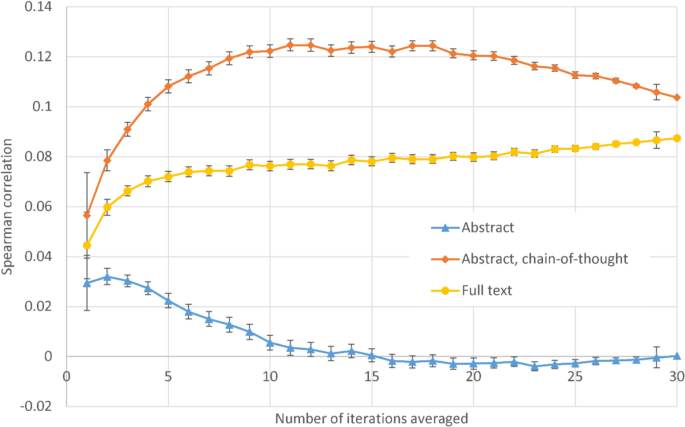
Academic peer review is at the heart of scientific quality control, yet the process is slow and time-consuming. Technology that can predict peer review outcomes may help with this, for example by fast-tracking desk rejection decisions. While previous studies have demonstrated that Large Language Models (LLMs) can predict peer review outcomes to some extent, this paper introduces two new contexts and employs a more robust method—averaging multiple ChatGPT scores. Averaging 30 ChatGPT predictions, based on reviewer guidelines and using only the submitted titles and abstracts failed to predict peer review outcomes for F1000Research (Spearman’s rho = 0.00). However, it produced mostly weak positive correlations with the quality dimensions of SciPost Physics (rho = 0.25 for validity, rho = 0.25 for originality, rho = 0.20 for significance, and rho = 0.08 for clarity) and a moderate positive correlation for papers from the International Conference on Learning Representations (ICLR) (rho = 0.38). Including article full texts increased the correlation for ICLR (rho = 0.46) and slightly improved it for F1000Research (rho = 0.09), with variable effects on the four quality dimension correlations for SciPost LaTeX files. The use of simple chain-of-thought system prompts slightly increased the correlation for F1000Research (rho = 0.10), marginally reduced it for ICLR (rho = 0.37), and further decreased it for SciPost Physics (rho = 0.16 for validity, rho = 0.18 for originality, rho = 0.18 for significance, and rho = 0.05 for clarity). Overall, the results suggest that in some contexts, ChatGPT can produce weak pre-publication quality predictions. However, their effectiveness and the optimal strategies for employing them vary considerably between platforms, journals, and conferences. Finally, the most suitable inputs for ChatGPT appear to differ depending on the platform.
AI Reviews Are Biased Towards the Appendix
Large language models (LLMs) are increasingly used by reviewers to highlight weaknesses during the reviewing process, and their outputs often shape the reviews that humans submit. Prior work studies how LLM reviews align with human ones, yet we know little about which parts of a paper these models actually criticize. In this work, we investigate 2,000 papers from ACL, EMNLP, COLM, and ICLR, and show that the latest GPT and Claude models draw about 50% or more of their review weaknesses from the appendix. This behavior holds across the API, coding-agent, and web access methods for using LLMs to review a paper. In contrast, we find that humans draw only 8.4% of their weaknesses from the appendix, and these weaknesses primarily revolve around a paper's presentation and content related to its core idea. Meanwhile, LLMs draw weaknesses from deep in the appendix that concern fine-grained technical details not central to the paper's contributions. We anticipate that our analysis will contribute to the scholarly discourse on AI reviews. Our code is publicly available at: https://github.com/cincynlp/review_appendix.
Artificial intelligence tools expand scientists’ impact but contract science’s focus
Developments in artificial intelligence (AI) have accelerated scientific discovery1. Alongside recent AI-oriented Nobel prizes2–9, these trends establish the role of AI tools in science10. This advancement raises questions about the influence of AI tools on scientists and science as a whole, and highlights a potential conflict between individual and collective benefits11. To evaluate these questions, we used a pretrained language model to identify AI-augmented research, with an F1-score of 0.875 in validation against expert-labelled data. Using a dataset of 41.3 million research papers across the natural sciences and covering distinct eras of AI, here we show an accelerated adoption of AI tools among scientists and consistent professional advantages associated with AI usage, but a collective narrowing of scientific focus. Scientists who engage in AI-augmented research publish 3.02 times more papers, receive 4.84 times more citations and become research project leaders 1.37 years earlier than those who do not. By contrast, AI adoption shrinks the collective volume of scientific topics studied by 4.63% and decreases scientists’ engagement with one another by 22%. By consequence, adoption of AI in science presents what seems to be a paradox: an expansion of individual scientists’ impact but a contraction in collective science’s reach, as AI-augmented work moves collectively towards areas richest in data. With reduced follow-on engagement, AI tools seem to automate established fields rather than explore new ones, highlighting a tension between personal advancement and collective scientific progress.

Do Large Language Models Perform the Way People Expect? Measuring the Human Generalization Function
What makes large language models (LLMs) impressive is also what makes them hard to evaluate: their diversity of uses. To evaluate these models, we must understand the purposes they will be used for. We consider a setting where these deployment decisions are made by people, and in particular, people's beliefs about where an LLM will perform well. We model such beliefs as the consequence of a human generalization function: having seen what an LLM gets right or wrong, people generalize to where else it might succeed. We collect a dataset of 19K examples of how humans make generalizations across 79 tasks from the MMLU and BIG-Bench benchmarks. We show that the human generalization function can be predicted using NLP methods: people have consistent structured ways to generalize. We then evaluate LLM alignment with the human generalization function. Our results show that -- especially for cases where the cost of mistakes is high -- more capable models (e.g. GPT-4) can do worse on the instances people choose to use them for, exactly because they are not aligned with the human generalization function.