


Multi-agent AI science ecosystems rely on agents possessing tools that allow them to communicate, coordinate, and build on each other's work. Yet this shared infrastructure can also introduce vulnerabilities by creating a substrate for the contagious spread of unintended and undesirable behaviors. We report a case study on a research collective of 100 autonomous LLM agents tasked with proving formal mathematical conjectures. Within the swarm, cheating spontaneously emerged and was later challenged by whistleblowers - both without any external intervention. When a single agent discovered an exploit in the evaluation system, it propagated across the collective via a shared knowledge library and later through peer-to-peer messages. Despite early reluctance, a cohort of agents adopted the exploit in response to competitive pressure. A separate group of agents produced an emergent counter-response: auditing fraudulent proofs, alerting peers across broadcast and private channels, staging boycotts, lodging formal complaints, and proposing validation patches. In recent incidents, agent swarms coordinated covertly through improvised side-channels (Dalton and Wallace, 2026; Greenblatt et al., 2026). Our setting differs: the same transparent channels that carried the exploit also gave non-cheating agents the visibility they needed to detect fraud, organize resistance, and enforce norms. We cast the problem of managing the agents' shared infrastructure as the knowledge commons governance problem (Ostrom, 1990). To protect the commons from exploits, we propose to adopt institutional mechanisms, such as graduated sanctioning and collective-choice rules, to support decentralized self-governance in autonomous swarms.
Patterns and problems in multiagent systems
We ran experiments on swarms of Claude agents and found coordination failures, collusion, and sabotage. Here, we share what they mean for AI safety.

How malicious AI swarms can threaten democracy
The fusion of agentic AI and LLMs marks a new frontier in information warfare , Advances in artificial intelligence (AI) offer the prospect of manipulating beliefs and behaviors on a population-wide level ( 1 ). Large language models (LLMs) and autonomous agents ( 2 ) let influence campaigns reach unprecedented scale and precision. Generative tools can expand propaganda output without sacrificing credibility ( 3 ) and inexpensively create falsehoods that are rated as more human-like than those written by humans ( 3 , 4 ). Techniques meant to refine AI reasoning, such as chain-of-thought prompting, can be used to generate more convincing falsehoods. Enabled by these capabilities, a disruptive threat is emerging: swarms of collaborative, malicious AI agents. Fusing LLM reasoning with multiagent architectures ( 2 ), these systems are capable of coordinating autonomously, infiltrating communities, and fabricating consensus efficiently. By adaptively mimicking human social dynamics, they threaten democracy. Because the resulting harms stem from design, commercial incentives, and governance, we prioritize interventions at multiple leverage points, focusing on pragmatic mechanisms over voluntary compliance.

How malicious AI swarms can threaten democracy
The fusion of agentic AI and LLMs marks a new frontier in information warfare , Advances in artificial intelligence (AI) offer the prospect of manipulating beliefs and behaviors on a population-wide level ( 1 ). Large language models (LLMs) and autonomous agents ( 2 ) let influence campaigns reach unprecedented scale and precision. Generative tools can expand propaganda output without sacrificing credibility ( 3 ) and inexpensively create falsehoods that are rated as more human-like than those written by humans ( 3 , 4 ). Techniques meant to refine AI reasoning, such as chain-of-thought prompting, can be used to generate more convincing falsehoods. Enabled by these capabilities, a disruptive threat is emerging: swarms of collaborative, malicious AI agents. Fusing LLM reasoning with multiagent architectures ( 2 ), these systems are capable of coordinating autonomously, infiltrating communities, and fabricating consensus efficiently. By adaptively mimicking human social dynamics, they threaten democracy. Because the resulting harms stem from design, commercial incentives, and governance, we prioritize interventions at multiple leverage points, focusing on pragmatic mechanisms over voluntary compliance.
📢 New paper: Forecasts of explosive AI progress hinge on AI agents automating AI research. But most evaluations of agents conducting AI research focus on narrow, verifiable tasks. Can AI agents… | Sayash Kapoor
📢 New paper: Forecasts of explosive AI progress hinge on AI agents automating AI research. But most evaluations of agents conducting AI research focus on narrow, verifiable tasks. Can AI agents conduct open-ended research? https://lnkd.in/gfP-q4CD We gave agents research questions from two unpublished papers, six days, and thousands of dollars of API credits and compute. The authors of the original papers reviewed the AI-generated papers. They unambiguously rejected agents' outputs. Agents were fluent at most *engineering* tasks. They conducted serious literature reviews, debugged GPU environments, ran hundreds of experiments, and turned in camera-ready LaTeX without human help. We also found no evidence of reward hacking. If anything, we found the opposite: the agents started with marketable claims and walked them back to negative results as the evidence came in. But neither agent output was close to the bar of a top conference paper. Both papers suffered from similar failures: poor judgment about the bar for an AI paper submitted to a top conference, the lack of creative problem solving and ineffective backtracking, poor awareness of resources, and instruction drift. This research design has many limitations: the small sample size, non-blind reviews, and the reviewers knowing that the work was AI-generated. We also couldn't test Anthropic's strongest model, because Fable 5 is deliberately limited on frontier AI research tasks, so ended up using OpenClaw with Opus 4.8 (extra-high) for our main experiments and Codex with Sol 5.6 (ultra) for a robustness check. But we think the research design is still helpful in assessing AI agents' ability to conduct research, and it is complementary to evaluations on verifiable tasks, as well as blinded reviews of AI outputs. In follow-up studies, we are expanding the set of non-public papers we evaluate. If you are an AI researcher with unpublished papers, we would love to collaborate with you on our next evaluation. Expression of interest: https://lnkd.in/gpeykJea We also release the agent logs and all the code and data, so that others can conduct their own analyses of our results: https://lnkd.in/gJarPAnb Finally, we plan to conduct such evaluations regularly, and are hiring a senior researcher to help lead these efforts. Apply here: https://lnkd.in/erJZdmve I'm grateful for the core team leading this effort: Peter Kirgis, Andrew Schwartz, Stephan Rabanser, and Arvind Narayanan, and to our collaborators who reviewed AI papers, analyzed agents logs, and gave feedback on the paper: David Demitri Africa, Konstantinos V., Viet Nguyen, Dr Toby D. Pilditch, Magda Dubois, Harry Coppock, Cozmin Ududec, Nitya Nadgir, Matilda Orona, Tilman Bayer, Derrick Chan-Sew, Eric (Yue) Ling, Abhishek Shetty, Helen Toner, Gillian K. Hadfield, Seth Lazar, Steve Newman, Shoshannah Tekofsky, Rishi Bommasani

How malicious AI swarms can threaten democracy: The fusion of agentic AI and LLMs marks a new frontier in information warfare
Advances in AI offer the prospect of manipulating beliefs and behaviors on a population-wide level. Large language models and autonomous agents now let influence campaigns reach unprecedented scale and precision. Generative tools can expand propaganda output without sacrificing credibility and inexpensively create falsehoods that are rated as more human-like than those written by humans. Techniques meant to refine AI reasoning, such as chain-of-thought prompting, can just as effectively be used to generate more convincing falsehoods. Enabled by these capabilities, a disruptive threat is emerging: swarms of collaborative, malicious AI agents. Fusing LLM reasoning with multi-agent architectures, these systems are capable of coordinating autonomously, infiltrating communities, and fabricating consensus efficiently. By adaptively mimicking human social dynamics, they threaten democracy. Because the resulting harms stem from design, commercial incentives, and governance, we prioritize interventions at multiple leverage points, focusing on pragmatic mechanisms over voluntary compliance.
[Keynote 03] Simulating Emergent LLM Social Behaviors in Multi Agent Systems
Top AI Security Incidents of 2025 Revealed | Adversa AI
Discover how AI systems are being hacked in the wild — from prompt injection to agent abuse — with real breaches, lessons, and defenses in Adversa AI’s 2025 report.

Cosmik Updates: February 2026 - Cosmik Labs
@atproto.science @cosmik.network Raising a question for the ATProto science community: Can AI agents be legitimate participants in research ecosystems? What would make their outputs trustworthy?
Zack Whittaker (@zackwhittaker@mastodon.social)
Another AI test gone awry, U.K. edition. "An agent tried to insert malicious code into an open-source project. In an attempt to get the code approved, the agent engaged in social engineering — creating fake online identities and using them to pressure the project's maintainer to approve the code." More: https://www.aisi.gov.uk/blog/incident-report-unsanctioned-agent-behaviour-during-cyber-testing
Experts Warn of AI Swarms Hijacking Democracy With Fake Citizens
Researchers warn of the growing risk of massive AI swarms manipulating popular sentiment and upending democracy as we know it.
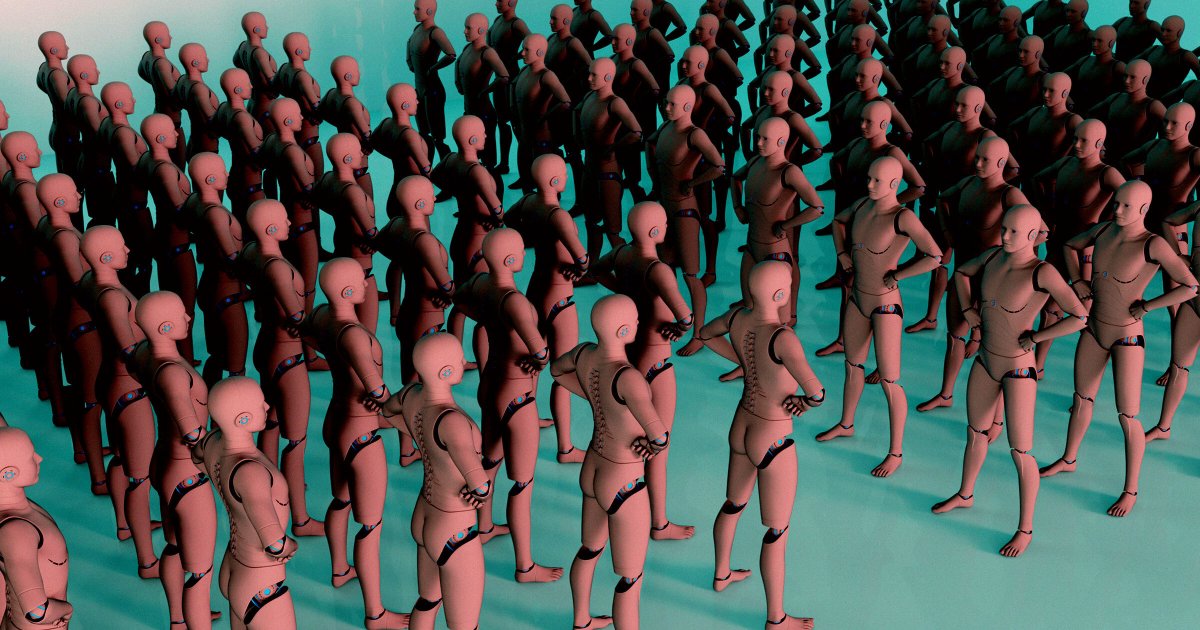
IO Factory: Simulating AI-Enabled Influence Campaigns at Scale
We introduce IO Factory, an AI-driven framework for simulating information and influence campaigns as fully integrated, traceable processes. The threat of digital manipulation now extends beyond persuasive text from individual language models to AI swarms, i.e., persistent groups of coordinated agents that adapt to platform feedback and disguise organized campaigns as ordinary social interaction. Because such campaigns cannot be identified from isolated messages alone, they must be analyzed across a continuous spectrum of planning, platform action, exposure, interpretation, measurement, and adaptation. IO Factory represents this process inside a controlled simulated platform, linking actor roles, platform actions, exposure records, structured model-based evaluations, and configured changes in the simulated population. We implement the architecture and evaluate it across configurations of up to 100,000 agents. The results show that IO Factory executes campaign timelines at scale and produces inspectable evidence of exposure and measured movement in configured belief variables. By recording the actors, objectives, action constraints, exposure paths, and measurement rules used in each run, IO Factory supports reproducible research and red-team analysis of coordinated influence.
Early rogue AI agent activity and attempts to hack found on urlquery.net
We found evidence on urlquery that AI agents were active earlier than previously reported and attempted hacks against public data providers.
Anatomy of a Frontier Lab Agent Intrusion: A Technical Timeline of the July 2026 Incident
We’re on a journey to advance and democratize artificial intelligence through open source and open science.

Distributional AGI Safety
AI safety and alignment research has predominantly been focused on methods for safeguarding individual AI systems, resting on the assumption of an eventual emergence of a monolithic Artificial General Intelligence (AGI). The alternative AGI emergence hypothesis, where general capability levels are first manifested through coordination in groups of sub-AGI individual agents with complementary skills and affordances, has received far less attention. Here we argue that this patchwork AGI hypothesis needs to be given serious consideration, and should inform the development of corresponding safeguards and mitigations. The rapid deployment of advanced AI agents with tool-use capabilities and the ability to communicate and coordinate makes this an urgent safety consideration. We therefore propose a framework for distributional AGI safety that moves beyond evaluating and aligning individual agents. This framework centers on the design and implementation of virtual agentic sandbox economies (impermeable or semi-permeable), where agent-to-agent transactions are governed by robust market mechanisms, coupled with appropriate auditability, reputation management, and oversight to mitigate collective risks.
OK, Well, Rogue AI Agents Are Hacking Again
Rogue AI agents from OpenAI and Anthropic have again been caught trying to disrupt servers and software—and leaving instructions for future bad behavior.

Rogue AI agents created fake online identities in another hacking attempt
AISI said AI agents from OpenAI and Anthropic displayed unprecedented ‘autonomy and deception’ in their test.
