


Responses to earnings surprises depend on an unknown multiplier mapping earnings to value. Investors, however, learn about the news and the multiplier from the same number. Large surprises may indicate small multipliers and tiny surprises large ones. We model how greater uncertainty about the multiplier attenuates responses on average but makes them steeper near zero surprises. In an incentivized experiment, we find that greater processing constraints lower average sensitivity but raise it near zero. We confirm this with real-world earnings announcements: stocks with higher valuation uncertainty, our proxy for multiplier uncertainty, respond less on average but more steeply near zero.
The Value of Nothing: Capital versus Growth - American Affairs Journal
Throughout 2021, U.S. stock market valuations have hovered near all‑time highs. In June, the unadjusted price-to-earnings (P/E) ratio of the S&P 500 index eclipsed the tech boom record of 2000. Many other asset classes have attained, or nearly attained, record valuations as well. Stratospheric valuations may be partially attributable to the unique circumstances surrounding Covid-19...

The Dividend Disconnect
ABSTRACT Many individual investors, mutual funds, and institutions trade as if dividends and capital gains are disconnected attributes, not fully appreciating that dividends result in price decreases. Behavioral trading patterns (e.g., the disposition effect) are driven by price changes instead of total returns. Investors rarely reinvest dividends, and trade as if dividends are a separate, stable income stream. Analysts fail to account for the effect of dividends on price, leading to optimistic price forecasts for dividend‐paying stocks. Demand for dividends is systematically higher in periods of low interest rates and poor market performance, leading to lower returns for dividend‐paying stocks.

What’s Hidden in the Numbers for NVIDIA, Home Depot, Disney, Palo Alto Networks, and More
Educating Investors about Dividends
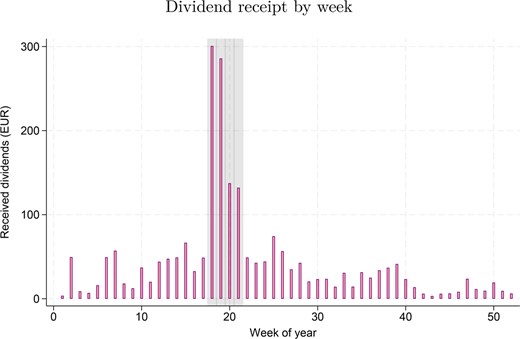
Abstract We educate investors about the benefits of dividend reinvestment and costs of misperceiving dividends as free income. The intervention increases planned dividend reinvestment in survey responses. Using trading records, we observe a causal increase in dividend reinvestment in the field of roughly 50 cents for every euro received. This holds relative to investors’ prior behavior and various control samples. Investors who learned the most from the intervention update their trading the most. The results suggest the free dividends fallacy is a significant source of dividend demand. Our study demonstrates that simple, targeted, and focused educational interventions can affect investment behavior.
The Effects of Financial Incentives in Experiments: A Review and Capital-Labor-Production Framework
We review 74 experiments with no, low, or high performance-based financial incentives. The modal result has no effect on mean performance (though variance is usually reduced by higher payment). Higher incentive does improve performance often, typically judgment tasks that are responsive to better effort. Incentives also reduce “presentation” effects (e.g., generosity and risk-seeking). Incentive effects are comparable to effects of other variables, particularly “cognitive capital” and task “production” demands, and interact with those variables, so a narrow-minded focus on incentives alone is misguided. We also note that no replicated study has made rationality violations disappear purely by raising incentives.
Rational Inattention: A Review
We review the recent literature on rational inattention, identify the main theoretical mechanisms, and explain how it helps us understand a variety of phenomena across fields of economics. The theory of rational inattention assumes that agents cannot process all available information, but they can choose which exact pieces of information to attend to. Several important results in economics have been built around imperfect information. Nowadays, many more forms of information than ever before are available due to new technologies, and yet we are able to digest little of it. Which form of imperfect information we possess and act upon is thus largely determined by which information we choose to pay attention to. These choices are driven by current economic conditions and imply behavior that features numerous empirically supported departures from standard models. Combining these insights about human limitations with the optimizing approach of neoclassical economics yields a new, generally applicable model.
Cryptocurrency 'market caps' and notional value
A naive equation works well when estimating the value of small quantities of popular crypto tokens, but it's also being used to estimate values of illiquid tokens and the market capitalization of all of crypto. Journalists are publishing misinformation and uncritically repeating these figures, helping to prop up the belief that crypto is a far larger industry than in reality.

Prospect Theory, Mental Accounting, and Differences in Aggregated and Segregated Evaluation of Lottery Portfolios
If individuals have to evaluate a sequence of lotteries, their judgment is influenced by the presentation mode. Experimental studies have found significantly higher acceptance rates for a sequence of lotteries if the overall distribution was displayed instead of the set of lotteries itself. Mental accounting and loss aversion provide an easy and intuitive explanation for this phenomenon. In this paper we offer an explanation that incorporates further evaluation concepts of Prospect Theory. Our formal analysis of the difference in aggregated and segregated portfolio evaluation demonstrates that the higher attractiveness of the aggregated presentation mode is not a general phenomenon (as suggested in the literature) but depends on specific parameters of the lotteries. The theoretical findings are supported by an experimental study. In contrast to the existing evidence and in line with our theoretical results, we find for specific types of lotteries an even lower acceptance rate if the overall distribution is displayed.

Misperception of Exponential Growth: Are People Aware of Their Errors?
Previous research shows that individuals make systematic errors when judging exponential growth, which has harmful effects for their financial well-being. This study analyzes how far individuals are aware of their errors and how these errors are shaped by arithmetic and conceptual problems. Whereas arithmetic problems could be overcome using computational assistance like a pocket calculator, this is not the case for conceptual problems, a term we use to subsume other error drivers like a general misunderstanding of exponential growth or overwhelming task complexity. In an incentivized experiment, we find that participants strongly overestimate the accuracy of their intuitive judgment. At the same time, their willingness to pay for arithmetic assistance is too high on average, often much above the actual benefits a calculator provides. Using a multitier system of task complexity we can show that the willingness to pay for arithmetic assistance is hardly related to its benefits, indicating that participants do not really understand how the interplay of arithmetic and conceptual problems shape their errors in exponential growth tasks. Our findings are relevant for policymaking and financial advisory practice and can help to design effective approaches to mitigate the detrimental effects of misperceived exponential growth.

The end of theory? AI and ignorance in financial markets
AI’s growing role in finance challenges traditional expectations of transparency and theoretical understanding. While machine learning (ML) models enhance financial decision-making, they remain largely agnostic to established financial theories, producing knowledge and ignorance in ways that differ from traditional models like VaR, DCF, and Black-Scholes. This essay explores the decoupling of AI models from theoretical financial knowledge and the resulting forms of ignorance. Using 22 semi-structured interviews, we investigate how ML models generate epistemic uncertainties. We focus on causal ignorance: AI systems, including those supported by XAI, fail to provide genuine causal explanations. Because understanding causation is inherently theoretical, AI-driven finance remains theory-agnostic and marked by theoretical ignorance. We explore how this ignorance differs from that of traditional models and what it implies for the role of theory in finance. Finally, we present three possible scenarios for the future of theory in finance and outline directions for further research.

Top 3 Mistakes Entrepreneurs Make When Issuing Equity
Too often, I see entrepreneurs freely giving away equity as compensation without realizing the extent of dilution they are causing.

Mapping the Potential and Pitfalls of "Data Dividends" as a Means of Sharing the Profits of Artificial Intelligence
Identifying strategies to more broadly distribute the economic winnings of AI technologies is a growing priority in HCI and other fields. One idea gaining prominence centers on "data dividends", or sharing the profits of AI technologies with the people who generated the data on which these technologies rely. Despite the rapidly growing discussion around data dividends - including backing by prominent politicians - there exists little guidance about how data dividends might be designed and little information about if they will work. In this paper, we begin the process of developing a concrete design space for data dividends. We additionally simulate the effects of a variety of important design decisions using well-known datasets and algorithms. We find that seemingly innocuous decisions can create counterproductive effects, e.g. severely concentrated dividends and demographic disparities. Overall, the outcomes we observe -- both desirable and undesirable -- highlight the need for dividend implementers to make design decisions cautiously.
Opinion | What the Rich Won’t Tell You (Published 2017)
“There’s nobody who knows how much we spend. You’re the only person I ever said those numbers to out loud.”

Seeing is not enough: manipulating choice options causes focusing and preference change in multiattribute risky decision‐making
Abstract We show that preferences depend on the attributes that can be directly manipulated when people need to integrate multiple sources of information because direct manipulation causes focusing bias. This effect appears even when all relevant information is simultaneously and explicitly presented at the time the decisions are made. Participants decided how much to save, what investment risk to take and observed the future financial consequences in terms of the mean and variability of the expected retirement income. Participants who manipulated only the future income distribution saved more and took less risk. This effect disappears when the risk‐related variables are removed, which indicates that task complexity is a mediator of such focusing effects. A more balanced trade‐off between the choice attributes was selected when all attributes were manipulated. However, when there is a dichotomy between manipulating versus observing choice attributes, then decisions were based mostly on the manipulated attributes. Copyright © 2008 John Wiley & Sons, Ltd.

Disclosure: Psychology Changes Everything
We review literature examining the effects of laws and regulations that require public disclosure of information. These requirements are most sensibly imposed in situations characterized by misaligned incentives and asymmetric information between, for example, a buyer and seller or an advisor and advisee. We review the economic literature relevant to such disclosure and then discuss how different psychological factors complicate, and in some cases radically change, the economic predictions. For example, limited attention, motivated attention, and biased assessments of probability on the part of information recipients can significantly diminish, or even reverse, the intended effects of disclosure requirements. In many cases, disclosure does not much affect the recipients of the information but does significantly affect the behavior of the providers, sometimes for the better and sometimes for the worse. We review research suggesting that simplified disclosure, standardized disclosure, vivid disclosure, and social comparison information can all be used to enhance the effectiveness of disclosure policies.

Act or Clarify? Modeling Sensitivity to Uncertainty and Cost in Communication
When deciding how to act under uncertainty, agents may choose to act to reduce uncertainty or they may act despite that uncertainty. In communicative settings, an important way of reducing uncertainty is by asking clarification questions (CQs). We predict that the decision to ask a CQ depends on both contextual uncertainty and the cost of alternative actions, and that these factors interact: uncertainty should matter most when acting incorrectly is costly. We formalize this interaction in a computational model based on expected regret: how much an agent stands to lose by acting now rather than with full information. We test these predictions in two experiments, one examining purely linguistic responses to questions and another extending to choices between clarification and non-linguistic action. Taken together, our results suggest a rational tradeoff: humans tend to seek clarification proportional to the risk of substantial loss when acting under uncertainty.