ShieldFont is an open-source creative technology project that offers a practical opt-out from unauthorized AI training and disrupts what is collected when that choice is ignored. It swaps 45.8% of content words (around 24.4% of all words) in a page's source code for other (partially) random words, while the font restores the original text on screen. Readers see the work as intended; mass scrapers collect an altered version. In testing, shielding caused over 90% of pages that would otherwise pass the quality filter to be rejected, keeping them out of the training pipeline. Of those that still passed, 19.4% of all words conveyed false meaning, adding noise to unauthorized AI training datasets. This paper's goal is to walk newcomers through the whole process, in plain language and in order: the project's rationale, how it was built, the results, how to deploy it, and where to contribute.
The Consent Layer: Using ligatures to make web text expensive to scrape without asking
Publish for humans, not for crawlers. A web font that swaps the words in your HTML, so readers see your writing and AI training gets a stale copy.
isaqueseneda/shieldfont
A web font that protects written content from AI scraping — humans see the text, scrapers see a plausible decoy.
ShieldFont
Publish for humans, not for crawlers. A web font that swaps the words in your HTML, so readers see your writing and AI training gets a stale copy.
ShieldFont
Publish for humans, not for crawlers. A web font that swaps the words in your HTML, so readers see your writing and AI training gets a stale copy.
The Impact of AI-Generated Text on the Internet
The proliferation of AI-generated and AI-assisted text on the internet is feared to contribute to a degradation in semantic and stylistic diversity, factual accuracy, and other negative...

The Impact of AI-Generated Text on the Internet
The proliferation of AI-generated and AI-assisted text on the internet is feared to contribute to a degradation in semantic and stylistic diversity, factual accuracy, and other negative...
Testing of detection tools for AI-generated text
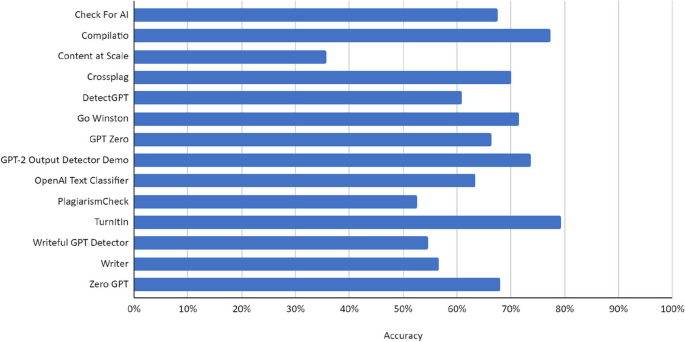
Recent advances in generative pre-trained transformer large language models have emphasised the potential risks of unfair use of artificial intelligence (AI) generated content in an academic environment and intensified efforts in searching for solutions to detect such content. The paper examines the general functionality of detection tools for AI-generated text and evaluates them based on accuracy and error type analysis. Specifically, the study seeks to answer research questions about whether existing detection tools can reliably differentiate between human-written text and ChatGPT-generated text, and whether machine translation and content obfuscation techniques affect the detection of AI-generated text. The research covers 12 publicly available tools and two commercial systems (Turnitin and PlagiarismCheck) that are widely used in the academic setting. The researchers conclude that the available detection tools are neither accurate nor reliable and have a main bias towards classifying the output as human-written rather than detecting AI-generated text. Furthermore, content obfuscation techniques significantly worsen the performance of tools. The study makes several significant contributions. First, it summarises up-to-date similar scientific and non-scientific efforts in the field. Second, it presents the result of one of the most comprehensive tests conducted so far, based on a rigorous research methodology, an original document set, and a broad coverage of tools. Third, it discusses the implications and drawbacks of using detection tools for AI-generated text in academic settings.
Testing of detection tools for AI-generated text
Recent advances in generative pre-trained transformer large language models have emphasised the potential risks of unfair use of artificial intelligence (AI) generated content in an academic environment and intensified efforts in searching for solutions to detect such content. The paper examines the general functionality of detection tools for AI-generated text and evaluates them based on accuracy and error type analysis. Specifically, the study seeks to answer research questions about whether existing detection tools can reliably differentiate between human-written text and ChatGPT-generated text, and whether machine translation and content obfuscation techniques affect the detection of AI-generated text. The research covers 12 publicly available tools and two commercial systems (Turnitin and PlagiarismCheck) that are widely used in the academic setting. The researchers conclude that the available detection tools are neither accurate nor reliable and have a main bias towards classifying the output as human-written rather than detecting AI-generated text. Furthermore, content obfuscation techniques significantly worsen the performance of tools. The study makes several significant contributions. First, it summarises up-to-date similar scientific and non-scientific efforts in the field. Second, it presents the result of one of the most comprehensive tests conducted so far, based on a rigorous research methodology, an original document set, and a broad coverage of tools. Third, it discusses the implications and drawbacks of using detection tools for AI-generated text in academic settings.
Artificial Writing and Automated Detection
Artificial intelligence (AI) tools are increasingly used for written deliverables. This has created demand for distinguishing human-generated text from AI-generated text at scale, e.g., ensuring assignments were completed by students, product reviews written by actual customers, etc. A decision-maker aiming to implement a detector in practice must consider two key statistics: the False Negative Rate (FNR), which corresponds to the proportion of AI-generated text that is falsely classified as human, and the False Positive Rate (FPR), which corresponds to the proportion of human-written text that is falsely classified as AI-generated. We evaluate three leading commercial detectors—Pangram, OriginalityAI, GPTZero—and an open-source one —RoBERTa—on their performance in minimizing these statistics using a large corpus spanning genres, lengths, and models. Commercial detectors outperform open-source, with Pangram achieving near-zero FNR and FPR rates that remain robust across models, threshold rules, ultra-short passages, "stubs" (≤ 50 words) and ’humanizer’ tools. A decision-maker may weight one type of error (Type I vs. Type II) as more important than the other. To account for such a preference, we introduce a framework where the decision-maker sets a policy cap—a detector-independent metric reflecting tolerance for false positives or negatives. We show that Pangram is the only tool to satisfy a strict cap (FPR ≤ 0.005) without sacrificing accuracy. This framework is especially relevant given the uncertainty surrounding how AI may be used at different stages of writing, where certain uses may be encouraged (e.g., grammar correction) but may be difficult to separate from other uses.

‘Contextualization Engines’ can fight misinformation without censorship
Search engines are nice. But we can do far better with modern AI.

Is Misinformation More Open? A Study of robots.txt Gatekeeping on the Web
Web scraping, the automated process of extracting information from websites, has long played a foundational role in the Internet ecosystem (Gray, 1995). It supports services such as search engine indexing, price comparison tools, and competitive intelligence. More recently, it has become a core component in the development of large-scale generative AI models. These Large Language Models (LLMs) require enormous volumes of training data, often in the terabyte range (Kaplan et al., 2020; Lehane, 2025), and the public web remains a low-cost, attractive source. Major model developers, including those behind OpenAI’s Chat-GPT (OpenAI, 2025), Google’s Bard (now known as Gemini) & Vertex AI (Romain, Danielle, 2023), and Anthropic’s Claude (Romain, Danielle, 2025), openly acknowledge the use of web scraping to construct their training corpora (Abdin et al., 2024; Brown et al., 2020; Chowdhery et al., 2023; Grattafiori et al., 2024; Team et al., 2024; Touvron et al., 2023).
AI-text detection tools are really easy to fool
A recent crop of AI systems claiming to detect AI-generated text perform poorly—and it doesn’t take much to get past them.

Control content use for AI training with Cloudflare’s managed robots.txt and blocking for monetized content
Cloudflare is making it easier for publishers and content creators of all sizes to prevent their content from being scraped for AI training by managing robots.txt on their behalf, and allowing targeted blocking of AI crawling on sites that serve ads.