

Journal of Object Technology
Bidirectional model transformations in QVT: semantic issues and open questions
We consider the OMG’s queries, views and transformations standard as applied to the specification of bidirectional transformations between models. We discuss what is meant by bidirectional transformations, and the model-driven development scenarios in which they are needed. We analyse the fundamental requirements on tools which support such transformations, and discuss some semantic issues which arise. In particular, we show that any transformation language sufficient to the needs of model-driven development would have to be able to express non-bijective transformations. We argue that a considerable amount of basic research is needed before suitable tools will be fully realisable, and suggest directions for this future research.

Bidirectional Transformations: A Cross-Discipline Perspective
The GRACE International Meeting on Bidirectional Transformations was held in December 2008 near Tokyo, Japan. The meeting brought together researchers and practitioners from a variety of sub-disciplines of computer science to share research efforts and help create a new community. In this report, we survey the state of the art and summarize the technical presentations delivered at the meeting. We also describe some insights gathered from our discussions and introduce a new effort to establish a benchmark for bidirectional transformations.

Delta Lenses over Inductive Types
Existing bidirectional languages are either state-based or operation-based, depending on whether they represent updates as mere states or as sequences of edit operations.In-between both worlds are delta-based frameworks, where updates are represented using alignment relationships between states.In this paper, we formalize delta lenses over inductive types using dependent type theory and develop a point-free delta lens language with an explicit separation of shape and data.In contrast with the already known issue of data alignment, we identify the new problem of shape alignment and solve it by lifting standard recursion patterns such as folds and unfolds to delta lenses that use alignment to infer meaningful shape updates.
Bidirectionalization for free! (Pearl) | Proceedings of the 36th annual ACM SIGPLAN-SIGACT symposium on Principles of programming languages
A bidirectional transformation consists of a function get that takes a source (document or value) to a view and a function put that takes an updated view and the original source back to an updated source, governed by certain consistency conditions ...

protolab
A patchbay for your schemas. Bidirectional data transformations, drawn as circuits.
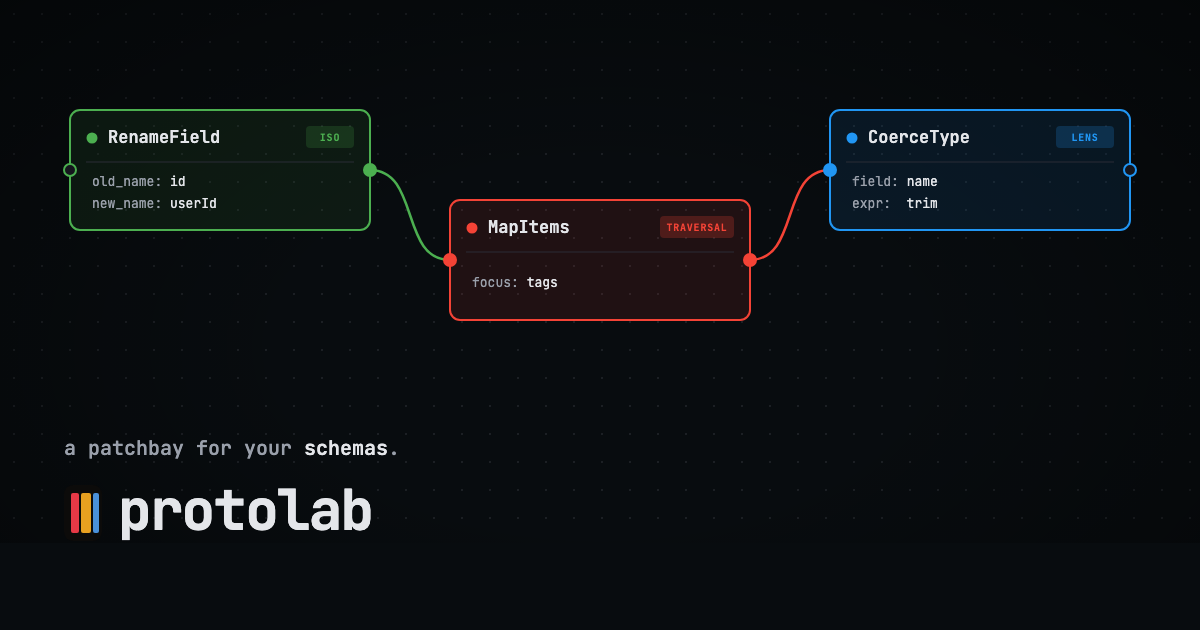
protolab
A patchbay for your schemas. Bidirectional data transformations, drawn as circuits.
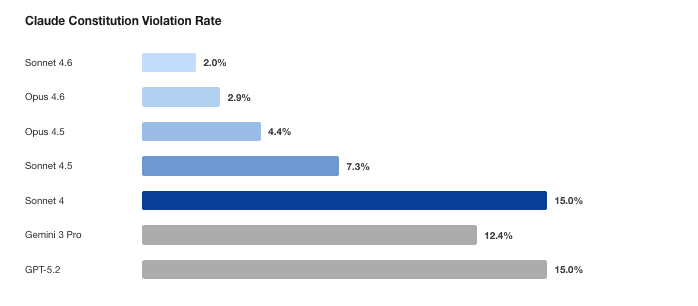
How well do models follow their constitutions? — LessWrong
This work was conducted during the MATS 9.0 program under Neel Nanda and Senthooran Rajamanoharan. …

Object-capability model
The object-capability model is a computer security model. A capability describes a transferable right to perform one (or more) operations on a given object. It can be obtained by the following combination:
Scaling Laws Across Model Architectures: A Comparative Analysis of...
The scaling of large language models (LLMs) is a critical research area for the efficiency and effectiveness of model training and deployment. Our work investigates the transferability and...

Why Can't Transformers Learn Multiplication?...
Language models are increasingly capable, yet still fail at a seemingly simple task of multi-digit multiplication. In this work, we study why, by reverse-engineering a model that successfully...
Why Can't Transformers Learn Multiplication?...
Language models are increasingly capable, yet still fail at a seemingly simple task of multi-digit multiplication. In this work, we study why, by reverse-engineering a model that successfully...
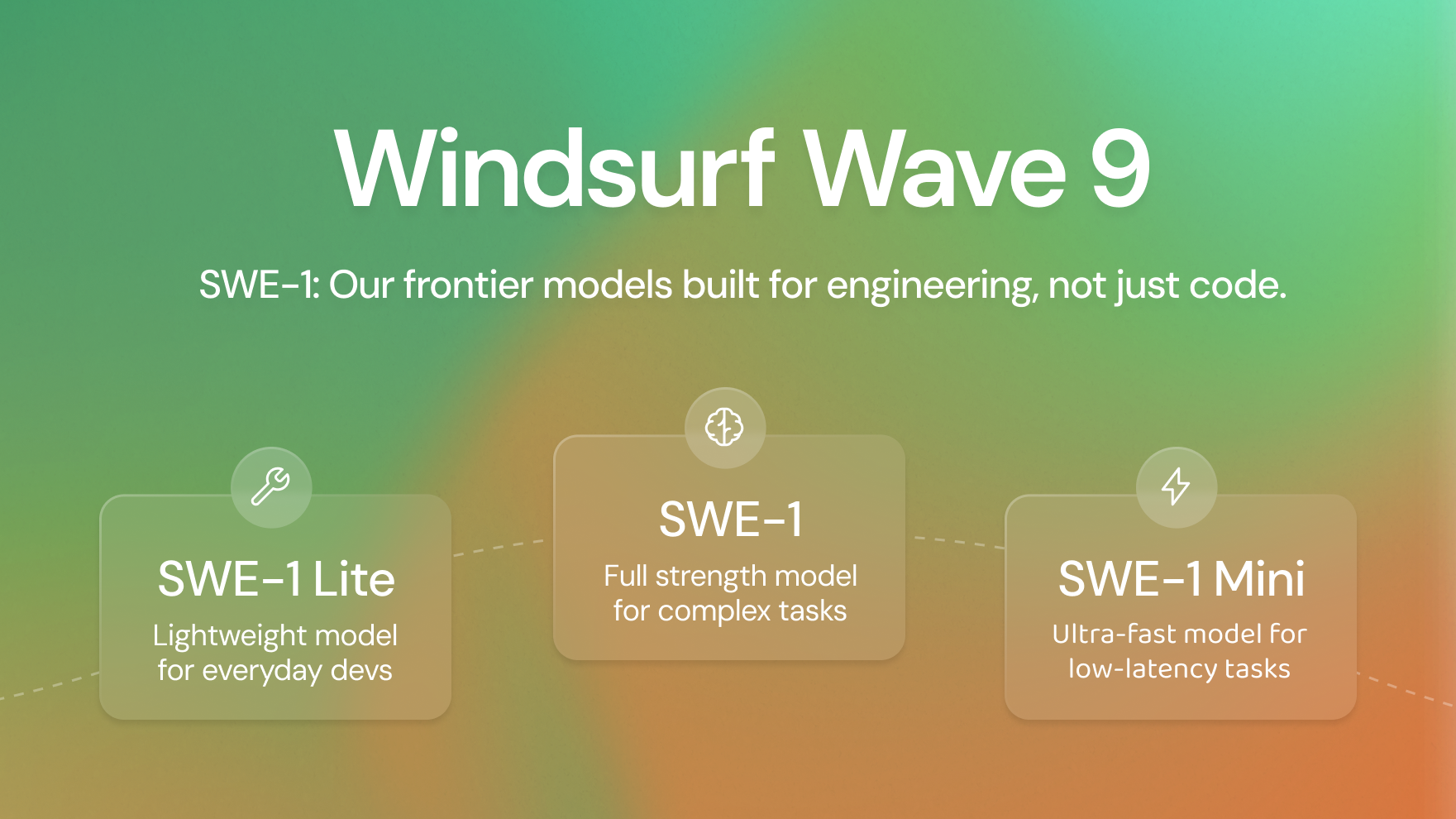
Astra for Coding: Why Are We Doing This Again?
Some thoughts on Astra and newfangled long-horizon models.

Combinators for bidirectional tree transformations: A linguistic approach to the view-update problem: ACM Transactions on Programming Languages and Systems: Vol 29, No 3
We propose a novel approach to the view-update problem for tree-structured data: a domain-specific programming language in which all expressions denote bidirectional transformations on trees. In one direction, these transformations---dubbed lenses---map ...
