

The transformation of academia into a more open and inclusive ecosystem depends not only on new policies or technologies but also on a fundamental shift in how we nurture early-career researchers through mentorship. This values resilience and integrity as much as productivity. Introduction In the vast, often complex, competitive, and
Improving scientific mentorship with "Open Labs" — science better
Open Labs would be a place for experienced scientists to post their open questions and curiosities — a list of the ideas they don't have time to pursue personally but wish someone would.
Center for Open Science
At the Center for Open Science, our mission is to increase openness, integrity, and reproducibility of scholarly research. Promoting these practices within the research funding and publishing communities accelerates scientific progress

Now Hiring: Senior Open Source Maintainer
A rare opportunity to make a real impact in a fast-paced, high-visibility role.
How contemporary academic structures constrain scientific creativity and hold back early-career researchers
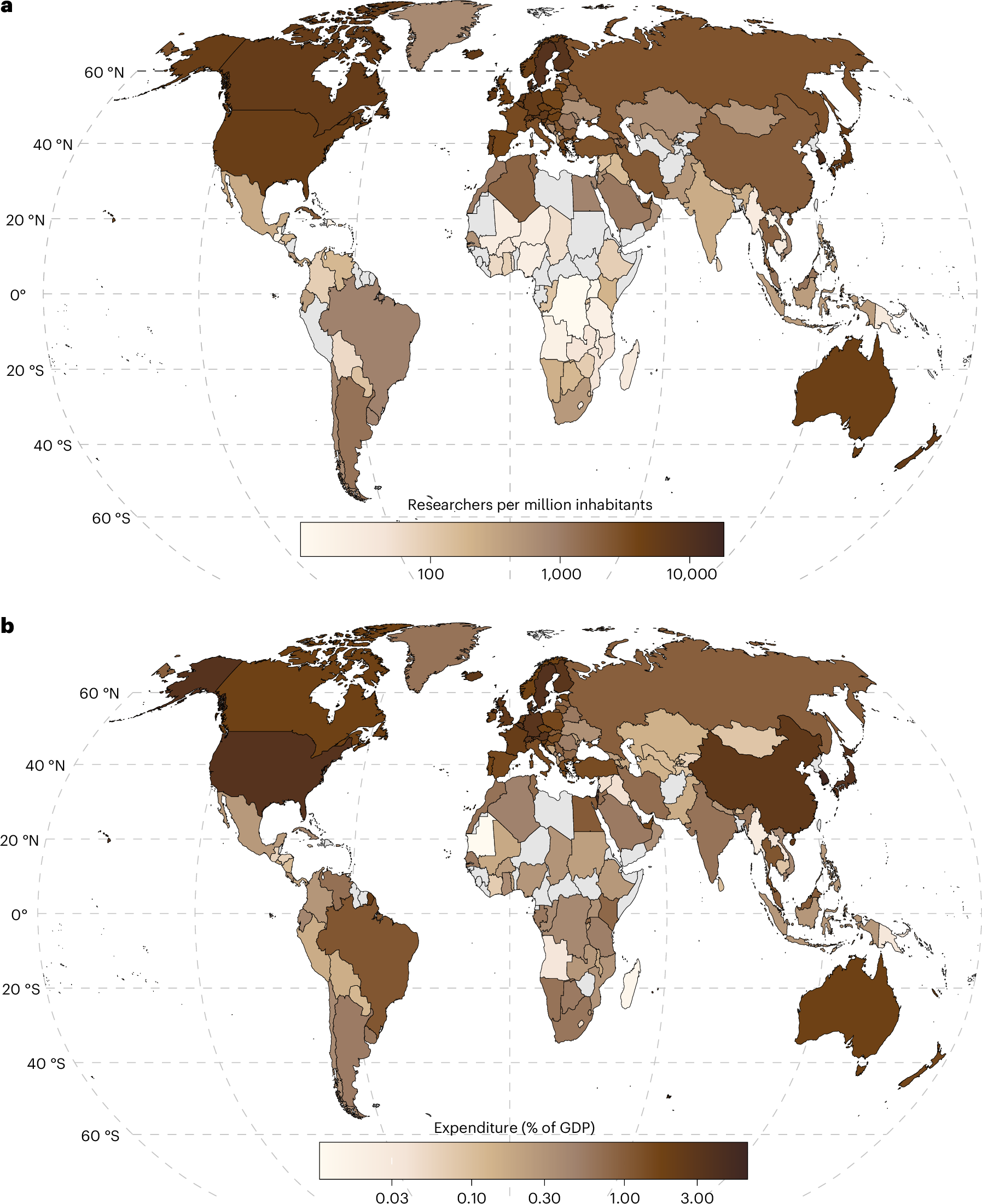
We argue that contemporary scientific systems progressively constrain high-risk and conceptually innovative research while being increasingly structured around short funding cycles, productivity-based evaluation criteria and risk-averse frameworks that favour predictable and non-transformative research outputs. Drawing on recent empirical literature, we show how such systems can place disproportionate pressure on early-career researchers by incentivizing safe, tractable and easily evaluated outputs. Structural academic mechanisms such as peer review and funding, escalating publication costs and institutional inequalities interact with precarious employment and hierarchical dependencies. In this environment, we contend that strategic conformity becomes a rational career path. This risks suppressing creativity and critical thinking precisely at the stage when scientific independence could otherwise emerge. Consequently, the probability of substantive contributions by early-career researchers is declining, while talent may increasingly abandon academia or cluster within a limited number of well-resourced institutions and national systems. By adopting a systems-level perspective, we argue that scientific creativity is not merely an individual trait but an emerging property of a supportive academic landscape and that maintaining or restoring it may require substantial structural reforms. These include promoting stable research pathways, decentralized decision-making and evaluation frameworks that better recognize collaboration, originality, persistence and nonlinear career trajectories. Without systemic change, we risk stifling the potential of early-career researchers to go beyond the confines of existing methods and approaches and deliver transformative advances. This would limit their capacity to meaningfully change our understanding of the world or benefit society, with impacts that fall short of their potential.
Software Stewardship Lab
A non-profit research lab dedicated to ensuring the stability of the Open Source ecosystem we all rely on.
Beyond Articles: Rethinking Diamond Open Access for a Data-Driven Research Future | CODATA Blog
What would it take for Diamond OA to evolve into a holistic, equitable, and data-rich scholarly ecosystem — one that meaningfully includes early-career researchers?
Cataloguing and theorising open research practices in the arts, humanities and social sciences: Problematising and diversifying ‘Open Science’
Background Discourses of ‘Open Science’ have been criticised for privileging the quantitative and positivist methodologies of science, technology, engineering and mathematics (STEM) research at the expense of qualitative, interpretive, critical-theoretical, practice-based, and other forms of research more common in the arts, humanities and social sciences (AHSS). Methods In this article, which emerged from a work component of the MORPHSS (Materialising Open Research Practices in the Humanities and Social Sciences) project, we document the process, outcomes and practical implications of work to develop a catalogue of open research practices in these disciplines, which proceeded via a wide-ranging literature review followed by targeted desk research and a conceptual mapping exercise. Results Key findings include the fact that open research practices in AHSS are diverse, extending beyond the suite of practices emphasised within dominant accounts of Open Science. We identify among these practices a range of forms of openness including those focused on mobilising the involvement and expert knowledge of diverse participants and communities. Conclusions Presenting a typology of forms of openness in AHSS that is consistent with the epistemic logics of these disciplines, we conclude that openness in AHSS is highly situated and context-dependent, as well as resisting quantification and binary measurement. Drawing on these conclusions, we offer a series of recommendations for institutions, open research monitoring initiatives, funders, publishers, learned societies and researchers to enhance the inclusivity of their policy and practice around openness.

Introduction to Open Science
This course introduces the principles and practices of open science, with an emphasis on reproducible research workflows, transparent reporting, and collaborative scholarship. Students will critically examine reproducibility, explore tools that support openness (such as Git, GitHub, and Quarto), and apply these tools in hands-on assignments and a final open project. Students will also explore how open science practices vary across disciplines, including education, humanities, social sciences, industry and government, and STEM contexts. This course emphasizes applying open science principles to real-world data problems in alignment with the principles of producing reproducible research.
The Missing Middle of Open Source
Why serious, maintainer-driven projects struggle to sustain themselves—and what it will take to fix it.
The Politics of Open Infrastructures: Power, Governance, and Justice in Digital Knowledge Practices
This volume examines how openness is designed, governed, contested and lived in contemporary digital knowledge infrastructures. From open source software and internet standards, to citizen science platforms, public sector data systems and alternative computing practices, the book shows that infrastructures are never neutral technical backbones.

Reclaiming scientific publishing: Our duty to make science freely accessible to all
When we (Camille Thomas and Romain Vaucher speaking) entered academia as graduate students in France and Switzerland, we were enthusiastic about the vast amount of research available with a simple click on our university computers. However, we also quickly felt disheartened by the significant amount of research work we couldn’t access when wrapping up our theses from home. Luckily, pirates existed. Empowered by Aaron Swartz’s Guerilla Open Access Manifesto, Alexandra Elbakyan created Sci-Hub in 2011, the greatest leak of scientific knowledge of the century. We felt right in the middle of an Open Access (OA) revolution that would finally make all scientific articles, old and new, accessible to everyone. Fifteen years later, our hopes as idealistic early-career researchers have been crushed by the oligopolistic model of scientific publishing and the subtle pressures of the “publish or perish” culture that reigns over our career development. In the meantime, publishers like Frontiers, MDPI and Springer Nature, to name a few, have exponentially expanded their number of titles. They have become increasingly exploitative of scholarly manpower, moving far away from the genuine accessibility they allegedly promised under the guise of this OA transformation. Open Access is to be praised, but the way it has been implemented through the mainstream Gold and Green OA models now primarily serves the status quo of large for-profit publishers. These entities hijack public money and voluntary editorial labour for their own profit and that of their shareholders (Butler et al., 2023; Shu and Larivière, 2024). In a nutshell, to offer reader accessibility, the Gold OA model requires authors to pay an Article Processing Charge (APC; around 2,000 $/€, rarely less, and often much more) covered by individual research funds, funding agencies or university library deals. The Green OA model allows authors to upload their accepted, non-formatted manuscripts to repositories after an embargo period. While both models allow compliance with funding agency mandates, true equity and accessibility are ultimately left behind. In an article we recently published (Vaucher and Thomas, 2026), we describe the mechanisms through which we, as researchers, inadvertently contribute to keeping research exclusive while driving the publishing model down an unsustainable path. Just like our broader economy, our publishing model and the ways science is evaluated fuelled a predatory system that demands more papers, funding and prestige at an ever-faster rate (Walter and Mullins, 2019), likely at the expense of quality, diversity and ethics (Frank et al., 2023; Heen and Vogt, 2024). These concerns aren’t entirely new. What is new, however, is the growing realisation among societies, universities and funding bodies that we must move away from this system. Initiatives like the European Diamond Capacity Hub, ALMASI and craft-OA are actively paving a way forward that we, as scientists, have yet to fully embrace. In the geosciences, a collective and concerted effort is currently being made by researchers to provide fairer, more sustainable alternatives through community-driven Diamond OA journals (which feature no APCs and completely free access to published articles). Volcanica (Farquharson and Wadsworth, 2018), Sedimentologika (Thomas et al., 2023), Tektonika (Fernández-Blanco et al., 2023), Seismica (Rowe et al., 2022), Geomorphica (Lefebvre et al., 2025), Open Paleontology (Drage et al., 2024), Advances in Geochemistry and Cosmochemistry (Pourret et al., 2025), Geodynamica, jSEDI and Planetary Research are all recently created, scholarly-run journals funded by university library investments to promote better ways of publishing. Their articles are peer-reviewed, free for readers to access, and free for authors to publish. They rely entirely on the voluntary involvement of scientists running open-source editorial platforms (such as Open Journal Systems), transparent workflows, copyediting, production and final dissemination. Diamond OA journals offer an alternative path for all of us to transform our broken publishing system and reclaim ownership of our own science. These efforts go hand in hand with greater involvement in our academic societies and non-profit publishing initiatives. Ultimately, real transformation can only happen if all of us as researchers realise how inherently unfair and exclusive the current system is to labs and institutions that cannot afford steep Gold OA APCs or paywalled journal subscriptions. It also means we must collectively stop evaluating science based on journal prestige and the flawed metrics they own (Posada and Chen, 2018; Sabel and Larhammar, 2025; Simons, 2008). Only by breaking these habits can we truly make knowledge accessible to all. References Butler, L.-A., Matthias, L., Simard, M.-A., Mongeon, P., and Haustein, S.: The oligopoly’s shift to open access: How the big five academic publishers profit from article processing charges, Quantitative Science Studies, 4, 778–799, https://doi.org/10.1162/qss_a_00272, 2023. Drage, H. B., Keating, J. N., Nielsen, M. L., Saleh, F., and Hearing, T. W. W.: Open Palaeontology: a new model of diamond open access journal for palaeontology, Open Palaeontology, 1, 1–6, https://doi.org/10.26034/la.opal.2024.6223, 2024. Farquharson, J. I. and Wadsworth, F. B.: Introducing Volcanica: The first diamond open-access journal for volcanology, Volcanica, 1, I–IX, https://doi.org/10.30909/vol.01.01.i-ix, 2018. Fernández-Blanco, D., Lacassin, R., Gouiza, M., Perez-Diaz, L., Magee, C., McCarthy, D., Doré, T., Péron-Pinvidic, G., Kavanagh, J., Bond, C., and Schmitt, R.: Tektonika: The Community-Led Diamond Open-Access Journal for Tectonics and Structural Geology, τeκτoniκa, 1, I–XIII, https://doi.org/10.55575/tektonika2023.1.1.56, 2023. Frank, J., Foster, R., and Pagliari, C.: Open access publishing – noble intention, flawed reality, Social Science & Medicine, 317, 115592, https://doi.org/10.1016/j.socscimed.2022.115592, 2023. Heen, E. and Vogt, H.: Scientific rot: Unsustainable publishing practices threatens trust in medicine, Journal of Evaluation in Clinical Practice, 30, 941–944, https://doi.org/10.1111/jep.13989, 2024. Lefebvre, A., Bosch, R., Burrows, K., Giaime, M., Goodwin, G., Lai, L. S.-H., Stammler, M., and Fernández, R.: Geomorphica: The most accessible journal for the geomorphology community, Geomorphica, 1, https://doi.org/10.59236/geomorphica.v1i1.54, 2025. Posada, A. and Chen, G.: Inequality in Knowledge Production: The Integration of Academic Infrastructure by Big Publishers, in: ELPUB 2018, https://doi.org/10.4000/proceedings.elpub.2018.30, 2018. Pourret, O., Millet, M.-A., Marin-Carbonne, J., Mallik, A., Tierney, J. E., Darling, J. R., Kiseeva, E. S., Torres, M. A., Fonseca, R. O. C., Tartèse, R., Namur, O., Klöcking, M., Matthews, S. W., Dahrén, B., Ickert, R. B., and Board, the inaugural A. in G. and C. editorial: Equitable Access, Open Science, and the Future of Publishing in Geochemistry and Cosmochemistry, Advances in Geochemistry and Cosmochemistry, 1, https://doi.org/10.33063/agc.v1i1.770, 2025. Rowe, C., Agius, M., Convers, J., Funning, G., Galasso, C., Hicks, S., Huynh, T., Lange, J., Lecocq, T., Mark, H., Okuwaki, R., Ragon, T., Rychert, C., Teplitzky, S., and Van den Ende, M.: The launch of Seismica: a seismic shift in publishing, Seismica, 1, https://doi.org/10.26443/seismica.v1i1.255, 2022. Sabel, B. and Larhammar, D.: Reformation of science publishing: the Stockholm Declaration, R Soc Open Sci., 12, 251805, https://doi.org/10.1098/rsos.251805, 2025. Shu, F. and Larivière, V.: The oligopoly of open access publishing, Scientometrics, 129, 519–536, https://doi.org/10.1007/s11192-023-04876-2, 2024. Simons, K.: The Misused Impact Factor, Science, 322, 165–165, https://doi.org/10.1126/science.1165316, 2008. Thomas, C., Privat, A., Vaucher, R., Spychala, Y., Zuchuat, V., Marchegiano, M., Poyatos-Moré, M., Kane, I., and Chiarella, D.: Sedimentologika: a community-driven diamond open access journal in sedimentology, Sedimentologika, 2023. Vaucher, R. and Thomas, C.: Diamond is the new Green—Why Green Open Access is not a sustainable long-term model for scientific publishing, Sedimentologika, 4, https://doi.org/10.57035/journals/sdk.2026.e41.2397, 2026. Walter, P. and Mullins, D.: From symbiont to parasite: the evolution of for-profit science publishing, Molecular Biology of the Cell, https://doi.org/https://doi.org/10.1091/mbc.E19-03-0147, 2019.
We just launched the Open Source Endowment, the first endowment dedicated to supporting Open Source maintainers, with $693,000 raised already. The world depends on Open Source, but making our ecosystem sustainable is a complex task. I hope that, with community consultation, the Endowment can help 🙏

A VC and some big-name programmers are trying to solve open source's funding problem, permanently | TechCrunch
techcrunch.com
