Research is rarely limited to a single contributor performing a single role. Behind every research output are people contributing in various ways: software development, data analyses, methodology design, and much more. Often, the same person contributes in several of these ways. Until now, Crossref metadata could only capture part of that picture, but this is changing with Schema 5.5.
You are Crossref - Crossref
Crossref runs open infrastructure to link research objects, entities, and actions—creating a lasting and reusable scholarly record that underpins open science. Together with our >25,000 members in 167 countries, we drive metadata exchange and support 2.1 billion monthly API queries, facilitating global research communication, for the benefit of society.

Manuscript submission systems and metadata completeness in Crossref: Patterns and associations
The importance of open research information, particularly publication metadata, is widely recognised. Crossref is one of the most important infrastructures for registering open metadata as part of DOI record registration. It is widely known, however, that the metadata of many publications is far from complete, with many publishers making certain metadata openly available, but failing to do so for other metadata elements. Publishers’ ability to register this metadata with Crossref depends on their capacity to capture and retain this data in their production workflows. Manuscript submission systems are an important, yet largely overlooked, factor in the extent to which publishers make metadata available through Crossref. In this paper, we present the results of an analysis investigating the relation between the level of metadata that publishers deposit with Crossref and the submission systems that they deploy for their journals. We have looked at the 153 publishers with the largest amounts of publications in Crossref and concentrate on the four most commonly used systems: Editorial Manager, ScholarOne, Open Journal Systems (OJS) and eJournalPress. We show that some submission systems appear better suited to capturing certain metadata elements. However, there are always cases where publishers using the same system differ widely in the level of metadata they register, suggesting that technology is not the only prohibiting factor and other considerations are at play.
Crossref: The sustainable source of community-owned scholarly metadata
This paper describes the scholarly metadata collected and made available by Crossref, as well as its importance in the scholarly research ecosystem. Containing over 106 million records and expanding at an average rate of 11% a year, Crossref’s metadata has become one of the major sources of scholarly data for publishers, authors, librarians, funders, and researchers. The metadata set consists of 13 content types, including not only traditional types, such as journals and conference papers, but also data sets, reports, preprints, peer reviews, and grants. The metadata is not limited to basic publication metadata, but can also include abstracts and links to full text, funding and license information, citation links, and the information about corrections, updates, retractions, etc. This scale and breadth make Crossref a valuable source for research in scientometrics, including measuring the growth and impact of science and understanding new trends in scholarly communications. The metadata is available through a number of APIs, including REST API and OAI-PMH. In this paper, we describe the kind of metadata that Crossref provides and how it is collected and curated. We also look at Crossref’s role in the research ecosystem and trends in metadata curation over the years, including the evolution of its citation data provision. We summarize the research used in Crossref’s metadata and describe plans that will improve metadata quality and retrieval in the future.
Two billion citation links in Crossref help research travel further - Crossref
We’ve recently reached an important milestone for the research nexus: the works in our metadata corpus are now connected with over 2 billion citation links! This is a great opportunity to share a dedicated dataset and discuss why these are important for science.

How Grobid uses Crossref metadata to enrich bibliographic information - Crossref
Crossref members register around 37,000 records daily. All this metadata is openly shared with the global scholarly community through our free APIs. We receive over two billion calls to our API each month, signalling its use by hundreds of tools and services worldwide, supporting the discovery and assessment of scholarly metadata. As part of a new series in our blog, we will spotlight the diversity of tools and integrations that rely on Crossref metadata to serve the scholarly community. In this initial post, we chat to Luca Foppiano, the developer and maintainer of Grobid1, to learn about how Grobid uses Crossref metadata to improve the extraction and enrichment of bibliographic information from scholarly PDFs.
Scholarly blogs and their place in the research nexus - Crossref
If you are reading this blog on our website, you may have noticed that alongside each post we now list a Crossref DOI link, which was not the case a few months ago (though we have retroactively added DOIs to all older posts too). You can find the persistent link for this post right above this paragraph. Go on, click on it, we’ll wait.
How Grobid uses Crossref metadata to enrich bibliographic information - Crossref | Luca F.
Early this year Crossref and I talked about how Grobid users rely on their API, and the numbers are big: in Q1 2026 alone, GROBID clients sent more than 100 million requests to consolidate extracted bibliographic data. Crossref offers three tiers: public (anonymous, low throughput), polite (identified by email, higher throughput) and Metadata Plus (paid, for large-scale use). GROBID’s integration dated back to 2014, and it turned out it needed an update. Since 0.9.0, GROBID lets you join the polite pool or use your Metadata Plus key. Consolidation is more reliable, and it’s fairer to a shared, open service. Luis M. Montilla and I had a conversation about how Grobid uses the Crossref metadata to enrich references extracted from PDFs, that eventually become a blog post: 🔗 https://lnkd.in/egxWRAV6 And there’s a next step: for really large volumes, a local service may be more suitable than the API. On 22 October at 15:15 UTC, I’ll present biblio-glutton in the Community Highlights session of the Crossref Annual Meeting. Biblio-glutton is a local metadata search service for scholary publications using the Crossref public dump and data from other services: Pubmed, HAL, OpenAlex, etc... I built with Patrice Lopez in 2016. It provides provide lookup, structured, and unstructured metadata search. The owners of the Crossref Metadata Plus subscription can keep it in sync with regular background jobs so the data is kept up-to-date. 🔗 Annual Meeting (online, free; register for Session 2): https://lnkd.in/ew699KCw 🔗 biblio-glutton: https://lnkd.in/eR6KvmJM

The Research Nexus vision for a more connected scholarly community
Crossref envisions “a rich and reusable open network of relationships connecting research organizations, people, things, and actions; a scholarly record that the global community can build on forever, for the benefit of society”. This Research Nexus expands on the importance of research objects being persistently and uniquely identified. The scholarly community has an established practice of connecting things such as citations to others’ work and it is increasingly critical to identify relationships beyond citations, bringing together published work, unpublished work, institutions, individuals, and identifying the actions that they take e.g., funding, publishing, creating, modifying, citing, and sharing. The Research Nexus brings together metadata and relationships to build a joined-up picture of the scholarly ecosystem and helps everyone identify these relationships and how they change through time. This vision is possible if all parts of the scholarly ecosystem (and beyond) work together, including various scholarly infrastructure organizations.

Crossmark - Crossref
The Crossmark button gives readers quick and easy access to the current status of an item of content, including any corrections, retractions, or updates to that record. Crossmark provides a cross-platform way for readers to quickly discover the status of a research output along with additional metadata related to the editorial process. Crucially, the Crossmark button can also be embedded in PDFs, which means that members have a way of alerting readers to changes months or even years after it’s been downloaded.
Crossmark - Crossref
The Crossmark button gives readers quick and easy access to the current status of an item of content, including any corrections, retractions, or updates to that record. Crossmark provides a cross-platform way for readers to quickly discover the status of a research output along with additional metadata related to the editorial process. Crucially, the Crossmark button can also be embedded in PDFs, which means that members have a way of alerting readers to changes months or even years after it’s been downloaded.
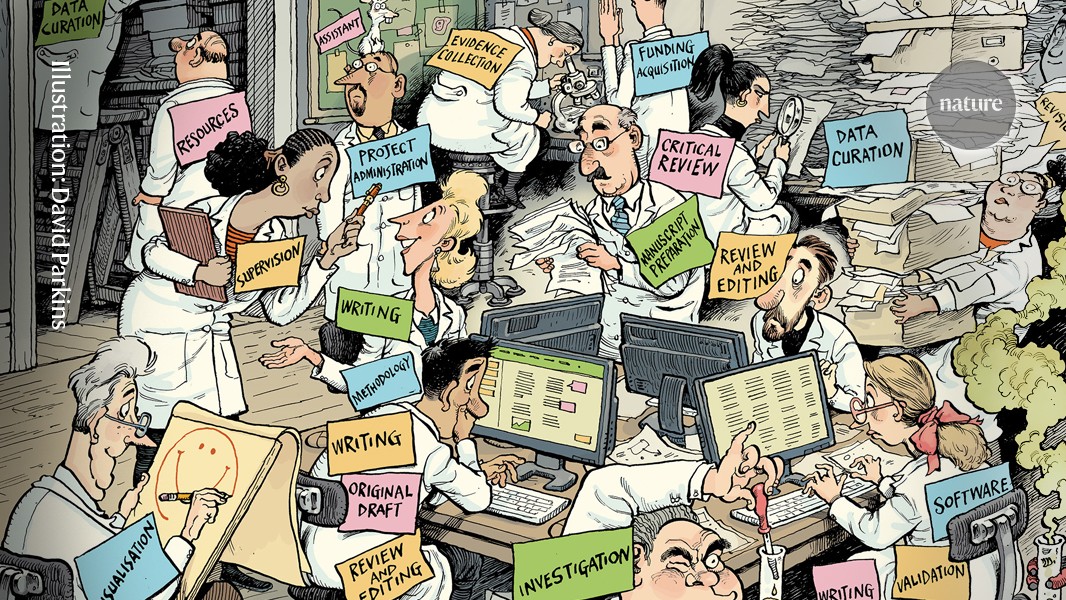
A ten-year drive to credit authors for their work — and why there’s still more to do
Nature - Information about the roles of each author of a paper can help to build trust, integrity and responsible research assessment. Coordinated efforts are needed to consolidate progress.
MIRA · A new medium for research
Modular Interoperable Research Attribution. An open architecture that publishes research as a graph of questions, claims, evidence, and sources, with provenance and attribution on every record.
MIRA 2026 - Modular Interoperable Research Attribution
Catalyzing Modular Interoperable Research Attribution - A workshop to design and prototype interoperable frameworks for modular research attribution. June 7-11, 2026 in Ireland.
Composing schema mappings: Second-order dependencies to the rescue: ACM Transactions on Database Systems: Vol 30, No 4
A schema mapping is a specification that describes how data structured under one schema (the source schema) is to be transformed into data structured under a different schema (the target schema). A fundamental problem is composing schema mappings: given ...

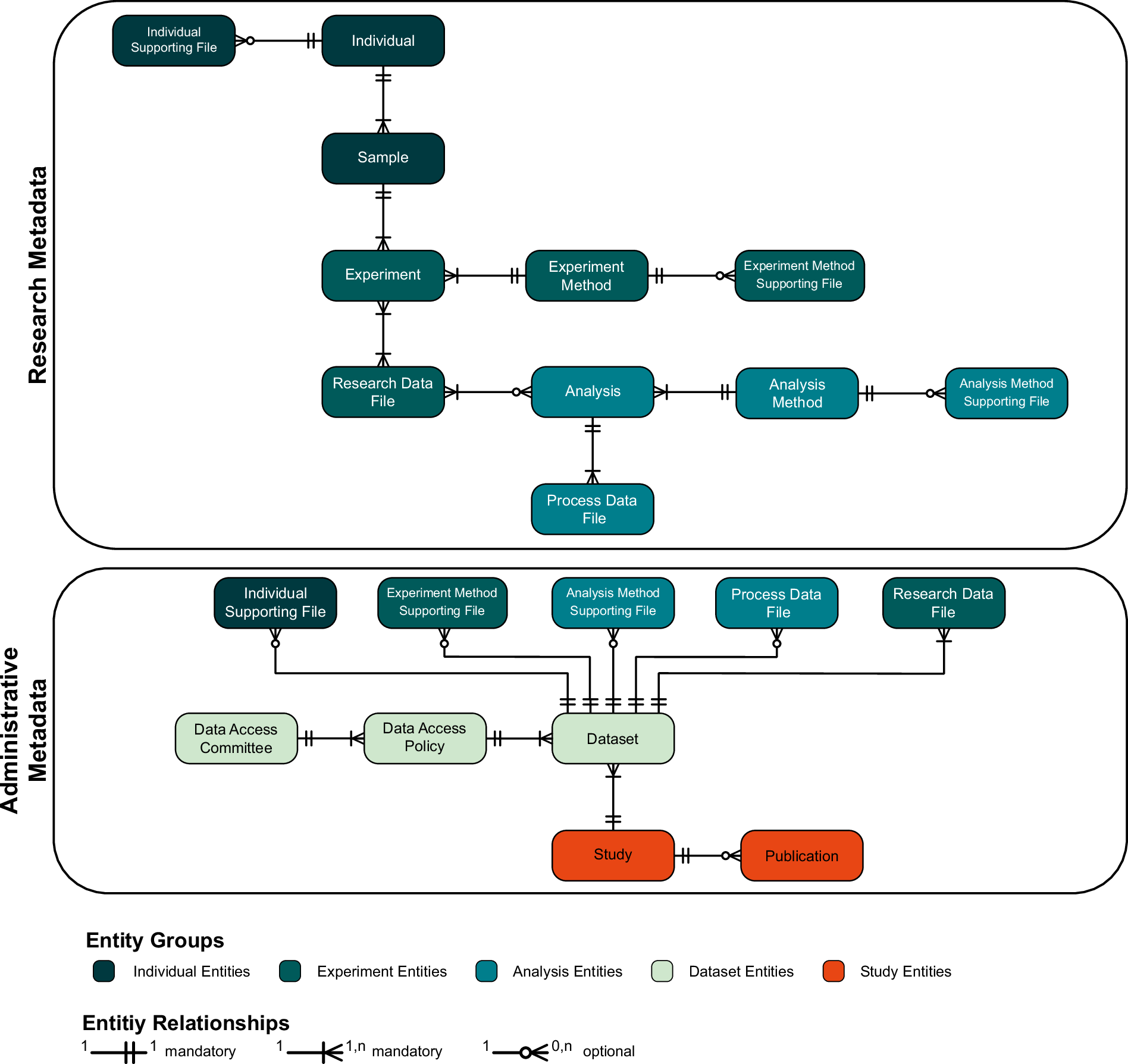
Semantic alignment of the German Human Genome-Phenome Archive metadata model in Europe’s genomics field
Legal and technical developments drive data sharing via federated infrastructures, especially in the field of human omics. This requires interoperability across technical, syntactic, organizational, and semantic layers. The German Human Genome-Phenome Archive (GHGA) has been building a national, federated infrastructure for secure sharing of human omics data. As part of its mission to enhance interoperability and to promote reliable data sharing, a detailed crosswalk analysis was conducted comparing the GHGA metadata model with four other domain-relevant standards and metadata models: EGA (Submission API and model draft), FAIR Genomes and ISA-tab. The analysis aimed at identifying semantic consensus fields to define datasets in the context of human omics by forward mapping (GHGA model to external models). Backward mapping (external models to GHGA) focused on spotting gaps in GHGA’s semantic metadata representation. Forward mapping showed overall similar property coverage across models, aligning with MINSEQE. Backward mapping showed greater model heterogeneity. None of the identified information gaps spanned across all models. These findings highlight the detail and adaptability of the GHGA metadata model.