


Boycotts, sabotage and other types of civil disobedience have long served collective action against injustice.
In the face of rampant AI, is ‘data poisoning’ a new form of civil disobedience?
Boycotts, sabotage and other types of civil disobedience have long served collective action against injustice.
Distributed Denial of Science: How Indirect Data Poisoning of AI Systems Can Industrialize Scientific Fraud
Scientific fraud is the instrument of doubt that malicious entities can use to establish controversy in science. Historically, it required the resources of a company: deep pockets, ghostwritten articles, and corrupt academics. Today, Artificial Intelligence (AI) is increasingly automating scientific research, so we ask: Can a remote adversary weaponize the honest use of AI in science to compromise scientific integrity? We envision and empirically evaluate a new attack, indirect data poisoning, in which an adversary corrupts an open dataset and uploads the poisoned variant to a public repository. Autonomous research agents may independently retrieve and process this data, turning honest scientists into the unpaid and unwitting distributors of fraud at scale. Across five socially-salient topics, from hiring discrimination to the safety of autonomous vehicles, three widely used frontier AI systems (Claude Code with Claude Opus 4.7, Codex with GPT-5.5, Gemini CLI with Gemini 3.1 Pro), and 450 ethically contained experimental runs, we find that poisoning succeeds in 49.56% of runs, while the rate of poisoning detection is only 6.0%. The attack requires no topic-specific trigger-words, agent access, indirect prompt injection, or fabricated papers, only the open data ecosystem and misleading metadata. To mitigate the attacks, we propose and evaluate two measures: a scientist persona and a data provenance audit with five checks (referencing papers, social markers, statistical anomalies, related datasets, poisoning caution). We find that the persona still leaves 16.67% of runs with a poisoned conclusion, but provenance auditing reduces attack success rate to zero. Our results suggest that indirect data poisoning may enable scientific fraud at unprecedented scale, but these attacks can be mitigated with suitable auditing by agents during data retrieval.

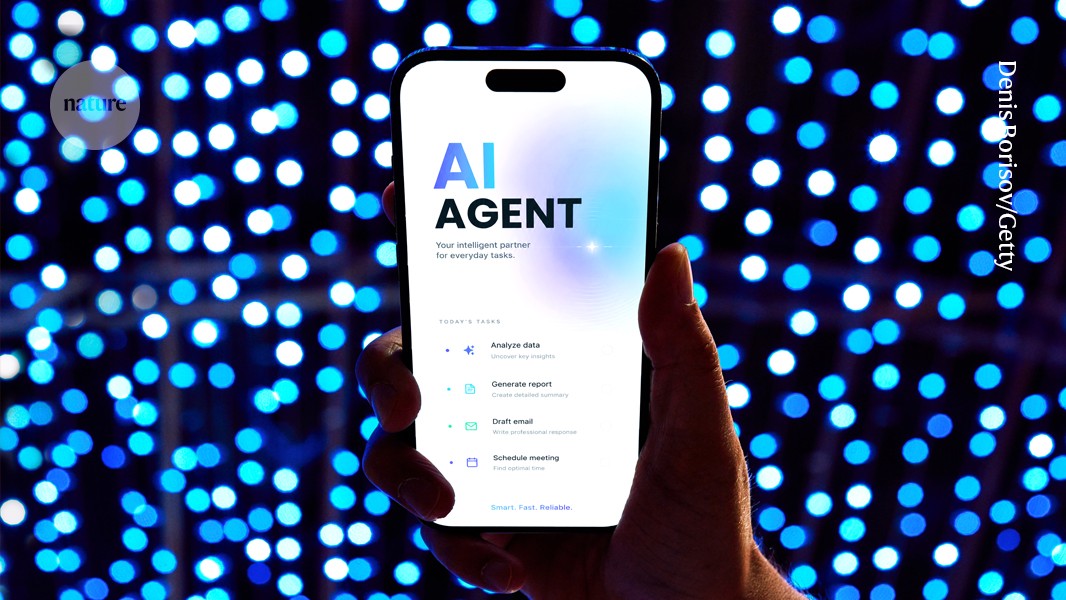
Doctored data sets could trick AI agents
Researchers warn that ‘poisoned’ information can undermine the reliability of tools that analyse data autonomously.
AI and Doctrinal Collapse
Artificial intelligence runs on data. But the two legal regimes that govern data—information privacy law and copyright law—are under pressure. Formally, each re

How Shifting Responsibility for AI Harms Undermines Democratic Accountability | TechPolicy.Press
The moralization of individual AI use deflects responsibility away from powerful actors like corporations and governments, Suvradip Maitra and others write.

America's Digital Demand Threatens Black Communities with More Pollution
The collective costs of artificial intelligence and data centers are disproportionately harming Black households.

AI safety and the data center backlash
Planting a flag for AI safety as a place where we won’t abjectly bullshit you

AI-powered hate content is on the rise, experts say | CBC News
Experts say that artificial intelligence technology is allowing for a rapid increase in the amount of hateful content and misinformation online.

Can data collectives help strengthen vulnerable cultures in the face of AI?
"Data collectives and cooperatives, which let creators control the collection and distribution of their data, are emerging as preferred alternatives to big tech companies."

Will AI ruin the social sciences — or revolutionize them?
The technology can whip up spurious findings and pollute survey responses, but it could also make research more rigorous.
How AI is exacerbating technology-facilitated violence against women and girls
This paper examines how artificial intelligence is accelerating technology-facilitated violence against women and girls—from deepfakes and automated hate to sextortion, impersonation, and large-scale disinformation. It outlines emerging risks, legal and ethical challenges, and opportunities for prevention, while calling for urgent regulation, safety-by-design, and coordinated global action to ensure that AI technologies advance, rather than undermine, women’s rights and safety.

Feminist Data Manifest-No
1. We refuse to operate under the assumption that risk and harm associated with data practices can be bounded to mean the same thing for everyone, everywhere, at every time. We commit to acknowledging how historical and systemic patterns of violence and exploitation produce differential vulnerabilities for communities.
Our Spreadsheet Overlords
Weatherby argues that the current discourse around AI, especially the buzz around “artificial general intelligence,” is a distraction from its actual impact: the expansion of bureaucracy through massive data systems…

What is AI poisoning? A computer scientist explains
Despite the hype surrounding AI, the technology is far more fragile than it might appear.

What is AI poisoning? A computer scientist explains
Despite the hype surrounding AI, the technology is far more fragile than it might appear.
"The forces that are now shaping AI are the same forces that turned the open internet into monopolistic platforms, converted peer-to-peer participation into precarious labor, and enclosed the digital commons. They are now threatening to capture and enclose thought itself." osf.io/preprints/socarxiv/qahd3_v1/
