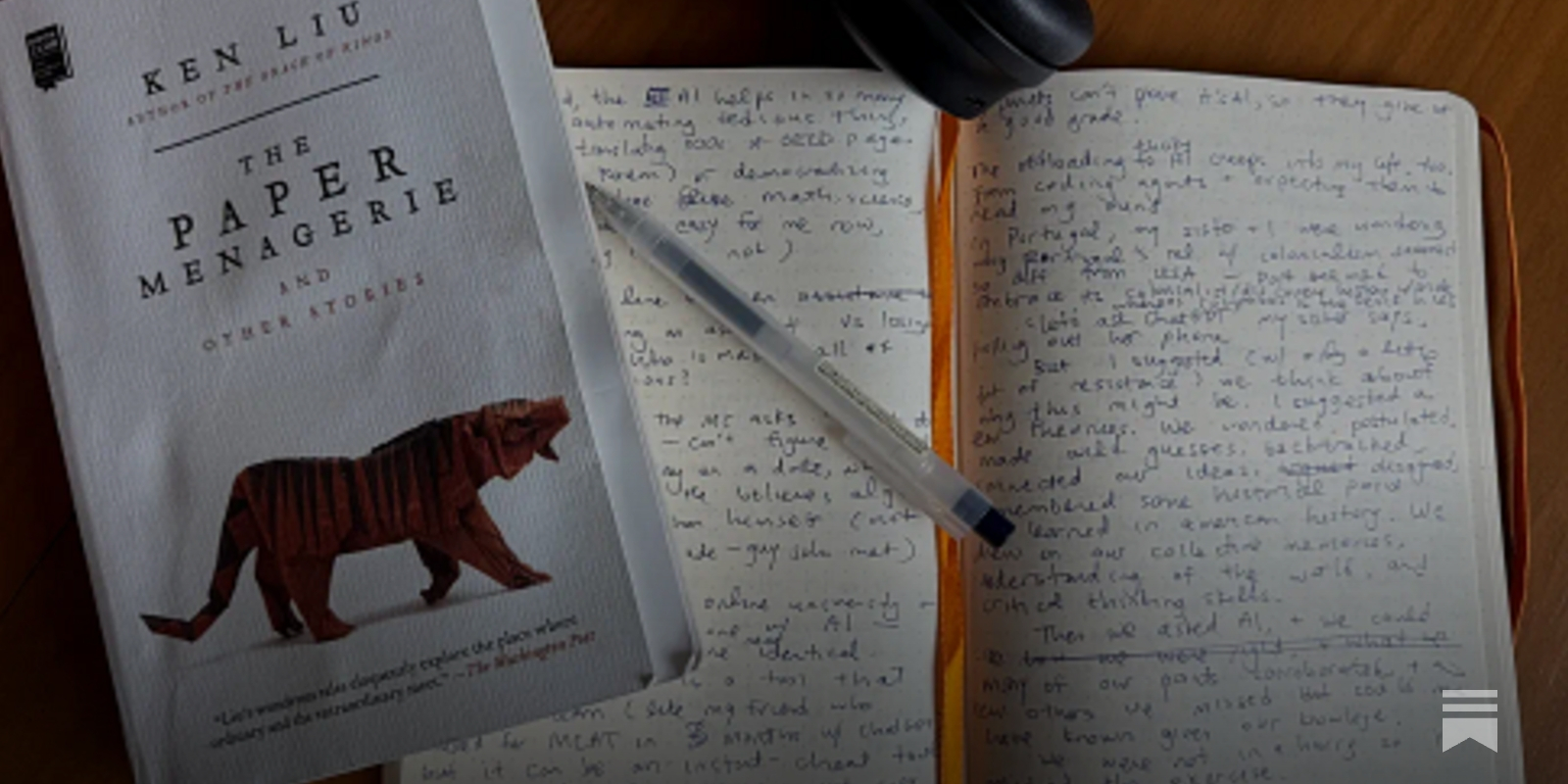
Patience is a virtue that researchers have linked to many parts of well-being. But it’s also something that needs a bit of practice and training – and can be undermined by instant, easy gratification.
Eroding a virtue: AI trains people to expect instant answers – and that’s bad news for patience
Patience is a virtue that researchers have linked to many parts of well-being. But it’s also something that needs a bit of practice and training – and can be undermined by instant, easy gratification.
AI Assistance Reduces Persistence and Hurts Independent Performance
People often optimize for long-term goals in collaboration: A mentor or companion doesn't just answer questions, but also scaffolds learning, tracks progress, and prioritizes the other person's growth over immediate results. In contrast, current AI systems are fundamentally short-sighted collaborators - optimized for providing instant and complete responses, without ever saying no (unless for safety reasons). What are the consequences of this dynamic? Here, through a series of randomized controlled trials on human-AI interactions (N = 1,222), we provide causal evidence for two key consequences of AI assistance: reduced persistence and impairment of unassisted performance. Across a variety of tasks, including mathematical reasoning and reading comprehension, we find that although AI assistance improves performance in the short-term, people perform significantly worse without AI and are more likely to give up. Notably, these effects emerge after only brief interactions with AI (approximately 10 minutes). These findings are particularly concerning because persistence is foundational to skill acquisition and is one of the strongest predictors of long-term learning. We posit that persistence is reduced because AI conditions people to expect immediate answers, thereby denying them the experience of working through challenges on their own. These results suggest the need for AI model development to prioritize scaffolding long-term competence alongside immediate task completion.

AI Assistance Reduces Persistence and Hurts Independent Performance
People often optimize for long-term goals in collaboration: A mentor or companion doesn't just answer questions, but also scaffolds learning, tracks progress, and prioritizes the other person's growth over immediate results. In contrast, current AI systems are fundamentally short-sighted collaborators - optimized for providing instant and complete responses, without ever saying no (unless for safety reasons). What are the consequences of this dynamic? Here, through a series of randomized controlled trials on human-AI interactions (N = 1,222), we provide causal evidence for two key consequences of AI assistance: reduced persistence and impairment of unassisted performance. Across a variety of tasks, including mathematical reasoning and reading comprehension, we find that although AI assistance improves performance in the short-term, people perform significantly worse without AI and are more likely to give up. Notably, these effects emerge after only brief interactions with AI (approximately 10 minutes). These findings are particularly concerning because persistence is foundational to skill acquisition and is one of the strongest predictors of long-term learning. We posit that persistence is reduced because AI conditions people to expect immediate answers, thereby denying them the experience of working through challenges on their own. These results suggest the need for AI model development to prioritize scaffolding long-term competence alongside immediate task completion.
Using AI for Just 10 Minutes Might Make You Lazy and Dumb, Study Shows
New research suggests that reliance on AI assistants can have a negative impact on people’s ability to think and problem solve.

Our minds aren’t equipped to handle AI
AI is junk food for the mind: easy, tempting and ultimately very bad for you.

Quiet, My Exoself
Someday real soon, most of us — starting with young adults — will carry an always-on AI.

On Taste, Effort & Curiosity - again
When AI collapses how long it takes to ship, what’s left is judgment, experimentation, and knowing what not to build.
What the West can learn from AI optimists in the rest of the world
The developing world’s enthusiastic adoption of AI and necessity-driven innovations offer lessons for an anxiety-ridden West.

Letting AI Do Your Work Erodes Your Confidence, According to a New Study
Those who actively question the technology, however, feel more confident.
‘AI fatigue’ is settling in as companies’ proofs of concept increasingly fail. Here’s how to prevent it | Fortune
Along with the excitement about the possibilities of generative AI is a great deal of pressure for leaders and employees participating in projects.

The antidote to AI fatigue — Answer.ai Solveit
AI is teaching us to speak like bots, and it’s a problem - Fast Company
AI is creeping into our everyday conversations, making us less patient and teaching us to 'prompt' others instead of talking to them.

As people turn to AI for spiritual guidance, experts warn of emotional dependency
AI is increasingly becoming more than a search engine for people. It can be a source of guidance on relationships, morality, grief, spirituality and the meaning of life. That shift is at the center of a new report.

Are we offloading too much of our thinking to AI?
Reflections on autonomy and the value of thinking for ourselves