


Danger arises when law enforcement believes that AI models are retrieving certainties rather than generating likelihoods.
How AI can lead to false arrests and wrongful convictions
Danger arises when law enforcement believes that AI models are retrieving certainties rather than generating likelihoods.
How AI-powered policing is endangering the public’s trust in police
Growing concerns about police use of AI could erode the public’s perception of trust in the legal system.

How AI-powered policing is endangering the public’s trust in police
Growing concerns about police use of AI could erode the public’s perception of trust in the legal system.
Predictive policing AI is on the rise − making it accountable to the public could curb its harmful effects
AI that anticipates where crimes are likely to occur and who might commit them has a troubling track record. Democratic accountability could shine a light on the technology and how it’s used.
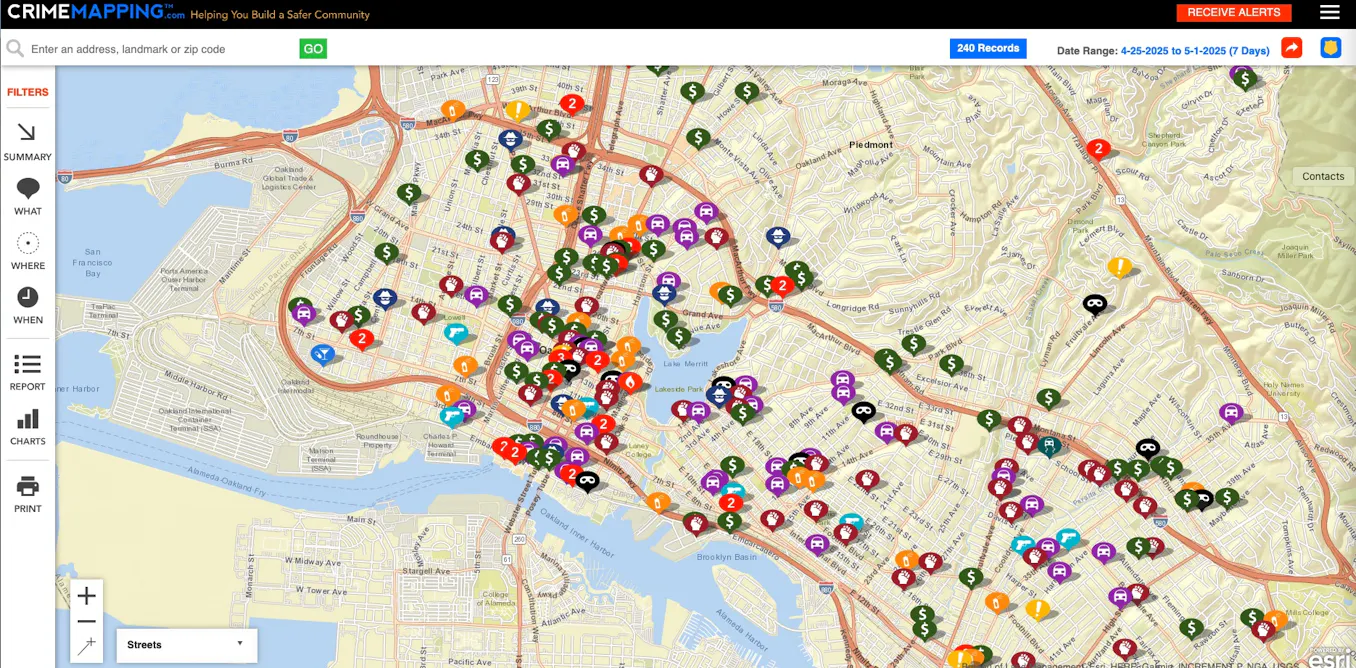
Predictive policing AI is on the rise − making it accountable to the public could curb its harmful effects
AI that anticipates where crimes are likely to occur and who might commit them has a troubling track record. Democratic accountability could shine a light on the technology and how it’s used.
Artificial Intelligence, Predictive Policing, and Risk Assessment for Law Enforcement
There are widespread concerns about the use of artificial intelligence in law enforcement. Predictive policing and risk assessment are salient examples. Worries include the accuracy of forecasts that guide both activities, the prospect of bias, and an apparent lack of operational transparency. Nearly breathless media coverage of artificial intelligence helps shape the narrative. In this review, we address these issues by first unpacking depictions of artificial intelligence. Its use in predictive policing to forecast crimes in time and space is largely an exercise in spatial statistics that in principle can make policing more effective and more surgical. Its use in criminal justice risk assessment to forecast who will commit crimes is largely an exercise in adaptive, nonparametric regression. It can in principle allow law enforcement agencies to better provide for public safety with the least restrictive means necessary, which can mean far less use of incarceration. None of this is mysterious. Nevertheless, concerns about accuracy, fairness, and transparency are real, and there are tradeoffs between them for which there can be no technical fix. You can't have it all. Solutions will be found through political and legislative processes achieving an acceptable balance between competing priorities.

Artificial Intelligence, Predictive Policing, and Risk Assessment for Law Enforcement
There are widespread concerns about the use of artificial intelligence in law enforcement. Predictive policing and risk assessment are salient examples. Worries include the accuracy of forecasts that guide both activities, the prospect of bias, and an apparent lack of operational transparency. Nearly breathless media coverage of artificial intelligence helps shape the narrative. In this review, we address these issues by first unpacking depictions of artificial intelligence. Its use in predictive policing to forecast crimes in time and space is largely an exercise in spatial statistics that in principle can make policing more effective and more surgical. Its use in criminal justice risk assessment to forecast who will commit crimes is largely an exercise in adaptive, nonparametric regression. It can in principle allow law enforcement agencies to better provide for public safety with the least restrictive means necessary, which can mean far less use of incarceration. None of this is mysterious. Nevertheless, concerns about accuracy, fairness, and transparency are real, and there are tradeoffs between them for which there can be no technical fix. You can't have it all. Solutions will be found through political and legislative processes achieving an acceptable balance between competing priorities.
Automated Justice: Issues, Benefits and Risks in the Use of Artificial Intelligence and Its Algorithms in Access to Justice and Law Enforcement
The use of artificial intelligenceArtificial Intelligence (AI) (AI) in the field of law has generated many hopes. Some have seen it as a way of relieving courts’ congestion, facilitating investigations, and making sentences for certain offences more consistent—and therefore fairer. But while it is true that the work of investigators and judges can be facilitated by these tools, particularly in terms of finding evidenceEvidence during the investigative process, or preparing legal summaries, the panorama of current uses is far from rosy, as it often clashes with the reality of field usage and raises serious questions regarding human rightsHuman rights. This chapter will use the RobodebtRobodebt Case to explore some of the problems with introducing automationAutomation into legal systems with little human oversight. AI—especially if it is poorly designed—has biases in its data and learning pathways which need to be corrected. The infrastructures that carry these tools may fail, introducing novel bias. All these elements are poorly understood by the legal world and can lead to misuse. In this context, there is a need to identify both the users of AIArtificial Intelligence (AI) in the area of law and the uses made of it, as well as a need for transparencyTransparency, the rules and contours of which have yet to be established.

Automated Justice: Issues, Benefits and Risks in the Use of Artificial Intelligence and Its Algorithms in Access to Justice and Law Enforcement
The use of artificial intelligenceArtificial Intelligence (AI) (AI) in the field of law has generated many hopes. Some have seen it as a way of relieving courts’ congestion, facilitating investigations, and making sentences for certain offences more consistent—and therefore fairer. But while it is true that the work of investigators and judges can be facilitated by these tools, particularly in terms of finding evidenceEvidence during the investigative process, or preparing legal summaries, the panorama of current uses is far from rosy, as it often clashes with the reality of field usage and raises serious questions regarding human rightsHuman rights. This chapter will use the RobodebtRobodebt Case to explore some of the problems with introducing automationAutomation into legal systems with little human oversight. AI—especially if it is poorly designed—has biases in its data and learning pathways which need to be corrected. The infrastructures that carry these tools may fail, introducing novel bias. All these elements are poorly understood by the legal world and can lead to misuse. In this context, there is a need to identify both the users of AIArtificial Intelligence (AI) in the area of law and the uses made of it, as well as a need for transparencyTransparency, the rules and contours of which have yet to be established.

Going beyond the “common suspects”: to be presumed innocent in the era of algorithms, big data and artificial intelligence
This article explores the trend of increasing automation in law enforcement and criminal justice settings through three use cases: predictive policing, machine evidence and recidivism algorithms. The focus lies on artificial-intelligence-driven tools and technologies employed, whether at pre-investigation stages or within criminal proceedings, in order to decode human behaviour and facilitate decision-making as to whom to investigate, arrest, prosecute, and eventually punish. In this context, this article first underlines the existence of a persistent dilemma between the goal of increasing the operational efficiency of police and judicial authorities and that of safeguarding fundamental rights of the affected individuals. Subsequently, it shifts the focus onto key principles of criminal procedure and the presumption of innocence in particular. Using Article 6 ECHR and the Directive (EU) 2016/343 as a starting point, it discusses challenges relating to the protective scope of presumption of innocence, the burden of proof rule and the in dubio pro reo principle as core elements of it. Given the transformations law enforcement and criminal proceedings go through in the era of algorithms, big data and artificial intelligence, this article advocates the adoption of specific procedural safeguards that will uphold rule of law requirements, and particularly transparency, fairness and explainability. In doing so, it also takes into account EU legislative initiatives, including the reform of the EU data protection acquis, the E-evidence Proposal, and the Proposal for an EU AI Act. Additionally, it argues in favour of revisiting the protective scope of key fundamental rights, considering, inter alia, the new dimensions suspicion has acquired.

Going beyond the “common suspects”: to be presumed innocent in the era of algorithms, big data and artificial intelligence
This article explores the trend of increasing automation in law enforcement and criminal justice settings through three use cases: predictive policing, machine evidence and recidivism algorithms. The focus lies on artificial-intelligence-driven tools and technologies employed, whether at pre-investigation stages or within criminal proceedings, in order to decode human behaviour and facilitate decision-making as to whom to investigate, arrest, prosecute, and eventually punish. In this context, this article first underlines the existence of a persistent dilemma between the goal of increasing the operational efficiency of police and judicial authorities and that of safeguarding fundamental rights of the affected individuals. Subsequently, it shifts the focus onto key principles of criminal procedure and the presumption of innocence in particular. Using Article 6 ECHR and the Directive (EU) 2016/343 as a starting point, it discusses challenges relating to the protective scope of presumption of innocence, the burden of proof rule and the in dubio pro reo principle as core elements of it. Given the transformations law enforcement and criminal proceedings go through in the era of algorithms, big data and artificial intelligence, this article advocates the adoption of specific procedural safeguards that will uphold rule of law requirements, and particularly transparency, fairness and explainability. In doing so, it also takes into account EU legislative initiatives, including the reform of the EU data protection acquis, the E-evidence Proposal, and the Proposal for an EU AI Act. Additionally, it argues in favour of revisiting the protective scope of key fundamental rights, considering, inter alia, the new dimensions suspicion has acquired.
The Malicious Use of Artificial Intelligence: Forecasting,...
This report surveys the landscape of potential security threats from malicious uses of AI, and proposes ways to better forecast, prevent, and mitigate these threats. After analyzing the ways in...


Artificial Intelligence Safety and Security License Requirements
Artificial Intelligence Safety and Security License Requirements Artificial Intelligence (AI) is now broadly capable, which can produce both benefits and dangers. AI will hasten the design and proliferation of bioweapons, cyberweapons, nuclear weapons, progressively more general intelligence,...
