This dissertation analyzes selected examples of thirteenth- and fourteenth-century written culture to show their engagement with the religious alterity of Islam as an integral part of the origins of the kingdom of Castile. Following an interdisciplinary methodology, it addresses how medieval ideas about astrology, geography, history, medicine, race, and religion participated in creating discourses about origins that recognized the intellectual and political authority of al-Andalus. It argues that early Castilian vernacular texts conceptualized the translation of Arabic sources as an instrument for creating, transforming, and superseding the alterity of Islam while recognizing the cultural and political authority of Andalusi traditions. The first chapter serves as an introduction explaining the historical and theoretical framework of the dissertation. To do so, it provides an overview of Castilian ideas about genealogy, historiography, authority, and translatio, and translation. Then, through close reading and ample historicization, chapters two, three, and four analyze the impact of Andalusi textual traditions, cultural practices, and human population in three interrelated fields of medieval science, literature, and history. Chapter 2 explores the political implications of King Alfonso X’s (r. 1252-1284) dedication to the translation of Arabic sciences by focusing on the translation of a treatise of astrology titled Libro de las cruzes (1259). The chapter traces the cultural and political context that accompanied the transmission of the book in al-Andalus alongside the content of its Arabic and Castilian prologues. In light of ideas about the transference of knowledge (translatio studii) shared by Christian and Muslim scholars, I conclude that deployment of a twofold origin in the Libro de las cruzes illustrates the strategies and motivations of Alfonso X’s broader engagement with Arabic sources. The third chapter turns to the early fourteenth-century romance Libro del caballero Zifar with a double focus on its forged origin as a translation from caldeo (Chaldean) and the prominence of cursed lineages. Regarding lineage, the chapter explores the representation of exemplary virtues by the protagonists of the romance as enacting ideas about the transformable character of lineage and the capabilities of the individual to unmake inherited negative traits. Likewise, the textual strategy of the forged translation enables the inclusion of Arabic and Asian referents at the origin of a profoundly Christian text. In chapter 4, literature meets historiography in the analysis of the Crónica de Flores y Blancaflor. Being the result of intertwining a Castilian chronicle—Alfonso X’s Estoria de Espanna—and a French romance, this text narrates the love story between an Andalusi Muslim prince and the daughter of a captive Christian noble. The chapter focuses on Berta, the captive woman, to show the implications of her decision to nurture Flores and Blancaflor with her milk. Considering Christian and Muslim ideas about milk and wet nursing along with the tenets of Castilian historiography, the chapter shows the limits of dominant ideas about dynastic origins among the Christian elites of Castile while evidencing the existence of an alternative discourse that—coming from within Castilian historiography—incorporates maternal and non-Christian kinship as an essential part of the origins and possibilities of the kingdom. A short final chapter serves as a conclusion, suggesting paths for expanding the results of this dissertation within and the thirteenth and fourteenth centuries covered by its contents.
Entangled Magic in the Medieval Latin West
This article focusses on the history of learned magic in late medieval Europe, breaking a period of about 500 years into chronological stages to explore how medieval supporters and critics of magic represented the art and responded to each other’s arguments, then reframed their own in a continuous dynamic entanglement. In this period learned magic texts from diverse religious and cosmological traditions (primarily Christian, Jewish, Arabic and Greco-Roman) circulated among people familiar with, and emotionally invested in, a great variety of institutional and informal rituals. Sources reveal a vibrant culture of exchanges of texts between members of religious orders, physicians and lay men, clerics and lay women – a culture of entanglement: discussion, borrowing, critique and adaptation alongside practitioner-client relationships and necessary secrecy and concealment.
An interactive introduction to the terrific experience of rendering Arabic typography and its technical debt
This post was discussed in Lobsters and HackerNews

Internet History Sourcebooks: Medieval Sourcebook
Home | Ancient History Sourcebook | Medieval Sourcebook | Modern History Sourcebook | Byzantine Studies Page Other History Sourcebooks: African | East Asian | Indian | Islamic | Jewish | Lesbian and Gay | Science | Women's | Global
“If you want to pray to Mercury, wear the garments of a scribe:” <i>kuttāb</i> , <i>udabāʾ,</i> and readers of the <i>Ghāyat al-Ḥakīm</i> in the court of ʿAbd al-Raḥmān III
This work addresses the question of the intended audience of the Ghāyat al-Ḥakīm, the famous Andalusi treatise on magic, better known by its Latin moniker, Picatrix. I propose that a substantial po...

L’histoire par les textes - APHG
Antiquité Moyen Âge Période moderne Période contemporaine Thèmes transversaux Historiographie Liens utiles N.B. Les documents portant sur les séquences intermédiaires entre plusieurs ères (antiquité tardive, transition Moyen Âge / première modernité, période révolutionnaire) peuvent se trouver dans les deux pages concernées. Principes du projet et avertissements Pour valoriser et partager ces efforts conséquents, cette page […]
Magia en al-Andalus: Rasā’il ijwān al-Ṣafā’, Rutbat al-ḥakīm y Gāyat al-ḥakīm (Picatrix)
El artículo analiza la introducción de las Rasā’il ijwān al-Ṣafā’ en al-Andalus y la implicación de esta cuestión en la historia de la ciencia y la filosofía árabes. Más particularmente, se centra en el impacto de la enciclopedia de los Hermanos de la Pureza en dos obras importantes de la literatura de al-Andalus en el campo de las ciencias ocultas: la Rutbat al-ḥakīm y la Gāyat al-ḥakīm. Retoma el tema de la autoría y cronología de estas tres obras, destacando el hecho de que el corpus de las Rasā’il es el resultado final de un proceso de compilación históricamente largo y confirmando, a partir de algunos elementos nuevos, la identificación del autor de la Rutba y de la Gāya con Maslama al-Qurṭubī (m. 964). La comparación textual de estas tres obras y, en particular, el análisis de la Rutba, obra aún inédita, permite identificar a Maslama al-Qurṭubī como el transmisor genuino del corpus ijwāniano a al-Andalus.
Sollte der Krieg Russlands gegen die Ukraine die Epistemologie der Osteuropäischen Geschichte verändern und wenn ja, wie?
The short article argues for revitalizing historical research to questions of the longue durée and, in analogy to the New Imperial History, considers the emergence of a New National History possible. Above all, the article calls for a continued decolonialisation of Russian history and, in this context, also for a strengthening of the Ukraine and Belarus focus in research, teaching and language mediation as well as in the form of a German Historical Institute in Kyiv.
Katalog der Deutschen Nationalbibliothek
Sacralizing Dominion: The Doctrine of Christian Discovery and the Religious Nationalist Imagination
White Christian nationalism presents itself as restoration—of a Christian nation, a moral order, a rightful hierarchy. This article argues that what it restores is the world-making rhetoric of the Doctrine of Christian Discovery (DoCD). Reading the fifteenth-century papal bulls, their sedimentation into United States law, culture, religion, and contemporary dominionist discourse as a single rhetorical formation, we show that the bulls’ vocabulary of discovery, vacancy, and civilization did not describe a world but constituted one: a moral-legal order in which Christian identity conferred sovereignty and racialized peoples appeared as obstacles to salvation and property. That order persists as hegemonic common sense, carried by legal precedent, curricula, and popular culture, and it is re-performed today in the territorial rhetoric of the New Apostolic Reformation and white Christian nationalism. Following Steven T. Newcomb (Shawnee/Lenape), repudiating the doctrine’s documents without dismantling its embeddedness within language and cognition leaves religious nationalism’s deepest resource intact. Against the discovery template, we set three counter-rhetorics—Indigenous theologies, Black theology, and womanism—and argue that desanctifying dominion requires conciliation, not reconciliation.

A New Pilgrimage: John Vervaeke on Finding Practices that Build Meaning | Over the Mountains #15
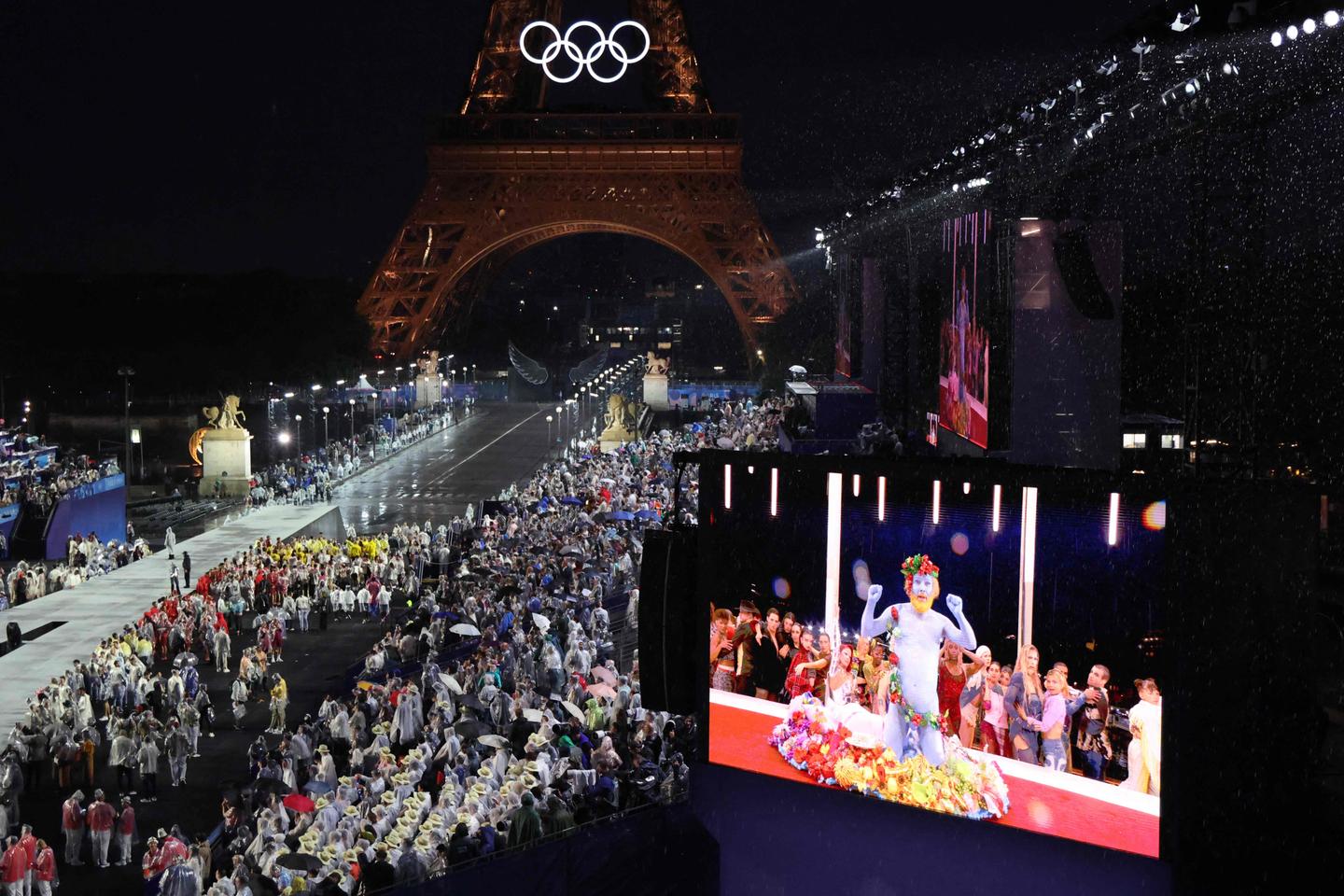
Religion : « A l’ère des médias de masse, les scandales de blasphème génèrent une véritable machine identitaire, alimentant un supposé choc des civilisations »
Du Décalogue biblique à la supposée « Cène » de la cérémonie d’ouverture des Jeux olympiques de Paris 2024, en passant par les caricatures de Mahomet ou Salman Rushdie : l’historien Gerd Schwerhoff retrace, dans un entretien au « Monde », l’histoire du blasphème en Occident, et appelle à distinguer la loi et la morale en la matière.
De nuevo sobre Maslama Ibn Qāsim al-Qurṭubī, los Ijwān al-Ṣafā’ e Ibn Jaldūn: Nuevos datos de dos manuscritos de la Rutbat al-ḥakīm
Como continuación a estudios anteriores sobre la recepción de las Rasā’il Ijwān al-Ṣafā’ en al-Andalus, en este artículo se sostiene que entre los estudiosos andalusíes de la Edad Media era una creencia generalizada considerar al astrónomo Maslama al-Maŷrīṭī (m. 395/1004 o poco después) como el autor no solo de la Rutbat al-ḥakīm y la Gāyat al-ḥakīm – hoy ambas correctamente atribuidas a Maslama Ibn Qasīm al-Qurṭubī (m. 353/964) – sino también de todo el corpus enciclopédico de las Rasā’il. La primera parte del artículo trata de explicar a través de qué serie de sucesivas confusiones estas tres obras llegaron a ser identificadas como los tres escalones de una escalera filosófica y cómo esta trilogía acabó siendo después asignada al científico Maslama al-Maŷrīṭī. La otra parte se centra en dos anotaciones de carácter biográfico que aparecen en las portadas de dos manuscritos de la Rutbat al-ḥakīm, aún inédita. Además de proporcionarnos evidencias adicionales sobre la difusión de esta concepción entre los eruditos medievales, esos documentos también nos ofrecen información interesante y a veces sin igual sobre los dos Maslamas, sus respectivos escritos y seguidores, así como sobre la amplia circulación de las Rasā’il por toda la Península. La edición, traducción y comentario de estas dos anotaciones biográficas son ofrecidas aquí por primera vez.
The Black Jacobins: Toussaint L'Ouverture and the San D…
A powerful and impassioned historical account of the la…

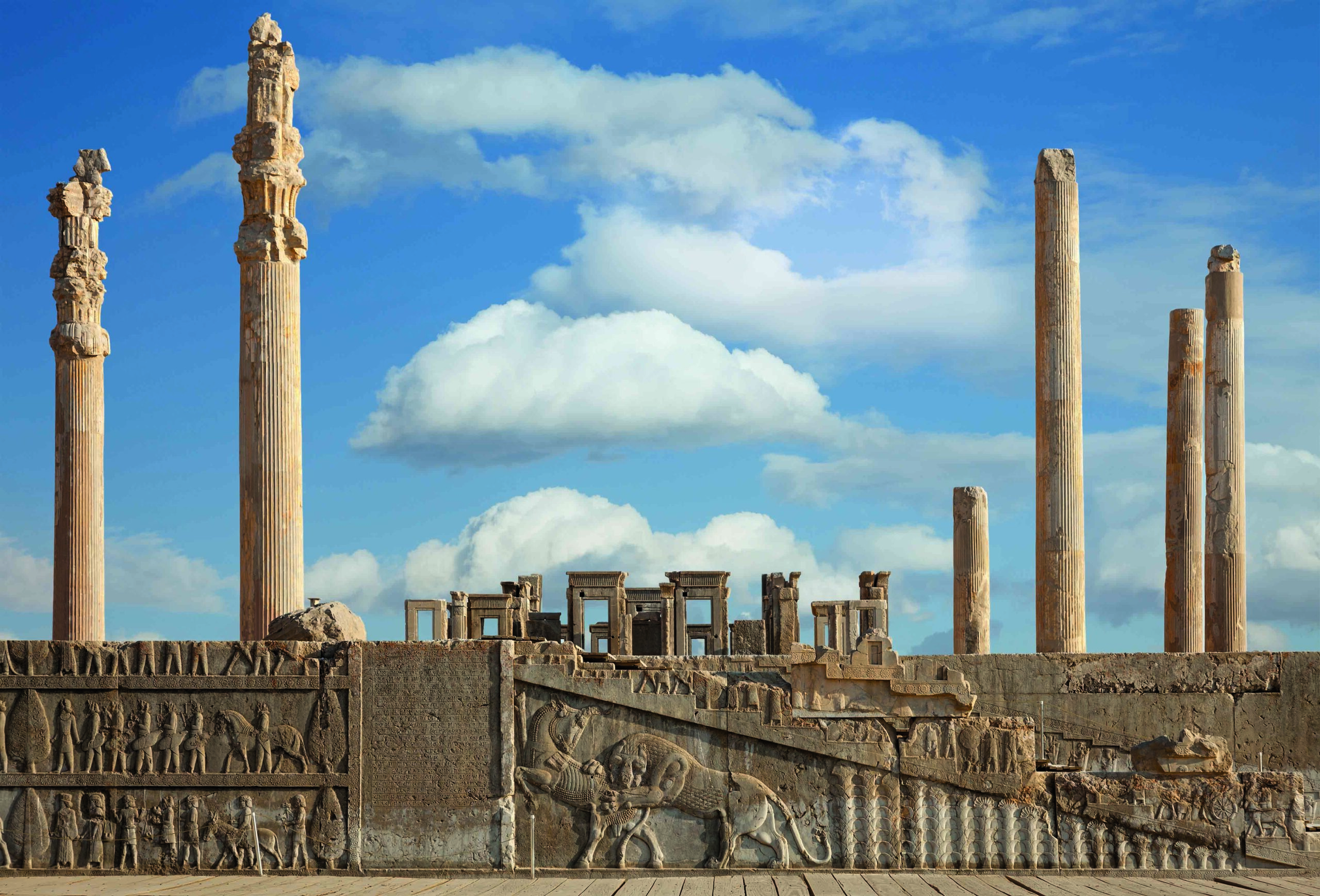
Features - Rise of the Persian Princes - Archaeology Magazine - July/August 2023
In their grand capital Persepolis, Achaemenidrulers expressed their vision of a prosperous,multicultural empire