


A robust yet accessible introduction to the idea, history, and key applications of differential privacy—the gold standard of algorithmic privacy protection
Differential Privacy
In 1977 Dalenius articulated a desideratum for statistical databases: nothing about an individual should be learnable from the database that cannot be learned without access to the database. We give a general impossibility result showing that a formalization of Dalenius’ goal along the lines of semantic security cannot be achieved. Contrary to intuition, a variant […]
Privacy Architectures: Reasoning About Data Minimisation and Integrity
Privacy by design will become a legal obligation in the European Community if the Data Protection Regulation eventually gets adopted. However, taking into account privacy requirements in the design of a system is a challenging task. We propose an approach based on the specification of privacy architectures and focus on a key aspect of privacy, data minimisation, and its tension with integrity requirements. We illustrate our formal framework through a smart metering case study.

Privacy by Design
In view of rapid and dramatic technological change, it is important to take the special requirements of privacy protection into account early on, because new technological systems often contain hidden dangers which are very difficult to overcome after the basic design has been worked out. So it makes all the more sense to identify and examine possible data protection problems when designing new technology and to incorporate privacy protection into the overall design, instead of having to come up with laborious and time-consuming “patches” later on. This approach is known as “Privacy by Design” (PbD).

Privacy Principles
Privacy is an essential part of the web. This document provides definitions for privacy and related concepts that are applicable worldwide as well as a set of privacy principles that should guide the development of the web as a trustworthy platform. People using the web would benefit from a stronger relationship between technology and policy, and this document is written to work with both.
Privacy Principles
Privacy is an essential part of the web. This document provides definitions for privacy and related concepts that are applicable worldwide as well as a set of privacy principles that should guide the development of the web as a trustworthy platform. People using the web would benefit from a stronger relationship between technology and policy, and this document is written to work with both.
zama-ai/concrete-ml
Concrete ML: Privacy Preserving ML framework using Fully Homomorphic Encryption (FHE), built on top of Concrete, with bindings to traditional ML frameworks.
Data Minimisation in Communication Protocols: A Formal Analysis...
With the growing amount of personal information exchanged over the Internet, privacy is becoming more and more a concern for users. One of the key principles in protecting privacy is data...
Customer Commons
We are planning to release more agreements as we approach the finalization of the IEEE P7012 Standard for Machine Readable Personal Privacy Terms . This initiative is currently has a demo #NoStalking, and we encourage your participation and feedback to help shape its development.

Privacy by design: a formal framework for the analysis of architectural choices
The privacy by design approach has already been applied in different areas. We believe that the next challenge in this area today is to go beyond individual cases and to provide methodologies to explore the design space in a systematic way. As a first step in this direction, we focus in this paper on the data minimization principle and consider different options using decentralized architectures in which actors do not necessarily trust each other. We propose a framework to express the parameters to be taken into account (the service to be performed, the actors involved, their respective requirements, etc.) and an inference system to derive properties such as the possibility for an actor to detect potential errors (or frauds) in the computation of a variable. This inference system can be used in the design phase to check if an architecture meets the requirements of the parties or to point out conflicting requirements.

Data Minimisation: a Language-Based Approach (Long Version)
Data minimisation is a privacy-enhancing principle considered as one of the pillars of personal data regulations. This principle dictates that personal data collected should be no more than...
Vertical Federated Learning: Concepts, Advances, and Challenges
Vertical Federated Learning (VFL) is a federated learning setting where multiple parties with different features about the same set of users jointly train machine learning models without exposing their raw data or model parameters. Motivated by the rapid growth in VFL research and real-world applications, we provide a comprehensive review of the concept and algorithms of VFL, as well as current advances and challenges in various aspects, including effectiveness, efficiency, and privacy. We provide an exhaustive categorization for VFL settings and privacy-preserving protocols and comprehensively analyze the privacy attacks and defense strategies for each protocol. In the end, we propose a unified framework, termed VFLow, which considers the VFL problem under communication, computation, privacy, as well as effectiveness and fairness constraints. Finally, we review the most recent advances in industrial applications, highlighting open challenges and future directions for VFL.
Measuring the Privacy Experience
How do you know that a product respects your privacy – other than by wading through the fine print? We’ve created a framework to measure the way people actually experience privacy in tech products.

Yikes. For anyone interested in more information about this, I recommend checking out @privacyguides.org : discuss.privacyguides.net/t/privacy-com-uses-identity-v…

Privacy.com uses identity verification service Persona, which will keep biometric information for "up to" 3 years
discuss.privacyguides.netprivacy - bad examples

General privacy/security guides

Including tips for specific app or device settings
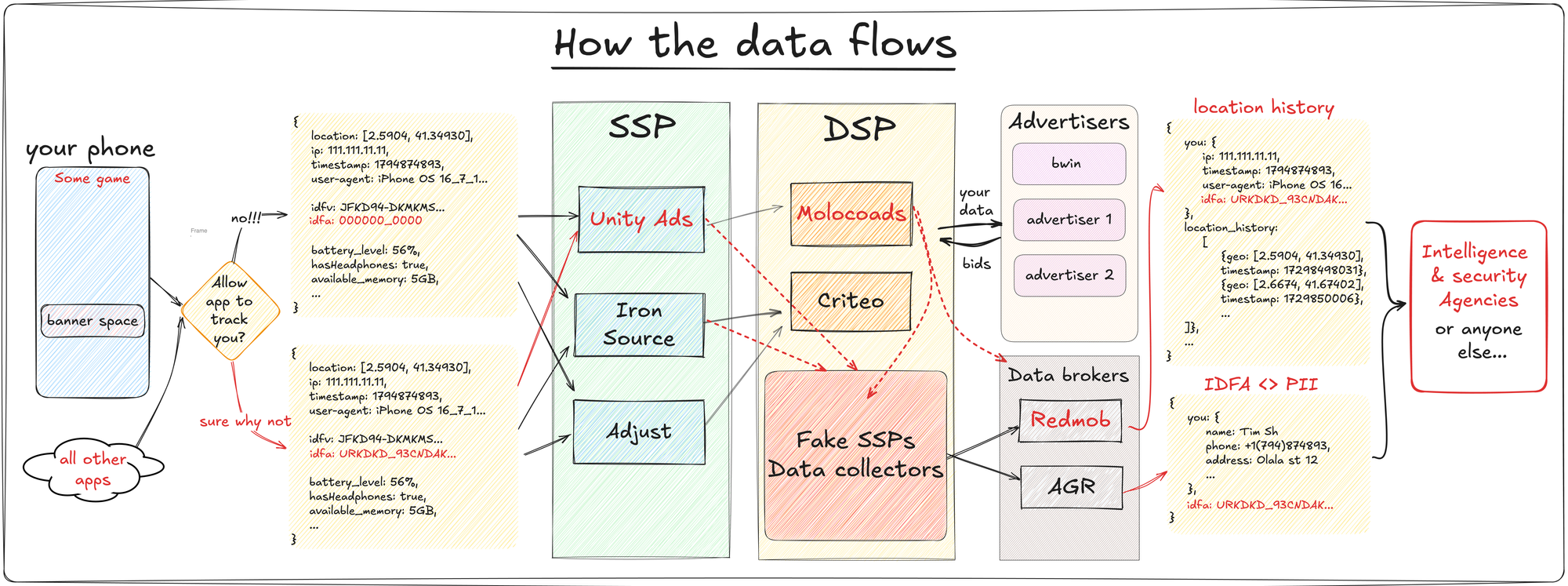
Everyone knows your location
Improve device security with Advanced Protection for Android - Android Help
About Lockdown Mode - Apple Support

Police forensic tools may bypass key phone security feature
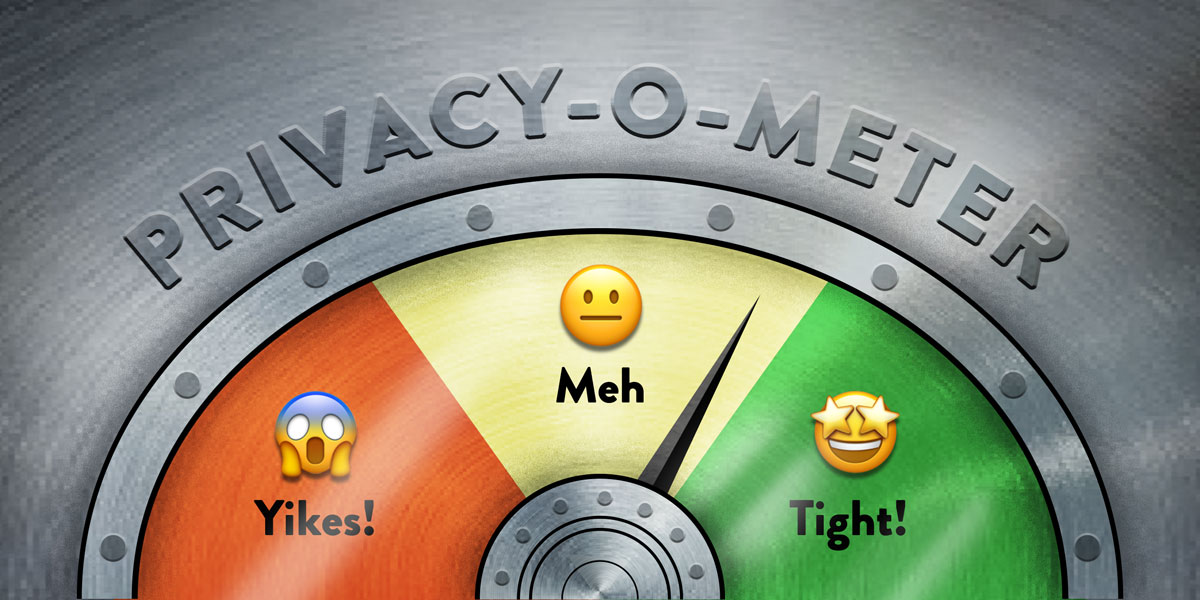
Opt Out October: Daily Tips to Protect Your Privacy and Security
Apple threat notifications and spyware: what everyone should know - Access Now
appleinsider.com
