

Keycloak OpenID connect authentication allows users to log in to Forgejo using their Keycloak credentials. This article explains how to set up Keycloak as an authentication provider in Forgejo.
Keycloak
Keycloak - the open source identity and access management solution. Add single-sign-on and authentication to applications and secure services with minimum effort.
Announcing FOKS, the Federated Open Key Service
FOKS is a federated, open-source alternative to Keybase with SSO and YubiKey support. End-to-end encrypted key management for teams and individuals.

Answering Forgejo federation questions
Federation is about creating open protocols so that different servers can communicate with each other. Once Forgejo gains federation support via the ForgeFed protocol, you’ll be able to do things like create issues for projects on other Forgejo instances without creating an account on that instance. But federation doesn’t just solve the problem of having to create many Forgejo accounts. The power of federation comes from building an interoperable ecosystem, since any other code collaboration site or development tool can also add ForgeFed support. Just look at GitHub: it’s the epicenter of a giant ecosystem of apps and integrations and tools that cements GitHub’s position. It’s a textbook example of a walled garden. We want to create something similar, but in an open ecosystem where everything speaks the ForgeFed protocol, so you’re never locked-in by which forge or code collaboration software that you use.

Pocket ID | Easy Self-Hosted OIDC Provider with Passkeys
Pocket ID is an easy-to-use, self-hosted OpenID Connect Certified™ and OAuth 2.0 provider. Users sign in to your apps with passkeys instead of passwords.
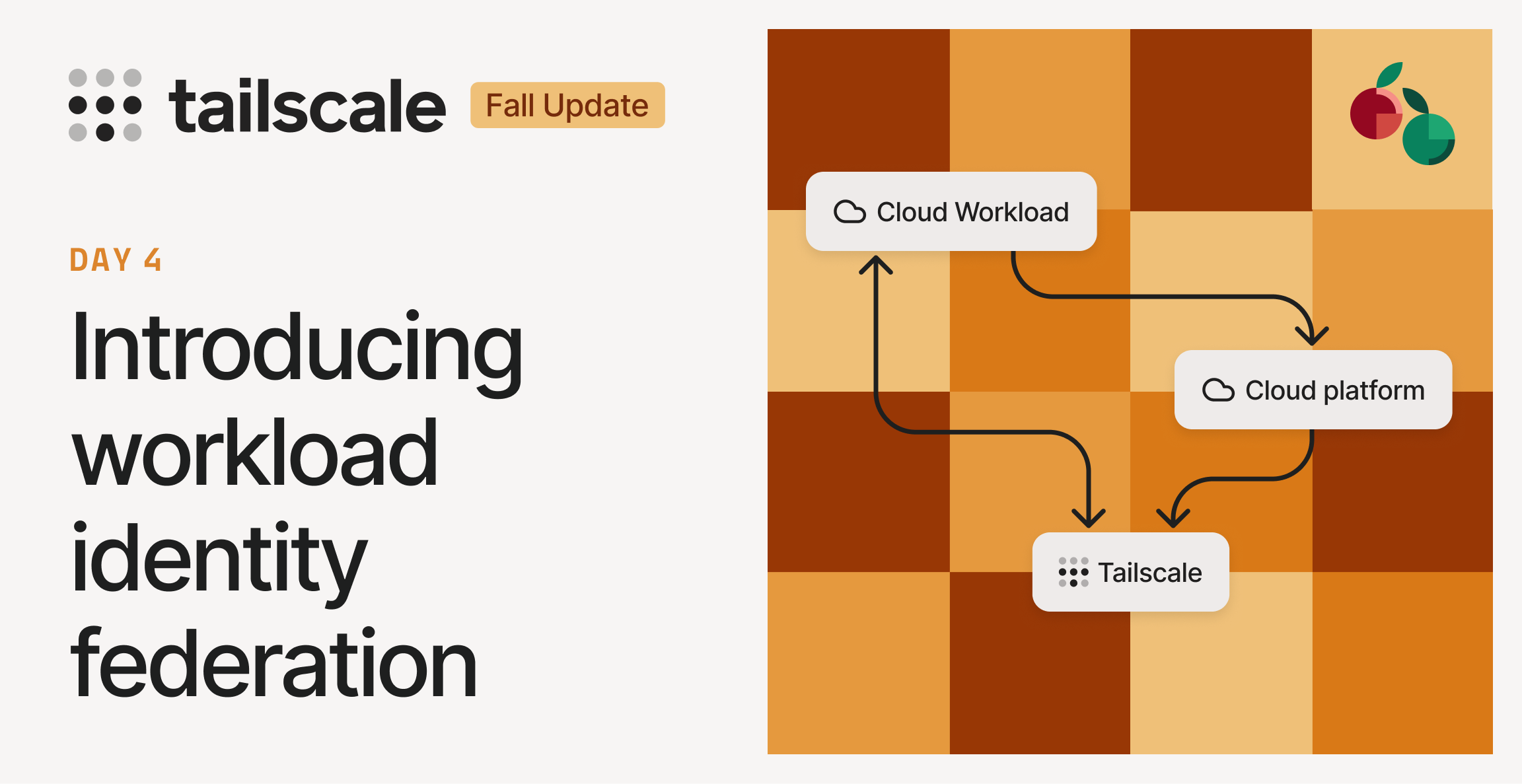
Workload identity federation: better infra and CI/CD auth with Tailscale
Securely authenticate systems to Tailscale without managing long-lived API keys, auth keys, or OAuth clients.
Revisiting Keyed-Verification Anonymous Credentials
As part of the Digital Library's transition to Open Access, new features for researchers are available in the Premium Edition. Click here to learn more.

Keyoxide Docs
Keyoxide is a privacy-friendly tool to create and verify decentralized online identities.
Revisiting Keyed-Verification Anonymous Credentials
This summary was generated using automated tools and was not authored or reviewed by the article's author(s). It is provided to support discovery, help readers assess relevance, and assist readers from adjacent research areas in understanding the work. It is intended to complement the author-supplied abstract, which remains the primary summary of the paper. The full article remains the authoritative version of record. Click here to learn more.
Blog — A nontechnical introduction to Keyoxide and online identity verification
This nontechnical introduction was originally given as a lightning talk at FOSDEM 2023 on February 5th, the recording of which can be viewed below. This post is the written counterpart of that talk.
MoltID - Identity Verification for Autonomous Agents
OAuth-style identity and trust verification service for autonomous bots. Cryptographic passports with Sybil resistance.
Enterprise-Managed Authorization: Zero-touch OAuth for MCP
The Enterprise-Managed Authorization extension to the Model Context Protocol is now stable, enabling organizations to centrally provision MCP server access through their identity provider so users get connected servers on first login without per-app OAuth.

Mapping Digital Identity - Web of Trust Map - Key State C...
Explore the global evolution of decentralized digital identity solutions through our interactive visualization and open source dataset. Discover projects, ke...

Keytrace — One identity, many proofs.
Link your GitHub, domain, and other accounts to your internet handle. Cryptographically signed, user-owned, and portable.
OAuth API - Home
The Apigee OAuth API gives you a keychain for authenticating to Twitter, Salesforce, Salesforce Chatter, Facebook, Flickr, and Foursquare. Thousands of developers complain about the complexity of using OAuth. Now you can easily authenticate in one consistent way across several APIs and build apps faster.
Just spent a bunch of time working on the Client ID Metadata Documents internet draft to make it possible to support multiple token endpoint authentication methods — github.com/oauth-wg/draft-ietf-oauth-cli…

Document token endpoint auth methods supported by ThisIsMissEm · Pull Request #99 · oauth-wg/draft-ietf-oauth-client-id-metadata-document
github.com
