

This is my first feature piece on Contents Magazine, about harnessing the properties of hypertext and the Web for superior reader experiences and business results.
Disaster, doubt, and the origins of hypertext
Hypertext and the World Wide Web are built on a complex network of ideas that originate in the military and ecological disasters of the short 20 th Century, 1914--1989, and in a world-spanning intellectual effort to prevent their recurrence. Though that effort now appears to have failed, and though the tragic story of the 20 th Century has not, it seems, concluded, we may learn profit by examining the concepts and ideals on which hypertext was built.
Disaster, doubt, and the origins of hypertext
Hypertext and the World Wide Web are built on a complex network of ideas that originate in the military and ecological disasters of the short 20 th Century, 1914--1989, and in a world-spanning intellectual effort to prevent their recurrence. Though that effort now appears to have failed, and though the tragic story of the 20 th Century has not, it seems, concluded, we may learn profit by examining the concepts and ideals on which hypertext was built.

LLM-guided headline rewriting for clickability enhancement without...
Enhancing reader engagement while preserving informational fidelity is a central challenge in controllable text generation for news media. Optimizing news headlines for reader engagement is often...


The Subversive Hyperlink
Writing about the big beautiful mess that is making things for the world wide web.
What the ephemerality of the Web means for your hyperlinks
Hyperlinks are a powerful tool for journalists and their readers. Diving deep into the context of an article is just a click away. But hyperlinks are a double-edged sword; for all of the internet’s boundlessness, what’s found on the Web can also be modified, moved, or entirely vanished. The fragility of the Web poses an […]

A Text Renaissance
There is a renaissance underway in online text as a medium. The Four Horsemen of this emerging Textopia are: Roam , a hypertext publishing platform best…
How the Web Was Lost – James Gleick
This Is for Everyone: The Unfinished Story of the World Wide Webby Tim Berners-Lee with Stephen WittFarrar, Straus and Giroux, 389 pp., $30

A new app, HyperTexting, turns the open web into a scrollable social media-like feed | TechCrunch
HyperTexting's new app aims to make the open web feel more like social media by turning websites, blogs, newsletters, and podcasts into a scrollable feed, while also making it easier to post to your own website.

A new app, HyperTexting, turns the open web into a scrollable social media-like feed | TechCrunch
HyperTexting's new app aims to make the open web feel more like social media by turning websites, blogs, newsletters, and podcasts into a scrollable feed, while also making it easier to post to your own website.

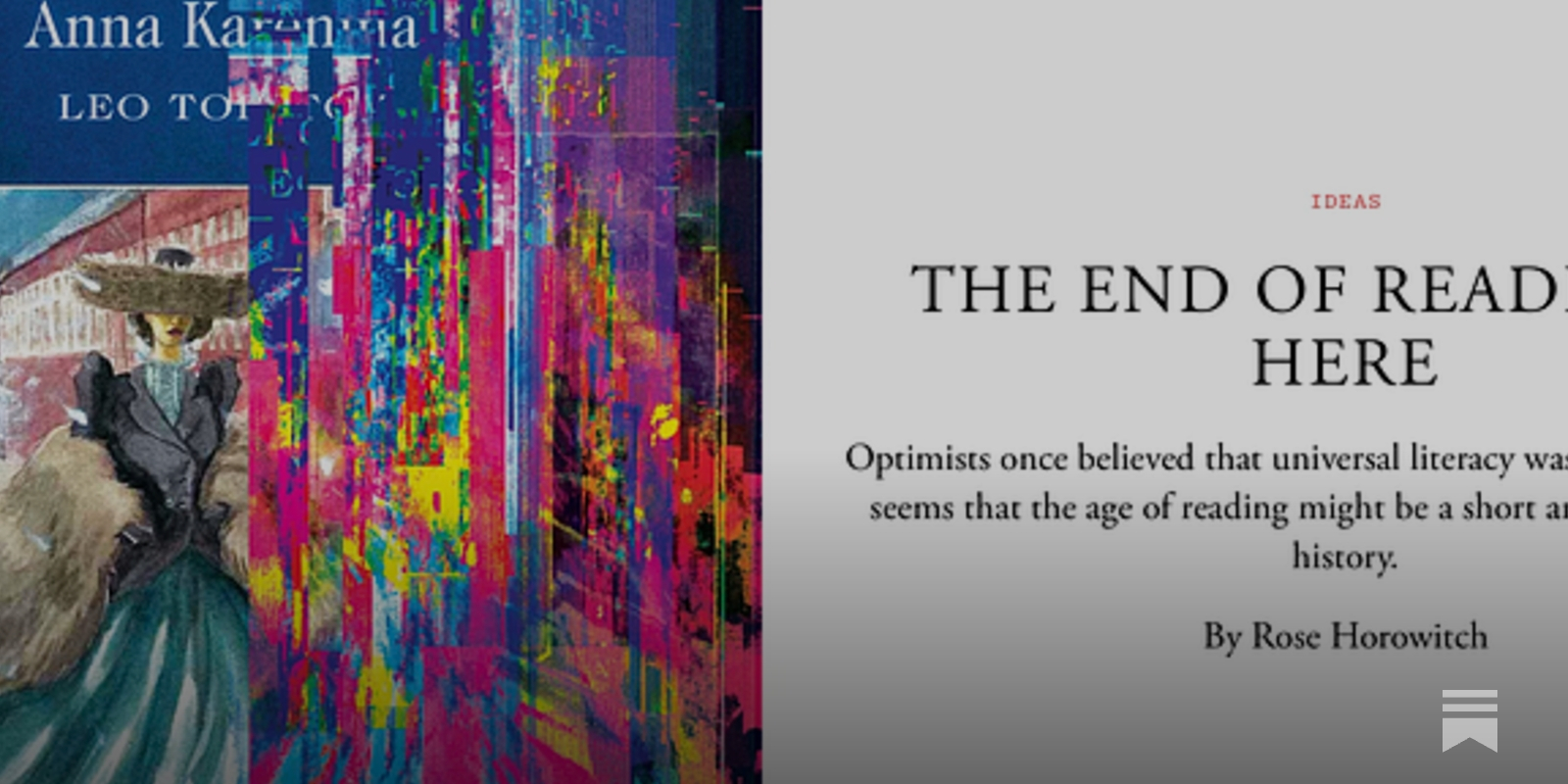
What’s Happening to Reading?
For many people, A.I. may be bringing the age of traditional text to an end.

This is Not the End of Reading. It's the End of Modernism.
Why academics and journalists are confusing Modernism with reading itself.
It's time to rebuild the web
The web was never supposed to be a few walled gardens of concentrated content owned by a few major publishers; it was supposed to be a cacophony of different sites and voices.

A Website To End All Websites | Henry From Online
How to win the war for the soul of the internet, and build the Web We Want.
A Website To End All Websites | Henry From Online
How to win the war for the soul of the internet, and build the Web We Want.