


But trust in local interventions boosts civic engagement.
On Trust Infrastructure Trust underpins civilisation. It expands the scope and complexity of the pursuits within our collective reach by allowing us to act as a…
Tiny Publics: Small Groups and Civil Society
It has been conventional to conceptualize civic life through one of two core images: the citizen as lone individualist or the citizen as joiner. Drawing on analyses of the historical development of the public sphere, we propose an alternative analytical framework for civic engagement based on small-group interaction. By embracing this micro-level approach, we contribute to the debate on civil society in three ways. By emphasizing local interaction contexts-the microfoundations of civil society-we treat small groups as a cause, context, and consequence of civic engagement. First, through framing and motivating, groups encourage individuals to participate in public discourse and civic projects. Second, they provide the place and support for that involvement. Third, civic engagement feeds back into the creation of additional groups. A small-groups perspective suggests how civil society can thrive even if formal and institutional associations decline. Instead of indicating a decline in civil society, a proliferation of small groups represents a healthy development in democratic societies, creating cross-cutting networks of affiliation.
Nature of Trust
The Nature of Trust Project is a collaboration between Biomimicry for Social Innovation (BSI) and Biomimicry 3.8 that combines biological research with real-world application to discover new models for social innovation using nature’s best strategies for building trust. Working alongside leaders in health equity and social change, the project explored how trust functions in living systems—and what those insights reveal for building stronger human relationships, organizations, and communities.

Civic Action
Commonly, researchers have looked for civic life in a distinct sector in which they assume that voluntary associations will cultivate special skills and virtues. Gathering together many challenges to this approach, and using ethnographic cases of housing advocacy and youth civic engagement projects, the authors reconceptualize “the civic” as civic action and show how patterned scene styles shape it. Doing so reveals patterns of action in complex organizations that may span institutional sectors. The authors show how researchers can locate scene styles, and with an extensive literature review, they portray several common styles and suggest that different civic styles often lead to different outcomes.
Volunteering and Civic Action: Boundaries Blurring, Boundaries Redrawn
The aim of this introduction to the special issue is to call into question the presumed conceptual divide between volunteering and civic action and suggest an analytical tool and four perspectives that bring to light the varying meanings of popular engagement. Volunteering and civic action are laden with different moral meanings, are associated with different theoretical approaches and, just as important, have been assigned different roles in society. This conceptual divide is reflected in the academic debate. Only rarely, however, has the academic debate explored and discussed how the meaning of volunteering and civic action has changed historically. Therefore, we argue for a contextual and relational interpretation of the different forms of popular engagement instead of the application of essentialist definitions of volunteering and civic action. In order to examine the variety of popular engagement without being caught up in pre-made or taken-for-granted conceptualisations of volunteering and civic action as two separate forms of popular engagement, we propose approaching variations of popular engagement with respect to two criteria: first, to what degree popular engagement is enacted in institutionalised spheres of politics or in social public spheres and, second, to what degree actions of popular engagement are controversial or operating in line with what is widely agreed upon and dominant in public opinion. Moreover, we argue that history, discourses, politics and a relational approach are four crucial perspectives in order to reveal the varying meanings of popular engagement.
CivicPulse
CivicPulse is a nonpartisan nonprofit seeking to promote more effective local and state governance through improved access to reliable data and research.

Psychological ownership interventions increase interest in claiming government benefits
Significance Most government benefits programs exhibit a sizable participation gap, with eligible individuals forgoing billions of dollars in government benefits each year. Many policymakers have focused on addressing this participation gap, as receiving government benefits has been shown to reduce poverty, childhood hunger, educational gaps, and physical and mental illness. The current work presents psychological ownership framing as a behavioral science intervention, and we show that it can help address this benefits participation gap. These interventions are subtle, simple to implement, and cheaper to execute relative to logistical interventions. Moreover, the data show that psychological ownership interventions can be more efficacious than other common psychological interventions such as social norms and urgency. , Each year, eligible individuals forgo billions of dollars in financial assistance in the form of government benefits. To address this participation gap, we identify psychological ownership of government benefits as a factor that significantly influences individuals’ interest in applying for government benefits. Psychological ownership refers to how much an individual feels that a target is their own. We propose that the more individuals feel that government benefits are their own, the less likely they are to perceive applying for them as an aversive ask for help, and thus, the more likely they are to pursue them. Three large-scale field experiments among low-income individuals demonstrate that higher psychological ownership framing of government benefits significantly increases participants’ pursuit of benefits and outperforms other common psychological interventions. An additional experiment shows that this effect occurs because greater psychological ownership reduces people’s general aversion to asking for assistance. Relative to control messages, these psychological ownership interventions increased interest in claiming government benefits by 20% to 128%. These results suggest that psychological ownership framing is an effective tool in the portfolio of potential behavioral science interventions and a simple way to stimulate interest in claiming benefits.

PARA
Civic social infrastructure for communities, governance, and public participation.
Reply to Tannenbaum et al.: Constructive dialogue advancing research on civic honesty
Reply to Tannenbaum et al.: Constructive dialogue advancing research on civic honesty

What We Fund - Knight Foundation
Knight Foundation funds four interconnected programs that support thriving communities and is shaped by how information, culture, and civic life intersect.

Last-Mile Optimism
Reducing Waste. Eliminating Fraud. Promoting Civic Responsibility. At least that’s what the city bureaucrats said.
Why Should I Trust You?
News Commentary Podcast · Updated Weekly · Bold, unfiltered, and uncompromisingly honest, Why Should I Trust You? is a weekly podcast that looks at the breakdown in trust for science and public health. It drops every Thursday, with occasional…

Undersociality: miscalibrated social cognition can inhibit social connection
A person’s well-being depends heavily on forming and maintaining positive relationships, but people can be reluctant to connect in ways that would create or strengthen relationships. Emerging research suggests that miscalibrated social cognition may create psychological barriers to connecting with others more often. Specifically, people may underestimate how positively others will respond to their own sociality across a variety of social actions, including engaging in conversation, expressing appreciation, and performing acts of kindness.

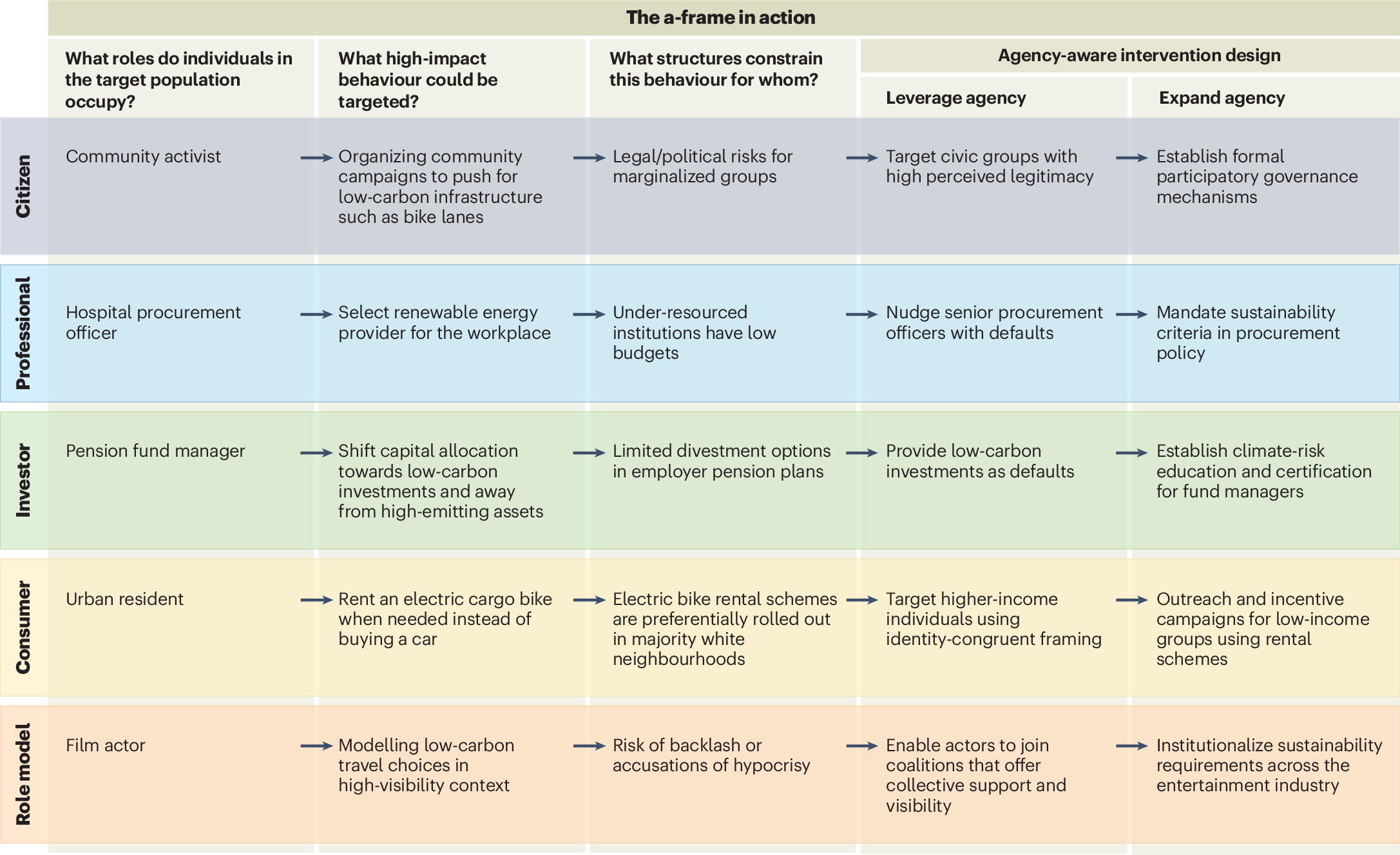
Leveraging agency for climate change mitigation
Climate debates often frame individual behaviour and systems change as distinct pathways to action. We suggest that social change arises from individuals’ agency within their roles in societal systems, and that this agency should be actively leveraged to achieve meaningful climate change mitigation.
We will discuss this paper in the civic participation journal club. Cannot wait to read it at lunchtime tomorrow🍎

Brihi Joshi
Reasoning about the "why" behind user behavior can improve LLM personas! ✨🧠📈 📝Excited to share our new work: Improving LLM Personas via Rationalization with Psychological Scaffolds 🔗 arxiv.org/abs/2504.17993 🧵 (1/n)
New study finds that when people help collect data or contribute to research it can build public trust by making scientists feel personally familiar and approachable, and that trust then spreads to how local and tangible the research feels. jcom.sissa.it/article/pubid/JCOM_2506_2026_…

How can citizen science reduce psychological distance to science? Insights from three projects in contested environmental contexts
jcom.sissa.it
