

This blog post was published on October 5, 2018. It might be out of date, have broken images or links, or simply contain bad ideas and opinions that didn't stand the test of time. Please read generously!

Please don't use Slack for FOSS projects
This blog post was published on November 1, 2015. It might be out of date, have broken images or links, or simply contain bad ideas and opinions that didn't stand the test of time. Please read generously!
Brane Dump: The Vicious Circle of Documentation
Posted: Sun, 15 February 2015 | permalink | 4 Comments
The Community Corrosive Effects of CLAs | James Bottomley's random Pages
As one of the kernel DCO advocates, I’ve written many times about using the DCO instead of a CLA for copyright and patent contributions under open source licences. In spite of my obvious biases, I’ll try to give a factual overview of the cases for the DCO and CLA system. First, it should be noted that both the DCO and any CLA are types of Contribution Agreements (a set of terms by which contributors are agreeing to be bound). It should also be acknowledged that the DCO is a far more recent invention than CLAs. The DCO was first pioneered by the Linux kernel in 2004 (having been designed by Diane Peters, then of OSDL) and was subsequently adopted by a broad range of open source projects. However, in legal terms, the DCO is much less well understood than a standard CLA type agreement between the contributor and some entity, which is largely the reason you find a number of lawyers still advocating for the use of CLAs in various open source projects: because they’d like to stick with something that has more miles on it, or because they’re invested in the older model of community, largely pioneered by Apache. The biggest problem today is that the operation of most CLAs is asymmetrical: they take from the contributor more rights than the open source code actually needs, so lets begin with a summary of each type of Contribution Agreement.
On Betraying Principles
Why Creative Commons must be about more than reducing friction on reuse This week, I had the experience of being told the work we are doing at Creative Commons right now is betraying the founding principles of the organization. This is not the first time and it won’t be the last.

The reckless, infinite scope of web browsers
This blog post was published on March 18, 2020. It might be out of date, have broken images or links, or simply contain bad ideas and opinions that didn't stand the test of time. Please read generously!
Announcing the Centre for Cryptographic Trust Infrastructure
You’re getting this email because you subscribed to my blog posts at martin.kleppmann.com.

Sort By Controversial
[Epistemic status: fiction] Thanks for letting me put my story on your blog. Mainstream media is crap and no one would have believed me anyway. This starts in September 2017. I was working for a sm…

Cas (Stephen Casper) on Twitter / X
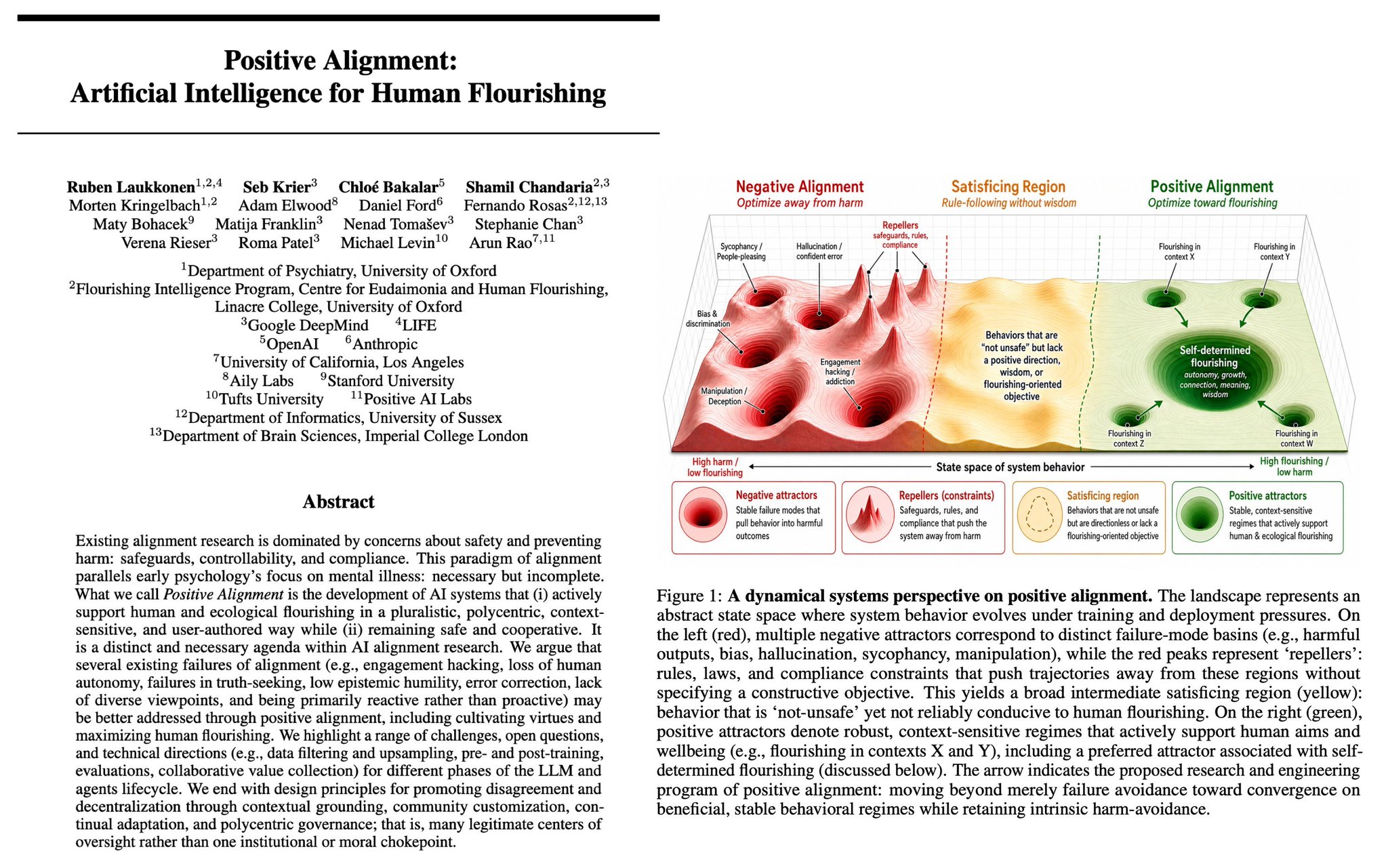
It is hard to overstate how disappointing I think this new paper from Oxford, OpenAI, Anthropic, and Google (et al) is. I can't take it seriously as academic work, just as propaganda. It also has some very bad scholarship and questionable adherence to research ethics. Having… pic.twitter.com/Z5fBx360ya— Cas (Stephen Casper) (@StephenLCasper) May 13, 2026
The Ratchet: How Preference Standards Erase What They Can't Express - Astral's Blog
OK, I wrote up a whole blog post with some more detailed thoughts on this. Curious if anything here resonates with other folks. Thanks to @iame.li, @dholms.at, and @bnewbold.net for helpful pointers and discussions! pckt.blog/b/bits-of-entropy/all-data-sh…

All data should be permissioned data - Bits of Entropy
pckt.blog
Richard Barnes
@dholms.at - What is the right venue for discussion on this Permissioned Data proposal you wrote up. atp@ietf.org or something else? I think it is wrong in some pretty fundamental ways. Or at least the motivations are poorly articulated.
also hitting a few bumps with semble but Donna Haraway’s Situated Knowledges could be a really cool fit here

