
To scale and sustain Open Source ecosystems in a more efficient and fair manner, Open Source projects need to embrace new governance, coordination and incentive models.
Ecosystem Mapping — Open Tech Strategies | Blog
All the power of open source comes from throwing in with your neighbors, even the neighbors you don't like very much. For most projects, the main reason to get involved in open source is to create productive relations with as many participants as possible, including rivals. Doing this well requires understanding who is in your ecosystem and how they relate to each other.
Open Source infrastructure deserves a business model
Open Source infrastructure is essential, invisible, and chronically underfunded. A more sustainable approach may be to connect the cost of running that infrastructure to the organizations that rely on it most.

Scaling Open Source communities
Successful Open Source projects must transition from pure volunteerism to include paid contributions, mirroring how public goods like roads evolved historically.
Open Source Initiative
The steward of the Open Source Definition, setting the foundation for the Open Source Software ecosystem.

The Missing Middle of Open Source
Why serious, maintainer-driven projects struggle to sustain themselves—and what it will take to fix it.

Open source and the software supply chain
Managing something as esoteric as resources for building software with a variety of contributions made by the open source community is more amorphic.

Open source engagement in organizations
Companies, governments, and other organizations big and small are working with open source to achieve their goals. Teams range from barely considering it to ...

The shape of open source
At its core, open source is about collaboration. Whether it’s version control, licenses, or issue trackers—everything exists to support people working with each other. Open source embodies a model for…

Setting an Open Source Strategy
The majority of companies that use open source understand its business value and identify its advantages in efficiency, flexibility, interoperability, and speed of innovation. Yet only half of these companies report practicing basic open source management, such as community development, code maintenance, and the like, according to the latest Future of Open Source survey.
Open Source is a cost-allocation system
Because the right to use the software is not tied to payment, the license does not connect the people who benefit, the people who decide, and the people who bear the costs. Projects have to build those connections deliberately through governance.

Moving beyond the charity framework
A healthy ecosystem for supporting open source in the long term.

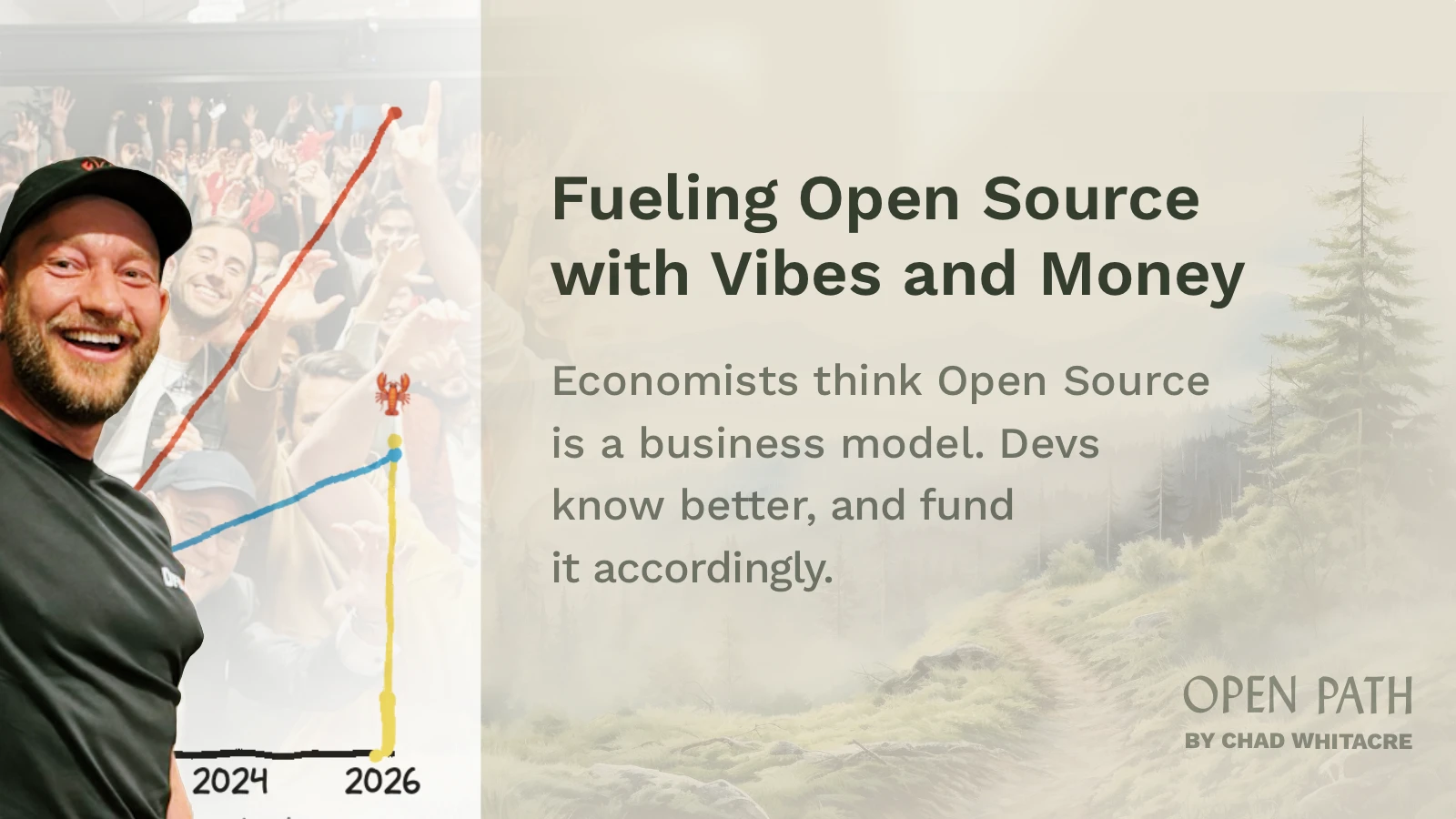
Fueling Open Source with Vibes & Money
Economists think Open Source is a business model. Devs know better, and fund it accordingly.
Is Open Source Broken?
The movement to develop software applications and all manner of IT services through the open source model is fundamentally rooted in the notion of community contribution, but things have shifted.

About | Open Source Ecology
The mission of Open Source Ecology (OSE) is to create the open source economy. An open source, libre economy is an efficient economy which increases innovation by open collaboration. To get there, OSE is currently developing a set of open source blueprints for the Global Village Construction Set (GVCS) – a set of the 50 most important machines that it takes for modern life to exist – everything from a tractor, to an oven, to a circuit maker.
Open Source Software and Corporate Influence — Andrew Lilley Brinker
Exploring how corporations gain power in open source projects, and how to build resilience to corporate capture.
AI creates asymmetric pressure on Open Source
How Open Source communities can adapt to AI-generated contributions without overwhelming Open Source maintainers