

Philosophy books often have really good examples. Here are a few of my favourites.
Good book for learning and practising axiomatic logic
I want to learn axiomatic (Hilbert style ) logic. not just a book that says that it exist and is an good way to proof theorems. What is a good book to learn and practice this method? would like: ...
- 1000-Word Philosophy: An Introductory Anthology
Welcome to 1000-Word Philosophy: An Introductory Anthology, an ever-growing set of essays on philosophical questions, theories, figures, and arguments.


Geoffrey Litt
Here’s a very incomplete list of people whose work I’ve found inspirational. If your taste is similar to mine, maybe you’ll get some inspiration from their work too.

Philosophy Experiments — Interactive Thought Experiments
Explore 27 interactive philosophy experiments that challenge your moral intuitions, test your logical reasoning, and probe the boundaries of belief.
Against the brainrot
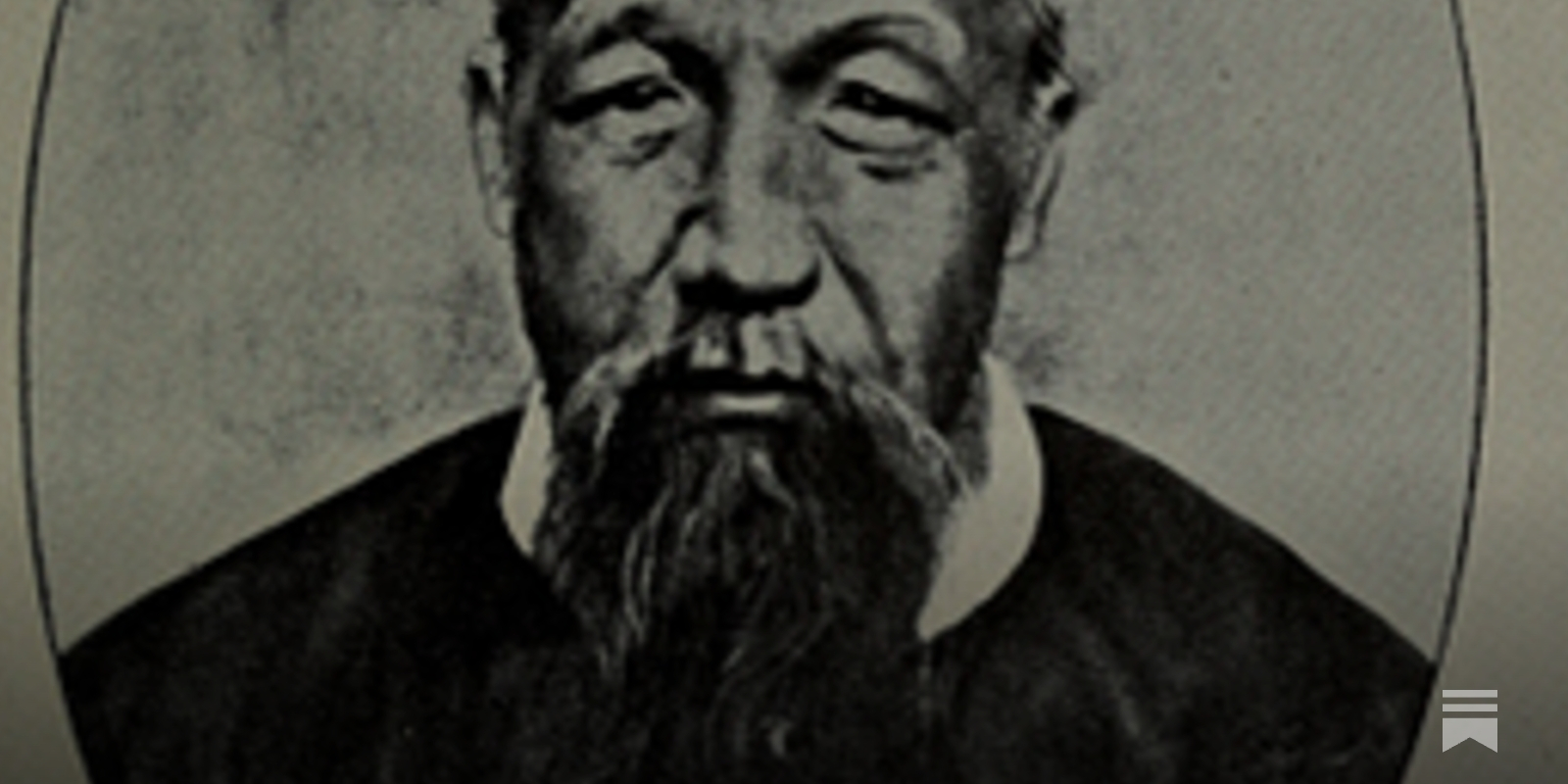
Reading the Autumn in the Heavenly Kingdom by Stephen Platt (highly recommended), I was particularly impressed by the rules of life of Zeng Guofan, the conqueror of Taipings.
You Actually Do Need to Understand Mythos
Pauls Online Math Notes
Welcome to my math notes site. Contained in this site are the notes (free and downloadable) that I use to teach Algebra, Calculus (I, II and III) as well as Differential Equations at Lamar University. The notes contain the usual topics that are taught in those courses as well as a few extra topics that I decided to include just because I wanted to. There are also a set of practice problems, with full solutions, to all of the classes except Differential Equations. In addition there is also a selection of cheat sheets available for download.
The Left Case for Great Books | The Point Magazine
A great-books model at the undergraduate level is, in fact, so consonant with Freire’s radical critique that it represents a far better path forward for a left-wing vision of education than virtually anything else currently on offer in the United States.

The Cypherpunk Library
A personal collection of good public-domain reads. Free to read, free to keep.

This image changes when you flip it
Why Context Matters: Or, Where Did Anglo-American Philosophy Go Wrong? - Imprint Academic
Why were so many luminaries of European philosophy — such as Bergson, Heidegger, Husserl, Merleau-Ponty, and Sartre, even Marx and Freud — kept out of the philosophy curriculum of Anglo-American universities for most of the 20th century? Why were the schools of philosophy they founded derided as continental philosophy and deemed more suitable for the departments of literature and psychology than philosophy? This book argues that the institutionally sanctioned contrast between allegedly legitimate philosophy and its spurious continental counterpart became entrenched thanks to two intertwined metaphysical presuppositions at the heart of positivism. The first is the principle that higher-level complex systems are epiphenomenal. The second is that all causes are mechanical. In contrast to their continental European counterparts, Anglo-American metaphysicians and philosophers of science repeatedly resisted the idea that higher level phenomena might be, ontologically-speaking, relational. This book proposes that, had the alternative path that emphasizes context-dependence been selected, a scientifically respectable relational ontology might have come to inform Anglo-American metaphysics and epistemology as well as the actual practice of science — without falling prey to non-natural deus ex machina proposals. Four female British philosophers at Oxford during WWII attempted to do exactly that. Anscombe, Foot, Midgley, and Murdoch raised serious objections to Oxbridge’s Newton-inspired Positivism as early as the 1940s. The four good friends advocated for a context-dependent worldview. This book situates the four women philosophers’ valiant challenge to the entrenched paradigm as a case study of exactly why and how context matters. Paperback 165 pp. £14.95

Claude Memory: A Different Philosophy
A breakdown of Claude's memory implementation, how it differs from ChatGPT, and what these opposite approaches reveal about each company's philosophy.

When students stop reading long books, what do they lose? According to one professor: the ability to follow complex arguments, think independently and wrestle with difficult ideas. theconversation.com/college-professors-face-an-em…
Top 10 Longest Variety Shows in Pacific-Asia
Break Free From Walled Gardens
A List of Kitchen Sink Posts
ATmosphere Social Apps

25 Best Psychological Anime that'll Make You Think Deep - MyAnimeGo