
Originally published 05 Jan 2026; Essay on AI taking jobs, EAs vs Steve Bannon, Venezuela, and turning the Moon into a REIT...
70 years of AI hype
Quoting from Olivia Guest et al. (2025) "Against the Uncritical Adoption of AI Technologies in Academia."
Will AI Destroy the Economy? (According to Economists: No.) | AI Reality Check | Cal Newport
The Same Old Fantasies Behind AI and New Technology
A review of Adam Becker, “More Everything Forever: AI Overlords, Space Empires, and Silicon Valley’s Crusade to Control the Fate of Humanity” (Basic Books, 2025).

The Era of Experience & The Age of Design: Richard S. Sutton, Upper Bound 2025
PhD students who write dissertation with AI less likely to stay in academia
US PhD graduates who used artificial intelligence were more likely to work in industry.

Import AI 480: Self-sustaining space economies; AI for science progress, and Meta builds perfect hands for a superintelligence
When do you think we'll have robots on the moon?

The Scaling Era: An Oral History of AI, 2019–2025
An inside view of the AI revolution, from the people an…

How the Anthropic saga could threaten American AI dominance
The shutdown of top AI models reverberates abroad.

5 questions for Meredith Whittaker
Hello, and welcome to this week’s installment of The Future in Five Questions. This week I spoke with Meredith Whittaker, president of the Signal Foundation and co-founder of the AI Now Institute, which is dedicated to researching AI’s social impact. Whittaker has emerged as a leading critic of the influence major Silicon Valley firms wield over American life and public policy, writing in a 2021 paper that modern AI advances are “primarily the product of significantly concentrated data and compute resources that reside in the hands of a few large tech corporations,” and that “our increasing reliance on such AI cedes inordinate power over our lives and institutions to a handful of tech firms.”

The Age of Wonders and Terrors
Twenty years ago, when the idea of AI taking over the world in our lifetimes still struck most of us as the unconstrained fantasy of those who knew too much science fiction and too little science, …

The Scaling Era: An Oral History of AI, 2019–2025
An inside view of the AI revolution, from the people and companies making it happen.
How AI can become pro-worker
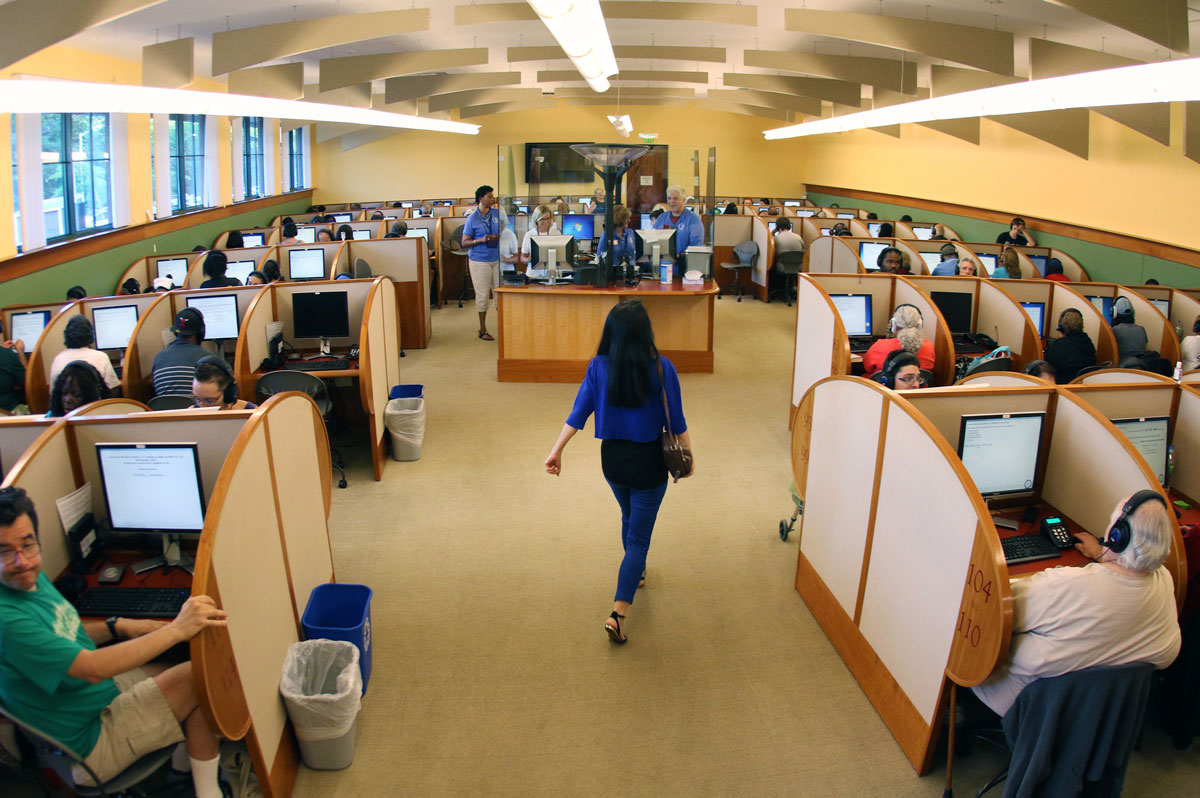
The automation of blue-collar and office jobs using digital technologies has been an important driver of the rise in inequality since the 1980s. A new CEPR Policy Insight argues that a ‘human-complementary’ path for artificial intelligence could contribute more to productivity growth and help reduce economic inequality. The authors suggest five potential elements for policy attention to help move the US, Europe, and other economies onto this human-complementary path.

Comparing U.S. and global attitudes toward AI
Five charts on how Americans feel about the current and future impact of AI on society, and how Americans’ views on the technology stack up against the rest of the world

AI, Ethics, and Society — Home
The Age Of Artificial Intelligence: Americans' AI Use Increases While Views On It Sour, Quinnipiac University Poll On AI Finds; 7 In 10 Think AI Will Cut Jobs With Gen Z The Most Pessimistic | Quinnipiac University Poll
"The contradiction between use and trust of AI is striking. Fifty-one percent say they use AI for research, and many also use it for writing, work, and data analysis. But only 21 percent trust AI-generated information most or almost all of the time. Americans are clearly adopting AI, but they are doing so with deep hesitation, not deep trust," said Chetan Jaiswal, Ph.D., Associate Professor of Computer Science and Associate Chair, Department of Computing, Quinnipiac University School of Computing and Engineering.
THE 2028 GLOBAL INTELLIGENCE CRISIS
A Thought Exercise in Financial History, from the Future