In this dissertation, I explore how, in Canada, Indigenous people’s relationships with culturally-significant plant species are an expression of Aboriginal rights, and I ask how these rights can be affirmed and exercised using a form of intersocietal law within and between First Nations and state governments. I examine how my own and others’ ethnobotanical and ethnoecological research can help to decolonize the Crown legal systems that limit Indigenous peoples in regenerating their relationships with native plant species and the ecosystems within which they are situated. In order to explore how Indigenous people’s relationships with native plant species can be expressed in law, my dissertation is grounded in a case study, developed and carried out in collaboration with the T’Sou-ke Nation, members of which have lived on southern Vancouver Island since time immemorial as part of the Straits Salish language group. Using the T’Sou-ke case study as an example, I explain how this evidence of knowledge and use of plants helps to root contemporary First Nations’ rights throughout their territories, which is essential to establishing the basis of land and resource rights that have legal force to be claimed today.I indicate current challenges faced by T’Sou-ke Nation in exercising plant-associated rights throughout their territory and outline how the current legal test for proving Aboriginal rights is problematic. The T’Sou-ke have an abundance of rich evidence of their use of 100 native plant species and of Indigenous laws and governance associated with the same. I contend that the obvious and long-standing Indigenous management of these plant species and various ecosystems on southern Vancouver Island supports a very significant claim of legal rights and I believe that my research is broadly applicable to other First Nations in BC and beyond. The T’Sou-ke Nation, historically and today, are norm creating, generating and interpreting people as reflected in their distinct social organization adapted and adjusted by their members through many changing social and ecological variables over centuries. The re-examination of the values, rules, protocols, customs and practices associated with markers of Indigenous plant use throughout Straits Salish landscapes, specifically with the assistance of Indigenous knowledge holders, as well as ethnohistorical, ethnobotanical, and traditional ecological knowledge, re-frames how evidence of land use and occupancy is presented, and, ultimately, how we might all govern these resources together. For the T’Sou-ke, laws around plants are not limited to certain traditional practices, or to specific sites or places; law also rests in species and in the long-term relationships that people have with culturally important plant species. As such, the normative ordering of T’Sou-ke laws relating to their plant use and management must be judged on T’Sou-ke terms, not by Canadian legal terms. My hope is that this research contributes to the larger discussion of acknowledging Indigenous peoples’ distinct and culturally relative rights and principles with respect to native plants, while strengthening and growing the ties that bind all British Columbians together.
‘We can feel our ancestors’: one First Nation’s fight to save Canada’s old forests
The Wet’suwet’en Nation never signed treaties with the Canadian or provincial governments, yet their land was leased to timber companies
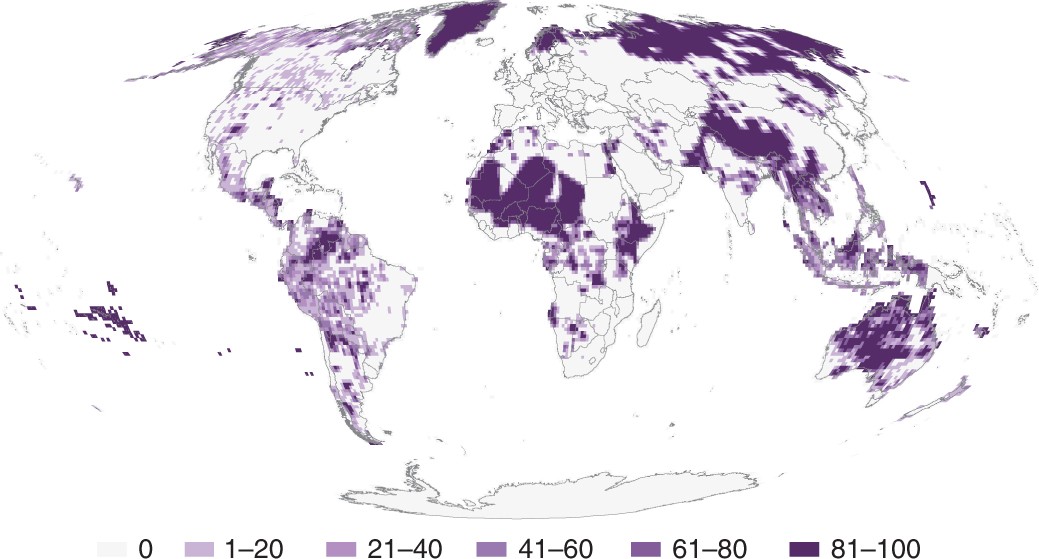
A spatial overview of the global importance of Indigenous lands for conservation
Understanding the scale, location and nature conservation values of the lands over which Indigenous Peoples exercise traditional rights is central to implementation of several global conservation and climate agreements. However, spatial information on Indigenous lands has never been aggregated globally. Here, using publicly available geospatial resources, we show that Indigenous Peoples manage or have tenure rights over at least ~38 million km2 in 87 countries or politically distinct areas on all inhabited continents. This represents over a quarter of the world’s land surface, and intersects about 40% of all terrestrial protected areas and ecologically intact landscapes (for example, boreal and tropical primary forests, savannas and marshes). Our results add to growing evidence that recognizing Indigenous Peoples’ rights to land, benefit sharing and institutions is essential to meeting local and global conservation goals. The geospatial analysis presented here indicates that collaborative partnerships involving conservation practitioners, Indigenous Peoples and governments would yield significant benefits for conservation of ecologically valuable landscapes, ecosystems and genes for future generations.
‘It is all about listening and sharing’: Indigenous solutions to the carbon divide
Deforestation rates are much lower on Indigenous land – and there is growing recognition that first peoples have vital role to play
Indigenous Data Sovereignty (DDN3-A11)
This article explores Indigenous data sovereignty, identifies some of the data-related challenges faced by Indigenous Peoples and highlights the work done to overcome these challenges.

Earthy Governance: How to Learn About Democracy From Indigenous Peoples
In light of the planetary polycrisis, it is time to challenge the dominant strand of Western thought that asserts only humans possess rights and that

Doctrine of Discovery Project
Explore the Doctrine of Discovery Project archive of legal history, papal bulls, repudiations, and resources on Indigenous sovereignty, justice, and decolonization.

How to rebuild First Nations food systems in B.C. | The Narwhal
Indigenous communities are tackling food sovereignty, but it requires recognition of jurisdiction, funding and a shift in worldview
Importance of Indigenous Peoples’ lands for the conservation of Intact Forest Landscapes
Intact Forest Landscapes ( IFL s) are critical strongholds for the environmental services that they provide, not least for their role in climate protection. On the basis of information about the distributions of IFL s and Indigenous Peoples’ lands, we examined the importance of these areas for conserving the world's remaining intact forests. We determined that at least 36% of IFL s are within Indigenous Peoples’ lands, making these areas crucial to the mitigation action needed to avoid catastrophic climate change. We also provide evidence that IFL loss rates have been considerably lower on Indigenous Peoples’ lands than on other lands, although these forests are still vulnerable to clearing and other threats. World governments must recognize Indigenous Peoples’ rights, including land tenure rights, to ensure that Indigenous Peoples play active roles in decision‐making processes that affect IFL s on their lands. Such recognition is critical given the urgent need to reduce deforestation rates in the face of escalating climate change and global biodiversity loss.

“Two‐Eyed Seeing”: An Indigenous framework to transform fisheries research and management
Abstract Increasingly, fisheries researchers and managers seek or are compelled to “bridge” Indigenous knowledge systems with Western scientific approaches to understanding and governing fisheries. Here, we move beyond the all‐too‐common narrative about integrating or incorporating (too often used as euphemisms for assimilating) other knowledge systems into Western science, instead of building an ethic of knowledge coexistence and complementarity in knowledge generation using Two‐Eyed Seeing as a guiding framework. Two‐Eyed Seeing ( Etuaptmumk in Mi’kmaw) embraces “learning to see from one eye with the strengths of Indigenous knowledges and ways of knowing, and from the other eye with the strengths of mainstream knowledges and ways of knowing, and to use both these eyes together, for the benefit of all,” as envisaged by Elder Dr. Albert Marshall. In this paper, we examine the notion of knowledge dichotomies and imperatives for knowledge coexistence and draw parallels between Two‐Eyed Seeing and other analogous Indigenous frameworks from around the world. It is set apart from other Indigenous frameworks in its explicit action imperative—central to Two‐Eyed Seeing is the notion that knowledge transforms the holder and that the holder bears a responsibility to act on that knowledge. We explore its operationalization through three Canadian aquatic and fisheries case‐studies that co‐develop questions, document and mobilize knowledge, and co‐produce insights and decisions. We argue that Two‐Eyed Seeing provides a pathway to a plural coexistence, where time‐tested Indigenous knowledge systems can be paired with, not subsumed by, Western scientific insights for an equitable and sustainable future.

Assessing nature's contributions to people
Recognizing culture, and diverse sources of knowledge, can improve assessments , A major challenge today and into the future is to maintain or enhance beneficial contributions of nature to a good quality of life for all people. This is among the key motivations of the Intergovernmental Science-Policy Platform on Biodiversity and Ecosystem Services (IPBES), a joint global effort by governments, academia, and civil society to assess and promote knowledge of Earth's biodiversity and ecosystems and their contribution to human societies in order to inform policy formulation. One of the more recent key elements of the IPBES conceptual framework ( 1 ) is the notion of nature's contributions to people (NCP), which builds on the ecosystem service concept popularized by the Millennium Ecosystem Assessment (MA) ( 2 ). But as we detail below, NCP as defined and put into practice in IPBES differs from earlier work in several important ways. First, the NCP approach recognizes the central and pervasive role that culture plays in defining all links between people and nature. Second, use of NCP elevates, emphasizes, and operationalizes the role of indigenous and local knowledge in understanding nature's contribution to people.

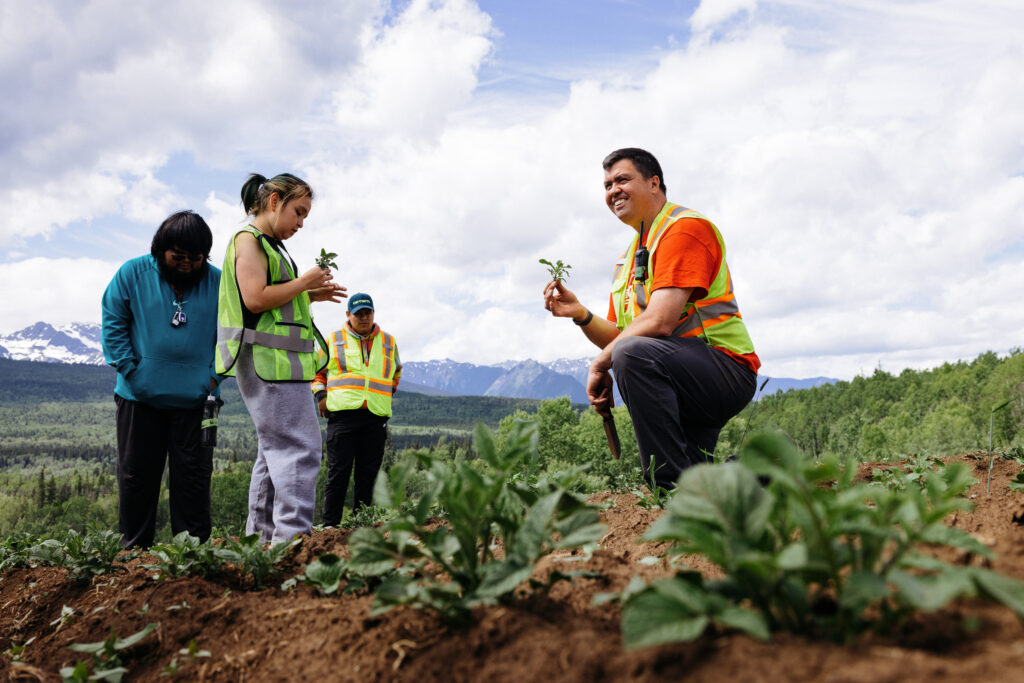
Supporting Indigenous Food Systems – Upland Agricultural Consulting
Upland Agricultural Consulting is committed to supporting First Nation, Métis, and Inuit Communities. We believe that investing in Indigenous communities leads to the success of British Columbia, and Canada. As Professional Agrologists, we want to see agriculturally-capable land being brought into full production. To meet that goal, we work alongside Indigenous leadership and staff to create agri-food suitability assessments based on the capacity of the land and the community and to meet the desired level of business development.

Guidelines for Indigenous-centred AI Design – Abundant Intelligences
The term ‘Indigenous’ is used as connective tissue rather than descriptive skin, to appreciate the hyperdense textures of our points of contact while respecting our rich and productive differences.The designation ‘v. 1’ is used to denote that this is only a first iteration and that we anticipate that these guidelines will be modified, adapted and updated as they circulate, to reflect the needs of specific Indigenous nations and communities.The purpose of these guidelines is to assist and guide the development of AI systems towards morally and socially desirable ends. Our focus is on the use and application of AI in Indigenous contexts. Yet we also believe these guidelines will be of use in other contexts, given that every implementation ofan AI system is a product and expression of cultural values. The goal of these guidelines is to promote intergenerational transmission of knowledge, ceremony, and practice, to connect and enhance our communities and to frame our relationships to the land, sea, and skyscapes. They are aimed at any person, group, organization, institute, company, and/or political or governmental representative that wishes to undertake responsible and fair development of AI systems with Indigenous communities. This responsibility includes, amongst other things, contributing to scientific or technological progress, projectIndigenous Protocol and Artificial Intelligence Workshops Position Paper 21 development, rules, regulations, codes and algorithm development, methodological approaches and public opinion.Although these guidelines are presented as a list, there is no hierarchy in its ordering. The first principle is no less important or weighted higher than the last.
Guardians of the Earth: How Indigenous Peoples can teach the world to safeguard and conserve biodiversity
For hundreds of years, Indigenous Peoples around the world have held integral roles as protectors of their surrounding territories, environment and resources.

Native-Land.ca | Our home on native land
Native Land is a resource to learn more about Indigenous territories, languages, lands, and ways of life. We welcome you to our site.
Decolonizing as a Spiritual Path- Leny Strobel, Center of Babaylan Studies
Is it possible to decolonize the Commons? An interview with Jane Anderson of Local Contexts - Creative Commons
Joining us at the Creative Commons Global Summit in 2018, NYU professor and legal scholar Jane Anderson presented the collaborative project “Local Contexts,” “an initiative to support Native, First Nations, Aboriginal, Inuit, Metis and Indigenous communities in the management of their intellectual property and cultural heritage specifically within the digital environment.”