

Home page for the Data Transfer Initiative, a nonprofit organization dedicated to promoting data transfers
Broadening Access to Data Science Education in High School and Higher Education through Open Source Tools, Infrastructure, and Training
Equitable data science education requires a multifaceted approach, involving high school and higher education, community involvement, and accessible tools. A renewed investment in public digital infrastructure is needed to support these efforts. Nonprofits play a crucial role in supporting these efforts, and increased representation in leadership can enhance their impact. By addressing these disparities, we can ensure a more inclusive future in data science.
A Polycentric Governance Lens on Data Infrastructures
Computer Supported Cooperative Work (CSCW) - Funding policies for data infrastructure promote open data sharing to drive positive social impact. However, concerns regarding the long-term management...

Digital Socialism?
What opportunities does the new feedback infrastructure of data capitalism offer for non-market forms of social coordination? Hayek and the Calculation Debate revisited in the age of big data.
A Polycentric Governance Lens on Data Infrastructures
Funding policies for data infrastructure promote open data sharing to drive positive social impact. However, concerns regarding the long-term management of data within and across distributed infrastructures can hinder data sharing. We draw upon the concept of polycentric governance to demonstrate how collaborative practices of data curation, in preparing and maintaining data for (future) sharing, provide a solid foundation for understanding data governance within data infrastructures. Based on a qualitative case study of a distributed ecological network, we investigate the conditions under which data are managed as a shared resource by local actors to ensure the long-term (re)usability of data. We contribute to CSCW by conceptualising data curation as a complex form of governance practice with multiple centres of decision-making, each of which operates with some degree of autonomy in data infrastructures. A polycentric governance lens on data infrastructures advances the CSCW conception of data curation as a collective governance practice that can cultivate a data democracy culture within and across organisations, empower individuals to be accountable for their data, and foster a mindset shift toward decentralised data governance.
Democratizing Data
Democratizing Data builds a community-driven data ecosystem by identifying how datasets are used and reducing barriers to accessing high-quality public data. The initiative enhances the discoverability, usability, and relevance of data for researchers, policymakers, and stakeholder communities. A suite of tools and strategic partnerships supports this work by connecting users to the data, insights, and networks needed to inform decisions and generate impact.
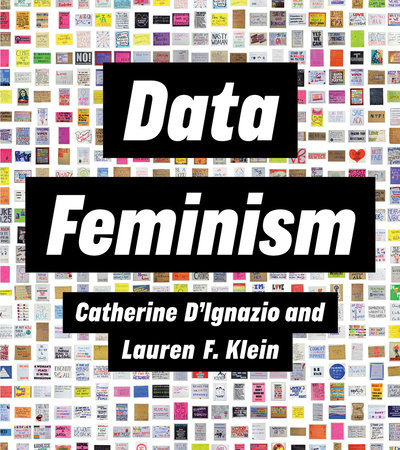
Data Feminism
Today, data science is a form of power. It has been used to expose injustice, improve health outcomes, and topple governments. But it has also been used to d...

We Need A New Kind Of Data Rights
Associational data rights would empower communities to reclaim power from Big Tech

Can “Conscious Data Contribution” Help Users to Exert “Data Leverage” Against Technology Companies?
Tech users currently have limited ability to act on concerns regarding the negative societal impacts of large tech companies. However, recent work suggests that users can exert leverage using their role in the generation of valuable data, for instance by withholding their data contributions to intelligent technologies. We propose and evaluate a new means to exert this type of leverage against tech companies: "conscious data contribution" (CDC).
The Future of Open Source | datagubbe.se
Open North – Building trust in data, for the common good
Open North is a not-for-profit organization dedicated to advancing the common good. Working alongside governments and civic-minded organizations of all sizes, we provide data expertise to enhance decision-making, drive innovation, optimize public and civic services, and address society's most pressing challenges. Our work focuses on building the capacity of organizations to make better decisions about managing their data so that it is useful, actionable, secure, and trustworthy throughout its entire lifecycle.
Fed up with Big Tech, communities turn to data collectives for control
Data collectives and cooperatives, which let creators control the collection and distribution of their data, are emerging as preferred alternatives to big tech companies.

Doing Data Science on the Shoulders of Giants: The Value of Open Source Software for the Data Science Community · Issue 2.2, Spring 2020
Open source software is ubiquitous throughout data science, and enables the work of nearly every data scientist in some way or another. Open source projects, however, are disproportionately maintained by a small number of individuals, some of whom are institutionally supported, but many of whom do this maintenance on a purely volunteer basis. The health of the data science ecosystem depends on the support of open source projects, on an individual and institutional level.

Data Feminism
A new way of thinking about data science and data ethics that is informed by the ideas of intersectional feminism.Today, data science is a form of power. I
Aye > Data Ownership as a conversation changes when data resides primarily with people (..). > Instead of arguing for what kinds of data we ought to be able to download from the corporate silos, the platforms should be asking us what kinds of data they may copy from *our* servers.

Erlend Sogge Heggen
The web can be made personal again. blog.muni.town/personal-data-storage-idea/
Please join this webinar on Moving from Harmful Platforms to Social Technologies, discussing how digital public goods and other open-source solutions can support the scaling of a more transparent, interoperable, and accountable social technology landscape. 📝 Register Here zoom.us/webinar/register/WN__IHGcRbVR…
#atproto devs, I know data is public and accessible But we need more tools to help people download their data in *familiar and user-friendly* formats Data ownership is also about enabling people to use and move their data in whatever way they desire, even if they wish to take it outside the protocol

Victoria
I'd argue that having an export tool to fetch the data from the PDSes into familiar data files would be very much appreciated by the general public, both webcomic authors and readers (especially converting the block content into something clean to import anywhere they might desire)
