



Attribution, Provenance, Reference, Citation, and AI for Research Applications – Understanding the Differences - The Scholarly Kitchen
Building robust citation and attribution into generative AI systems are foundational to usage, credit and trust. We need to expect more from AI.

Two billion citation links in Crossref help research travel further - Crossref
We’ve recently reached an important milestone for the research nexus: the works in our metadata corpus are now connected with over 2 billion citation links! This is a great opportunity to share a dedicated dataset and discuss why these are important for science.

Viewing Citation Analysis Through the Lens of Citation Justice
Given the recent growing emphasis on citation justice and related concepts, this paper examines "Citation Analysis," published in Library Trends in 1981, and revisits it through the lens of citation justice. Overarching questions include: How can citation analysis be more just? How can research evaluation go beyond citation analysis to be more just? Sections include a discussion of the concept of citation justice, applications of citation analysis with particular emphasis on evaluative bibliometrics, characterization of assumptions underlying citation analysis, identification of problems posed in dealing with citation data, and an outline of possible approaches to achieving citation justice. Several different entities and actions are discussed with the goal of working toward citation justice. These include author roles, pedagogical approaches, resource compilation, editor and reviewer roles, publisher roles, advocacy, recommendations for research evaluation reform, and higher education institutional roles. Viewing citation analysis through the lens of citation justice reveals significant limitations in citation analysis and suggests ways to correct them–both to ensure that more diverse scholars are part of the scholarly conversation that underlies citation analysis and to encourage approaches to research evaluation that are not dependent solely on citation counts.
The Research Nexus vision for a more connected scholarly community
Crossref envisions “a rich and reusable open network of relationships connecting research organizations, people, things, and actions; a scholarly record that the global community can build on forever, for the benefit of society”. This Research Nexus expands on the importance of research objects being persistently and uniquely identified. The scholarly community has an established practice of connecting things such as citations to others’ work and it is increasingly critical to identify relationships beyond citations, bringing together published work, unpublished work, institutions, individuals, and identifying the actions that they take e.g., funding, publishing, creating, modifying, citing, and sharing. The Research Nexus brings together metadata and relationships to build a joined-up picture of the scholarly ecosystem and helps everyone identify these relationships and how they change through time. This vision is possible if all parts of the scholarly ecosystem (and beyond) work together, including various scholarly infrastructure organizations.

SemRepo.org
SemRepo is a large-scale RDF knowledge graph of GitHub repositories linked to scientific research. SemRepo captures fine-grained repository-level metadata (e.g., contributors, issues, programming languages) and interlinks this with external scholarly knowledge graphs: repositories to publications in LPWC, repository authors to their profiles in SemOpenAlex, and research artifacts (e.g., datasets, experiments) are linked via MLSea.
Open Sourcing Scientific Research with Lab Discourse Graphs
Bibliograph — Overview
Bibliograph AT Protocol AppView: procedures and queries served by the net.olamaelcu.livtet.biblio lexicon.
Jim Nielsen (@jim-nielsen.com)
If you haven’t seen it yet the new @aworkinglibrary.com website is dope aworkinglibrary.com Lots of things to love. A few that stand out to me: - It's _fast_ - Every page has a “footer” that’s essentially just the home page — enthralled by this idea. - ❤️ the treatment for citations on post pag…

Crossref: The sustainable source of community-owned scholarly metadata
This paper describes the scholarly metadata collected and made available by Crossref, as well as its importance in the scholarly research ecosystem. Containing over 106 million records and expanding at an average rate of 11% a year, Crossref’s metadata has become one of the major sources of scholarly data for publishers, authors, librarians, funders, and researchers. The metadata set consists of 13 content types, including not only traditional types, such as journals and conference papers, but also data sets, reports, preprints, peer reviews, and grants. The metadata is not limited to basic publication metadata, but can also include abstracts and links to full text, funding and license information, citation links, and the information about corrections, updates, retractions, etc. This scale and breadth make Crossref a valuable source for research in scientometrics, including measuring the growth and impact of science and understanding new trends in scholarly communications. The metadata is available through a number of APIs, including REST API and OAI-PMH. In this paper, we describe the kind of metadata that Crossref provides and how it is collected and curated. We also look at Crossref’s role in the research ecosystem and trends in metadata curation over the years, including the evolution of its citation data provision. We summarize the research used in Crossref’s metadata and describe plans that will improve metadata quality and retrieval in the future.

Introduction to the Journal of Marketing Research Special Interdisciplinary Issue on Consumer Financial Decision Making
If you have citation software installed, you can download citation data to the citation manager of your choice
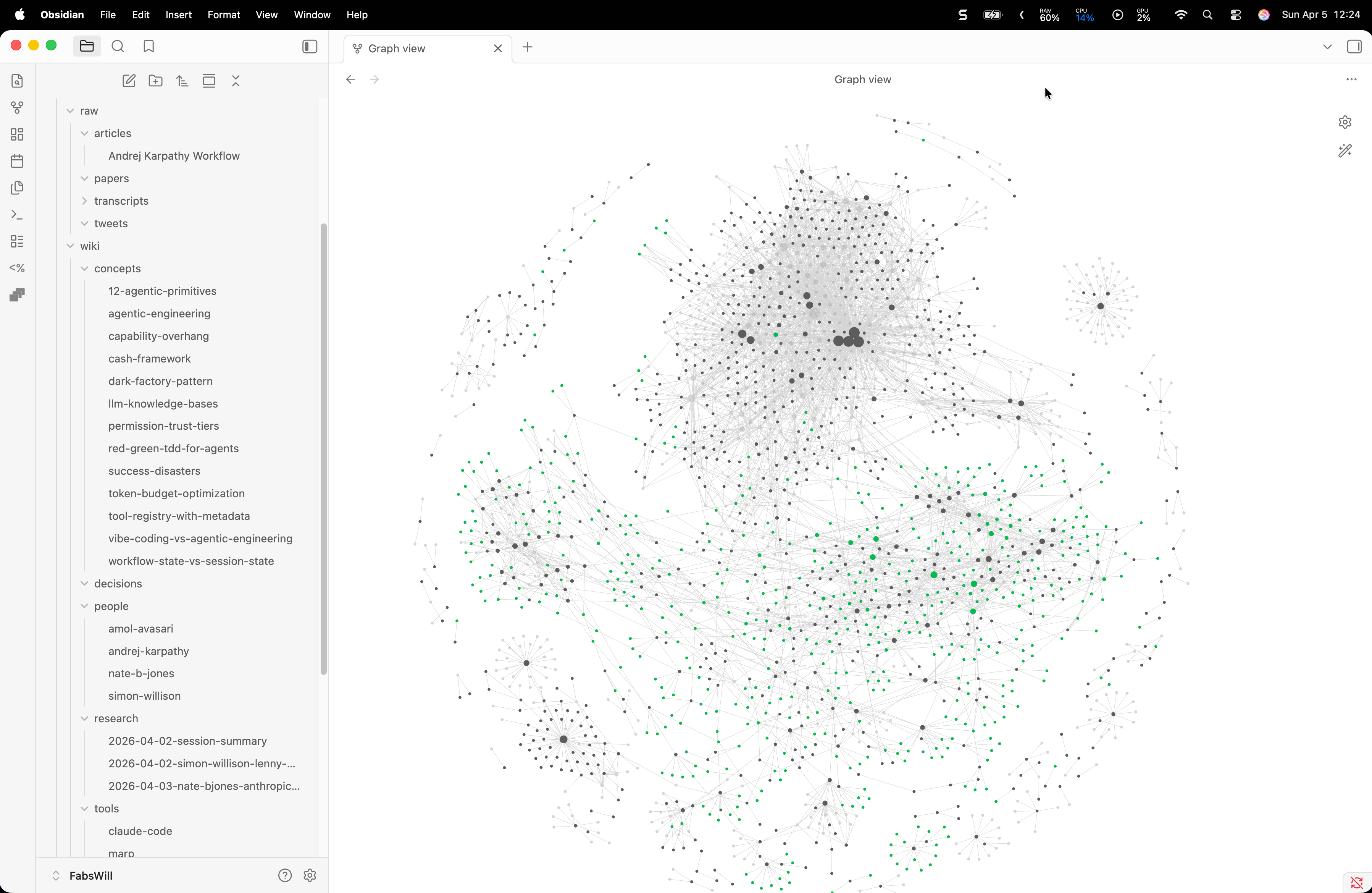
I Built a Knowledge Base That Writes Itself. Here Is What Andrej Karpathy Got Right.
Andrej Karpathy posted about using LLMs to build personal knowledge bases. I took his workflow, wired it into my Obsidian vault with Claude Code, and within an hour had 21 cross-linked wiki articles compiled from YouTube transcripts. Here is how it works and why it matters.
Incorrect Citation Association for Articles in Online-Only Springer Nature Journals
We show that citation metrics of journal articles in many of the online-only Springer Nature journals and associated ones are distorted, going back to articles from 2001. We find that most likely due to an API response error, there are many incorrect references which typically lead to Article Number 1 of a given Volume. Among others, the issue affects journals such as Scientific Reports, Nature Communications, Communications journals, Cell Death & Disease, Light: Science & Applications, as well as many BMC, Discovery and npj journals. Beyond the negative effect of introducing incorrect reference information, this distorts the citation statistics of articles in these journals, with a few articles being massively over-cited compared to their peers, while many lose citations; e.g. both in Scientific Reports and in Nature Communications, 5 of the 10 top cited articles have article numbers of 1. We validate the distorted statistics by assessing data from multiple scientific literature databases: Crossref, OpenCitations, Semantic Scholar, and the journals' websites. The issue primarily arises from the inconsistent transition from page-based referencing of articles to article number-based referencing, as well as the improper handling of the change in the publisher's article metadata API. It seems that the most pressing problem has been present since approximately 2011, which we estimate affects the citation count of millions of authors.

Getting started - Docs
Discourse Graphs are a tool and ecosystem for collaborative knowledge synthesis, enabling researchers to map ideas and arguments in a modular, composable graph format.
Wikipedia:Reliable sources/Perennial sources
This is a non-exhaustive list of sources whose reliability and use on Wikipedia are frequently discussed. This list summarizes prior consensus and consolidates links to the most in-depth and recent discussions from the reliable sources noticeboard and elsewhere on Wikipedia.