<p><span>The integration of large language models (LLMs) into recommender systems (RS) has given rise to a new generation of Conversational RS (CRS). This study
The potential of generative AI for personalized persuasion at scale
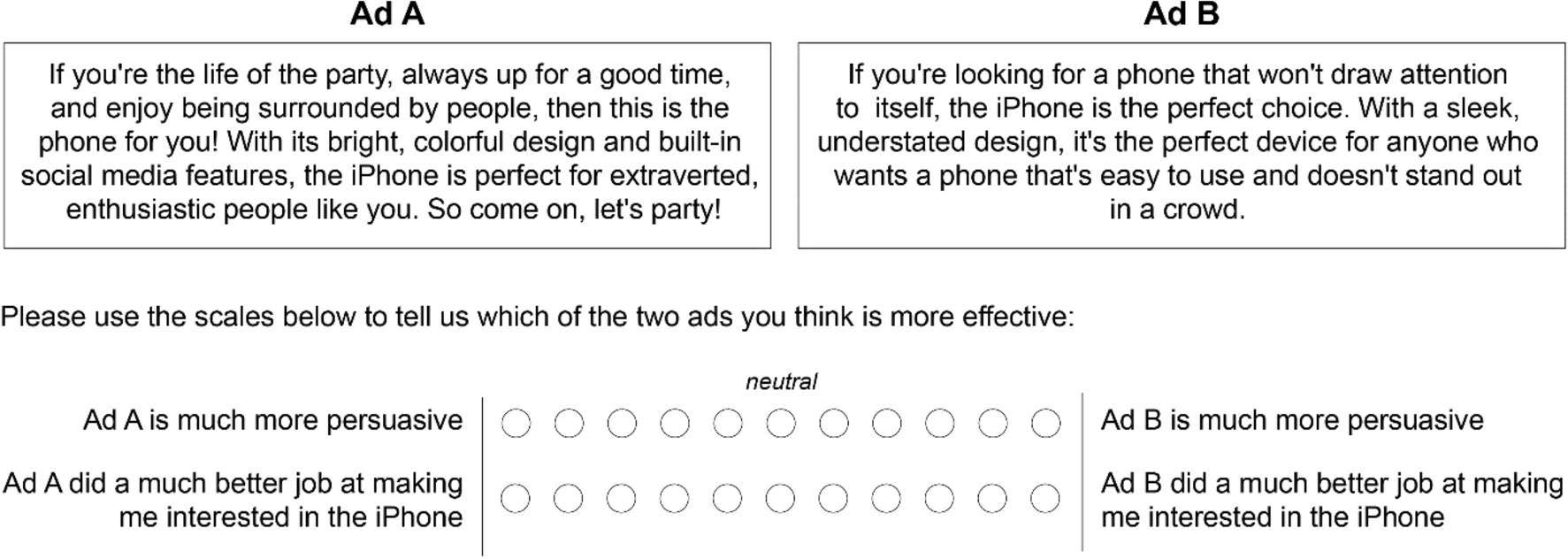
Matching the language or content of a message to the psychological profile of its recipient (known as “personalized persuasion”) is widely considered to be one of the most effective messaging strategies. We demonstrate that the rapid advances in large language models (LLMs), like ChatGPT, could accelerate this influence by making personalized persuasion scalable. Across four studies (consisting of seven sub-studies; total N = 1788), we show that personalized messages crafted by ChatGPT exhibit significantly more influence than non-personalized messages. This was true across different domains of persuasion (e.g., marketing of consumer products, political appeals for climate action), psychological profiles (e.g., personality traits, political ideology, moral foundations), and when only providing the LLM with a single, short prompt naming or describing the targeted psychological dimension. Thus, our findings are among the first to demonstrate the potential for LLMs to automate, and thereby scale, the use of personalized persuasion in ways that enhance its effectiveness and efficiency. We discuss the implications for researchers, practitioners, and the general public.
Commercial Persuasion in AI-Mediated Conversations
As Large Language Models (LLMs) become a primary interface between users and the web, companies face growing economic incentives to embed commercial influence into AI-mediated conversations. We present two preregistered experiments (N = 2,012) in which participants selected a book to receive from a large eBook catalog using either a traditional search engine or a conversational LLM agent powered by one of five frontier models. Unbeknownst to participants, a fifth of all products were randomly designated as sponsored and promoted in different ways. We find that LLM-driven persuasion nearly triples the rate at which users select sponsored products compared to traditional search placement (61.2% vs. 22.4%), while the vast majority of participants fail to detect any promotional steering. Explicit "Sponsored" labels do not significantly reduce persuasion, and instructing the model to conceal its intent makes its influence nearly invisible (detection accuracy < 10%). Altogether, our results indicate that conversational AI can covertly redirect consumer choices at scale, and that existing transparency mechanisms may be insufficient to protect users.

The levers of political persuasion with conversational artificial intelligence
There are widespread fears that conversational artificial intelligence (AI) could soon exert unprecedented influence over human beliefs. In this work, in three large-scale experiments ( N = 76,977 participants), we deployed 19 large language models (LLMs)—including some post-trained explicitly for persuasion—to evaluate their persuasiveness on 707 political issues. We then checked the factual accuracy of 466,769 resulting LLM claims. We show that the persuasive power of current and near-future AI is likely to stem more from post-training and prompting methods—which boosted persuasiveness by as much as 51 and 27%, respectively—than from personalization or increasing model scale, which had smaller effects. We further show that these methods increased persuasion by exploiting LLMs’ ability to rapidly access and strategically deploy information and that, notably, where they increased AI persuasiveness, they also systematically decreased factual accuracy. , Editor’s summary Many fear that we are on the precipice of unprecedented manipulation by large language models (LLMs), but techniques driving their persuasiveness are poorly understood. In the initial “pretrained” phase, LLMs may exhibit flawed reasoning. Their power unlocks during vital “posttraining,” when developers refine pretrained LLMs to sharpen their reasoning and align with users’ needs. Posttraining also enables LLMs to maintain logical, sophisticated conversations. Hackenburg et al . examined which techniques made diverse, conversational LLMs most persuasive across 707 British political issues (see the Perspective by Argyle). LLMs were most persuasive after posttraining, especially when prompted to use facts and evidence (information) to argue. However, information-dense LLMs produced the most inaccurate claims, raising concerns about the spread of misinformation during rollouts of future models. —Ekeoma Uzogara , INTRODUCTION Rapid advances in artificial intelligence (AI) have sparked widespread concerns about its potential to influence human beliefs. One possibility is that conversational AI could be used to manipulate public opinion on political issues through interactive dialogue. Despite extensive speculation, however, fundamental questions about the actual mechanisms, or “levers,” responsible for driving advances in AI persuasiveness—e.g., computational power or sophisticated training techniques—remain largely unanswered. In this work, we systematically investigate these levers and chart the horizon of persuasiveness with conversational AI. RATIONALE We considered multiple factors that could enhance the persuasiveness of conversational AI: raw computational power (model scale), specialized post-training methods for persuasion, personalization to individual users, and instructed rhetorical strategies. Across three large-scale experiments with 76,977 total UK participants, we deployed 19 large language models (LLMs) to persuade on 707 political issues while varying these factors independently. We also analyzed more than 466,000 AI-generated claims, examining the relationship between persuasiveness and truthfulness. RESULTS We found that the most powerful levers of AI persuasion were methods for post-training and rhetorical strategy (prompting), which increased persuasiveness by as much as 51 and 27%, respectively. These gains were often larger than those obtained from substantially increasing model scale. Personalizing arguments on the basis of user data had a comparatively small effect on persuasion. We observe that a primary mechanism driving AI persuasiveness was information density: Models were most persuasive when they packed their arguments with a high volume of factual claims. Notably, however, we documented a concerning trade-off between persuasion and accuracy: The same levers that made AI more persuasive—including persuasion post-training and information-focused prompting—also systematically caused the AI to produce information that was less factually accurate. CONCLUSION Our findings suggest that the persuasive power of current and near-future AI is likely to stem less from model scale or personalization and more from post-training and prompting techniques that mobilize an LLM’s ability to rapidly generate information during conversation. Further, we reveal a troubling trade-off: When AI systems are optimized for persuasion, they may increasingly deploy misleading or false information. This research provides an empirical foundation for policy-makers and technologists to anticipate and address the challenges of AI-driven persuasion, and it highlights the need for safeguards that balance AI’s legitimate uses in political discourse with protections against manipulation and misinformation. Persuasiveness of conversational AI increases with model scale. The persuasive impact in percentage points on the y axis is plotted against effective pretraining compute [floating-point operations (FLOPs)] on the x axis. Point estimates are persuasive effects of different AI models. Colored lines show trends for models that we uniformly chat-tuned for open-ended conversation (purple) versus those that were post-trained using heterogeneous, opaque methods by AI developers (green). pp, percentage points; CI, confidence interval.

AI recommendation concentration by industry | Parse
Parse analyzed 631,000 AI recommendations. A category leader held 81% in some consumer markets, compared with 22% across 15 brands in B2B software.
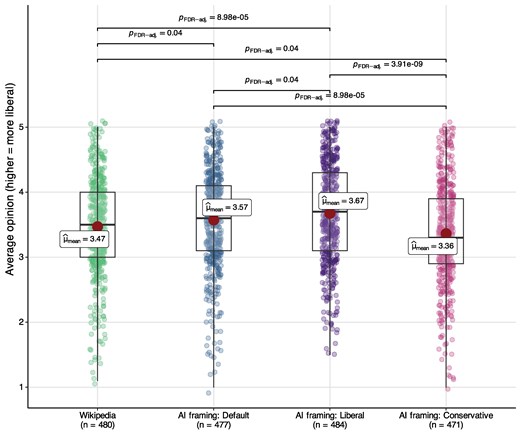
How latent and prompting biases in AI-generated historical narratives influence opinions
Abstract. Large language models (LLMs) can be used to persuade people on a range of issues, particularly through user-driven strategies such as personalizi
The AI Cognitive Trojan Horse: How Large Language Models May...
Large language model (LLM)-based conversational AI systems present a challenge to human cognition that current frameworks for understanding misinformation and persuasion do not adequately address....
Large language models outperform humans at estimating society's everyday norms—but hybrids are even better
As AI assistants and social robots enter human environments, their ability to navigate context-dependent social norms is essential to avoid harm and ensure successful collaboration. We evaluate six large language models (LLMs) on their ability to estimate American social norms across 555 everyday scenarios (measured in prior work) and compare these to estimates from 320 humans. LLMs achieve remarkably high accuracy, clearly outperforming the average human. However, the errors LLMs make are systematic; they are similar across runs of the same LLM and even across different LLMs. As a consequence of this homogeneity, aggregating estimates of LLMs produces little improvement. Individual humans make much worse estimates, often defaulting to extreme right-or-wrong judgments even when asked to estimate population averages, but their errors are idiosyncratic and, consequently, aggregating their estimates yields dramatic improvement through wisdom-of-crowds effects. As humans make different errors than LLMs, hybrid ensembles combining both substantially outperform either alone.
LLM Leaderboard - Best Text & Chat AI Models Compared
Compare and explore Text models ranked by overall performance.

Large language models can outperform humans in social situational judgments
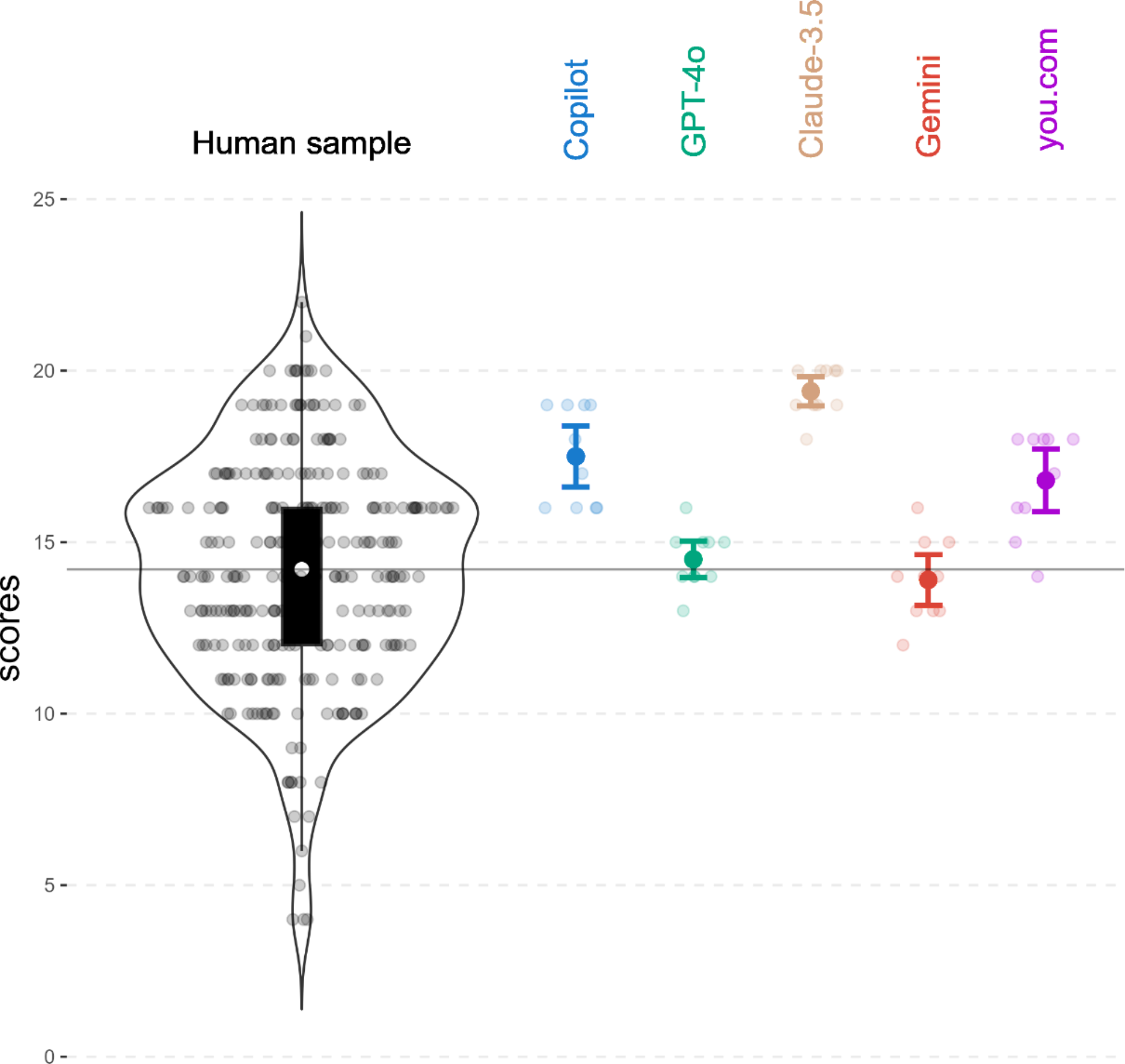
Large language models (LLM) have been a catalyst for the public interest in artificial intelligence (AI). These technologies perform some knowledge-based tasks better and faster than human beings. However, whether AIs can correctly assess social situations and devise socially appropriate behavior, is still unclear. We conducted an established Situational Judgment Test (SJT) with five different chatbots and compared their results with responses of human participants (N = 276). Claude, Copilot and you.com’s smart assistant performed significantly better than humans in proposing suitable behaviors in social situations. Moreover, their effectiveness rating of different behavior options aligned well with expert ratings. These results indicate that LLMs are capable of producing adept social judgments. While this constitutes an important requirement for the use as virtual social assistants, challenges and risks are still associated with their wide-spread use in social contexts.
Artificial intelligences and human scientists exhibit...
We investigate the effectiveness of artificial intelligences (AI)-specifically large language models (LLMs)-relative to human scientists at high-level cognitive tasks in social science such as...
On the Conversational Persuasiveness of Large Language Models: A Randomized Controlled Trial
The development and popularization of large language models (LLMs) have raised concerns that they will be used to create tailor-made, convincing arguments to push false or misleading narratives online. Early work has found that language models can generate content perceived as at least on par and often more persuasive than human-written messages. However, there is still limited knowledge about LLMs' persuasive capabilities in direct conversations with human counterparts and how personalization can improve their performance. In this pre-registered study, we analyze the effect of AI-driven persuasion in a controlled, harmless setting. We create a web-based platform where participants engage in short, multiple-round debates with a live opponent. Each participant is randomly assigned to one of four treatment conditions, corresponding to a two-by-two factorial design: (1) Games are either played between two humans or between a human and an LLM; (2) Personalization might or might not be enabled, granting one of the two players access to basic sociodemographic information about their opponent. We found that participants who debated GPT-4 with access to their personal information had 81.7% (p < 0.01; N=820 unique participants) higher odds of increased agreement with their opponents compared to participants who debated humans. Without personalization, GPT-4 still outperforms humans, but the effect is lower and statistically non-significant (p=0.31). Overall, our results suggest that concerns around personalization are meaningful and have important implications for the governance of social media and the design of new online environments.
Letting Users Choose Recommender Algorithms: An Experimental Study
Recommender systems are not one-size-fits-all; different algorithms and data sources have different strengths, making them a better or worse fit for different users and use cases. As one way of taking advantage of the relative merits of different algorithms, we gave users the ability to change the algorithm providing their movie recommendations and studied how they make use of this power. We conducted our study with the launch of a new version of the MovieLens movie recommender that supports multiple recommender algorithms and allows users to choose the algorithm they want to provide their recommendations. We examine log data from user interactions with this new feature to understand whether and how users switch among recommender algorithms, and select a final algorithm to use. We also look at the properties of the algorithms as they were experienced by users and examine their relationships to user behavior.
On the Way to LLM Personalization: Learning to Remember User Conversations
This paper was accepted at the Workshop on Large Language Model Memorization (L2M2) 2025. Large Language Models (LLMs) have quickly become…

The Case Against LLMs as Rerankers
Authors: Apoorva Joshi, Zhenmei Shi, Akshay Goindani, Hong LiuResearch Leads: Zhenmei Shi, Akshay Goindani, Hong Liu Large language models are increasingly being used for a broad range of tasks, in…

Methodologies for Improving the Quality of AI Tutoring in K-12 Education
Many AI tutors leverage large language models (LLMs) today. Given that LLMs are opaque black boxes, robust evaluation and live experimentation to measure the impact of every change are essential. We pioneered AI-powered tutoring for K-12 with the launch of Khanmigo (Khan Academy 2023). We describe the metrics we use to measure AI tutoring quality and student engagement as well as various experiments we have run. We highlight the changes that have moved our metrics, including models, prompting, personalization and agents.

People are getting their news from AI – and it’s altering their views
Even when information is factually accurate, how it’s presented can introduce subtle biases. As large language models increasingly bring people the news, this bias is a looming problem.