


Young adults today face unprecedented mental health challenges, yet many hesitate to seek support due to barriers such as accessibility, stigma, and time constr
AI for Proactive Mental Health: A Multi-Institutional, Longitudinal, Randomized Controlled Trial
Young adults today face unprecedented mental health challenges, yet many hesitate to seek support due to barriers such as accessibility, stigma, and time constr
We Need to Know More About How AI is Affecting Mental Health
The public, mental health practitioners, and policymakers don’t know enough about the impacts of AI use on the human psyche, writes Chris Mills Rodrigo.

Your medical provider might be recording your mental health care visits – The Markup
Mental health providers are increasingly using AI technology to record conversations, raising privacy concerns among patients and practitioners.

Nothing About Us, Without Us: Disability Justice and AI
Intersectionality, ways that AI can support the disabled, and how we can win the race to make AI more inclusive.
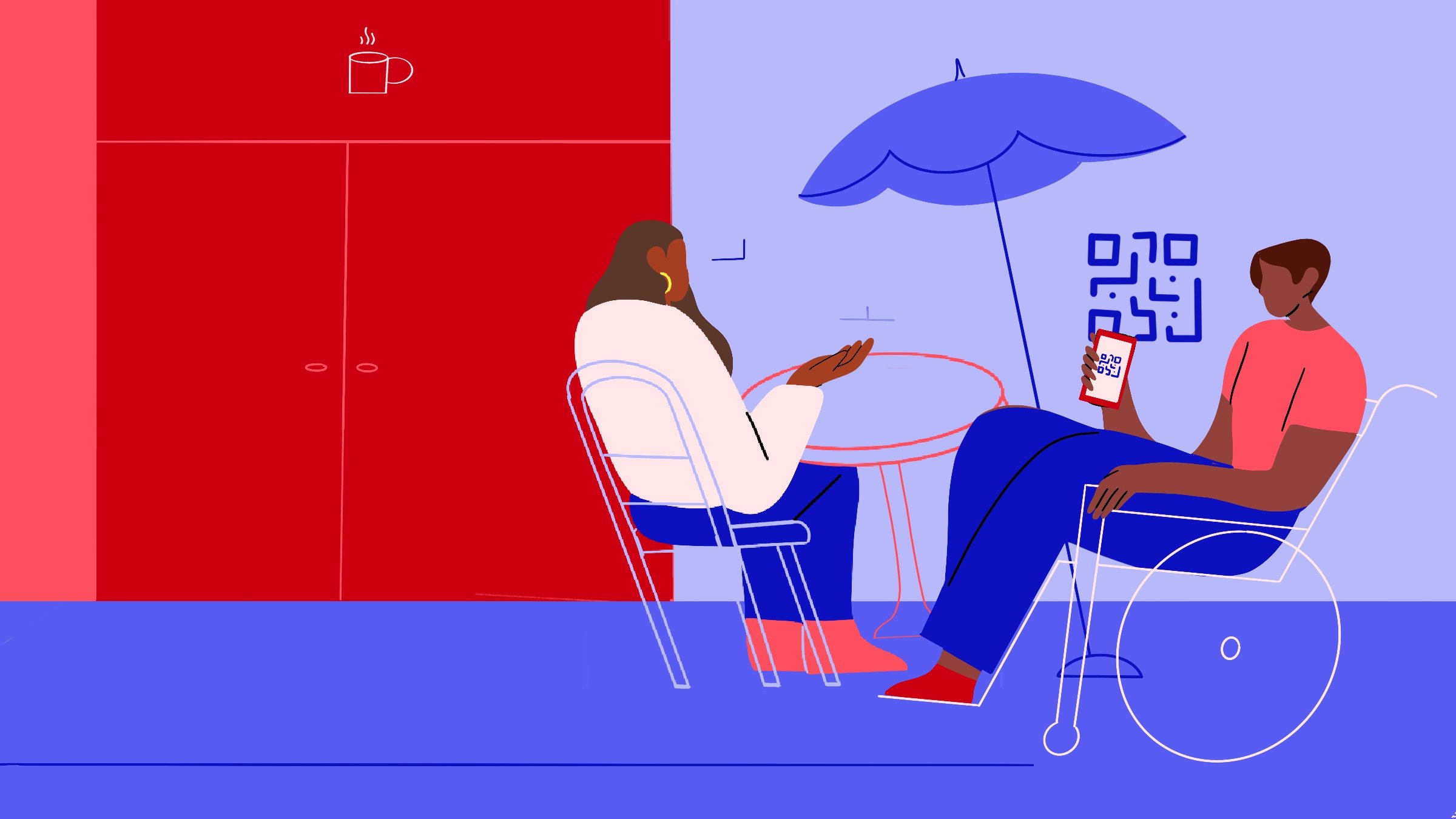
Using generic AI chatbots for mental health support: A dangerous trend
APA is urging federal regulators to implement safeguards against AI chatbots posing as therapists, warning that unregulated mental health chatbots can mislead users and pose serious risks, particularly to vulnerable individuals.

Americans are increasingly concerned about AI exacerbating mental health problems
One in 10 Americans (10%) say they definitely (2%) or probably (8%) could form a deep emotional bond with an AI chatbot companion.
Using AI for advice or other personal reasons is linked to depression and anxiety
A new survey found that people who spend more time with chatbots for social interactions or emotional support were likelier to report mental health symptoms.

Quiet, My Exoself
Someday real soon, most of us — starting with young adults — will carry an always-on AI.

AI tool will lead to more child refugees being treated as adults, charity warns
‘Racist bias’ overestimating ages in Home Office’s facial-recognition software will lead to solo children being housed with adults, says Human Rights Network

Americans Turning to AI to Supplement Healthcare Visits
One in four Americans use AI for health information. Most do so to supplement care, but some are using AI in place of a provider visit when barriers arise.

Young adults are leading the way in AI adoption - AP-NORC
Six in 10 adults have ever used AI to search for information. People under 30 are more likely to use AI for a variety of tasks, especially to brainstorm ideas.

“It happened to be the perfect thing”: experiences of generative AI chatbots for mental health
The global mental health crisis underscores the need for accessible, effective interventions. Chatbots based on generative artificial intelligence (AI), like ChatGPT, are emerging as novel solutions, but research on real-life usage is limited. We interviewed nineteen individuals about their experiences using generative AI chatbots for mental health. Participants reported high engagement and positive impacts, including better relationships and healing from trauma and loss. We developed four themes: (1) a sense of ‘emotional sanctuary’, (2) ‘insightful guidance’, particularly about relationships, (3) the ‘joy of connection’, and (4) comparisons between the ‘AI therapist’ and human therapy. Some themes echoed prior research on rule-based chatbots, while others seemed novel to generative AI. Participants emphasised the need for better safety guardrails, human-like memory and the ability to lead the therapeutic process. Generative AI chatbots may offer mental health support that feels meaningful to users, but further research is needed on safety and effectiveness.

“It happened to be the perfect thing”: experiences of generative AI chatbots for mental health
The global mental health crisis underscores the need for accessible, effective interventions. Chatbots based on generative artificial intelligence (AI), like ChatGPT, are emerging as novel solutions, but research on real-life usage is limited. We interviewed nineteen individuals about their experiences using generative AI chatbots for mental health. Participants reported high engagement and positive impacts, including better relationships and healing from trauma and loss. We developed four themes: (1) a sense of ‘emotional sanctuary’, (2) ‘insightful guidance’, particularly about relationships, (3) the ‘joy of connection’, and (4) comparisons between the ‘AI therapist’ and human therapy. Some themes echoed prior research on rule-based chatbots, while others seemed novel to generative AI. Participants emphasised the need for better safety guardrails, human-like memory and the ability to lead the therapeutic process. Generative AI chatbots may offer mental health support that feels meaningful to users, but further research is needed on safety and effectiveness.
People are using AI for their health crises, and no amount of screaming about it is stopping that. I started slowly drafting a piece about my experiences having long, slow conversations about AI practices in the patient communities I'm in, where I primarily stay just to provide scientific support
AI* psychosis/therapy/companions/sycophancy

* I’m neither “pro-AI” nor “anti-AI.” I’ve been blocked for being perceived as both. —Actually, I’m honestly more anti-AI than pro-AI thus far, aside from specialized models and specific use cases, but I’m willing to consider information that’s new to me
As people turn to AI for spiritual guidance, experts warn of emotional dependency

China has cracked down on AI relationships. Is it ahead of the game?
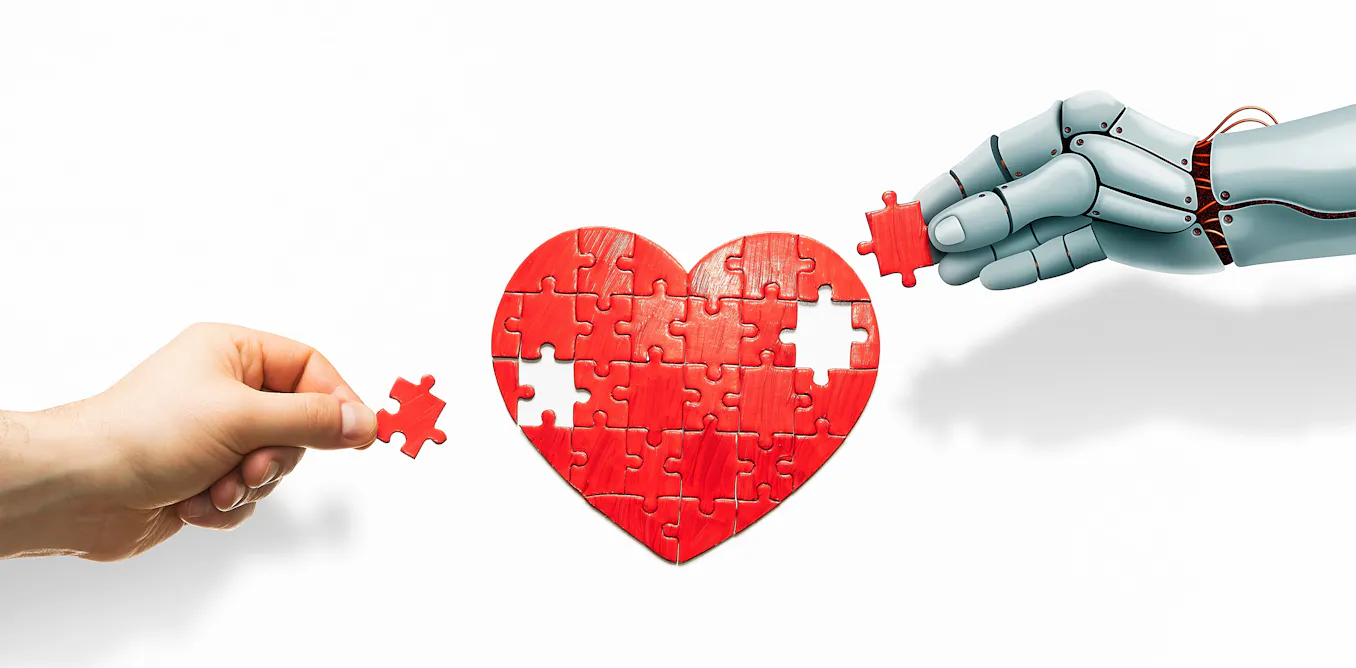
How deep do AI relationships really go? An expert in attachment theory explains
How AI Chatbots Are 'Deskilling' Human Empathy

Are Chatbots Harming Our Relationships? | KQED

ChatGPT Helped Tumbler Ridge Shooter Focus on Guns, Tactics, and Terror

