How do the productivity effects of AI evolve across successive generations of tools, and to what extent do task-level gains ultimately translate into final output? We study these questions in the context of software development, using data on more than 100,000 GitHub developers combined with their AI usage telemetry. In a matched event study design, we find that autocomplete, interactive coding agents, and autonomous coding agents each significantly increase coding activity ("commits"), with respective cumulative effects of 40%, 140%, and 180%. These gains, however, attenuate sharply across the production hierarchy: the 180% cumulative effect falls to 50% for the number of projects, and to 30% for actual releases. This pattern is consistent with the weak-link hypothesis: the strong productivity gains from AI are attenuated by human bottlenecks in the production chain, with an estimated elasticity of substitution of 0.25 between AI and human effort, which indicates strong complementarities. We further confirm these results across four major app marketplaces, finding a moderate increase in the number of new apps but no increase in total usage. Large task-level AI productivity gains have therefore translated only partially into shipped and used software thus far.
Writing Code vs. Shipping Code: Productivity Effects Across Generations of AI Coding Tools
How do the productivity effects of AI evolve across successive generations of tools, and to what extent do task-level gains ultimately translate into final outp
Writing Code vs. Shipping Code: Productivity Effects Across Generations of AI Coding Tools
How do the productivity effects of AI evolve across successive generations of tools, and to what extent do task-level gains ultimately translate into final outp
Measuring the Impact of Early-2025 AI on Experienced Open-Source Developer Productivity
Despite widespread adoption, the impact of AI tools on software development in the wild remains understudied. We conduct a randomized controlled trial (RCT) to understand how AI tools at the February-June 2025 frontier affect the productivity of experienced open-source developers. 16 developers with moderate AI experience complete 246 tasks in mature projects on which they have an average of 5 years of prior experience. Each task is randomly assigned to allow or disallow usage of early 2025 AI tools. When AI tools are allowed, developers primarily use Cursor Pro, a popular code editor, and Claude 3.5/3.7 Sonnet. Before starting tasks, developers forecast that allowing AI will reduce completion time by 24%. After completing the study, developers estimate that allowing AI reduced completion time by 20%. Surprisingly, we find that allowing AI actually increases completion time by 19%--AI tooling slowed developers down. This slowdown also contradicts predictions from experts in economics (39% shorter) and ML (38% shorter). To understand this result, we collect and evaluate evidence for 20 properties of our setting that a priori could contribute to the observed slowdown effect--for example, the size and quality standards of projects, or prior developer experience with AI tooling. Although the influence of experimental artifacts cannot be entirely ruled out, the robustness of the slowdown effect across our analyses suggests it is unlikely to primarily be a function of our experimental design.

How Do AI Coding Agents Contribute to Software Development? an Empirical Study of Agentic Pull Requests
Recent advances in large language models and their rapid adoption across software engineering tasks have made Artificial Intelligence (AI) coding agents an integral component of modern software development workflows. While developers increasingly benefit from these coding agents, their impact on software quality remains insufficiently understood. In particular, how agentic contributions evolve across the software development lifecycle has not been thoroughly investigated. This study aims to characterize agentic pull requests (PR) in comparison to human generated PRs and to examine how their properties change across different stages of the development lifecycle. Using the AIDev dataset, we first analyze how differences in merge rates between agentic and human generated PRs vary over time. We then identify the types of development tasks where AI coding agents are predominantly applied and investigate how these task distributions evolve across development quarters. Finally, we compare a set of key characteristics of agentic and human generated PRs, focusing on their implications for software quality and their temporal dynamics. Overall, our findings provide an empirical and longitudinal perspective on the role of AI coding agents in software development, offering a more nuanced understanding of their benefits and limitations in real-world practices.
How Do AI Coding Agents Contribute to Software Development? an Empirical Study of Agentic Pull Requests
Recent advances in large language models and their rapid adoption across software engineering tasks have made Artificial Intelligence (AI) coding agents an integral component of modern software development workflows. While developers increasingly benefit from these coding agents, their impact on software quality remains insufficiently understood. In particular, how agentic contributions evolve across the software development lifecycle has not been thoroughly investigated. This study aims to characterize agentic pull requests (PR) in comparison to human generated PRs and to examine how their properties change across different stages of the development lifecycle. Using the AIDev dataset, we first analyze how differences in merge rates between agentic and human generated PRs vary over time. We then identify the types of development tasks where AI coding agents are predominantly applied and investigate how these task distributions evolve across development quarters. Finally, we compare a set of key characteristics of agentic and human generated PRs, focusing on their implications for software quality and their temporal dynamics. Overall, our findings provide an empirical and longitudinal perspective on the role of AI coding agents in software development, offering a more nuanced understanding of their benefits and limitations in real-world practices.
The Impact of AI Coding Assistants on Software Engineering: A Longitudinal Study
AI coding assistants have become prolific in recent years. Through a longitudinal mixed-methods investigation, we examined how professional software engineers perceive the effects of AI coding assistants in regard to task focus, developer experience, and productivity. Two questionnaires were administered six months apart, yielding 158 eligible participants at the first time point, 101 at the second, and a matched longitudinal cohort of 95. Participants reported spending less time on most development tasks, with 82% reporting less on writing code. We find broader shift in focus from creation to verification activities. We propose a new category of work we term supervisory engineering work, encompassing the direction, evaluation, and correction of AI output. We also identified a productivity-experience paradox: productivity perceptions held stable, with 84% reporting improvement at both time points, yet among matched participants, the proportion reporting worsened developer experience in at least one dimension nearly doubled from 14% to 27%, with flow state and cognitive load eroding while feedback loops improved. These findings suggest that AI coding assistants are impacting both the nature of software engineering work and how engineers experience it.
Adoption and Impact of Command-Line AI Coding Agents: A Study of Microsoft's Early 2026 Rollout of Claude Code and GitHub Copilot CLI
Organizations rolling out agentic command line tools like Anthropic's Claude Code and GitHub's Copilot CLI need to know who will try them, who will keep using them, and whether the tools produce enough output to justify their cost. At organizational scale, token spend can run into millions of dollars annually, so misreading adoption, retention, or impact can make a rollout expensive without changing engineering velocity. Studying tens of thousands of engineers at Microsoft over its early-2026 rollout, we find that first use spread primarily through social networks, retention was associated more with engineers' coding activity than with demographics, and adopters merged roughly 24% more pull requests than they would have otherwise. We use merged pull requests as our proxy for output -- acknowledging that a merged PR is not the same as the value it delivers -- and the lift persists across our four-month window. These results suggest that CLI coding agents are neither uniformly adopted nor mere novelty effects and that organizations should treat visible peer use as central to rollout strategy.
Measuring the Impact of Early-2025 AI on Experienced Open-Source Developer Productivity
We conduct a randomized controlled trial to understand how early-2025 AI tools affect the productivity of experienced open-source developers working on their own repositories. Surprisingly, we find that when developers use AI tools, they take 19% longer than without—AI makes them slower.

No Vibes Allowed: Solving Hard Problems in Complex Codebases – Dex Horthy, HumanLayer
Does AI Actually Boost Developer Productivity? (100k Devs Study) - Yegor Denisov-Blanch, Stanford
AI boosts worker productivity — but does that translate to final outputs? | MIT Sloan
A new study found that developers using AI tools can write much more code than those working without AI, but they don’t release as much new software.

AI Code Is Producing a Quality Crisis Nobody Wants to Talk About
The productivity numbers look great. AI coding tools are everywhere.

What AI coding costs you | Tom Wojcik
What's the effect of the prolonged AI usage among coders and is it tracked correctly, if it all?
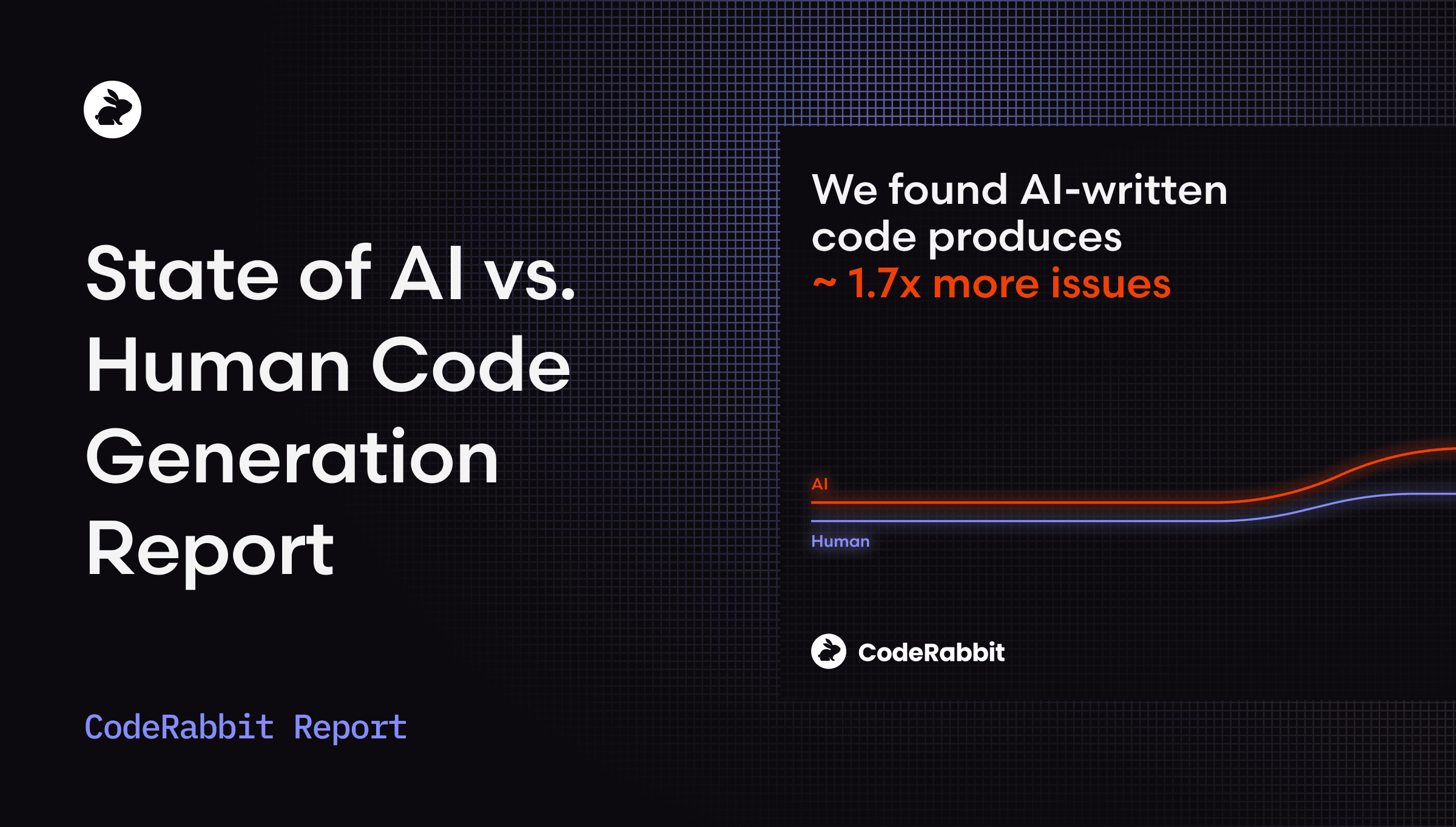
AI vs human code gen report: AI code creates 1.7x more issues
We analyzed 470 open-source GitHub pull requests, using CodeRabbit’s structured issue taxonomy and found that AI generated code creates 1.7x more issues.
The Economics of Using AI to Churn Out Code Are Looking Worse Than Ever
Anthropic updated an estimate for how much developers will spend on its AI coding tool, signaling that the tech is only going to get costlier.

AI Tools Accelerates Coding, but Not Overall Software Delivery, GitLab Research Finds
GitLab's 2026 AI Accountability Report highlights an AI Paradox: although 78% of developers say they code faster, overall software delivery has not accelerated due to downstream testing and review bottlenecks and new challenges for enterprise governance and traceability.