

Objective To evaluate the reliability and diagnostic performance of ChatGPT-o3 in conducting Risk of Bias (RoB) assessments of randomized clinical trials (RCTs) using the Cochrane RoB 2.0 tool. Materials and methods This methodological validation study analyzed 50 RCTs sampled from 50 published meta-analyses. Each trial was independently assessed by the original systematic review authors (OSRAs), our masked human panel, and ChatGPT-o3. Structured prompts based on RoB 2.0 guidelines were used to elicit ChatGPT-o3 assessments. Agreement was evaluated using weighted Cohen’s kappa and Gwet’s AC2. Diagnostic performance was measured by sensitivity, specificity, and balanced accuracy, with human ratings as the reference. Results ChatGPT-o3 classified 34% of trials as high risk, compared with 22% by our panel, and 12% by the OSRAs. Agreement was modest (median κ: 0.33 with our panel; 0.14 with OSRAs). Overall Gwet’s AC2 was 0.30. For detecting high-risk trials, ChatGPT-o3 achieved a sensitivity of 0.46, specificity of 0.69, and balanced accuracy of 0.57. For low-risk trials, its sensitivity was 0.47, specificity was 0.86, and balanced accuracy was 0.66. Discussion The results indicate that ChatGPT-o3 produced more conservative RoB ratings than human reviewers, identifying a greater percentage of trials as having a high RoB. Conclusion While unsuitable to be used as a sole assessor, ChatGPT-o3 may serve as an adjunct tool to enhance the efficiency and consistency of RoB assessments in systematic reviews.
Assessing risk of bias of cohort studies with large language models
This study aims to explore the feasibility and accuracy of utilizing large language models (LLMs) to assess the risk of bias (ROB) in cohort studies. We conducted a pilot and feasibility study in 30 cohort studies randomly selected from reference lists of published Cochrane reviews. We developed a structured prompt to guide the ChatGPT-4o, Moonshot-v1-128k, and DeepSeek-V3 to assess the ROB of each cohort twice. We used the ROB results assessed by three evidence-based medicine experts as the gold standard, and then we evaluated the accuracy of LLMs by calculating the correct assessment rate, sensitivity, specificity, and F1 scores for overall and item-specific levels. The consistency of the overall and item-specific assessment results was evaluated using Cohen’s kappa (κ) and prevalence-adjusted bias-adjusted kappa. Efficiency was estimated by the mean assessment time required. This study assessed three LLMs (ChatGPT-4o, Moonshot-v1-128k, and DeepSeek-V3) and revealed distinct performance across eight assessment items. Overall accuracy was comparable (80.8%–83.3%). Moonshot-v1-128k showed superior sensitivity in population selection (0.92 versus ChatGPT-4o’s 0.55, P < 0.001). In terms of F1 scores, Moonshot-v1-128k led in population selection (F = 0.80 versus ChatGPT-4o’s 0.67, P = 0.004). ChatGPT-4o demonstrated the highest consistency (mean κ = 96.5%), with perfect agreement (100%) in outcome confidence. ChatGPT-4o was 97.3% faster per article (32.8 seconds versus 20 minutes manually) and outperformed Moonshot-v1-128k and DeepSeek-V3 by 47–50% in processing speed. The efficient and accurate assessment of ROB in cohort studies by ChatGPT-4o, Moonshot-v1-128k, and DeepSeek-V3 highlights the potential of LLMs to enhance the systematic review process.

ChatGPT for assessing risk of bias of randomized trials using the RoB 2.0 tool: A methods study
Abstract Background Internationally accepted standards for systematic reviews necessitate assessment of the risk of bias of primary studies. Assessing risk of bias, however, can be time- and resource-intensive. AI-based solutions may increase efficiency and reduce burden. Objective To evaluate the reliability of OpenAI’s ChatGPT for performing risk of bias assessments of randomized trials using the revised risk of bias tool for randomized trials (RoB 2.0). Methods We sampled recently published Cochrane systematic reviews of medical interventions (up to October 2023) that included randomized controlled trials and assessed risk of bias using the Cochrane-endorsed RoB 2.0. From each eligible review, we collected data on the risk of bias assessments for the first three reported outcomes. Using ChatGPT-4, we assessed the risk of bias for the same outcomes using three different prompts: a minimal prompt including limited instructions, a maximal prompt with extensive instructions, and an optimized prompt that was designed to yield the best risk of bias judgements. The agreement between ChatGPT’s assessments and those of Cochrane systematic reviewers was quantified using weighted kappa statistics. Results We included 34 systematic reviews with 157 unique trials. We found the agreement between ChatGPT and systematic review authors for assessment of overall risk of bias to be 0.16 (95% CI: 0.01 to 0.3) for the maximal ChatGPT prompt, 0.17 (95% CI: 0.02 to 0.32) for the optimized prompt, and 0.11 (95% CI: −0.04 to 0.27) for the minimal prompt. For the optimized prompt, agreement ranged between 0.11 (95% CI: −0.11 to 0.33) to 0.29 (95% CI: 0.14 to 0.44) across risk of bias domains, with the lowest agreement for the deviations from the intended intervention domain and the highest agreement for the missing outcome data domain. Conclusion Our results suggest that ChatGPT and systematic reviewers only have “slight” to “fair” agreement in risk of bias judgements for randomized trials. ChatGPT-4 cannot be relied upon to judge risk of bias and should not be used for this purpose. Since this study was completed, ChatGPT has advanced and OpenAI has released newer models with different capabilities. These may prove more adept at risk of bias evaluation. There may also be opportunities to use ChatGPT to streamline other aspects of systematic reviews, such as screening of search records or collection of data.
Evaluating the Ability of Large Language Models to Identify Adherence to CONSORT Reporting Guidelines in Randomized Controlled Trials: A Methodological Evaluation Study
The Consolidated Standards of Reporting Trials statement is the global benchmark for transparent and high-quality reporting of randomized controlled trials. Manual verification of CONSORT adherence is a laborious, time-intensive process that constitutes a significant bottleneck in peer review and evidence synthesis. This study aimed to systematically evaluate the accuracy and reliability of contemporary LLMs in identifying the adherence of published RCTs to the CONSORT 2010 statement under a zero-shot setting. We constructed a golden standard dataset of 150 published RCTs spanning diverse medical specialties. The primary outcome was the macro-averaged F1-score for the three-class classification task, supplemented by item-wise performance metrics and qualitative error analysis. Overall model performance was modest. The top-performing models, Gemini-2.5-Flash and DeepSeek-R1, achieved nearly identical macro F1 scores of 0.634 and Cohen's Kappa coefficients of 0.280 and 0.282, respectively, indicating only fair agreement with expert consensus. A striking performance disparity was observed across classes: while most models could identify compliant items with high accuracy (F1 score > 0.850), they struggled profoundly with identifying non-compliant and not applicable items, where F1 scores rarely exceeded 0.400. Notably, some high-profile models like GPT-4o underperformed, achieving a macro F1-score of only 0.521. LLMs show potential as preliminary screening assistants for CONSORT checks, capably identifying well-reported items. However, their current inability to reliably detect reporting omissions or methodological flaws makes them unsuitable for replacing human expertise in the critical appraisal of trial quality.

Benchmarking agreement between large language models and published clinical trial conclusions across four artificial intelligence platforms
Advanced large language models (LLMs) such as ChatGPT, Gemini, Grok3, and Claude offer new possibilities for medical research interpretation and clinical decision support. While these models demonstrate remarkable natural language processing capabilities, their ability to independently reason through clinical trial data and produce conclusions consistent with published trial interpretations remains underexplored. The objective was to evaluate the reliability of LLMs in interpreting numerical and statistical healthcare data. For this study, landmark randomized controlled trials (RCTs) were selected as a standardized domain to minimize bias from poor-quality research designs. Twenty landmark RCTs from the New England Journal of Medicine were analyzed in neurosurgical and cardiovascular intervention domains. Four AI platforms were evaluated using a structured prompt covering five domains: evidence interpretation, statistical understanding, clinical relevance, limitation recognition, and practical applicability. Two independent raters scored all AI outputs on a 0–5 scale per domain, and interobserver reliability was assessed. Primary outcomes included concordance with published trial conclusions, accuracy of primary outcome identification, and appropriateness of recommendations. Secondary outcomes included output pattern analysis, recognition of limitations, and handling of confounding factors. ChatGPT demonstrated the highest concordance with published conclusions at 100.0%, followed by Gemini at 84%, Grok3 at 72%, and Claude at 68%. However, these concordance scores should be interpreted cautiously, as the LLMs may have been trained on these published trials, potentially inflating alignment with published conclusions. ChatGPT and Gemini accurately identified limitations and confounding factors, while Grok3 and Claude struggled in these secondary outcomes. Interobserver reliability between raters was good (Cronbach’s α = 0.868), supporting the consistency of scoring. Certain LLMs, particularly ChatGPT and Gemini, can reliably interpret clinical trial data and align closely with human conclusions, suggesting a potential role in data summarization and evidence synthesis. These findings highlight the importance of selecting AI tools carefully and highlight potential applications in research and clinical workflows.

Agreement in Risk of Bias Assessment Between RobotReviewer and Human Reviewers: An Evaluation Study on Randomised Controlled Trials in Nursing‐Related Cochrane Reviews
Abstract Purpose RobotReviewer is a machine learning system for semi‐automated assistance in risk of bias assessment. The tools’s performance in randomized controlled trials (RCTs) in the field of nursing remains unknown. We aimed therefore to evaluate the agreement in risk of bias assessment between RobotReviewer and human reviewers. Design Evaluation study using a retrospective diagnostic design. Methods We used RobotReviewer as the index test and human reviewers’ risk of bias assessment reported in Cochrane reviews as the reference test. A convenience sample of electronically available English‐language full texts of RCTs included in Cochrane reviews with nurs* in the title were eligible for inclusion. In this context, we assessed random sequence generation, allocation concealment, and blinding (personnel or participants and assessors) corresponding to Cochrane risk of bias version 2011. Two independent research teams performed and double‐checked data extraction and analysis. We calculated sensitivity, specificity, receiver operating characteristic (ROC) curve, the area under the ROC curve, predictive values, observed percentage of agreement, and Cohen’s kappa (including confidence intervals, if applicable). Findings The selection process yielded 190 RCTs published between 1958 and 2016 in 23 Cochrane reviews published between 2000 and 2018. Missing assessments of risk of bias domains in Cochrane reviews or RobotReviewer yielded varying sample sizes per risk of bias domain. Sensitivity ranged from 0.44 to 0.88 and specificity from 0.48 to 0.95. Positive predictive value was highest for allocation concealment (0.79) and lowest for blinding assessors (0.25). Cohen’s kappa was moderate for randomization (0.52), allocation concealment (0.60), and for blinding of personnel/patients (0.43). Blinding of outcome assessors had only slight agreement (0.04). Conclusions This is the first evaluation of risk of bias assessment by RobotReviewer in RCTs included in nursing‐related Cochrane reviews. It yielded a moderate degree of agreement with human reviewers for randomization and allocation concealment, and an adequate sensitivity for detecting low risk of selection bias. Clinical Relevance Based on our results, using the RobotReviewer for risk of bias assessment in RCTs can be supportive in some risk of bias domains. However, human reviewers should supervise the semi‐automated assessment process.

An LLM Analysis of Reporting Quality of Randomized Clinical Trial Articles
This study uses a zero-shot large-language model to automatically assess compliance with the Consolidated Standards of Reporting Trials guideline for English-language randomized clinical trials published from 1966 to 2024.

I saw this meta-analysis shared a couple of times recently, so we took a look and re-analyzed the data. | František Bartoš
I saw this meta-analysis shared a couple of times recently, so we took a look and re-analyzed the data. We found that the conclusion is almost entirely driven by publication bias. Both state-of-the-art and standard methods reduce the degree of the effect 2-3 fold. Moreover, the data no longer show statistical evidence for the main conclusions. Importantly, our findings do not imply that there is no positive effect of ChatGPT, or other large language models on learning; in fact, our analysis reveals that there is “absence of evidence” rather than “evidence of absence”. The present literature appears to be contaminated by publication bias; high-quality registered reports are needed to properly evaluate the effect of large language models in educational settings. See the full response just submitted for publication at https://lnkd.in/eGKHHKtg

Large Language Models and the Analyses of Adherence to Reporting Guidelines in Systematic Reviews and Overviews of Reviews (PRISMA 2020 and PRIOR)
In the context of Evidence-Based Practice (EBP), Systematic Reviews (SRs), Meta-Analyses (MAs) and overview of reviews have become cornerstones for the synthesis of research findings. The Preferred Reporting Items for Systematic Reviews and Meta-Analyses (PRISMA) 2020 and Preferred Reporting Items for Overviews of Reviews (PRIOR) statements have become major reporting guidelines for SRs/MAs and for overviews of reviews, respectively. In recent years, advances in Generative Artificial Intelligence (genAI) have been proposed as a potential major paradigm shift in scientific research. The main aim of this research was to examine the performance of four LLMs for the analysis of adherence to PRISMA 2020 and PRIOR, in a sample of 20 SRs and 20 overviews of reviews. We tested the free versions of four commonly used LLMs: ChatGPT (GPT-4o), DeepSeek (V3), Gemini (2.0 Flash) and Qwen (2.5 Max). Adherence to PRISMA 2020 and PRIOR was compared with scores defined previously by human experts, using several statistical tests. In our results, all the four LLMs showed a low performance for the analysis of adherence to PRISMA 2020, overestimating the percentage of adherence (from 23 to 30%). For PRIOR, the LLMs presented lower differences in the estimation of adherence (from 6 to 14%) and ChatGPT showed a performance similar to human experts. This is the first report of the performance of four commonly used LLMs for the analysis of adherence to PRISMA 2020 and PRIOR. Future studies of adherence to other reporting guidelines will be helpful in health sciences research.

An automated approach to improve clinical trial registration and to identify outcome changes on ClinicalTrials.gov
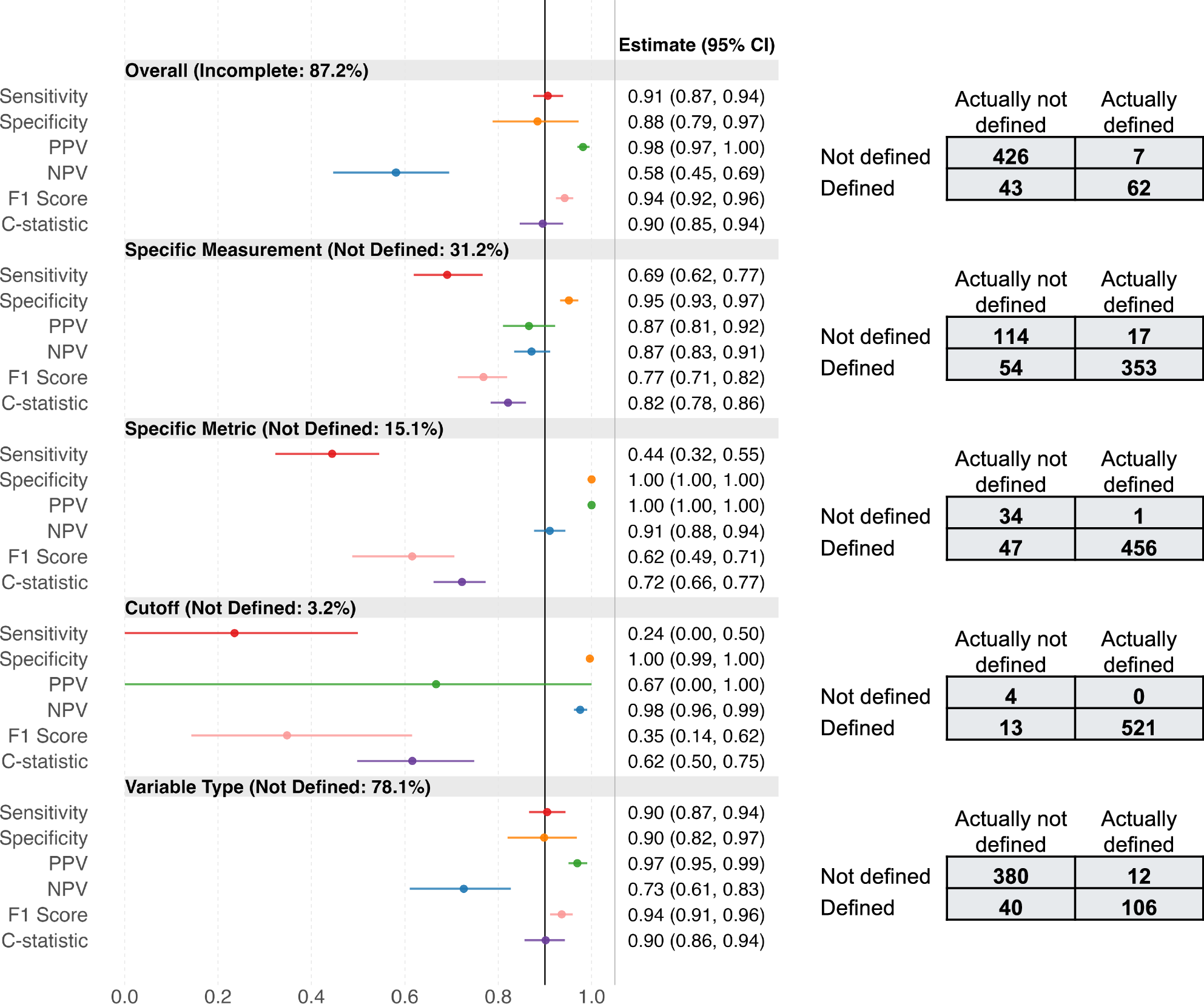
It is difficult to ensure clinical trial outcomes are defined completely in registrations, and to check outcome changes between registration and posting results. We developed a large language model (LLM)-based approach to evaluate outcome definitions and changes on ClinicalTrials.gov. Our LLM-based approach accurately identified incomplete outcomes in prospective trial registrations (sensitivity, 0.91 [95% confidence interval {CI}, 0.87–0.94]; positive predictive value [PPV], 0.98 [95% CI, 0.97–1.00]). Comparing prospective registrations with posted results, it correctly identified 96.1% of missing and 97.9% of added outcomes. It identified all outcomes with a priority change (e.g., from primary to secondary) and 99.2% without one. Sensitivity and PPV for identifying any outcome change were 0.97 (95% CI, 0.95–0.99) and 0.95 (95% CI, 0.89–0.98), respectively. Estimated costs per trial were $0.13 for o3-mini, $0.30 for GPT-4o, and $1.80 for o1. The accuracy of our approach suggests it could be used to improve registration quality and to detect outcome changes at large scale and at low cost.
RAPID: Reliable and efficient Automatic generation of submission rePorting checklists with Large language moDels
Importance Medical reporting guidelines are significant in improving the transparency, quality, and integrity of medical research, particularly in randomized clinical trials; adherence to these guidelines supports research interpretability and has direct implications for downstream applications, such as patient treatment. However, with over 600 distinct reporting guidelines, manual assessments are often time-consuming and labor-intensive. Objective To evaluate an automated reporting checklist generation tool using large language models and retrieval augmentation generation technology, called RAPID. Design, Setting, and Participants This study used large language models to design a retrieval augmentation generation architecture and collected published journal articles as training and validation sets to optimize prompts within the framework and comprehensively evaluate the performance of the framework. Medical reporting experiments were collected from 50 randomized controlled trials without the intervention of AI tools and 41 randomized controlled trials with the intervention of AI tools. Main Outcomes and Measures For effective evaluation of the performance of this tool, a classification accuracy metric (Reported/Not Reported) defined as the number of correct judgments divided by all judgments and a content consistent score metric defined as the number of contents retrieved by the tool that are the same as those retrieved by researchers divided by the total number of judgments were calculated. Results The RAPID tool uses the widely used Word document and Portable Document Format as an input file. Fifty published journal articles without the intervention of AI tools and 41 published journal articles with the intervention of AI tools were collected as CONSORT and CONSORT-AI datasets. All of the CONSORT reporting items (37) were included in the tool. RAPID achieved a high average accuracy rate of 92.11% and a content consistency score of 81.14% on the CONSORT dataset. Of the CONSORT-AI reporting items, 11 items related to the intervention of AI tools were included in the tool. RAPID achieved an average accuracy of 83.81% with a content consistency score of 72.51% on the CONSORT-AI dataset. For these two reporting guidelines, a training set of 5 articles was selected from each dataset to refine the prompts used in the tools for CONSORT and CONSORT-AI reporting checklist. The validation set of the remaining articles was used to assess the performance of the RAPID. The RAPID tool used the Word document and Portable Document Format of the articles as input files. A RAPID graphical user interface was built using JavaScript and Vue. Conclusions and Relevance The RAPID tool is designed to assist in the reporting of various types of trials. RAPID has strong scalability, which can be easily adapted to different medical reporting guidelines without transfer learning on a large dataset. RAPID may effectively save time and improve working efficiency for different user groups, for example, 1) simplifying the submission process and improving report quality by verifying manuscript completeness for medical authors; 2) facilitating evaluation of report quality for medical researchers; 3) expediting manuscript distribution for medical editors; and 4) identifying reporting deficiencies and providing deeper insights for review comments for reviewers. Question Can large language model tools automatically generate medical reporting checklists for manuscripts of different types of clinic trials?Findings An automated reporting checklist generation tool using large language models and retrieval augmentation generation technology, RAPID, was developed. RAPID was fully evaluated on all items across two separate datasets related to the Consolidated Standards of Reporting Trials (CONSORT) and CONSORT-AI reporting guidelines. In the first dataset corresponding to CONSORT, RAPID achieved an average accuracy of 92.11%, while in the second dataset associated with CONSORT - AI, it reached an average accuracy of 83.81%. Additionally, RAPID is highly scalable. It can be easily and smoothly adapted to different medical reporting guidelines without transfer learning on a large dataset.Meaning RAPID can effectively save time and improve working efficiency for different user groups such as medical authors, researchers, editors, and reviewers.
Comparing scientific abstracts generated by ChatGPT to real abstracts with detectors and blinded human reviewers
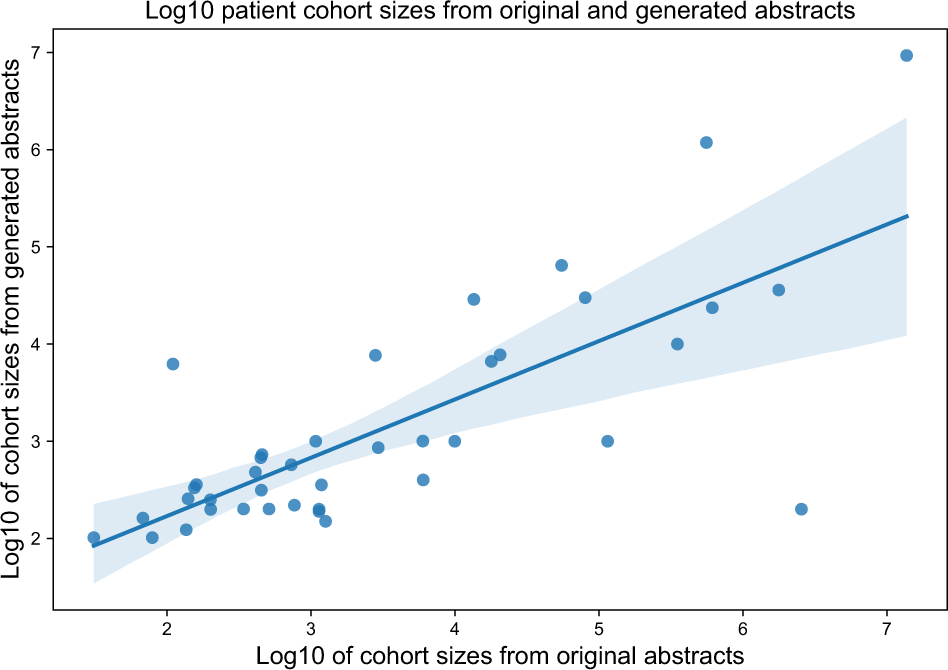
Large language models such as ChatGPT can produce increasingly realistic text, with unknown information on the accuracy and integrity of using these models in scientific writing. We gathered fifth research abstracts from five high-impact factor medical journals and asked ChatGPT to generate research abstracts based on their titles and journals. Most generated abstracts were detected using an AI output detector, ‘GPT-2 Output Detector’, with % ‘fake’ scores (higher meaning more likely to be generated) of median [interquartile range] of 99.98% ‘fake’ [12.73%, 99.98%] compared with median 0.02% [IQR 0.02%, 0.09%] for the original abstracts. The AUROC of the AI output detector was 0.94. Generated abstracts scored lower than original abstracts when run through a plagiarism detector website and iThenticate (higher scores meaning more matching text found). When given a mixture of original and general abstracts, blinded human reviewers correctly identified 68% of generated abstracts as being generated by ChatGPT, but incorrectly identified 14% of original abstracts as being generated. Reviewers indicated that it was surprisingly difficult to differentiate between the two, though abstracts they suspected were generated were vaguer and more formulaic. ChatGPT writes believable scientific abstracts, though with completely generated data. Depending on publisher-specific guidelines, AI output detectors may serve as an editorial tool to help maintain scientific standards. The boundaries of ethical and acceptable use of large language models to help scientific writing are still being discussed, and different journals and conferences are adopting varying policies.
Assessing the methodologic quality of systematic reviews using generative large language models
INTRODUCTION: We aimed to evaluate whether generative large language models (LLMs) can accurately assess the methodologic quality of systematic reviews (SRs). METHODS: A total of 114 SRs from five leading urology journals were included in the study. Human reviewers graded each of the SRs in duplicate, with differences adjudicated by a third expert. We created a customized generative artificial intelligence (generative pretrained transformer [GPT]), “Urology AMSTAR 2 Quality Assessor,” and graded the 114 SRs in three iterations using a zero-shot method. We performed an enhanced trial focusing on critical criteria by giving GPT detailed, step-by-step instructions for each of the SRs using chain-of-thought method. Accuracy, sensitivity, specificity, and F1 score for each GPT trial were calculated against human results. Internal validity among three trials were computed. RESULTS: GPT had an overall congruence of 75%, with 77% in critical criteria and 73% in non-critical criteria when compared to human results. The average F1 score was 0.66. There was a high internal validity at 85% among three iterations. GPT accurately assigned 89% of studies into the correct overall category. When given specific, step-by-step instructions, congruence of critical criteria improved to 91%, and overall quality assessment accuracy to 93%. CONCLUSIONS: GPT showed promising ability to efficiently and accurately assess the quality of SRs in urology.
Does <span style="font-variant:small-caps;">ChatGPT</span> Ignore Article Retractions and Other Reliability Concerns?
ABSTRACT Large language models (LLMs) like ChatGPT seem to be increasingly used for information seeking and analysis, including to support academic literature reviews. To test whether the results might sometimes include retracted research, we identified 217 retracted or otherwise concerning academic studies with high altmetric scores and asked ChatGPT 4o‐mini to evaluate their quality 30 times each. Surprisingly, none of its 6510 reports mentioned that the articles were retracted or had relevant errors, and it gave 190 relatively high scores (world leading, internationally excellent, or close). The 27 articles with the lowest scores were mostly accused of being weak, although the topic (but not the article) was described as controversial in five cases (e.g., about hydroxychloroquine for COVID‐19). In a follow‐up investigation, 61 claims were extracted from retracted articles from the set, and ChatGPT 4o‐mini was asked 10 times whether each was true. It gave a definitive yes or a positive response two‐thirds of the time, including for at least one statement that had been shown to be false over a decade ago. The results therefore emphasise, from an academic knowledge perspective, the importance of verifying information from LLMs when using them for information seeking or analysis.

Reliability of LLMs as medical assistants for the general public: a randomized preregistered study
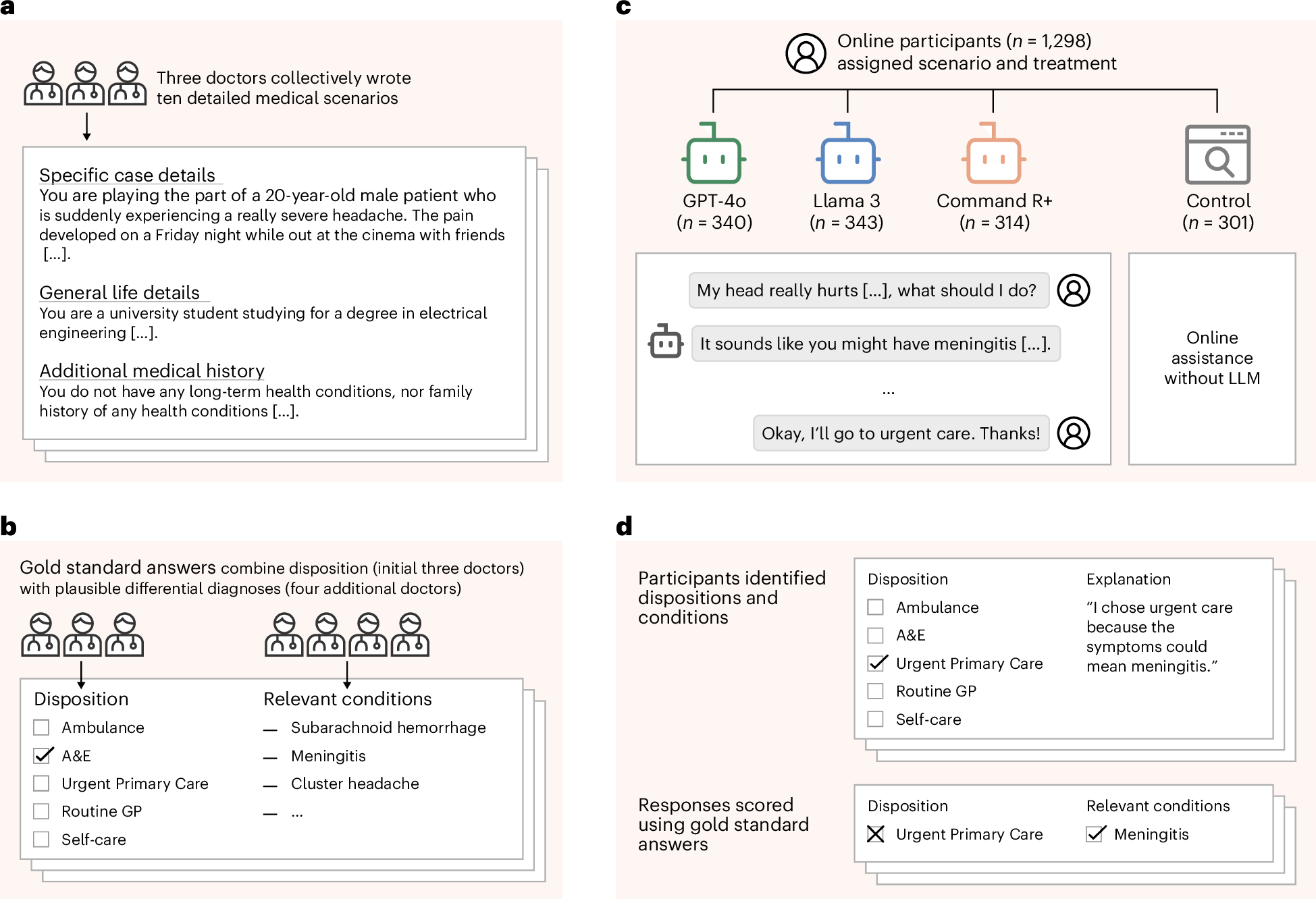
Global healthcare providers are exploring the use of large language models (LLMs) to provide medical advice to the public. LLMs now achieve nearly perfect scores on medical licensing exams, but this does not necessarily translate to accurate performance in real-world settings. We tested whether LLMs can assist members of the public in identifying underlying conditions and choosing a course of action (disposition) in ten medical scenarios in a controlled study with 1,298 participants. Participants were randomly assigned to receive assistance from an LLM (GPT-4o, Llama 3, Command R+) or a source of their choice (control). Tested alone, LLMs complete the scenarios accurately, correctly identifying conditions in 94.9% of cases and disposition in 56.3% on average. However, participants using the same LLMs identified relevant conditions in fewer than 34.5% of cases and disposition in fewer than 44.2%, both no better than the control group. We identify user interactions as a challenge to the deployment of LLMs for medical advice. Standard benchmarks for medical knowledge and simulated patient interactions do not predict the failures we find with human participants. Moving forward, we recommend systematic human user testing to evaluate interactive capabilities before public deployments in healthcare.
Reliability of LLMs as medical assistants for the general public: a randomized preregistered study
Global healthcare providers are exploring the use of large language models (LLMs) to provide medical advice to the public. LLMs now achieve nearly perfect scores on medical licensing exams, but this does not necessarily translate to accurate performance in real-world settings. We tested whether LLMs can assist members of the public in identifying underlying conditions and choosing a course of action (disposition) in ten medical scenarios in a controlled study with 1,298 participants. Participants were randomly assigned to receive assistance from an LLM (GPT-4o, Llama 3, Command R+) or a source of their choice (control). Tested alone, LLMs complete the scenarios accurately, correctly identifying conditions in 94.9% of cases and disposition in 56.3% on average. However, participants using the same LLMs identified relevant conditions in fewer than 34.5% of cases and disposition in fewer than 44.2%, both no better than the control group. We identify user interactions as a challenge to the deployment of LLMs for medical advice. Standard benchmarks for medical knowledge and simulated patient interactions do not predict the failures we find with human participants. Moving forward, we recommend systematic human user testing to evaluate interactive capabilities before public deployments in healthcare.