

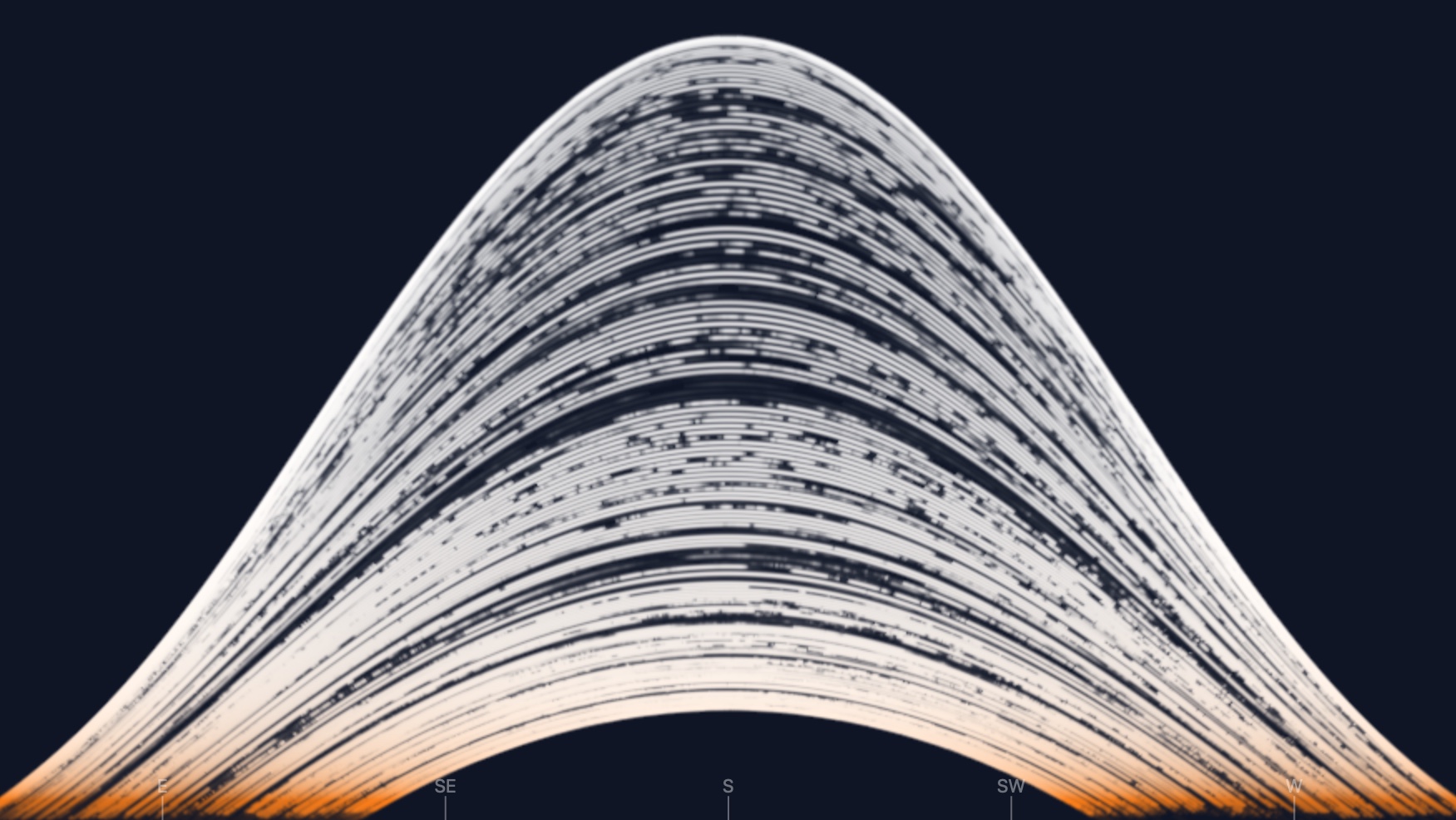
How a 6-month exposure shows the sun's path across the sky, from solstice to solstice
solar meditation
The video contains imagery from NASA’s Solar Dynamics Observatory in five wavelengths of ultraviolet light. Scrubbing up and down reveals new layers, from sunspots on the solar surface to prominences extending outward in the corona.
Everything to know about this week's solar eclipse : Short Wave
During a total solar eclipse the world around you is very different. The sun gets totally blotted out and suddenly, it feels like night time. The temperature drops. Birds stop singing. These surreal celestial events happen every year or so around the globe – including tomorrow. To get you prepped, we’re talking to eclipse chasers about what makes these few minutes of darkness worthwhile and break down how to view an eclipse. That includes using special specs, so we’re linking the American Astronomical Society’s list of trustworthy eclipse glasses. To nerd out even more, check out NASA’s eclipse website.Interested in more space news? Email us your question at shortwave@npr.org and we may cover it in an upcoming segment.Support public media with NPR+ and enjoy perks for over 25 podcasts like this one. This show’s perks include sponsor-free listening. Learn more at plus.npr.org.
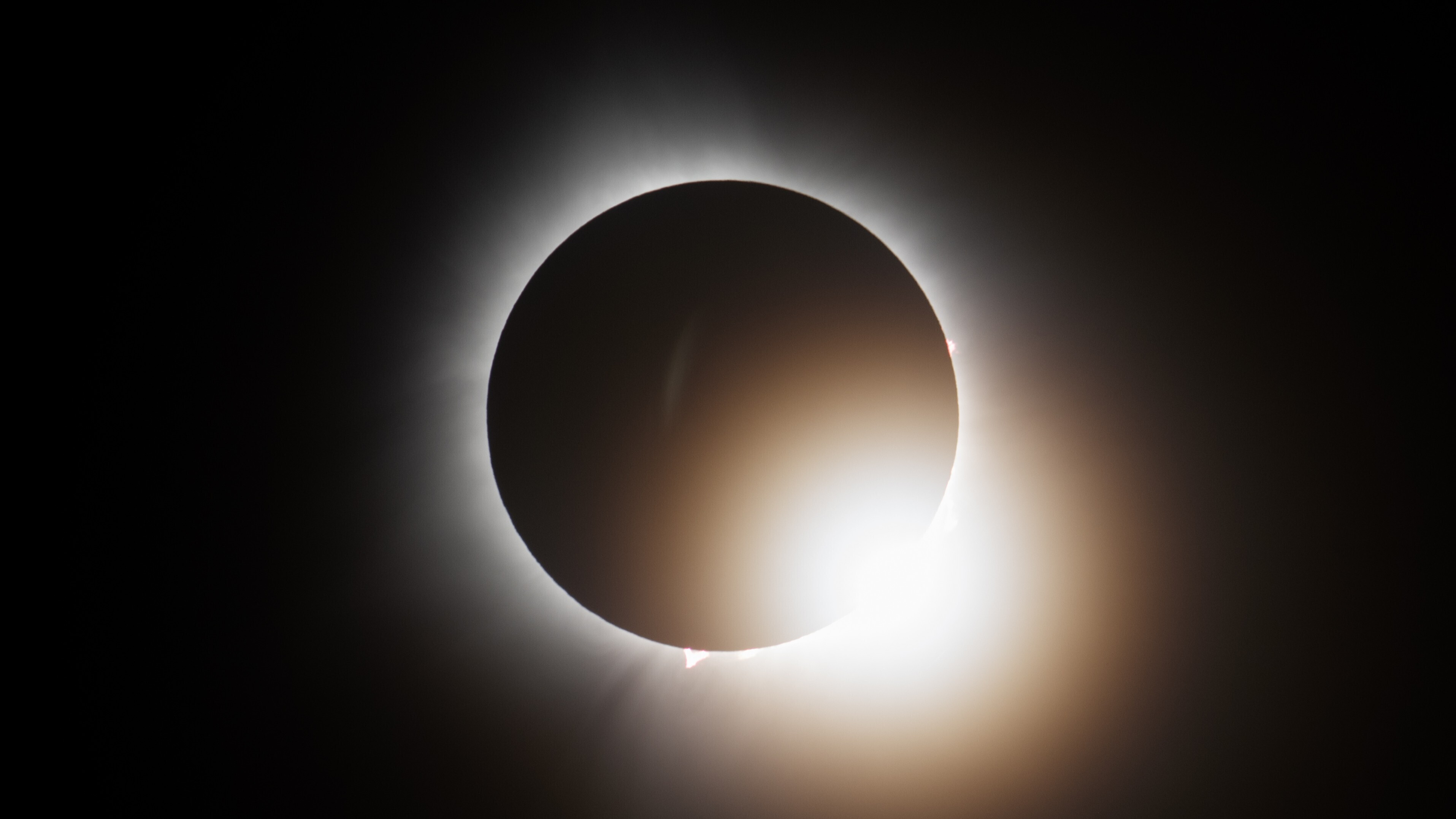
Eyes on the Solar System - NASA/JPL
Explore the 3D world of the Solar System. Learn about past and future missions.
Time for the sun to rise | Paul Stephenson | Offprint
Get Season 1 of the Sunset Chronicles - Omnibus Edition.

Stargraph
Stargraph automatically maps Atmosphere profiles together. Find your friends and share your presence in one link.

Supported Services - Stargraph
Stargraph automatically maps Atmosphere profiles together. Find your friends and share your presence in one link.

@paulmwatson.com - Stargraph
Stargraph automatically maps Atmosphere profiles together. Find your friends and share your presence in one link.

NASA Didn't Even Know!!
Figure 9: The radiance curves of several LEDs useful to mimic the Black...
Download scientific diagram | The radiance curves of several LEDs useful to mimic the Black Body representative of the M stars (from M0 to M8 spectral type). The absorption spectra of several photosynthetic bacteria are also shown. from publication: Simulating super earth atmospheres in the laboratory | Several space missions, such as JWST, TESS and the very recently proposed ARIEL, or ground-based experiments, as SPHERE and GPI, have been proposed to measure the atmospheric transmission, reflection and emission spectra of extrasolar planets. The planet atmosphere... | Atmosphere, Earth and Extrasolar Planets | ResearchGate, the professional network for scientists.

Scareship Venus
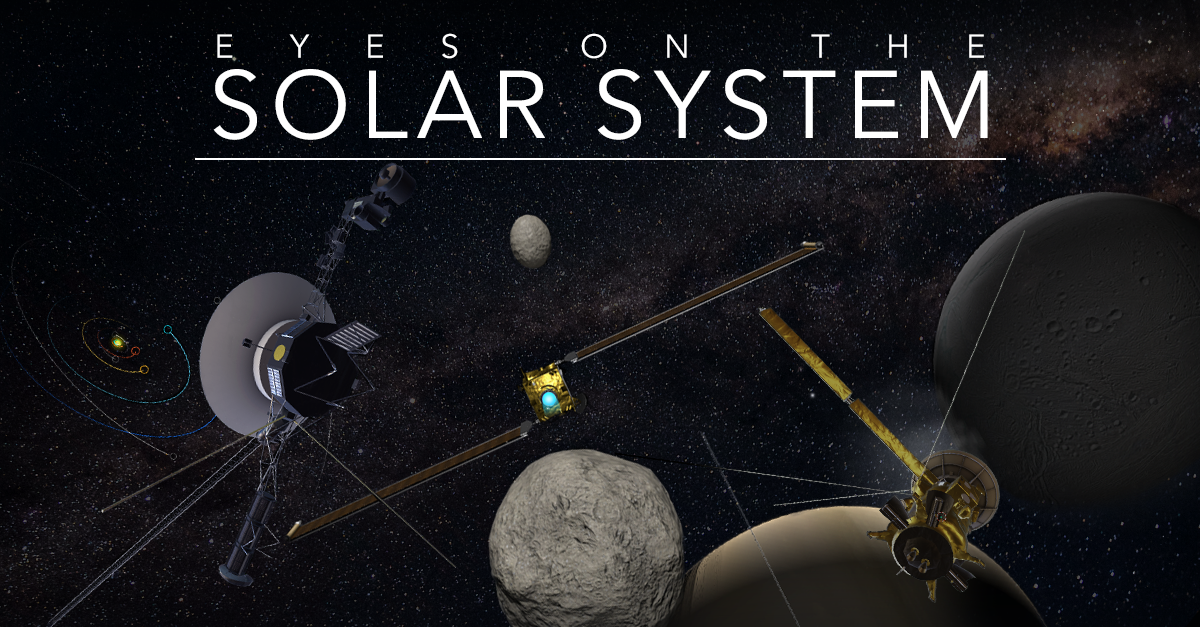
The planet Venus normally sticks close to the Sun and so can only be seen very shortly after sunset, to the west (or before sunrise, to the east, when it is a morning star). But every 584 days, when it reaches maximum elongation in its orbit, it is far enough from the Sun in apparent [...]

We need more tiny knowledge projects—here’s one
Crowdsourcing dynamic illustrations for a new astronomy book by Terry Tao and Tanya Klowden. The other day I was reading the sample chapter of a new book by Terence Tao and Tanya Klowden, on the so-called cosmic distance ladder. It’s a lovely piece of writing. The chapter tells the story of how Johannes Kepler, using data collected by Tycho Brahe, solved the puzzle of planetary motion. It puts us in the discoverers’ shoes: instead of working backwards from Kepler’s equations, we work forwards from the inexp

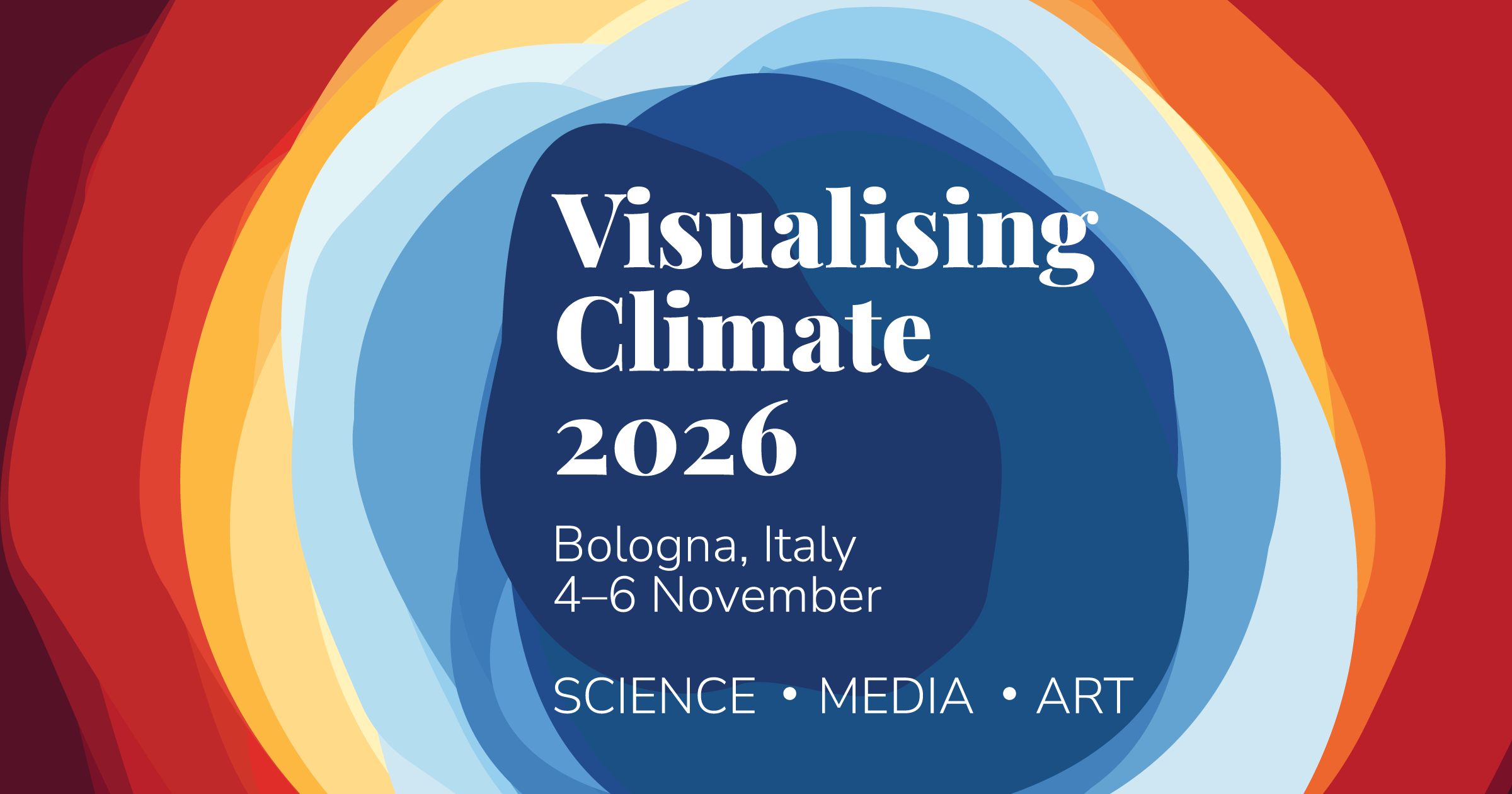
Visualising Climate 2026 — Conference
A global conference on climate data visualization, storytelling, and science. Bologna, Italy • 4–6 November 2026.
Just released the first alpha of Stargraph featuring the frontend that brings your Atmosphere profiles together. Share your presence in one link or QR code. stargraph.link
