


Exploring how to measure code sloppiness, why correct code can still erode a codebase, and why human intuition and taste still matter.
Devin Review: AI to Stop Slop | Cognition
As code generation gets easier, code review is the new bottleneck. That's why we're launching a new way to quickly review and understand complex PRs in our latest tool for codebase understanding - augmenting human attention with AI.

Tinkered Thinking
Daily, snackable writings to spur changes in thinking.Building a blueprint for a better brain by tinkering with the code.
We should rethink how we teach people to code | deadSimpleTech
It's fair to say that the tech industry at the moment is not in a good place. Software engineers tend to be detached, demotivated and unwilling to care much about the work they're doing beyond their paycheck. Code quality is poor on the whole, made worse by the current spate of vibe coding and whatever other febrile ideas come out of Sam Altman's brain. Much of the software that we write is either useless or actively hurts people. And the talented, creative people that we most need in the industry are pushed to the margins of it.

Sung Kim (@sungkim.bsky.social)
I like this quote on code review: "The idea that humans will reliably look through code to find the increasingly rare issues that automated tools miss seems like a fantasy." By Marc Brooker, AWS.

esoteric.codes
esolangs, esoplatforms, esosystems, and all that break from the norms of computing

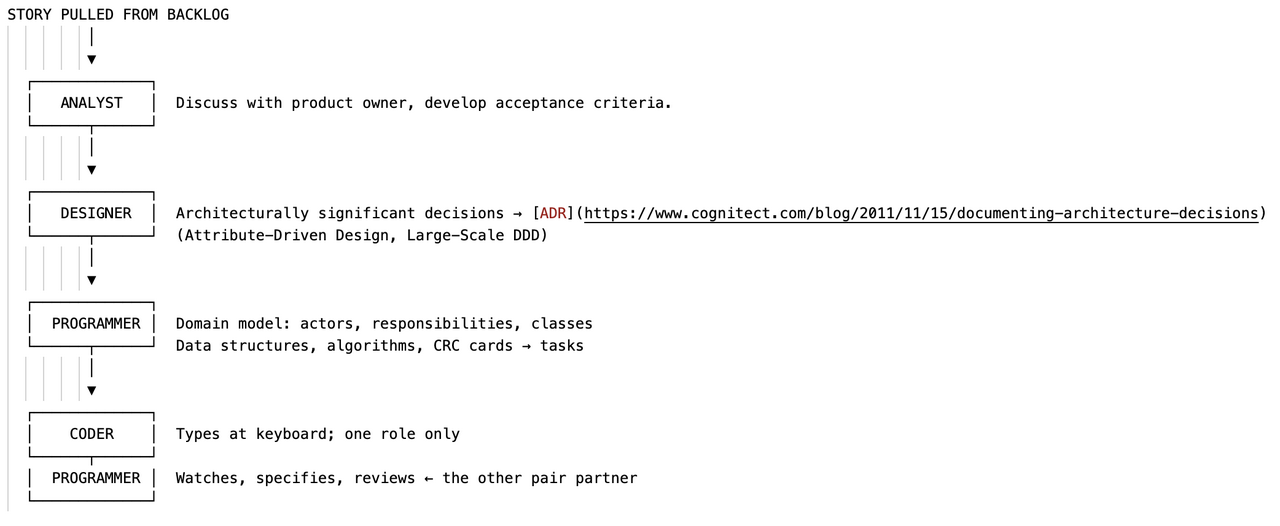
Coding Is Dead, Long Live Programming — Ian Cooper - Staccato Signals
Summary In this post, we argue that the role of a coder now belongs to a coding agent, but that the distinct role of a programmer define...
Code Is Cheap Now, And That Changes Everything | Pere Villega
AI coding agents have made code production nearly free. Drawing on insights from Kent Beck, Paul Ford, and Simon Willison, this post argues that the value has shifted from writing code to defining systems — contracts, invariants, SLAs, and verification.
Software development is a losers game
Great code doesn’t save you, but bad code will kill you #HoskWisdom

Coding After Coders: The End of Computer Programming as We Know It - …
archived 16 Mar 2026 15:14:04 UTC

Rationally irrational
I waste a lot of time sweating small details of code. Stuff that has absolutely zero impact on anything quantifiable. It took me a long time to stop feeling bad about this. I’m not talking about tu…

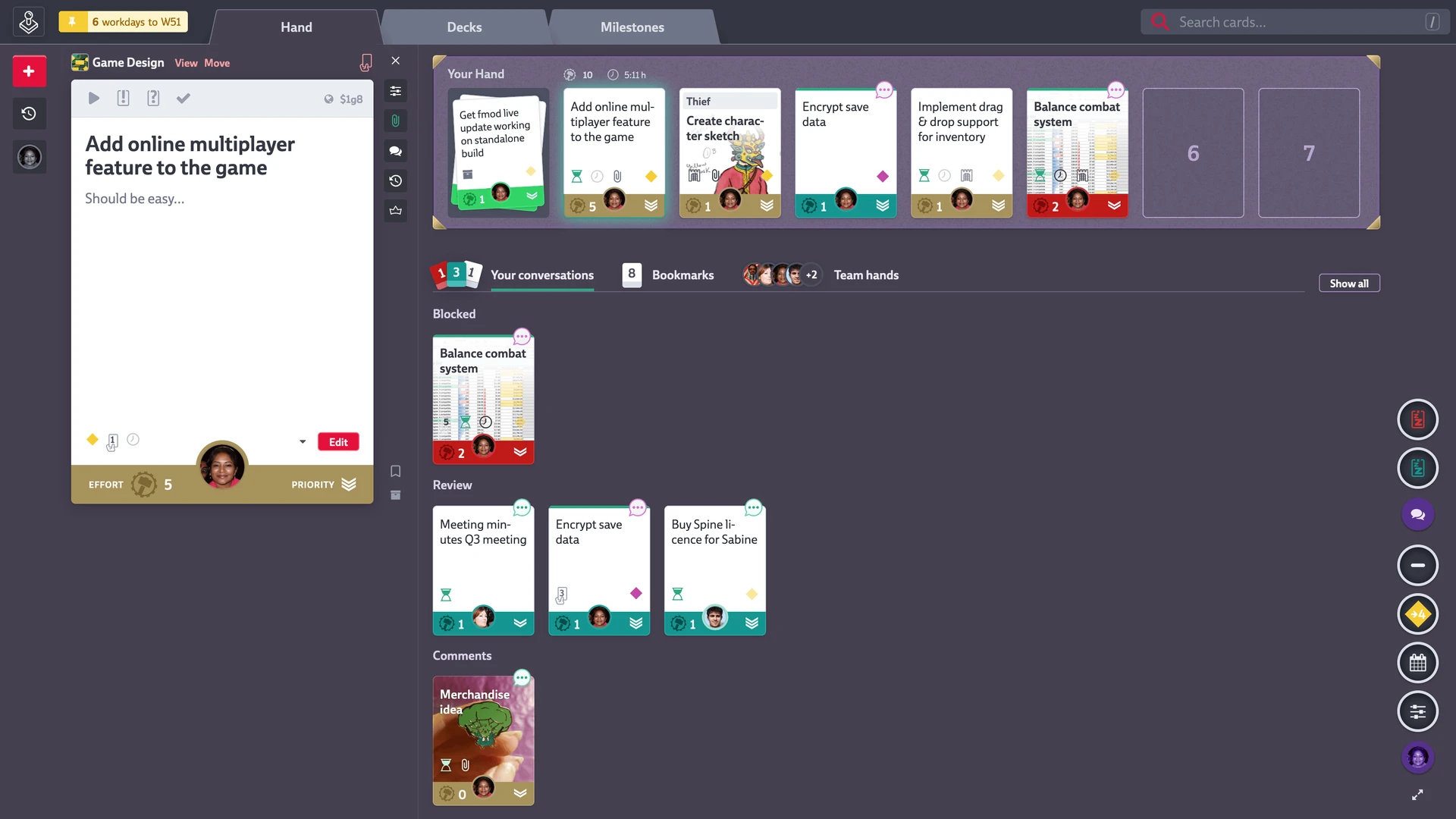
Making tools for game developers — Codecks
Rather than use a tool that assumes order and fails when faced with the reality of game development, we're building a tool that assumes chaos and, in spite of that, reduces the stress that comes with it.
What Is Code? If You Don't Know, You Need to Read This
The world belongs to people who code. Those who don’t understand will be left behind.

What Is Code? If You Don't Know, You Need to Read This
The world belongs to people who code. Those who don’t understand will be left behind.
AI Code Review | Greptile | Merge 4X Faster, Catch 3X More Bugs
AI Code Reviews that understand your entire codebase. Automate PR reviews, catch bugs faster, improve code quality with AI-driven analysis. Try Greptile free!
SlopCodeBench: Benchmarking How Coding Agents Degrade Over Long-Horizon Iterative Tasks
Software development is iterative, yet agentic coding benchmarks hide design issues through their single-shot setup. Recent iterative benchmarks attempt to remedy this but heavily constrain an agent's design decision space, making it impossible to faithfully measure how their decisions shape future extensions. We introduce SlopCodeBench, a benchmark of 36 problems and 196 checkpoints where agents repeatedly extend their own solutions. Unlike prior iterative benchmarks, our evolving specifications demand architectural decisions but leave internal structure to the agent. We measure two forms of degradation: structural erosion (concentrated complexity) and verbosity (redundant code). Evaluating 15 coding agents across open and closed models, we find that no agent fully solves any problem end-to-end, and the best agent passes 14.8% of checkpoints. Quality degrades across checkpoints, with structural erosion rising in 77% of trajectories and verbosity in 75.5%. Compared to 473 open-source Python repositories, agent code is 2.3x more verbose and 2.0x more eroded, and the human repositories degrade less often and by smaller margins across their git histories. Explicit quality guidance reduces initial verbosity and erosion by up to a third, without affecting degradation rates. SlopCodeBench provides the first measurement of code degradation under iterative extension, revealing that agents pass checkpoints while producing code that erodes and bloats with each turn.

Is all code becoming the same? On one hand, 95% of Kaggle submissions that set a random seed now use 42 (a Hitchhiker's Guide joke LLMs love). But, it turns out that while coding syntax is converging, approaches to problems are not converging. Human prompters drive real variety in solutions.
