

Didascalia on Early Christian Writings: the New Testament, Apocrypha, Gnostics, and Church Fathers: information and translations of Gospels, Epistles, and documents of early Christianity.
Didascalia Apostolorum
The Didascalia was clearly modeled on the earlier Didache.[3] The author is unknown, but he was probably a bishop. The provenance is usually regarded as Northern Syria, possibly near Antioch.[4]

~ The Gospel of Matthew ~ Syriac - Aramaic Peshitta Bible Text ~
the Gospel of Matthew - Aramaic Peshitta Bible text
Remote Origins: Translation, Genealogy, and Alterity in Medieval Castile (1252-circa 1390)
This dissertation analyzes selected examples of thirteenth- and fourteenth-century written culture to show their engagement with the religious alterity of Islam as an integral part of the origins of the kingdom of Castile. Following an interdisciplinary methodology, it addresses how medieval ideas about astrology, geography, history, medicine, race, and religion participated in creating discourses about origins that recognized the intellectual and political authority of al-Andalus. It argues that early Castilian vernacular texts conceptualized the translation of Arabic sources as an instrument for creating, transforming, and superseding the alterity of Islam while recognizing the cultural and political authority of Andalusi traditions. The first chapter serves as an introduction explaining the historical and theoretical framework of the dissertation. To do so, it provides an overview of Castilian ideas about genealogy, historiography, authority, and translatio, and translation. Then, through close reading and ample historicization, chapters two, three, and four analyze the impact of Andalusi textual traditions, cultural practices, and human population in three interrelated fields of medieval science, literature, and history. Chapter 2 explores the political implications of King Alfonso X’s (r. 1252-1284) dedication to the translation of Arabic sciences by focusing on the translation of a treatise of astrology titled Libro de las cruzes (1259). The chapter traces the cultural and political context that accompanied the transmission of the book in al-Andalus alongside the content of its Arabic and Castilian prologues. In light of ideas about the transference of knowledge (translatio studii) shared by Christian and Muslim scholars, I conclude that deployment of a twofold origin in the Libro de las cruzes illustrates the strategies and motivations of Alfonso X’s broader engagement with Arabic sources. The third chapter turns to the early fourteenth-century romance Libro del caballero Zifar with a double focus on its forged origin as a translation from caldeo (Chaldean) and the prominence of cursed lineages. Regarding lineage, the chapter explores the representation of exemplary virtues by the protagonists of the romance as enacting ideas about the transformable character of lineage and the capabilities of the individual to unmake inherited negative traits. Likewise, the textual strategy of the forged translation enables the inclusion of Arabic and Asian referents at the origin of a profoundly Christian text. In chapter 4, literature meets historiography in the analysis of the Crónica de Flores y Blancaflor. Being the result of intertwining a Castilian chronicle—Alfonso X’s Estoria de Espanna—and a French romance, this text narrates the love story between an Andalusi Muslim prince and the daughter of a captive Christian noble. The chapter focuses on Berta, the captive woman, to show the implications of her decision to nurture Flores and Blancaflor with her milk. Considering Christian and Muslim ideas about milk and wet nursing along with the tenets of Castilian historiography, the chapter shows the limits of dominant ideas about dynastic origins among the Christian elites of Castile while evidencing the existence of an alternative discourse that—coming from within Castilian historiography—incorporates maternal and non-Christian kinship as an essential part of the origins and possibilities of the kingdom. A short final chapter serves as a conclusion, suggesting paths for expanding the results of this dissertation within and the thirteenth and fourteenth centuries covered by its contents.

051. Mark 1:4-11
Chapel Sermon by Matthew Harrison from Mark 1:4-11 on Wednesday, January 11, 2012.
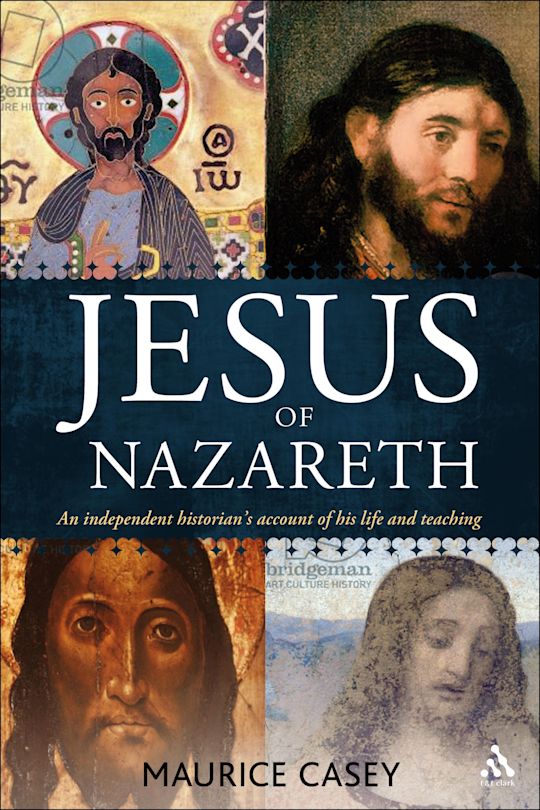
Jesus of Nazareth
A new 'life' of Jesus written by one of the outstanding scholars of his generation, it offers a complete resource on the 'Historical Jesus' debate. With an over…
The Syriac Clementine Recognitions and Homilies: The First Complete Translation of the Text
The Syriac Clementine Recognitions and Homilies is the first ever complete translation into a modern language of this important historical document relating to the origins of Judaism and Christianity. Found within the pages of the world’s
A Dictionary of Jewish Palestinian Aramaic of the Byzantine Period
contains the aramaic vocabulary of the jewish literary and epigraphic sources of eretz israel from the third century c e until the arab conquest including palestinian talmud midrashim targumim and synagogue inscriptions
047b._Mark_13_32-37
Chapel Sermon by Victor Raj from Mark 13:32-37 on Tuesday, November 28, 2000.
Parmenides: Pre-Socratic Philosophy
Mark 1:1-8 – Advent 2 (B)
On this episode of Preaching the Text, John Hoyum and Steve Paulson examine the opening words of the Gospel of Mark.
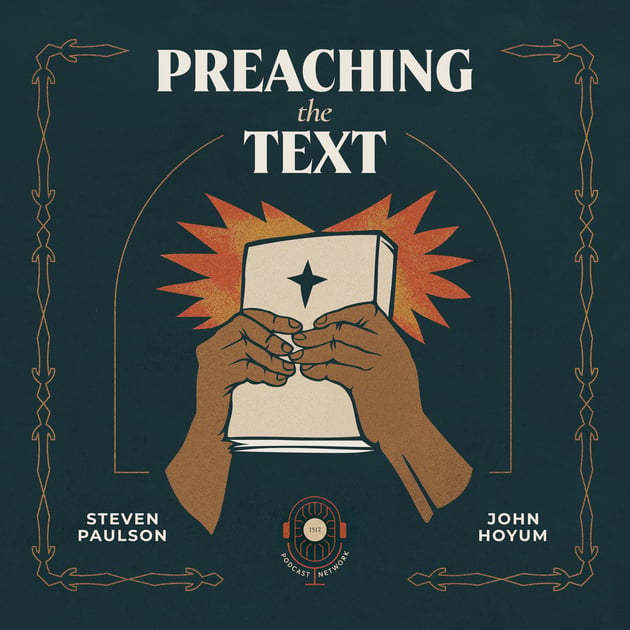
Gospel: Mark 1:1-8 (Advent 2: Series B)
Like the Old Testament, John’s role is crucial. But, also like the Old Testament, it points to someone greater.

The Final Christian Generation? - Mockingbird
What we can learn from the century that saw the sun set on the “final” pagan generation

Εργαστήριο Διαδραστικών Τεχνών - InArts
Το Εργαστήριο Διαδραστικών Τεχνών στεγάζεται στο χώρο του Τμήματος Τεχνών Ήχου & Εικόνας του οποίου υποστηρίζει τη διδακτορική και μεταδιδακτορική έρευνα. Η ερευνητική δραστηριότητα αποτελεί κεντρικό άξονα στον σχεδιασμό των δράσεων και κατευθύνσεων του εργαστηρίου τόσο σε ερευνητικό όσο και σε αναπτυξιακό επίπεδο. - info@inarts.eu

The Qurʾan and Syriac Christianity