

Entropy
Entropy is a tactical turn-based RPG inspired by classic JRPGs. Assemble your party of mercenaries and forge your own path towards an expedition into hell to stop the demonic incursion. Choices you make along the way will determine the fate of your world.
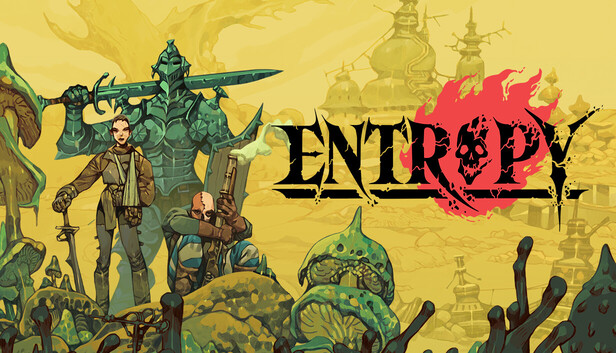
Turn-based RPG Entropy offers up a world abandoned by the gods that looks like a PS1 game fished from a toilet
Come wallow in the demo for Entropy, an absorbingly ugly take on the Final Fantasy RPG format from the creators of Dread Delusion.

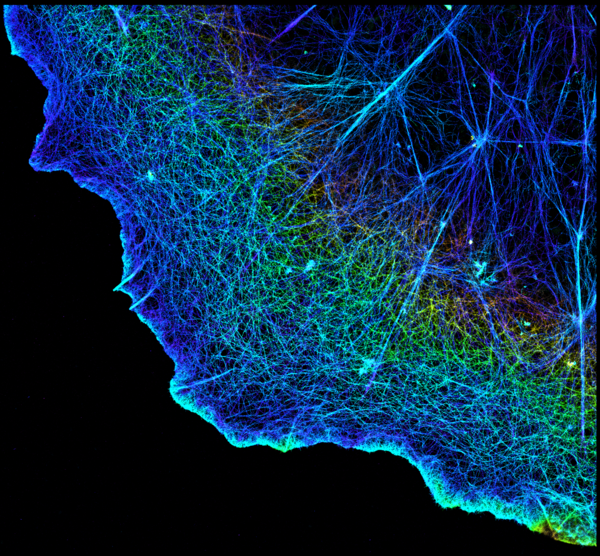
Tom Leinster : The categorical origins of entropy
This Most Simple Sudoku Rule = Fog Magic
Making Sense of Chaos
From a pioneer in the field of complexity science and chaos theory, a plan for solving the world’s most pressing problems “Farmer convincingly argues t...
Cryptographic Nature
I consider the many ways in which evolved information-flows are restricted and metabolic resources protected and hidden -- the thesis of living phenomena as evolutionary cryptosystems. I present the information theory of secrecy systems and discuss mechanisms acquired by evolved lineages that encrypt sensitive heritable information with random keys. I explore the idea that complexity science is a cryptographic discipline as "frozen accidents", or various forms of regularized randomness, historically encrypt adaptive dynamics.

Spirits and the incompleteness of physics
Complexity, renormalization, and the spirits beyond the horizon of theory

Consciousness as a Gödel sentence in the language of science
Why the Hard Problem (might be) so Hard

Requisite variety and its implications for the control of complex systems
Recent work on the fundamental processes of regulation in biology (Ashby, 1956) has shown the importance of a certain quantitative relation called the law of requisite variety. After this relation had been found, we appreciated that it was related to a theorem in a world far removed from the biological—that of Shannon on the quantity of noise or error that could be removed through a correction-channel (Shannon and Weaver, 1949; theorem 10). In this paper I propose to show the relationship between the two theorems, and to indicate something of their implications for regulation, in the cybernetic sense, when the system to be regulated is extremely complex. Since the law of requisite variety uses concepts more primitive than those used by entropy, I will start by giving an account of that law.
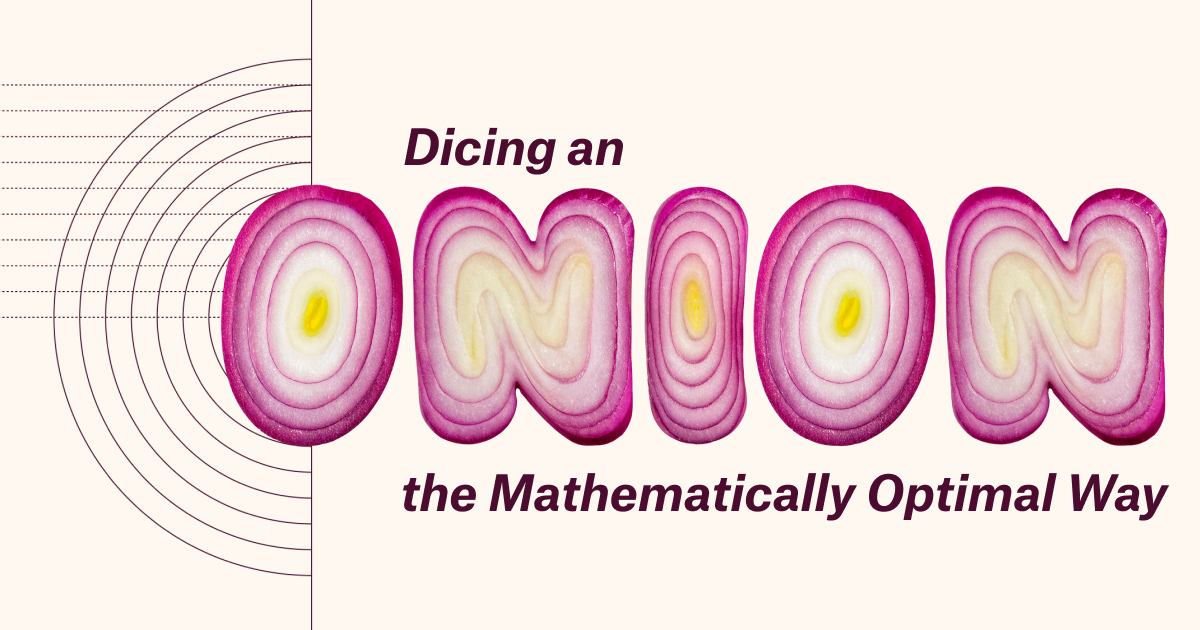
Dicing an Onion, the Mathematically Optimal Way
There is more than one way to dice an onion…
Tethered Reasoning: Decoupling Entropy from Hallucination in Quantized LLMs via Manifold Steering
A fundamental challenge in quantized inference is the temperature-entropy trade-off: low sampling temperatures yield repetitive, mode-collapsed outputs, while high temperatures (T>2.0T{>}2.0) cause what is conventionally termed “hallucination”—semantic incoherence and factual errors. Quantization exacerbates this: 4-bit models exhibit earlier collapse than full-precision counterparts [5, 6]. Most inference frameworks cap temperature at T=2.0T{=}2.0, treating high-entropy regimes as inherently unstable.
Scaffolding, Hard and Soft: Infrastructures as Critical and Generative Structures
Words in Space is the work of Shannon Mattern.

A quote by Edsger W. Dijkstra
The question of whether a computer can think is no more interesting than the question of whether a submarine can swim.

Cognition all the way down 2.0: neuroscience beyond neurons in the diverse intelligence era
This paper formalizes biological intelligence as search efficiency in multi-scale problem spaces, aiming to resolve epistemic deadlocks in the basal “cognition wars” unfolding in the Diverse Intelligence research program. It extends classical work on symbolic problem-solving to define a novel problem space lexicon and search efficiency metric. Construed as an operationalization of intelligence, this metric is the decimal logarithm of the ratio between the cost of a random walk and that of a biological agent. Thus, the search efficiency measures how many orders of magnitude of dissipative work an agentic policy saves relative to a maximal-entropy search strategy. Empirical models for amoeboid chemotaxis and barium-induced planarian head regeneration show that, under conservative (i.e., intelligence-underestimating) assumptions, even ‘simple’ organisms are from two-hundred- to sextillion-fold more efficient in problem space exploration. In this sense, the deep insights of neuroscience are not about neurons per se, but about the policies and patterns of physics and mathematics that function as a kind of “cognitive glue” binding parts toward higher levels of collective intelligence in wholes of highly diverse composition and origin. Therefore, our synthesis argues that the “mark of the cognitive” is perhaps better sought in the measurable efficiency with which living systems, from single cells to complex organisms, traverse energy and information gradients to tame combinatorial explosions-one problem space at a time.
Scaling Laws for Neural Language Models
We study empirical scaling laws for language model performance on the cross-entropy loss. The loss scales as a power-law with model size, dataset size, and the amount of compute used for training, with some trends spanning more than seven orders of magnitude. Other architectural details such as network width or depth have minimal effects within a wide range. Simple equations govern the dependence of overfitting on model/dataset size and the dependence of training speed on model size. These relationships allow us to determine the optimal allocation of a fixed compute budget. Larger models are significantly more sample-efficient, such that optimally compute-efficient training involves training very large models on a relatively modest amount of data and stopping significantly before convergence.
Unified framework for information integration based on information geometry
Significance Measuring the degree of causal influences among multiple elements of a system is a fundamental problem in physics and biology. We propose a unified framework for quantifying any combination of causal relationships between elements in a hierarchical manner based on information geometry. Our measure of integration, called geometrical integrated information, quantifies the strength of multiple causal influences among elements by projecting the probability distribution of a system onto a constrained manifold. This measure overcomes mathematical problems of existing measures and enables an intuitive understanding of the relationships between integrated information and other measures of causal influence such as transfer entropy. Inspired by the integration of neural activity in consciousness studies, our measure should have general utility in analyzing complex systems. , Assessment of causal influences is a ubiquitous and important subject across diverse research fields. Drawn from consciousness studies, integrated information is a measure that defines integration as the degree of causal influences among elements. Whereas pairwise causal influences between elements can be quantified with existing methods, quantifying multiple influences among many elements poses two major mathematical difficulties. First, overestimation occurs due to interdependence among influences if each influence is separately quantified in a part-based manner and then simply summed over. Second, it is difficult to isolate causal influences while avoiding noncausal confounding influences. To resolve these difficulties, we propose a theoretical framework based on information geometry for the quantification of multiple causal influences with a holistic approach. We derive a measure of integrated information, which is geometrically interpreted as the divergence between the actual probability distribution of a system and an approximated probability distribution where causal influences among elements are statistically disconnected. This framework provides intuitive geometric interpretations harmonizing various information theoretic measures in a unified manner, including mutual information, transfer entropy, stochastic interaction, and integrated information, each of which is characterized by how causal influences are disconnected. In addition to the mathematical assessment of consciousness, our framework should help to analyze causal relationships in complex systems in a complete and hierarchical manner.
