What was the key to successfully learning to drive, ride a bike, or speak a foreign language? Confidence, and it’s every bit as important in computing, and in macOS.
Letting AI Do Your Work Erodes Your Confidence, According to a New Study
Those who actively question the technology, however, feel more confident.
Why You Should Keep Listening Even If You Don’t Understand | AJATT | All Japanese All The Time
Like I’ve said before…the set of tools/methods described on this site…I don’t know why it all works; looking at and thinking about how people learn their native language, it just all seemed obvious to me. In other words, I knew what I needed to do to achieve fluency…but not much more.
machines will never understand language
I thought language was too complicated for machines to understand, until I got sick. a lifelong, meandering journey of parsing, learning, and fixing my broken body.
A quote from Andrew Quinn
One could say in the first quarter-century of my life, that while I was always fascinated by programming, I could never overcome the guilt of not really knowing whether the …
Understanding Confidence Threshold in AI Systems
Learn how confidence threshold works as a decision boundary in AI systems. Discover the key mechanics that determine automated processing versus human review.
Learning to Trust: How Humans Mentally Recalibrate AI Confidence Signals
Productive human-AI collaboration requires appropriate reliance, yet contemporary AI systems are often miscalibrated, exhibiting systematic overconfidence or underconfidence. We investigate whether humans can learn to mentally recalibrate AI confidence signals through repeated experience. In a behavioral experiment (N = 200), participants predicted the AI's correctness across four AI calibration conditions: standard, overconfidence, underconfidence, and a counterintuitive "reverse confidence" mapping. Results demonstrate robust learning across all conditions, with participants significantly improving their accuracy, discrimination, and calibration alignment over 50 trials. We present a computational model utilizing a linear-in-log-odds (LLO) transformation and a Rescorla-Wagner learning rule to explain these dynamics. The model reveals that humans adapt by updating their baseline trust and confidence sensitivity, using asymmetric learning rates to prioritize the most informative errors. While humans can compensate for monotonic miscalibration, we identify a significant boundary in the reverse confidence scenario, where a substantial proportion of participants struggled to override initial inductive biases. These findings provide a mechanistic account of how humans adapt their trust in AI confidence signals through experience.

Apple Intelligence Foundation Language Models Tech Report 2025
We introduce two multilingual, multimodal foundation language models that power Apple Intelligence features across Apple devices and…

Beyond the Dark Forest Theory of the Internet
Re-learning how to be yourself online

Talking with strangers is surprisingly informative
A meaningful amount of people’s knowledge comes from their conversations with others. The amount people expect to learn predicts their interest in having a conversation (pretests 1 and 2), suggesting that the presumed information value of conversations guides decisions of whom to talk with. The results of seven experiments, however, suggest that people may systematically underestimate the informational benefit of conversation, creating a barrier to talking with—and hence learning from—others in daily life. Participants who were asked to talk with another person expected to learn significantly less from the conversation than they actually reported learning afterward, regardless of whether they had conversation prompts and whether they had the goal to learn (experiments 1 and 2). Undervaluing conversation does not stem from having systematically poor opinions of how much others know (experiment 3) but is instead related to the inherent uncertainty involved in conversation itself. Consequently, people underestimate learning to a lesser extent when uncertainty is reduced, as in a nonsocial context (surfing the web, experiment 4); when talking to an acquainted conversation partner (experiment 5); and after knowing the content of the conversation (experiment 6). Underestimating learning in conversation is distinct from underestimating other positive qualities in conversation, such as enjoyment (experiment 7). Misunderstanding how much can be learned in conversation could keep people from learning from others in daily life.

Home - 80/20 Japanese
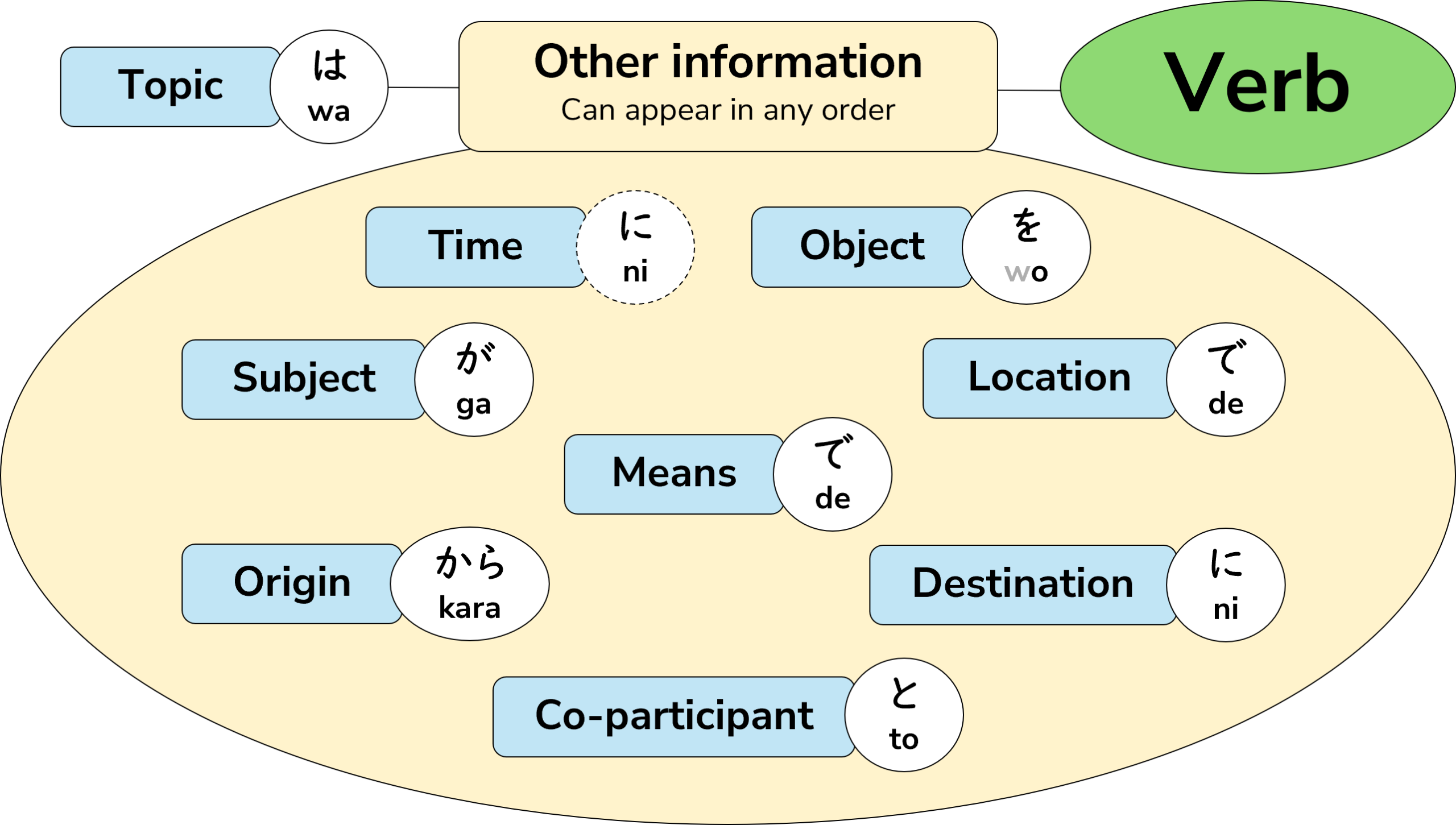
Finally make sense of Japanese grammar Master Japanese grammar through visual explanations that show you why the language works the way it does, so you can build your own sentences with confidence, not just memorize phrases. “ Your course is AMAZING! It’s a lifesaver to having me communicate properly with my coworkers and getting around […]
Why Language Models Hallucinate
Like students facing hard exam questions, large language models sometimes guess when uncertain, producing plausible yet incorrect statements instead of admitting uncertainty. Such "hallucinations" persist even in state-of-the-art systems and undermine trust. We argue that language models hallucinate because the training and evaluation procedures reward guessing over acknowledging uncertainty, and we analyze the statistical causes of hallucinations in the modern training pipeline. Hallucinations need not be mysterious -- they originate simply as errors in binary classification. If incorrect statements cannot be distinguished from facts, then hallucinations in pretrained language models will arise through natural statistical pressures. We then argue that hallucinations persist due to the way most evaluations are graded -- language models are optimized to be good test-takers, and guessing when uncertain improves test performance. This "epidemic" of penalizing uncertain responses can only be addressed through a socio-technical mitigation: modifying the scoring of existing benchmarks that are misaligned but dominate leaderboards, rather than introducing additional hallucination evaluations. This change may steer the field toward more trustworthy AI systems.
Why Language Models Hallucinate
Like students facing hard exam questions, large language models sometimes guess when uncertain, producing plausible yet incorrect statements instead of admitting uncertainty. Such "hallucinations" persist even in state-of-the-art systems and undermine trust. We argue that language models hallucinate because the training and evaluation procedures reward guessing over acknowledging uncertainty, and we analyze the statistical causes of hallucinations in the modern training pipeline. Hallucinations need not be mysterious -- they originate simply as errors in binary classification. If incorrect statements cannot be distinguished from facts, then hallucinations in pretrained language models will arise through natural statistical pressures. We then argue that hallucinations persist due to the way most evaluations are graded -- language models are optimized to be good test-takers, and guessing when uncertain improves test performance. This "epidemic" of penalizing uncertain responses can only be addressed through a socio-technical mitigation: modifying the scoring of existing benchmarks that are misaligned but dominate leaderboards, rather than introducing additional hallucination evaluations. This change may steer the field toward more trustworthy AI systems.
Changing Minds: Computers, Learning, and Literacy
An impassioned guide to how computers can fundamentally change how we learn and think.Andrea diSessa's career as a scholar, technologist, and teacher has b
» Apple, Carmen Sandiego, and the Rise of Edutainment The Digital Antiquarian
If there was any one application that was the favorite amongst early boosters of personal computing, it was education. Indeed, it could sometimes be difficult to find one of those digital utopianists who was willing to prioritize anything else — unsurprisingly, given that so much early PC culture grew out of places like The People’s Computer Company, who made “knowledge is power” their de facto mantra and talked of teaching people about computers and using computers to teach with equal countercultural fervor. Creative Computing, the first monthly magazine dedicated to personal computing, grew out of that idealistic milieu, founded by an educational consultant who filled a big chunk of its pages with plans, schemes, and dreams for computers as tools for democratizing, improving, and just making schooling more fun. A few years later, when Apple started selling the II, they pushed it hard as the learning computer, making deals with the influential likes of the Minnesota Educational Consortium (MECC) of Oregon Trail fame that gave the machine a luster none of its competitors could touch. For much of the adult public, who may have had their first exposure to a PC when they visited a child’s classroom, the Apple II became synonymous with the PC, which was in turn almost synonymous with education in the days before IBM turned it into a business machine. We can still see the effect today: when journalists and advertisers look for an easy story of innovation to which to compare some new gadget, it’s always the Apple II they choose, not the TRS-80 or Commodore PET. And the iconic image of an Apple II in the public’s imagination remains a group of children gathered around it in a classroom.
How I Learned Spanish in 3 Months | Loïs Talagrand
Complete breakdown of my 90-day Spanish challenge: constraints, tools, timeline, and final 30-minute conversation result.
Online Spanish Classes San Diego | Culture & Language Center
Learn Spanish and gain confidence through real conversations and tailored online Spanish classes with friendly, certified teachers from Latin America. Visit us!