

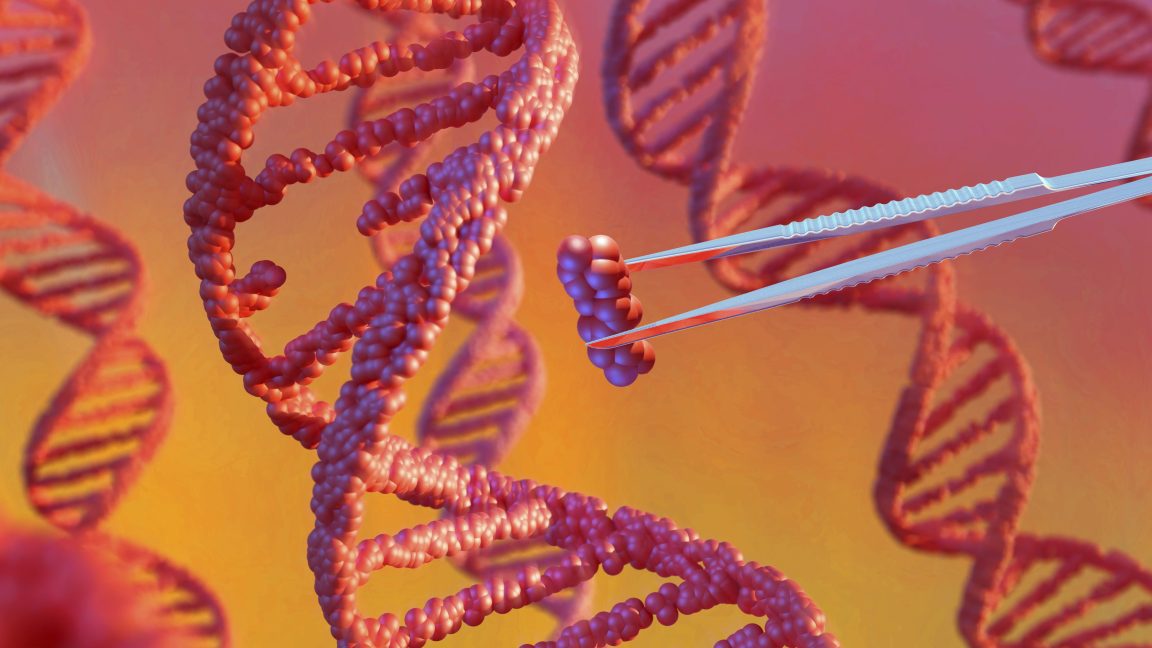
The new biotech tool called “gene drive” changes our relation to wild species profoundly. Any gene (or set of genes) can be forced to “drive” through an entire wild population. It doesn’t matter if the trait the genes control is deleterious to the organism. With one genetic tweak to its germline, a species can even be compelled to go extinct.
Crispr Could Revolutionize the Way We Eradicate Invasive Species
Gene editing isn't brutal like poison, but it could transform our power over nature.

How DNA Editing Could Change Life on Earth
Researchers hope to use the powerful biological tool to alter the genetic destiny of species and eliminate diseases.

New, reversible CRISPR method can control gene expression while leaving underlying DNA sequence unchanged
Over the past decade, the CRISPR-Cas9 gene editing system has revolutionized genetic engineering, allowing scientists to make targeted changes to organisms' DNA. While the system could potentially be ...

New E. coli strain will accelerate evolution of the genes of your choice
Strain eliminates the trade-offs of a high mutation rate.

Synthetic Biology of Plants and Microbes for Agriculture, Environment, and Future Applications
Agriculture is under pressure to provide food for a growing population and the feedstock required to drive the bioeconomy. Methods to breed and genetically modify plants are inadequate to keep pace. When engineering crops, traits are painstakingly introduced into plants one-at-a-time, combine unpredictably, and are continuously expressed. Synthetic biology is changing these paradigms with new genome construction tools, computer aided design (CAD), and artificial intelligence (AI). “Smart plants” contain circuits that respond to environmental change, alter morphology, or respond to threats. Further, the plant and associated microbes (fungi, bacteria, archaea) are now being viewed by genetic engineers as a holistic system. Historically, plant health has been enhanced by many natural and laboratory-evolved soil microbes marketed to enhance growth or provide nutrients, or pest/stress resistance. Synthetic biology has expanded the number of species that can be engineered, increased the complexity of engineered functions, controlled environmental release, and can assemble stable consortia. New CAD tools will manage genetic engineering projects spanning multiple plant genomes (nucleus, chloroplast, mitochondrion) and the thousands of genomes of associated bacteria/fungi. This review covers advanced genetic engineering techniques to drive the next agricultural revolution, as well as push plant engineering into new realms for manufacturing, infrastructure, sensing, and remediation.

Gene therapy has made some recent progress—is it enough?
Despite a bumpy history, through work and trust, gene therapy may have a future.
Stage- and tissue-specific gene editing using 4-OHT–inducible Cas9 in whole organism
Li et al. report a novel Cas9-based spatiotemporal gene-editing approach in zebrafish. Given the limited germline transmission efficiency of knock-in allel

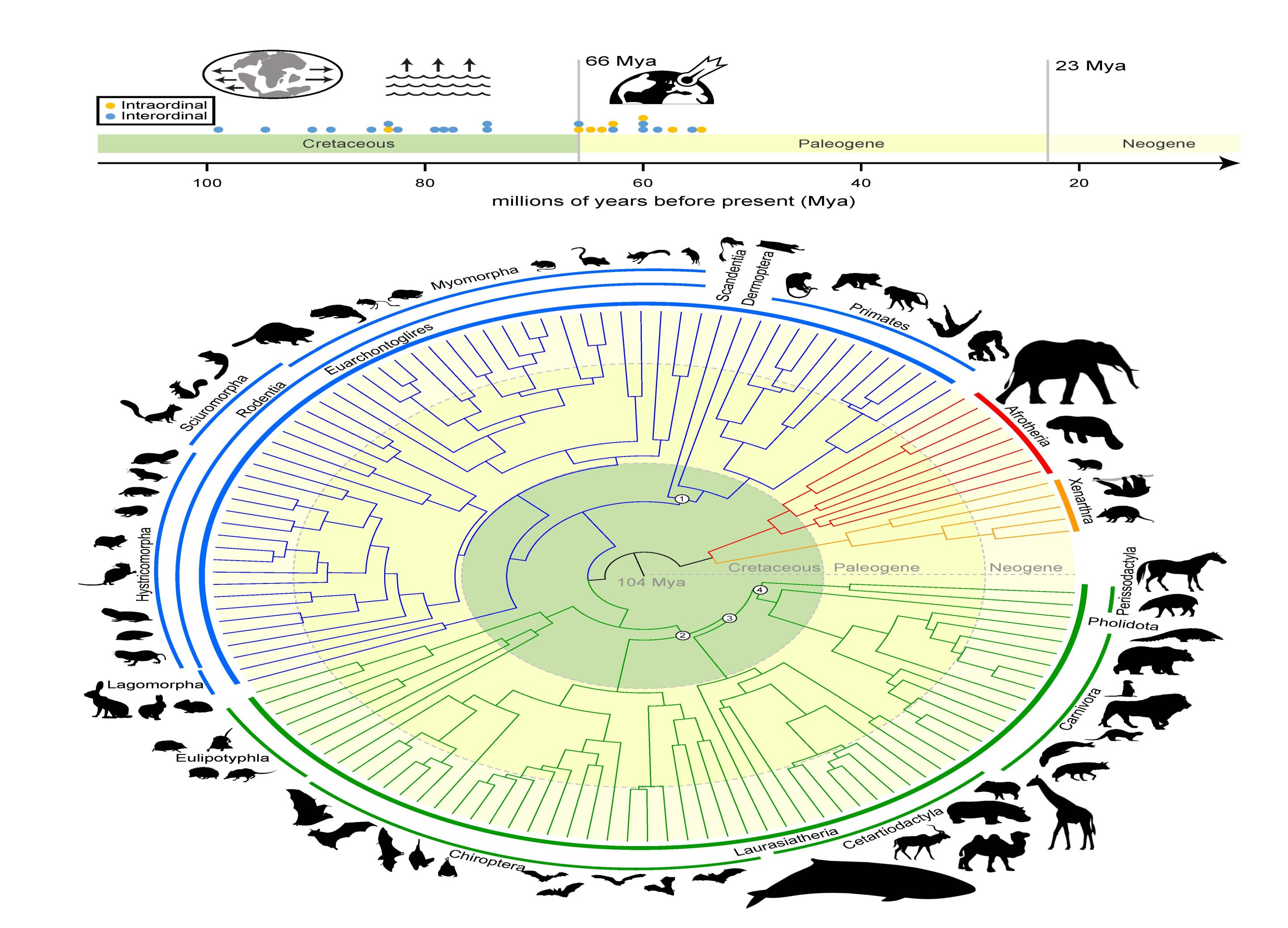
Researchers use genomes of 241 species to redefine mammalian tree of life
Research led by a team of scientists from the Texas A&M School of Veterinary Medicine and Biomedical Sciences puts to bed the heated scientific debate regarding the history of mammal diversification ...
Infecting gut microbes with CRISPR-loaded virus demonstrates potential for microbiome gene editing
In a first, researchers at the UC San Francisco have successfully used the DNA-editing system, CRISPR to alter the genomes of bacteria living in the guts of mammals, a development which stands to advance ...

The Ecological Theatre of Selfish Elements
Abstract. Some selfish genetic elements enhance their transmission to the next generation by interfering with and eliminating competing variants within the

Limited genomic predictability of complex trait evolution despite genotype-phenotype stability
Whether genomic data can be used to effectively predict adaptation in natural populations is unknown. Here, we tested the efficacy of genomic prediction of complex trait evolution by monitoring genome-wide allele frequencies and pigmentation variation in genetically diverse populations of Drosophila melanogaster during evolution in both field mesocosms and a controlled, lab-based setting. At two points during trait evolution, we produced a high-powered, well-resolved genotype-phenotype map that exhibited marked stability across independent populations. Although we were able to use this map to correctly infer the direction of pigmentation evolution in both the lab and field settings, the particular loci responding to selection were largely unpredictable based on the direction of trait evolution itself. Our results hold implications for the promise, and limitations, of genomic prediction. , Editor’s summary Variant effects depend on the environment as well as the genetic backgrounds in which they arise, which leads to questions about how translatable results found in laboratory settings are to evolution in the wild. Smiley-Rhodes et al . allowed populations of the fruit fly Drosophila melanogaster to evolve in both laboratory and naturalistic settings to study the evolution of pigmentation. Both test populations lightened across replicates, but only variants near known pigmentation genes replicated with previous studies. However, predictions based on the allele frequencies of these variants alone suggested unchanged or increased pigmentation, whereas incorporating all identified variants reflected the real phenotypic changes seen. These results underscore the complicated relationships between variation and environment, even for well-studied traits. —Corinne Simonti , INTRODUCTION Whether genomic data can be used to predict adaptive evolution in natural populations, particularly for genetically complex traits, is unresolved. This task is challenging for two key reasons. First, genotype-phenotype maps are generally constructed within a single population and at a single point in time. Whether the phenotypic effects of trait-associated loci remain stable as populations evolve is unknown. Second, complex trait loci are often pleiotropic and affect multiple fitness-relevant phenotypes. This can decouple the direction of evolution of the trait itself from that of specific trait-associated loci, given that the fitness effect of a locus depends on its effect on all affected traits and their joint impact on fitness. Longitudinal studies that directly measure trait variation and selection on individual loci throughout evolution provide a way to quantify genomic predictability, despite these challenges. RATIONALE Here, we leveraged rapid, repeatable evolution of temperate Drosophila melanogaster populations under seasonally fluctuating selection to quantify the predictability of complex trait evolution. Specifically, we quantified allele frequencies and pigmentation variation over time in genetically diverse populations reared in field mesocosms exposed to natural conditions and in mesocosms housed in a controlled lab setting. At two time points, we conducted high-powered, tail-based mapping to identify loci underpinning pigmentation variation in our focal population. We used the resulting mapping data in conjunction with time-series allele frequency estimates to address the following questions: How stable is the genotype-phenotype map throughout evolution and across environments of selection? Are the loci that underpin variation in pigmentation the same as those that respond to selection and drive trait evolution? How does the complexity of the environment of selection affect genomic predictability? RESULTS The genotype-phenotype map we constructed reaffirmed canonical pigmentation genes, unveiled previously unidentified loci, and exhibited marked stability across independent populations. Although variation across all mapped loci together correctly predicted the direction of pigmentation evolution in both the field and lab mesocosms, the particular loci responding to selection, and thus the architecture of adaptation itself, were largely unpredictable. This was apparent even at the largest-effect, canonical pigmentation genes: Allele frequency shifts at ebony predicted the evolution of lighter pigmentation, consistent with our observations; shifts at tan predicted no change in pigmentation; and shifts at bric-à-brac predicted evolution of darker pigmentation, counter to what occurred. Finally, genomic predictability of trait evolution was lower in the field environment, where shifting environmental conditions likely select on a greater number of traits overall than in the controlled lab setting. CONCLUSION The stability of the genotype-phenotype map we quantified suggests that shifting epistatic landscapes associated with the evolutionary process may not preclude the portability of mapping results across populations if the mapping itself is sufficiently powered. Furthermore, genomic prediction of complex trait evolution in natural settings is feasible but hinges upon a well-resolved genotype-phenotype map that characterizes both large- and moderate-effect loci. Finally, the tendency for large-effect loci to behave in unpredictable ways exemplifies the role of pleiotropic constraint during evolution in natural environments while also demonstrating how such pleiotropic constraint can be overcome through genetic redundancy and shifts at moderate-effect loci. Longitudinal mapping of a complex trait throughout evolution. Ten mesocosms, housed in both a lab and a field environment, were seeded with a diverse D. melanogaster population. Genomic and pigmentation variation were monitored and genotype-phenotype maps were constructed throughout trait evolution. Mapping and time-series genomic data were analyzed jointly to test whether loci underlying trait variation also drove trait evolution through time. [Illustration credit: R. Dhillon]

More gene-edited food is coming, but organic farmers want to opt out | CBC News
Organic farmers say Canada's relaxed guidelines welcome genetically modified seeds and leave them no room to opt out, while biotech developers applaud the change, saying it will help farmers increase crop yields in the face of food insecurity and climate change.

(PDF) Highly efficient genome editing using oocyte-specific z cas9 transgenic zebrafish
PDF | Since its first application, CRISPR/Cas9 rapidly becomes a routine technique to perform genome editing in a variety of biological systems. To... | Find, read and cite all the research you need on ResearchGate

Prof. Lee Cronin on Twitter / X
It is easy to see that biology does things that cannot be computed in advanced because the future is not controlled by statistics, it is controlled by creative actions. This means today’s statistically-driven GenAI is fundamentally unintelligent.— Prof. Lee Cronin (@leecronin) March 28, 2026
DEF CON 25 - John Sotos - Genetic Diseases to Guide Digital Hacks of the Human Genome
Lorna Slater delays final biodiversity strategy amid fears over voices being silenced
Lorna Slater has admitted that a key biodiversity strategy has been delayed amid claims interested groups are being “denied the opportunity to…
