

In several conversations with a friend I was invited to revisit some prior beliefs I had posited on the relationship between the environment and the self; at various times in my life this position has reversed, then reversed again, but I think it’s reaching a more nuanced, unified position.
Learn Your Philosophical Beliefs | ClearerThinking.org
Find your direction in life with our philosophical compass, a tool to explore your beliefs, values and purpose!

The Self-Evidencing Agent: Mind, Existence, and Predictive Processing
How the concept of self-evidencing offers a philosophical principle for understanding mind and behavior, consciousness, value, wisdom, and meaning.What is

ICPA - ICPA 2026
Welcome to the 2026 International Conference on Perception and Action (ICPA). This year, we meet in Omaha, Nebraska, bringing the international ecological psychology community together in a setting that reflects a growing culture of research and innovation.ICPA brings together scholars from around the world who study perception and action as inseparable, mutually constraining processes grounded in organism–environment relations. The program features work spanning affordances, perceptual learning, coordination and control, development, social interaction, ecological design, and methodological innovation.The conference is designed to support sustained dialogue across theoretical, empirical, and applied perspectives—welcoming diverse viewpoints and participants from across institutions, disciplines, and countries. We invite you to join us for a week of scientific exchange and community building as we continue to advance ecological approaches to understanding behavior in real-world contexts.

Why major life decisions should be approached with ‘epistemic humility’ | Psyche Videos
At a crossroads in life? No matter how much you deliberate, one unknowable remains: the person you will be on the other side

Relational values of nature: leverage points for nature policy in Europe
Relational values reflect the qualities of the relationships between humans and nature, such as care, social bonding, place attachment and spiritual meanings. In this perspective article, we argue ...

Mindfulness is loaded with (troubling) metaphysical assumptions | Aeon Essays
Mindfulness promotes itself as value-neutral but it is loaded with (troubling) assumptions about the self and the cosmos

Evald Ilyenkov and the enactive approach
There is a growing interest in Evald Ilyenkov’s work and its significance for contemporary debates. This interest spans several disciplines. One key thread in Ilyenkov’s ideas concerns a perspective on the relation between biology and psychology. In rejecting crude reductionism and individualism, Ilyenkov put forward a view of mind and personhood as emerging from activity and social practice. In his rejection of brain-bound notions of the mind, Ilyenkov’s ideas bear interesting resonances with current work in 4E cognition. One particularly interesting resonance that has occasionally been noticed are the connections with the enactive approach to life and mind. However, beyond some hints at interesting convergences, there is to date no detailed comparison between the two views. The present article attempts to address this gap, examining both complementarities and possible tensions between the two approaches. Rejecting cognitive views detached from environmental and social processes, the enactive approach, as exemplified by De Jaegher and Di Paolo’s concept of participatory sense-making, emphasises the dynamic constitution of cognition through embodied and situated activities. The article draws parallels between Ilyenkov’s emphasis on historically and culturally situated activity, notably labour, and the enactive understanding of human bodies as dynamically constituted in human activity. The article explores the Ilyenkovian and enactive perspectives on the dialectics of ideality, challenging traditional dualistic views and proposing that the ideal emerges as metastable patterns in the ongoing interactions between world, practices, norms, and bodies. The article concludes by suggesting future research directions for the enactive approach, particularly in areas emphasised by Ilyenkov, such as labour and the mediation of material/cultural artefacts.

Metamodern Individualism Anonymous
Diunital Cognition, Emotional Intelligence and Archaeological Therapy

Taking Love Seriously: What Ancient Wisdom & Modern Psychology Say About Interconnectedness - The Great Simplification
In this episode, Nate welcomes Dr. John Churchill, a psychologist and former Buddhist monk, to explore a map of human development that runs from "first-person" perspective of the isolated self all the way to a felt, embodied sense of interdependence with the planet itself.

Ephemeral Identities
The Paper Pilot's digital garden of thoughts on philosophy, politics, and sociology. Reading time: ~5 minute read | Published: Sep 16, 2026 | Updated: Sep 17, 2026

Reflections on Anthropic and EA
Personal reflections I've been sitting on lately.

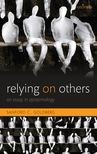
Relying on Others: An Essay in Epistemology
Abstract. This book concerns the role others play in our attempts to acquire knowledge of the world. Two main forms of this reliance are examined: testimon
A New Pilgrimage: John Vervaeke on Finding Practices that Build Meaning | Over the Mountains #15
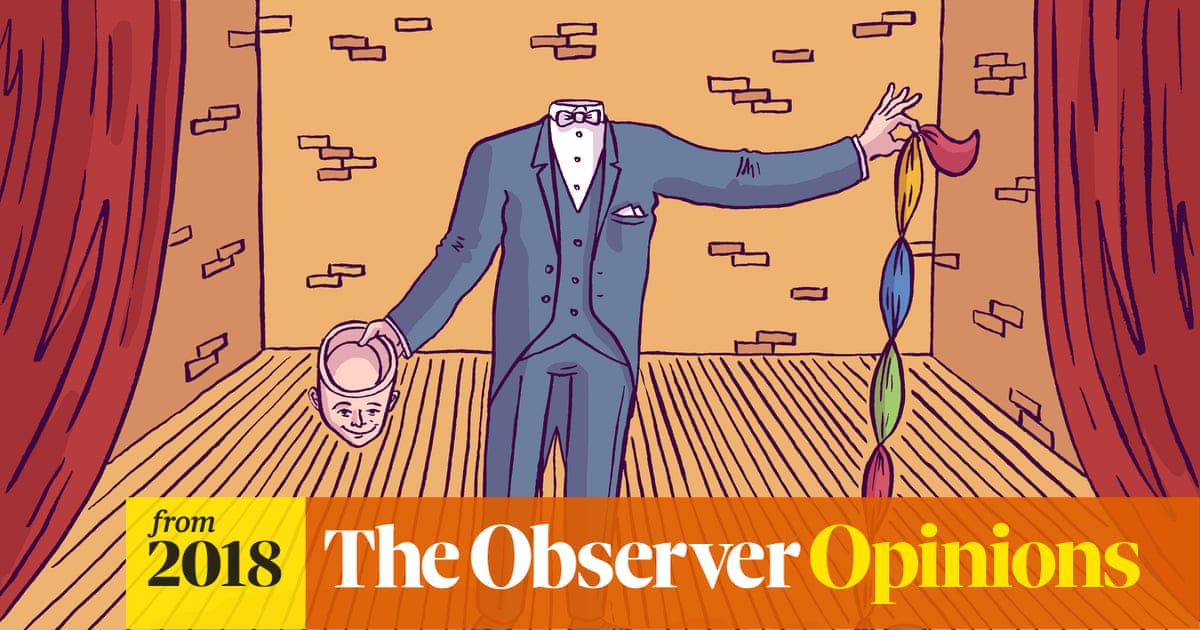
A revolution in our sense of self | Nick Chater
Psychologists have tried to plumb the depths of human motivation to make sense of our behaviour. But our inner mental world is a fiction, sustained by constant improvisation
I tried to explain to myself the behaviour of some people who only seem to reheat one another's ideas — and are the same people still on X today, irrespective of political alignment. berjon.com/rt/

The Retweeting Class
berjon.com