


Latine activism is an unusual addition to Paul Thomas Anderson's milk-pale oeuvre
Cartographic Memory: Social Movement Activism and the Production of Space
“Cartographic Memory is a creative, important, and well-written book that offers a vital analysis of Latinx activism in Oakland. Juan Herrera’s concept of social movement continuities helps us analyze the range of ways that actors make social change, rather than only focusing on the most radical politics or certain epic moments. Herrera’s book is an outstanding contribution toward building a nuanced and complex understanding of Latinx social movements.” - Victoria Lawson, author of Making Development Geography
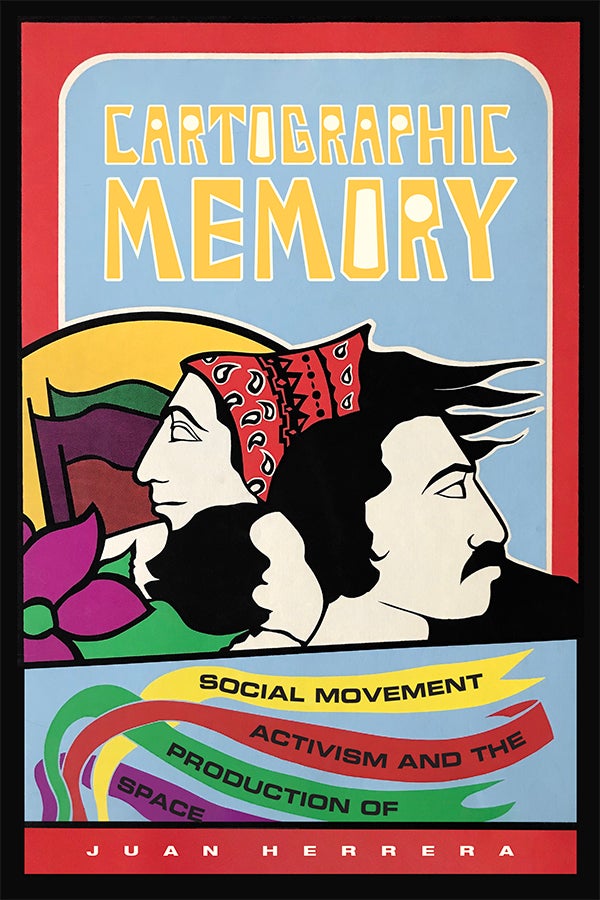

REVIEW: Pauline Hopkins' Contending Forces should be leading the literary canon - The Maroon
Contending Forces tells the story of a Black family both before and after slavery ended in the United States.
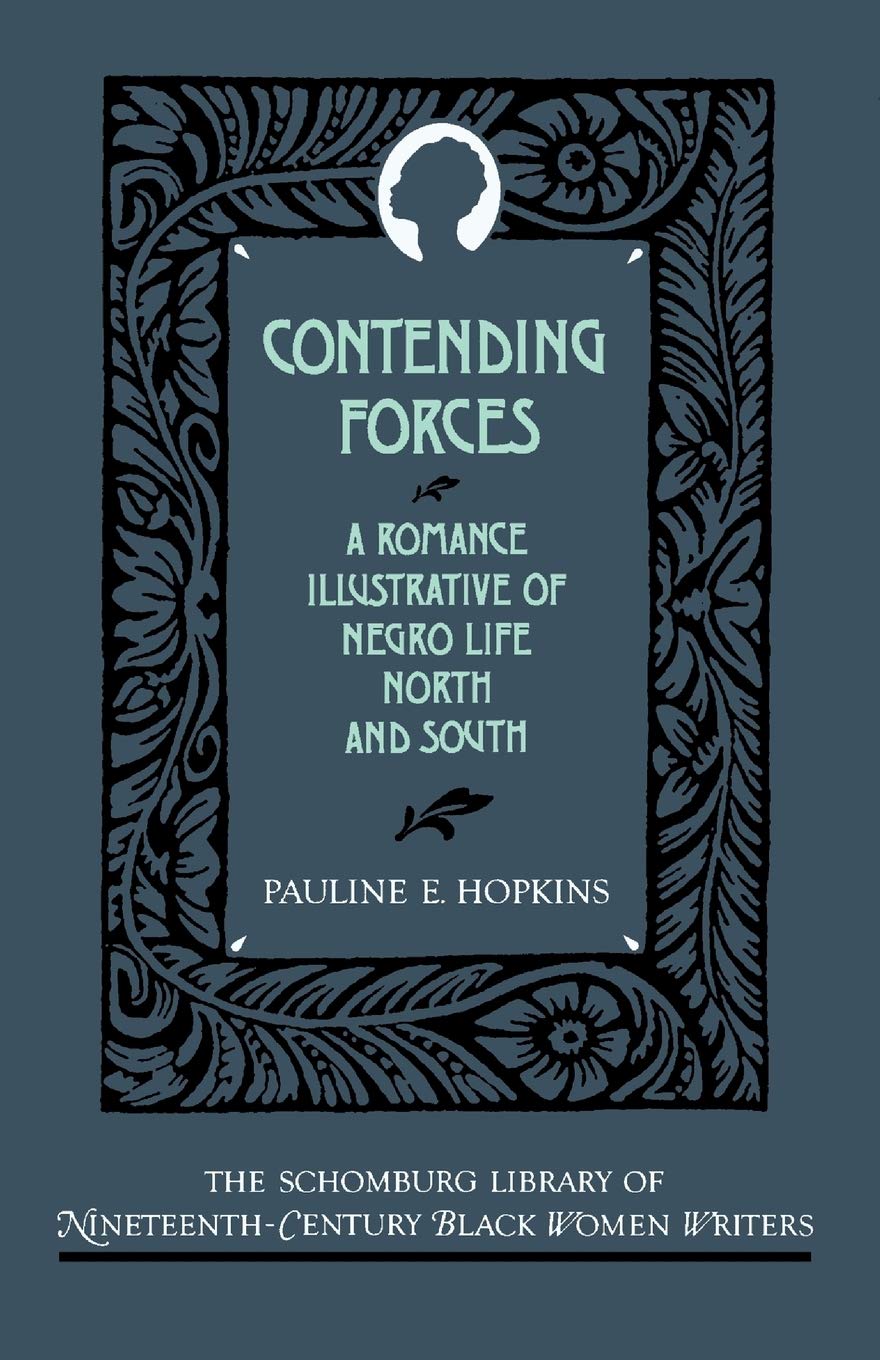
The Rise and Fall of Agent Civilizations
The whole OpenAI/Hugging Face story in plain English
Revenge of the Dilettantes
Book club and AI adventures, age of bespokeness, study groups, new rules of engagement

Revenge of the Dilettantes
Book club and AI adventures, age of bespokeness, study groups, new rules of engagement
Masculist pushback: the threatened extinction of the great, white Judeo-Christian male
A political ideology rooted in fear is remaking the world in its own image and dragging us with it

Art alchemy / Infernal machines
Anna Merlan on Leonora Carrington, and Maria Bustillos on the battle against genAI “writing”

YOU NAME IT
Check out YOU NAME IT - This comprehensive publication focuses on the artwork and activism of Sasha Huber. A Helsinki-based visual artist and researcher of Swiss and Haitian heritage, Huber’s creative practice encompasses performance, photography, film, mixed media, reparative interventions, and collaborations to investigate colonial residues left in the environment. Her projects conceive of natural spaces—mountains, lakes, glaciers, forests, and craters—as contested territories, highlighting the ways in which history is imprinted onto the landscape through acts of remembrance, including memorialization through naming and the erection of monuments. For over a decade, Huber has produced work in relation to the cultural and political Demounting Louis Agassiz campaign, which seeks to redress the racist legacy of the Swiss-born naturalist and glaciologist. With her artworks, Huber challenges the terms by which we remember, asking not only who and what we memorialize, but also, and more importantly, how we do so. by Huber, Sasha on Bookshop.org UK!

The Rebel: An Essay on Man in Revolt | Philopedia
Overview of Albert Camus’s The Rebel, exploring metaphysical and historical rebellion, nihilism, revolution, and the limits of political violence.

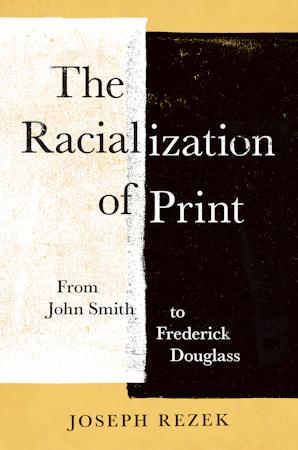
The Racialization of Print
Readers since Thomas Jefferson have believed it possible to judge entire races of people based on a single book, yet no one has attempted to explain the orig...
One Battle After Another Production Designer Florencia Martin on Building Paul Thomas Anderson’s Detailed World
Florencia Martin's second feature collaboration with Paul Thomas Anderson following Licorice Pizza and her second Oscar nomination following Babylon, One Battle After Another is a feat of instant-classic production design. From the redwood stump that Bob emerges from as he's being hunted down by Lockjaw to Sensei's labyrinthine, linked apartments to the Christmas Adventurers' underground

Sacralizing Dominion: The Doctrine of Christian Discovery and the Religious Nationalist Imagination
White Christian nationalism presents itself as restoration—of a Christian nation, a moral order, a rightful hierarchy. This article argues that what it restores is the world-making rhetoric of the Doctrine of Christian Discovery (DoCD). Reading the fifteenth-century papal bulls, their sedimentation into United States law, culture, religion, and contemporary dominionist discourse as a single rhetorical formation, we show that the bulls’ vocabulary of discovery, vacancy, and civilization did not describe a world but constituted one: a moral-legal order in which Christian identity conferred sovereignty and racialized peoples appeared as obstacles to salvation and property. That order persists as hegemonic common sense, carried by legal precedent, curricula, and popular culture, and it is re-performed today in the territorial rhetoric of the New Apostolic Reformation and white Christian nationalism. Following Steven T. Newcomb (Shawnee/Lenape), repudiating the doctrine’s documents without dismantling its embeddedness within language and cognition leaves religious nationalism’s deepest resource intact. Against the discovery template, we set three counter-rhetorics—Indigenous theologies, Black theology, and womanism—and argue that desanctifying dominion requires conciliation, not reconciliation.

AI, Artifice, And Authenticity
The era of badly-automated homogenized engagement slop is upon us. I desperately want to believe there's a renaissance for authenticity on the other end.

The Counter-Revolution of 1776: Slave Resistance and th…
Illuminates how the preservation of slavery was a moti…

That Winter the Wolf Came — Oakland Public Library
That Winter the Wolf Came — Spahr, Juliana — <p>That Winter the Wolf Came is written for this era of global struggle. It finds its ferment at the intersection of ecological and economic catastrophe. Its feminist and celebratory energy is fueled by street protests and their shattered windows. Amid oil spills and austerity measures and shore birds and a child holding its mother’s hand and hissing teargas canisters, it reminds us exactly what we must fight to defend with a wild ferocity, and what we’re up against.</p><br /><p>"In her poems, love does not resist the world beyond; love lets it in. Politics demands feeling rather than denuding it." —<i>Los Angeles Review of Books</i></p><p>"Geography, economics, ecology, hydrology, local and international history; repetition, flat limited diction, lengthy chant; intersections of incompatible discourses, such as a field biologist’s checklist plus memoir, medical record plus ode, incantation plus site report: Spahr draws on these resources and procedures to make poems that feel like bizarre, careful essays, and essays that feel like sad, extended poems." —<i>The Nation</i></p><p>"...a work of crisp wit, bizarre conjunctions and ultimately enduring moral authority." —<i>Publisher’s Weekly</i></p><br /><br />Excerpt:<br /><br /> It was Non-Revolution. Or it was me. Or it was Non-Revolution and me. I was unsure what it really was. Maybe it was my thoughts. My thoughts at one minute about Non-Revolution. About the smell of Non-Revolution. Sweat, urine, sage, pot, rotting food, hay, all mixed together. Perhaps about Non-Revolution’s body. I am sure I am not the only one who has thought it exceptional, but I am also just as sure that by the standards of bodies, Non-Revolution’s is fine but not exceptional. That is the point. That is why Non-Revolution is called Non-Revolution, why they have revolution as a possibility in their name but it is a modified and thus negated possibility so as to suggest they are possibly neither good nor fucked. Still something about Non-Revolution’s smell and body had gotten into me.<br /><br/>Renewed poetry of struggle at the intersection of ecological and economic catastrophe—feminist, ferocious, and finally celebratory.<br />