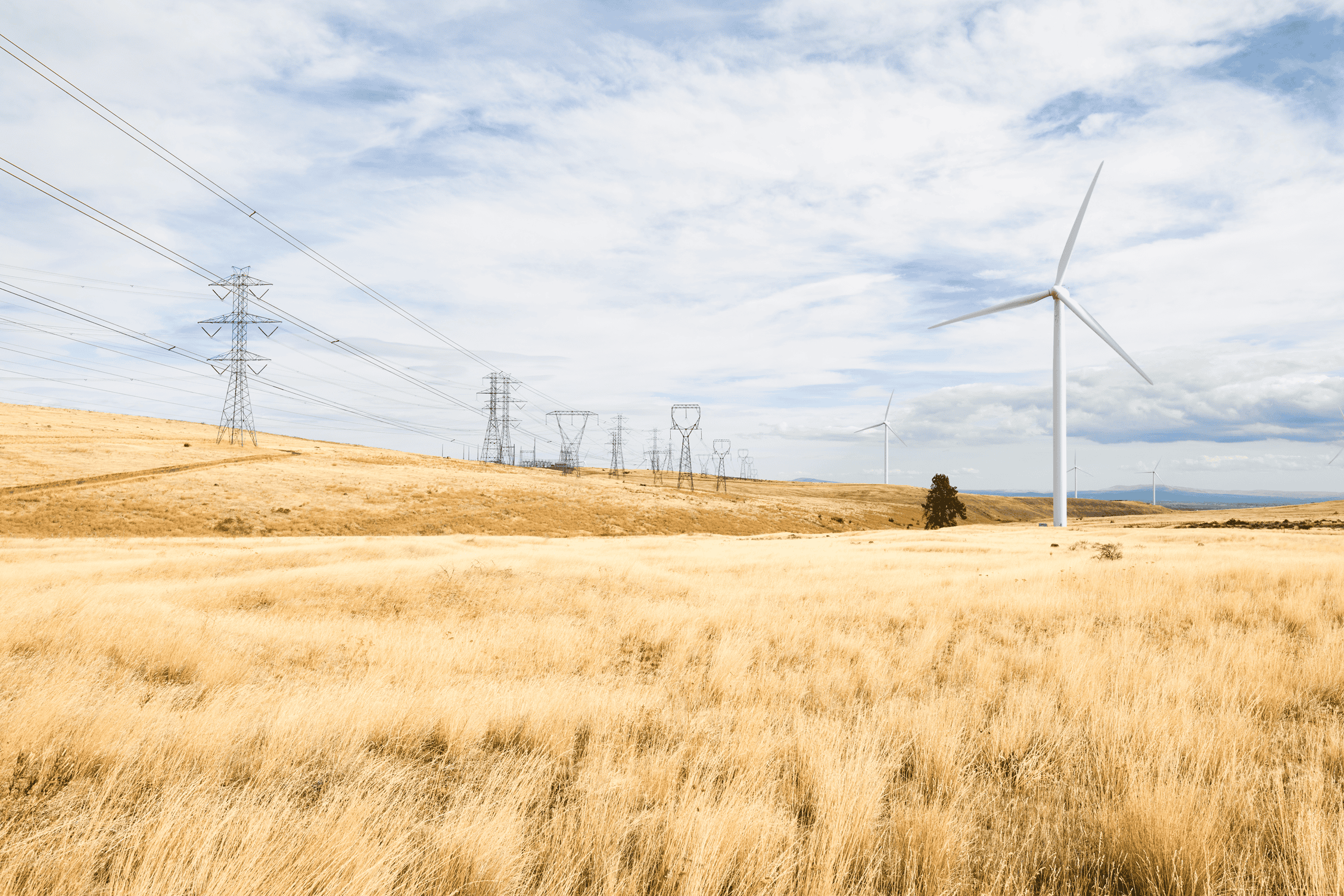
Introducing the Electrification Staircase: a visual framework showing the steps Europe must take to fully electrify its economy.
Electrification | Ember
Electrification can refer to different processes depending on the context. For example, increasing electricity access in emerging economies. At Ember, we focus on a specific type of electrification: replacing fossil fuels with electricity in sectors like transport, heating and industry. This kind of electrification cuts emissions and improves energy efficiency by replacing fossil fuels with clean power.

National Grid: Live
Shows the live status of Great Britain’s electric power transmission network
Static! Designing for energy Awareness
From the boost of the first cup of coffee in the morning to the glow of a nightlight that keeps a child company after dark, much of our contemporary lifestyles is powered by electricity. Today, however, the economic and environmental costs of energy require us to think again. While recognizing the complex social functions and cultural forms of electricity in everyday life, the current challenge for design is to change practices and patterns of (over)consumption. Static! explores design as a basis for increasing awareness of energy. Familiar furnishings and products have been reinterpreted to materialize electricity, to make it more visible and tangible for people. The resulting series of conceptual design examples express the poetics – and politics – of everyday electricity consumption. A design research project at the Interactive Institute funded by the Swedish Energy Agency, Static! has proved to be a pioneer in opening a current and critical research area at the intersection of design, energy and information technology. This book presents the Static! design examples and perspectives on issues in (sustainable) design today. Grounded in passion and humor, as well as rigor and research, the book asks designers and consumers – that is, all of us – to rethink the form, and future, of electricity in the world around us. Editor: Ramia Mazé. Authors: Christina Öhman, Sara Backlund, Johan Redström, Ramia Mazé, Sara Ilstedt Hjelm, Sara Routarinne.
The Electric Vehicle Developmental State | Paolo Gerbaudo
BYD exemplifies transformations in Chinese industrial policy

Climate solutions most likely to reach ‘positive tipping points’ revealed by scientists
Global shift towards clean electricity could trigger ‘cascade’ of progress, helping reduce air pollution, cut waste and revive oceans
Interrail.eu | 1 rail pass, 33 countries
Travel across 33 countries with the best and cheapest rail pass in Europe for Europeans. Take the first step of your epic train travel and explore the beauties of Europe with Interrail.

The growing Brics divide between carbon nations and electrostates
Energy systems can shape political institutions and make some nations more vulnerable to trade wars than others

Decoding Europe’s Data Centre Landscape: An Analysis based on the EU EED DC Dashboard
The rapid expansion of digital infrastructure has made data centres a focal point of European energy and climate policy. Under the recast Energy Efficiency Directive (EED), the European Union established a public Data Centre Registry and Dashboard to enforce unprecedented transparency on energy and environmental related performance. However, initial releases of these official datasets present substantial challenges regarding data completeness and reporting anomalies, limiting their immediate usability for empirical policy assessment. This paper presents a comprehensive analysis and systematic refinement of the initial published dataset. We developed an automated data-processing workstream to validate registry disclosures, filter statistical outliers, and resolve data gaps by recalculating core metrics, including calculated average Power Usage Effectiveness (PUE), utilization rates, and data centre capacity relative to national economic indicators. Our findings uncover significant regional variations in energy efficiency and infrastructure density and utilisation across Europe, characterized by a sharp geographic efficiency gradient favoring northern member states. Furthermore, evaluating the framework's effectiveness reveals structural data quality issues, yielding an estimated overall EU data centre coverage rate of just 38 % alongside critical reporting anomalies, such as theoretical utilization rates exceeding 100 % in select member states. Ultimately, this study establishes a highly curated baseline of the current European digital infrastructure landscape and provides a refined, reliable dataset to track the sector's trajectory toward net-zero goals.
Les questions ouvertes du rapport Draghi | Le Grand Continent
Pour les économistes Olivier Blanchard (Peterson Institute) et Angel Ubide (Citadel), le rapport Draghi identifie les problématiques essentielles auxquelles est confrontée l’Europe qui vient — sans apporter pour autant toutes les réponses. Afin d’ouvrir un débat nécessaire sur les constats et la feuille de route, ils proposent d’élargir la focale : de la productivité aux investissements en passant par la sécurité nationale — un tour d’horizon.

How Infrastructure Works: Transforming our shared systems for a changing world
'Pulsing with wisdom and humanity... a masterpiece' ED YONG'A hopeful, lyrical - even beautiful - hymn to the systems of mutual aid we embed in our material world' CORY DOCTOROW'An extraordinary book' MARK MIODOWNIK'You won't see the world the same after reading this book!' AUSTIN KLEONEvery day, we are granted the power to travel at high speeds, fly, see in the dark, summon water from distant mountains and electricity from the sun. The systems that run our world are invisible to us until they fail.Infrastructure enables lives of astounding ease and freedom that would have been unimaginable just a century ago. These technological systems - the most complex and vast ever created by humans - have allowed us to work collectively for the public good. But these systems are now beginning to fail us.Engineering professor Deb Chachra takes readers on a fascinating tour of these essential utilities, revealing how they work, what it takes to keep them running, and just how much they shape our lives - but also the price they extract, who pays it and in what ways, as well as the threats to our infrastructure in a changing world.From Snowdonia's Electric Mountain to a solar plant in southern India, Chachra shows how we can rebuild our shared infrastructure to be not just functional but also equitable, resilient, and sustainable. We need to learn how to see these systems and to transform them, together, because the cost of not being able to rely on them is unthinkably high.
All the Ways Europe Is Ditching American Technology
A WIRED timeline shows how dozens of governments, companies, and other organizations across Europe are moving, or planning to shift, away from US Big Tech.

Home | Bridge
BRIDGE is a European Commission initiative that brings together projects from Horizon Europe with a focus on smart energy systems, in particular Smart Grid, Energy Storage, and Digitalisation Projects.

The Impact of Digital Business on Energy Efficiency in EU Countries
Digital business plays a crucial role in driving energy efficiency and sustainability by enabling innovative solutions such as smart grid technologies, data analytics for energy optimization, and remote monitoring and control systems. Through digitalization, businesses can streamline processes, minimize energy waste, and make informed decisions that lead to more efficient resource utilization and reduced environmental impact. This paper aims at analyzing the character of digital business� impact on energy efficiency to outline the relevant instruments to unleash EU countries� potential for attaining sustainable development. The study applies the panel-corrected standard errors technique to check the effect of digital business on energy efficiency for the EU countries in 2011�2020. The findings show that digital business has a significant negative effect on energy intensity, implying that increased digital business leads to decreased energy intensity. Additionally, digital business practices positively contribute to reducing CO2 emissions and promoting renewable energy, although the impact on final energy consumption varies across different indicators. The findings underscore the significance of integrating digital business practices to improve energy efficiency, lower energy intensity, and advance the adoption of renewable energy sources within the EU. Policymakers and businesses should prioritize the adoption of digital technologies and e-commerce strategies to facilitate sustainable energy transitions and accomplish environmental objectives.

Clear the Lines: Policy and Messaging for the Electric Grid the Northwest Needs
Two Sightline reports detail how Oregon and Washington can build a robust energy and climate future.