

After ten years in print, our publisher decided against further printings and reverted the rights to us. Elements of Programming is now available in two forms: a free PDF and a no-markup paperback.
Its Time for a New Programming Language
Today, when compared to any other point in programming history, we find ourselves spoiled for choice when it comes to programming…
Let’s explore the universe of programming resources together
by Quincy Larson Let’s explore the universe of programming resources together There are a lot of free programming resources out there. Here’s a list of more than a thousand free programming books. Here’s a list of hundreds of free online university c...
The Art of Unix Programming
This book and its on-line version are distributed under the terms of the Creative Commons Attribution-NoDerivs 1.0 license, with the additional proviso that the right to publish it on paper for sale or other for-profit use is reserved to Pearson Education, Inc. A reference copy of this license may be found at http://creativecommons.org/licenses/by-nd/1.0/legalcode.
A break from programming languages
This is a blog post I have been considering writing for a long time.
Motivating Adult Learners by Introducing Programming Concepts with Scratch
Novice programmers usually fail to combine abstract concepts and knowledge into program design, even though they know the syntax and semantics of individual statement. Adult novice programmers with little computer background knowledge might face more ...

The Next 7000 Programming Languages
Landin’s seminal paper “The next 700 programming languages” considered programming languages prior to 1966 and speculated on the next 700. Half-a-century on, we cast programming languages in a Darwinian ‘tree of life’ and explore languages, their features (genes) and language evolution from the viewpoint of ‘survival of the fittest’.
The Rust Programming Language - The Rust Programming Language
by Steve Klabnik, Carol Nichols, and Chris Krycho, with contributions from the Rust Community
Nobody Cracks Open a Programming Book Anymore · unix.foo
A sad look at the state of modern programming books.
Knuth: Literate Programming
This book is the first in a series of eight volumes that contain archival forms of my published papers, together with new material.
Reflections on a decade of coding
I've been programming professionally for about 12 years. Here are some of the things I worked on in the last 2 years.
Programming (with AI agents) as theory building
Back in 1985, computer scientist Peter Naur wrote “Programming as Theory Building”. According to Naur — and I agree with him — the core output of software engineers is not the program itself, but the theory of how the program works. In other words, the knowledge inside the engineer’s mind is the primary artifact of engineering work, and the actual software is merely a by-product of that.

Scratch is a big deal
While none of us were paying attention, Scratch has transformed from a programming language for kids to a massive online community of self-guided, student-pr...
Programming as Theory Building - Peter Naur
Programming as Theory Building - Peter Naur · GitHub
The future of programming and computing

Trends and adjacent possibles for the future of how computers are used and programmed
LIMITS 2026 -- Workshop on Computing within Limits
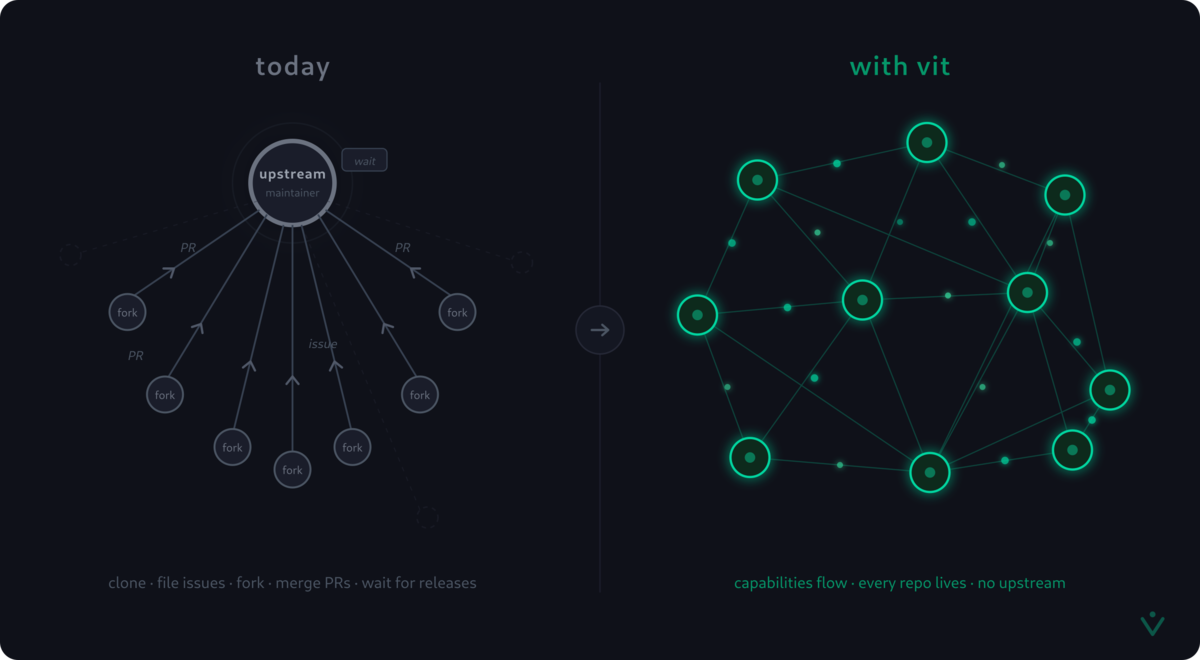
vit — open source is social

Humans approve intent, machines prove conformance
Introducing System One Models and Jev - TypeSafe AI Blog

Message from our CEO: After co-inventing ChatGPT, I kept asking myself: why have superhuman chat models not led to AGI? I’ve spent the last…
On-device intelligence for every product