

Elicit helps you synthesize evidence, understand the landscape, design programs and experiments, draft proposals, and weigh tradeoffs. Trusted by over 7 million researchers and 8 of the top 20 pharmaceutical companies
Elicit: AI for scientific research
Use AI to search, summarize, extract data from, and chat with over 125 million papers. Used by over 2 million researchers in academia and industry.
Introducing Elicit Research Agent: Rigor that powers decisions - Elicit
Elicit Research Agent is an AI environment built for high-stakes decisions

Alerts | Elicit: Al for scientific research
AI monitoring and screening with Elicit Alerts help you stay on top of all new research. Save a new alert mid-workflow and be notified when new relevant papers become available.
Ensue | Your world model's research team
Coordinated AI research against your repo, your data, and your benchmarks. Verified breakthroughs ship as pull requests your team can review. We only get paid when the number moves.

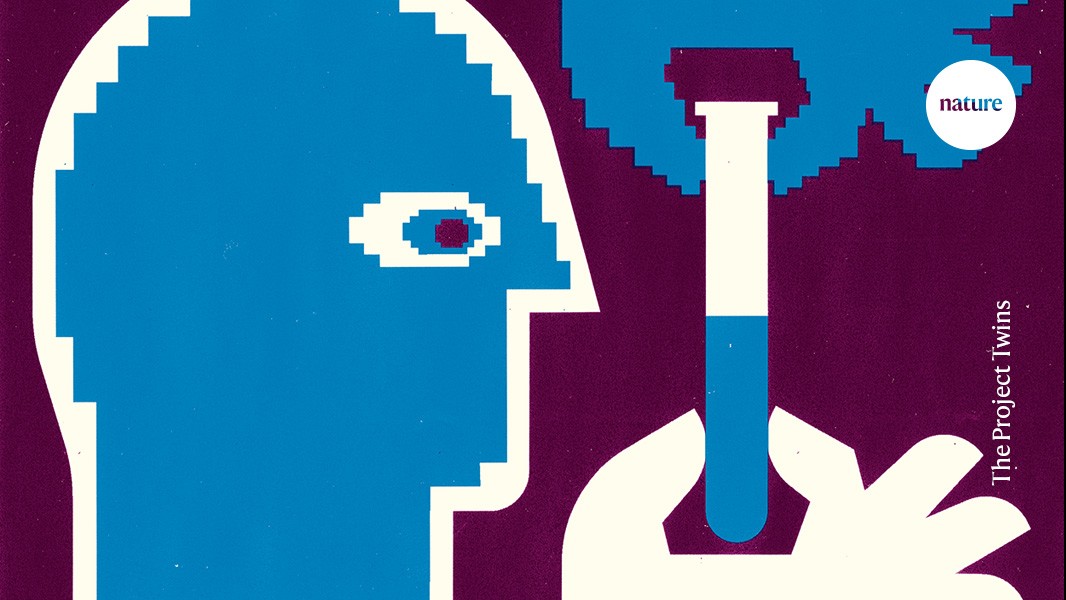
AI co-scientists are revolutionizing how research is done
Artificial-intelligence systems can generate hypotheses, design experiments and analyse data — but humans still need to decide what makes sense.
Charting AI’s Role in Scientific Discovery — Renaissance Philanthropy – A brighter future for all through science, technology, and innovation
Renaissance Philanthropy, with support from Google.org , is conducting a landscape study of AI integration in scientific research — and we want your perspective.

What Can We Learn From the FDA Model for AI Regulation? - AI Now Institute
After holding a rapid deliberation late last year that convened deep experts on the FDA alongside key participants in the AI policy debate, we pulled together several immediate insights into a memo. Though it was clear the path forward isn’t to port over any single regulatory model wholesale, hosting a deep dive into the Food […]
Where does the rigor go? Research software and the future of trustworthy science.
Generative AI now makes it dramatically easier to produce something that looks like research: analysis code, figures, literature reviews, even whole pap…
AI Research Assistant Claude Scholar: Open Source, Free, and Citation-Verified | João Cláudio Nunes Carvalho posted on the topic | LinkedIn
🚨 Professors are going to hate this. Someone just open sourced an AI that writes research papers from idea to publication. Conference-ready. Citation-verified. Free. It's called Claude Scholar. An AI-powered research system that handles every step of the academic workflow. Idea to publication. Fully automated. No advisor at 2am. No staring at blank LaTeX files. No crying during rebuttal season. Here's what's inside this thing: → AI brainstorms research topics, reviews literature, and finds gaps nobody has explored → Runs statistical analysis on your experiments. t-tests, ANOVA, ablation studies. Publication-ready figures. → Writes your paper section by section. Abstract to conclusion. Conference-formatted. → Verifies every citation through multi-layer validation so AI never hallucinates a reference → Strips robotic AI language and adds human voice so reviewers can't tell → Self-reviews your draft with a 6-point quality checklist before you submit → Parses reviewer comments, classifies each one, and drafts your entire rebuttal Here's the wildest part: It supports NeurIPS, ICML, ICLR, ACL, AAAI, Nature, Science, Cell, and PNAS. Downloads the conference template, strips sample content, and gives you a clean LaTeX structure ready to write into. The creator says it covers 90% of the academic research lifecycle. Research assistants charge $30 to $60/hour. Conference paper consultants charge $5,000+. Graduate programs cost $50K/year. This is free. All of it. 100% Open Source.

AI is Creating Peak Software, Media is the Best Analogy
Let's learn more about the world's most important manufactured product. Meaningful insight, timely analysis, and an occasional investment idea.
AI for science needs reasoning, not just data
AI agents that can model the human process of research will accelerate discoveries in science.

AI for Research | Scite
Scite searches 280M+ scholarly articles to give you citation-backed answers and show you how every claim is supported or disputed.
Measuring AI’s capability to accelerate biological research in the wet lab
OpenAI introduces a real-world evaluation framework to measure how AI can accelerate biological research in the wet lab. Using GPT-5 to optimize a molecular cloning protocol, the work explores both the promise and risks of AI-assisted experimentation.
Verification in the Age of AI Scientists
AI Scientists now operate at a scale that outpaces human capacity for manual review. Systems such as Sakana’s AI Scientist write entire workshop papers end-to-end. Lila Sciences runs autonomous ``AI Science Factories’’ that hypothesize, experiment, and iterate without human guidance. FutureHouse’s Kosmos and Robin generate thousands of candidate hypotheses in a single run, and Google’s Co-Scientist proposes testable experiments at a rate no laboratory can fully evaluate. Each of these systems emphasizes verified results, yet that standard ranges from near-perfect formal proof in mathematics to decade-long clinical trials in medicine, with no shared framework for judging sufficiency across domains. As outputs scale beyond what humans can manually inspect, the question of which results to trust becomes as hard as generating them. The bottleneck for AI for Science is no longer hypothesis generation, it is verification.
Import AI 475: Swarm scaling; Google DeepMind watermarks biology; and the AI science economy
Who chooses what AI gets to do?

The CEO’s Guide to Generative AI: Cost of compute
The IBM Institute for Business Value uses data-driven research and expert analysis to deliver thought-provoking insights to leaders on the emerging trends that will determine future success.'
