Use AI to search, summarize, extract data from, and chat with over 125 million papers. Used by over 2 million researchers in academia and industry.
Elicit: AI for scientific research
Use AI to search, summarize, extract data from, and chat with over 125 million papers. Used by over 2 million researchers in academia and industry.
AI for Research | Scite
Scite searches 280M+ scholarly articles to give you citation-backed answers and show you how every claim is supported or disputed.
AI has supercharged scientists—but may have shrunk science
Analysis of 41 million papers finds that although AI expands individual impact, it narrows collective scientific exploration
Alerts | Elicit: Al for scientific research
AI monitoring and screening with Elicit Alerts help you stay on top of all new research. Save a new alert mid-workflow and be notified when new relevant papers become available.

AI Research Agents Narrow Scientific Exploration
AI research agents can now generate research ideas, design experiments, run code, and draft papers, raising the possibility of large-scale AI-assisted scientific discovery. Many current agent frameworks explicitly encourage the generation of novel and high-impact ideas. Yet it remains unclear whether AI-assisted ideation broadens scientific exploration or mainly concentrates around existing work. We study AI research agents as scientific search systems. Using four AI research-agent frameworks and six large language models, we generate 37,802 scientific ideas from shared seed literature across citation-defined research areas in AI and machine learning. We then compare the resulting AI ideas against human-authored papers from the same research areas, follow-on human research emerging from the same seed literature, and the seed literature itself. Across experiments, four consistent patterns emerge. First, AI-generated ideas are substantially more concentrated than human-authored papers from the same research areas. Second, AI-generated ideas remain much closer to their starting literature than later human follow-on work does. Third, papers most similar to AI-generated ideas tend to receive lower subsequent citations. Fourth, when AI-generated ideas differ from prior work, the differences arise primarily from recombining existing technical methods rather than introducing fundamentally new research questions. Overall, current AI research agents appear better suited to local elaboration than to broadening scientific exploration.

Deep Research, information vs. insight, and the nature of science
What AI will accelerate in the scientific process, what it cannot do, and how we can prepare for new manners of scientific investigation.
Project Rachel: Can an AI Become a Scholarly Author?
This paper documents Project Rachel, an action research study that created and tracked a complete AI academic identity named Rachel So. Through careful publication of AI-generated research papers, we investigate how the scholarly ecosystem responds to AI authorship. Rachel So published 10+ papers between March and October 2025, was cited, and received a peer review invitation. We discuss the implications of AI authorship on publishers, researchers, and the scientific system at large. This work contributes empirical action research data to the necessary debate about the future of scholarly communication with super human, hyper capable AI systems.
Summarize with built-in AI | AI on Chrome | Chrome for Developers
Distill lengthy articles, complex documents, or even lively chat conversations into concise and insightful summaries.

Charting AI’s Role in Scientific Discovery — Renaissance Philanthropy – A brighter future for all through science, technology, and innovation
Renaissance Philanthropy, with support from Google.org , is conducting a landscape study of AI integration in scientific research — and we want your perspective.

AI for science needs reasoning, not just data
AI agents that can model the human process of research will accelerate discoveries in science.

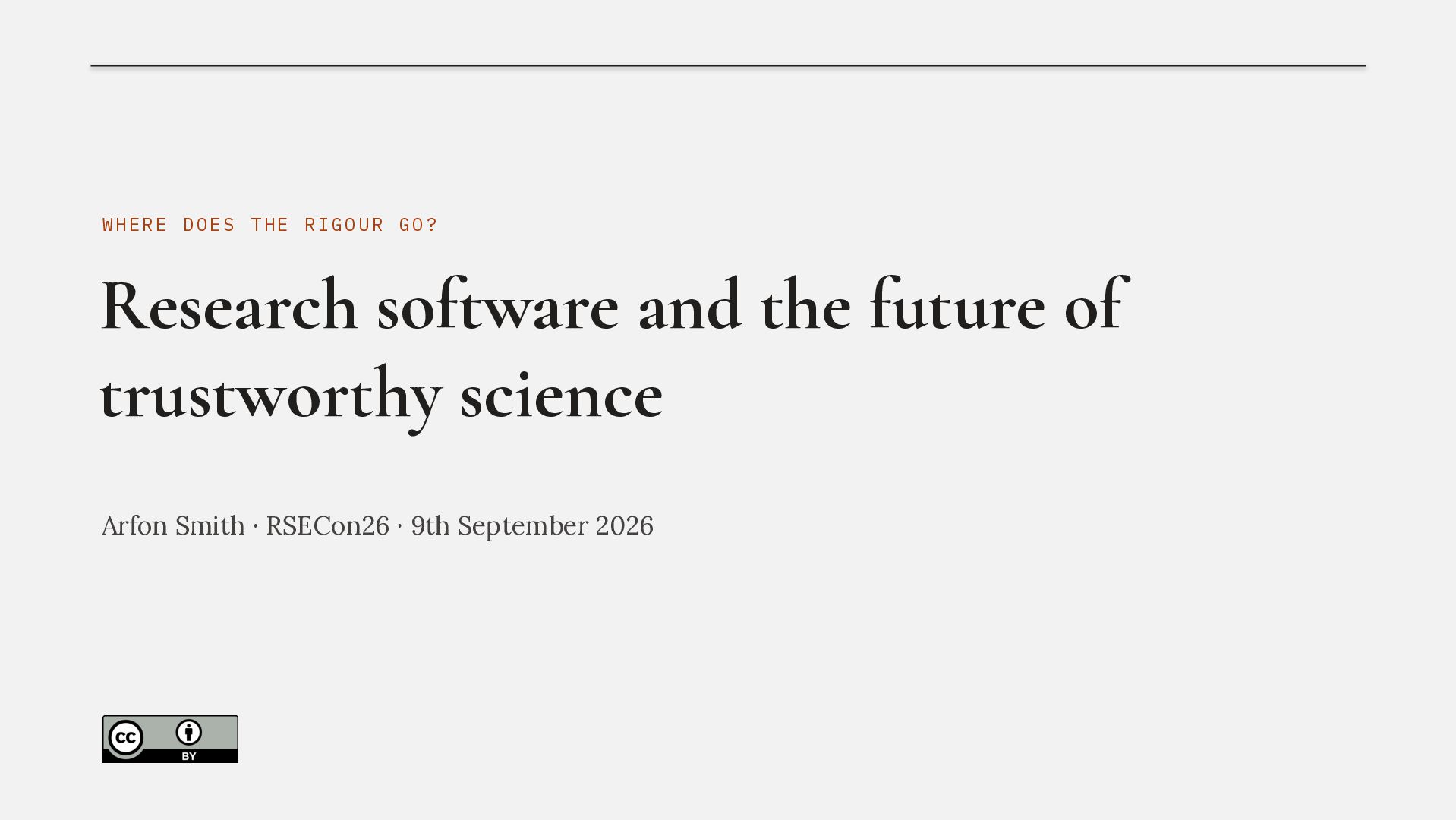
Scientific Paper Planner - AI Research Planning
Structure your scientific research with AI-powered guidance
Where does the rigor go? Research software and the future of trustworthy science.
Generative AI now makes it dramatically easier to produce something that looks like research: analysis code, figures, literature reviews, even whole pap…
Reimagining research papers as interactive and reliable AI agents
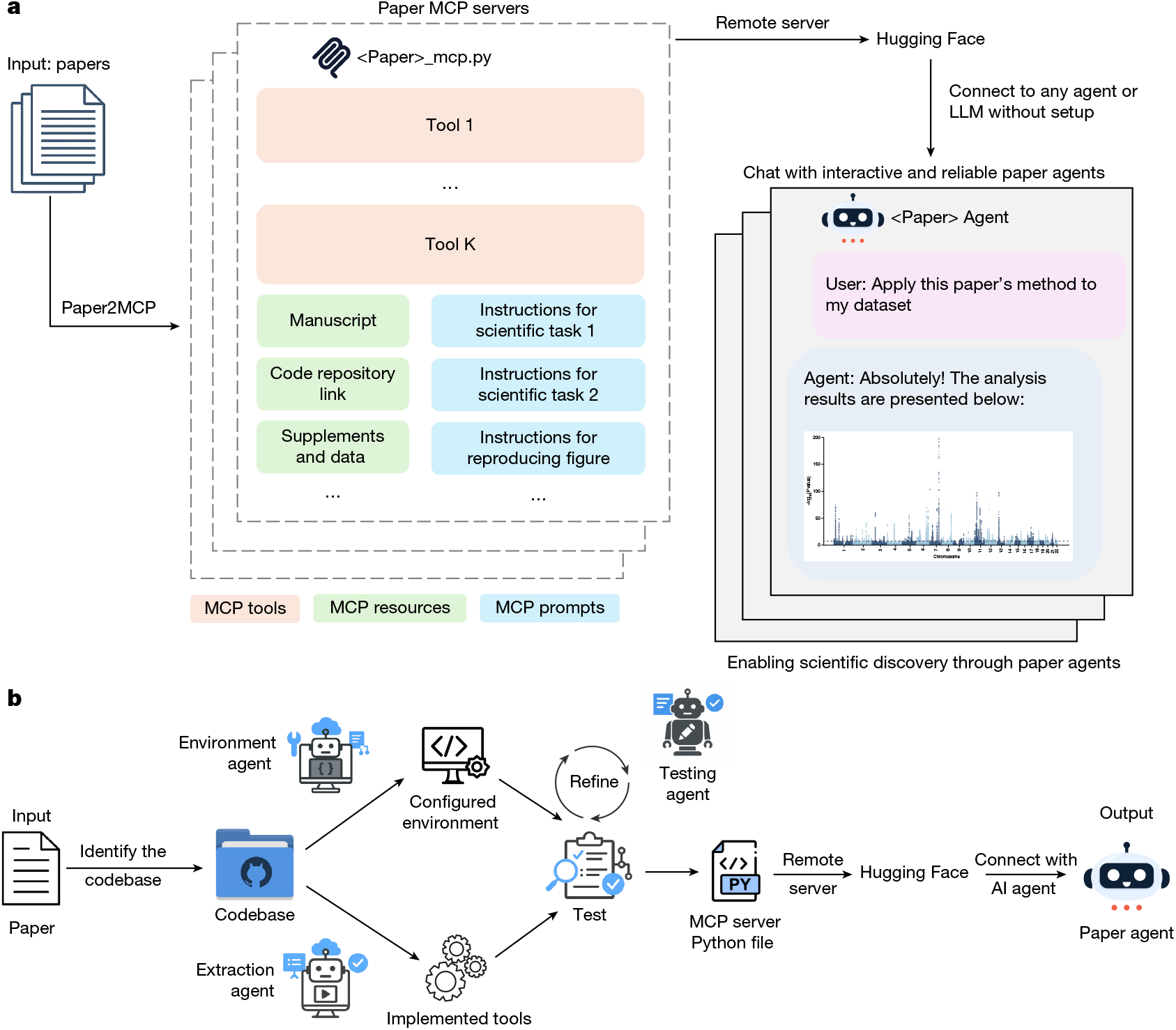
Here we introduce Paper2Agent, an automated framework that converts research papers into artificial intelligence (AI) agents. Paper2Agent transforms research output from passive artefacts into active systems that accelerate use and discovery. Conventional research papers require readers to understand and adapt the paper’s code, data and methods to their work, creating barriers to dissemination and reuse. Paper2Agent addresses this challenge by converting a paper into an AI agent that functions as a virtual corresponding author, exposing its manuscript, supplementary materials, datasets, code and workflows as active, agent-native knowledge rather than static text. It analyses the paper and codebase using multiple agents to construct a model context protocol (MCP) server, then generates and runs tests to refine and increase robustness of the MCP. These paper MCPs can be connected to a chat agent (such as Claude Code) to carry out complex scientific queries through natural language while invoking tools and workflows from the paper. We demonstrate Paper2Agent’s effectiveness through case studies. Paper2Agent created an agent that leveraged AlphaGenome1 to interpret genomic variants and agents based on Scanpy2 and TISSUE (transcript imputation with spatial single-cell uncertainty estimation)3 to conduct single-cell and spatial transcriptomics analyses. We validate that these agents reproduce the results of the original papers and carry out novel user queries. Paper2Agent created multiple agents that collaborate to prioritize a causal gene for psoriasis. By turning static papers into interactive AI agents, Paper2Agent introduces a paradigm for knowledge dissemination and a collaborative ecosystem of AI co-scientists.
Our Approach to Artificial Intelligence
We are experimenting with using AI tools to extend our work as a small nonprofit, so that we can focus our time on reinforcing human connections, conversations, and communities that have eroded.

AI tools make things up a lot, and that’s a huge problem | CNN Business
Artificial intelligence-powered tools like ChatGPT have mesmerized us with their ability to produce authoritative, human-sounding responses to seemingly any prompt. But as more people turn to this buzzy technology for things like homework help, workplace research, or health inquiries, one of its biggest pitfalls is becoming increasingly apparent: AI models sometimes just make things up.

Semantic Scholar | AI-Powered Research Tool
Semantic Scholar uses groundbreaking AI and engineering to understand the semantics of scientific literature to help Scholars discover relevant research.