How to transfer taste into an AI.

Agentic Taste Modeling | lab notes #8
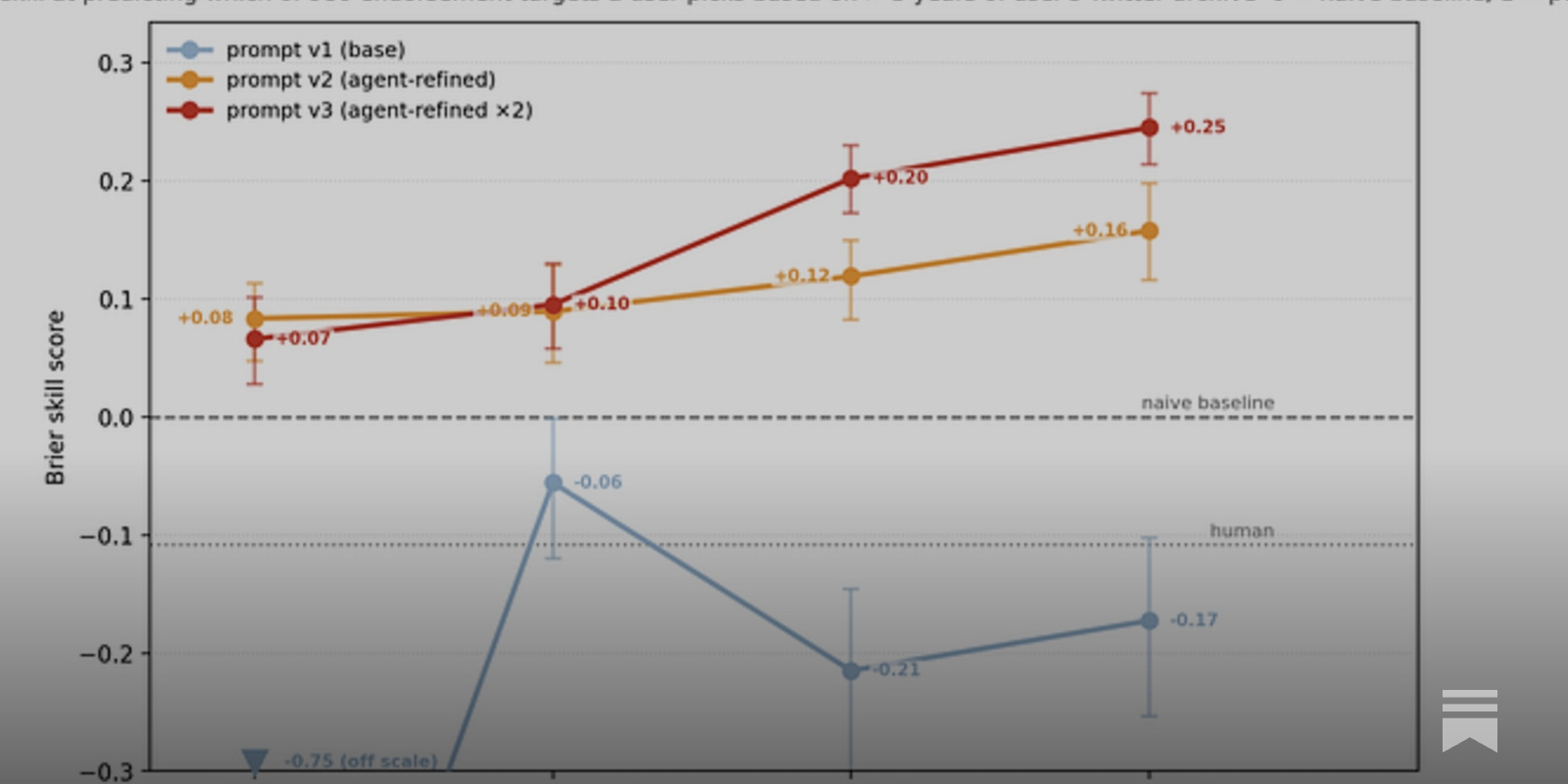
We built a forecasting benchmark to test how well agents predict what you like.
Leonxlnx/taste-skill
Taste-Skill - gives your AI good taste. stops the AI from generating boring, generic slop
AI Policy - The Takeout
The Takeout is about making your life better through food. We celebrate high and low foods and drinks with equal reverence—with recipes, tips, features, advice, and taste tests in an authoritative and accessible way.

TasteVal: Measuring the Experimental Research Taste of AI Systems Against Human Experts
We introduce TasteVal, a benchmark to evaluate the experimental research taste of frontier models. We define research taste as the ability to pick interesting problems to solve, design experiments, and interpret experimental results. TasteVal measures the experimental component of research taste; given a fixed research problem, we measure how well a model iteratively designs experiments and draws conclusions from their outcomes. We operationalize experimental research taste as compute efficiency; a Researcher who reaches the same score as an expert human using half the serial experimental compute has twice the experimental taste. Experimental taste thus acts as a multiplier on experimental compute, making it a key input to forecasts of AI progress. TasteVal consists of 8 novel, challenging, open-ended tasks representative of frontier AI R&D. To isolate taste from coding ability, the model under evaluation acts as a Researcher that iteratively designs experiments while a fixed Coder agent implements them and reports their results. The Researcher executes until either the 40 H100 hour or 120 wall-clock hour budgets are exhausted. We recruit 24 human experts, at least 2 per task, and take the best expert attempt per task as the expert baseline. We evaluate 20 models released between 2023 and 2026. The best-performing model, Opus 5.5, exceeds our expert baseline, with a compute multiplier of 2.3x (95% CI 1.15-4.37), at roughly 1/30 of our baseliners' average per-run cost. On TasteVal, the compute multiplier of frontier models has doubled approximately every 3.0 months since December 2025 (95% CI 1.7-5.0), up from every 14 months between 2023 and December 2025. Measured by final normalized performance, frontier models show no trend break, doubling every 14.6 months. To keep TasteVal uncontaminated, we do not release the tasks.



Our minds did not evolve for AI
AI is mental junk food: tasty and tempting, but ultimately unhealthy — a cognitive hot dog
How Claude marks AI-generated content | Claude Help Center
Anthropic has signed the EU AI Act's Article 50(2) Code of Practice on Transparency of AI-Generated Content, as a provider of both generative AI models and generative AI systems. This article describes how we’re planning to put those commitments into practice, how marking works, and what its limitations are. We’ll update this article and publish more detailed technical guidance as it becomes available.

AI: A Guide for Thinking Humans | Melanie Mitchell | Substack
I write about interesting new developments in AI. Click to read AI: A Guide for Thinking Humans, by Melanie Mitchell, a Substack publication with tens of thousands of subscribers.
Taste Is All That's Left | Blog
On what is left to do once the machine can make anything, and why taste is the last craft worth keeping.
On Taste, Effort & Curiosity - again
When AI collapses how long it takes to ship, what’s left is judgment, experimentation, and knowing what not to build.
Popmelt — Design copilots for AI agents
Our Taste models encode design expertise and philosophy, giving AI agents instant access to a curated catalog of aesthetic knowledge. Unlike traditional templates and design systems, our imprints are AI-native and guided by universal principles. This means agents can apply them to any interface scenario, not just predefined layouts and elements. They're also customizable and extensible, letting you build quickly without falling into the cookie-cutter UI library trap.
Generative AI in a Nutshell - how to survive and thrive in the age of AI