
Right now, many of us are suspicious of AI as something being done to us rather than for us. Corporate-driven efforts to advance capabilities feel more in service of stock prices than uplifting and empowering users' lives. This lack of control and user influence is why the open source
The Creators of Model Context Protocol
Introducing the Model Context Protocol
The Model Context Protocol (MCP) is an open standard for connecting AI assistants to the systems where data lives, including content repositories, business tools, and development environments. Its aim is to help frontier models produce better, more relevant responses.

Making a Model Context Protocol server more robust, and much more private
A Tailscale engineering director (and AI skeptic) walks through creating a different kind of MCP.
MCP Protocol: a new AI dev tools building block
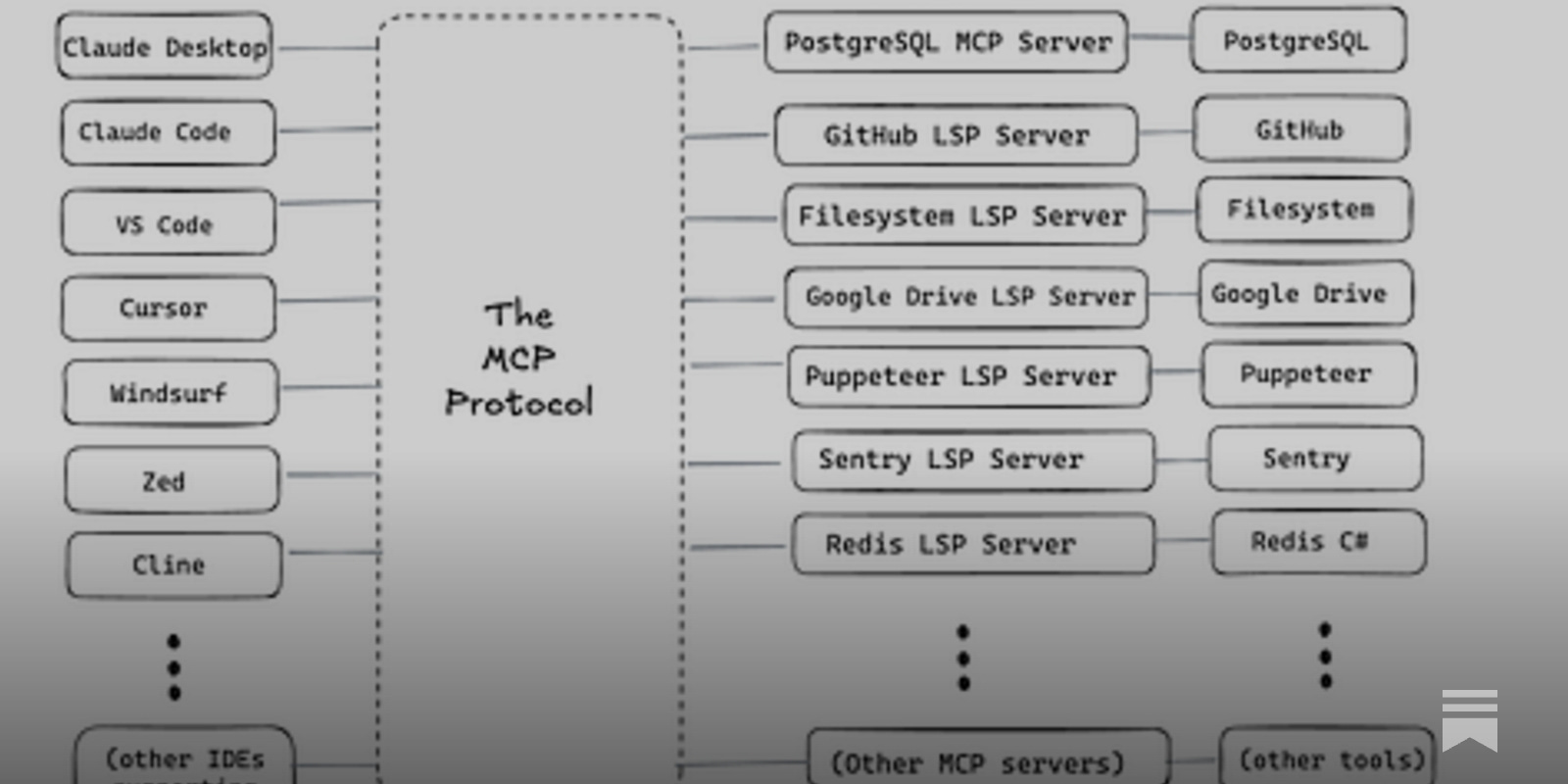
The Model Context Protocol - that extends IDEs’ AI capabilities - is gaining rapid popularity. Why is this, and why should us developers pay attention to it?
MCP and LLM Security Research Briefing | Wiz Blog
Explore the evolving Model Context Protocol (MCP), its security risks, and how to prepare for safe adoption as LLMs connect to external systems.

OpenAI to release open-source model as AI economics force strategic shift
OpenAI plans to release its first open-weight AI model since 2019 as economic pressures mount from competitors like DeepSeek and Meta, marking a significant strategic reversal for the company behind ChatGPT.
An easy, realistic model for MCP connectivity | lbr.
You can’t escape it. Everywhere you turn in the tech ecosystem, AI is there. Whether you’re an AI skeptic or an AI convert, you almost certainly understand how explosive the
Mozilla (@mozilla.org)
V1 of our State of Open Source AI report predicted that whoever won tokens would win requests too. V1.1 maps how people are using, and even improving open models. The model layer is commoditizing as the fight moved to state. Whoever controls that owns the customer. https://stateofopensource.ai/

Open Protocols Can Prevent AI Monopolies
Isobel Moure, Jul 30, 2025 — With model performance converging, user data is the new advantage — and Big Tech is sealing it off.

The Arguments Against Open Source AI are Very Bad | Tom Bedor's Blog
The release of Kimi K3 has opened a fresh round of angst and confused discourse. There's a loud cohort of journalists, business leaders, and politicians arguing that open source AI is a dangerous threat. OpenAI's Dean Ball:
Unpacking Open Source Artificial Intelligence: Toward a Framework for Openness in Foundation Models
Openness has long driven innovation in software,9 and AI is no exception.12 While some see openness in foundation models (FMs) as a security threat,18 others argue that restricting access will not meaningfully reduce risk and will limit the benefits of transparency, research, and global participation.3 As the EU AI Act reporting requirements on FMs—also referred to as general-purpose AI models (GPAIMs)—move toward implementation, there is an urgent need for a more nuanced and informed understanding of openness in AI systems.

Mozilla’s Inaugural ‘State of Open Source AI’ Report Is Here | The Mozilla Blog
Open source AI has crossed a threshold. For years the debate has centered around whether open models could ever compete with closed ones. This is no longer
There is NO Open Source Business Model
Preface: It has been brought to my attention by friends and trusted advisors that a valid interpretation of my point below is that open…

Replit — Model Context Protocol (MCP): A Comprehensive Guide
Learn how Replit's Model Context Protocol (MCP) lets AI models access tools and data seamlessly using a simple, universal interface.
Reframing “Open Source AI” with Meredith Whittaker: AI Impact Summit 2026
“Wait, not like that”: Free and open access in the age of generative AI
The real threat isn’t AI using open knowledge — it’s AI companies killing the projects that make knowledge free