


Apophenia is the tendency to perceive meaningful connections between unrelated things. The term was coined by psychiatrist Klaus Conrad in his 1958 publication on the beginning stages of schizophrenia. He defined it as "unmotivated seeing of connections [accompanied by] a specific feeling of abnormal meaningfulness". He described the early stages of delusional thought as self-referential over-interpretations of actual sensory perceptions, as opposed to hallucinations. Apophenia has also come to describe a human propensity to unreasonably seek definite patterns in random information, which can occur in gambling.
I can’t picture things in my mind. I didn’t realize that was unusual
People with aphantasia can’t mentally visualize things. Mental imagery is a spectrum, and we lie outside it, in the dark
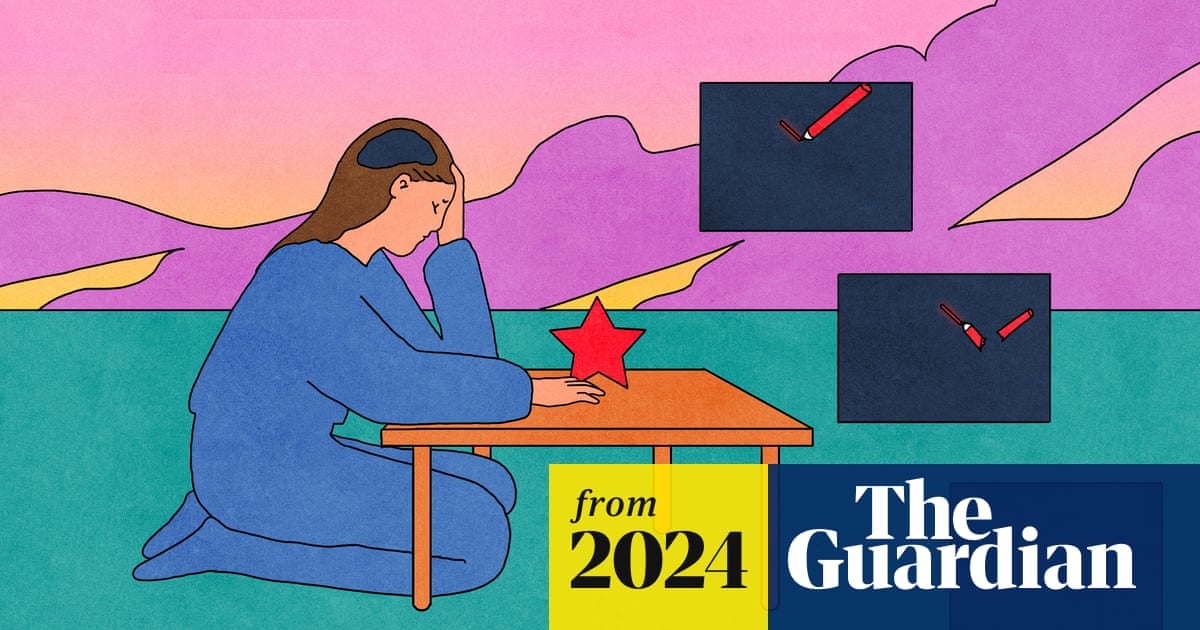
A Math Theory for Why People Hallucinate | Quanta Magazine
Psychedelic drugs can trigger characteristic hallucinations, which have long been thought to hold clues about the brain’s circuitry. After nearly a century of study, a possible explanation is…

What Are Psychedelic Entities?
The beings people often meet while using psychedelics resist tidy explanations.

Jonathan Pageau's Psychedelic Warning
Mental time travel: a new case of autobiographical hypermnesia
Remembering past events in minute detail, revisiting them methodically, and reliving past emotions—this is the peculiarity of people with an exceptional memory of their own lives, known as autobiographical hypermnesia, or hyperthymesia. This fascinating condition remains poorly understood, and each new case contributes to our understanding. In a recent article in Neurocase, researchers from Paris Brain Institute and the Memory, Brain, and Cognition Laboratory (LMC²) in Paris describe the extraordinary mental life of a 17-year-old girl.
Metacognitive Myopia: A Major Obstacle on the Way to Rationality
The notion of metacognitive myopia refers to a conspicuous weakness of the quality control of memory and reasoning processes. Although people are often remarkably sensitive even to complex samples of information when making evaluative judgments and decisions, their uncritical and naive tendency to take the validity of sampled information for granted constitutes a major obstacle to rational behavior. After illustrating this phenomenon with reference to prominent biases (base-rate neglect, misattribution, perseverance), we decompose metacognitive myopia into two distinct but intertwined functions, monitoring and control. We offer explanations for why effectively monitoring the biases resulting from information sampling in an uncertain world is so difficult and why the control function is severely restricted by the lack of volitional control over mental actions. Because of these and other difficulties, metacognitive myopia constitutes a major obstacle to rational judgment and decision making.


What does it really mean to have a moment of insight? | Psyche Notes to Self
From art to science to love, the moment of insight happens when we see a likeness between different things

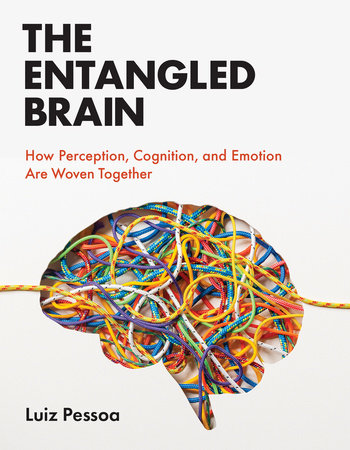
The Entangled Brain: How Perception, Cognition, and Emotion Are Woven Together
A new vision of the brain as a fully integrated, networked organ.Popular neuroscience accounts often focus on specific mind-brain aspects like addiction, c
How Information is Like Snacks, Money, and Drugs To Your Brain - Slashdot
A new study by researchers at UC Berkeley's Haas School of Business has found that information acts on the brain's dopamine-producing reward system in the same way as money or food. From a report: "To the brain, information is its own reward, above and beyond whether it's useful," says Assoc. Prof. ...

People Experience 'New Dimensions of Reality' When Dying, Groundbreaking Study Reports - Slashdot
An anonymous reader quotes a report from Motherboard: Scientists have witnessed brain patterns in dying patients that may correlate to commonly reported "near-death" experiences (NDEs) such as lucid visions, out-of-body sensations, a review of one's own life, and other "dimensions of reality," repor...

A Philosopher’s One-Word Theory to Explain Why the World Feels So Weird
Once you learn what the "uni-context" is, you won't stop seeing it everywhere

Sycophantic Chatbots Cause Delusional Spiraling, Even in Ideal Bayesians
"AI psychosis" or "delusional spiraling" is an emerging phenomenon where AI chatbot users find themselves dangerously confident in outlandish beliefs after extended chatbot conversations. This...

The Shape of Knowing - The Cynefin Co
We evolved to make sense of a world that does not come with explanations attached. This is the third in a series on the trialectics. For an introduction

Smoke-away on Twitter / X
Andrej Karpathy: "What you want is the inner thought monologue of your brain... The trajectories in your brain as you're doing problem solving, if we had a billion of that, AGI is here roughly speaking." pic.twitter.com/C0kBUITPBv— Smoke-away (@SmokeAwayyy) October 18, 2024
