


Nick Land is an English philosopher best known for popularising the ideology of accelerationism. His work has been tied to the development of speculative realism, and departs from the formal conventions of academic writing, incorporating unorthodox and esoteric influences. Much of his writing was anthologized in the 2011 collection Fanged Noumena.
Meditations on Machinic Desire
The philosopher and accelerationist Nick Land writes, in his 1993 essay Machinic Desire, three of the most insight-dense paragraphs I’ve ever encountered:

On Nick Land: The Weird Libertarian
The philosopher Nick Land has been widely described as “fascist”, “neofascist” or “alt-right”, all essentially inaccurate or uninteresting labels. Those who bother with fine distinction would call …

Accelerationism, The Dark Enlightenment & The Strange Life of Nick Land
Accelerationism: how a fringe philosophy predicted the future we live in
The long read: The world is changing at dizzying speed – but for some thinkers, not quickly enough. Is accelerationism a dangerous idea or does it speak to our troubled times?

Accelerationism: how a fringe philosophy predicted the future we live in
The long read: The world is changing at dizzying speed – but for some thinkers, not quickly enough. Is accelerationism a dangerous idea or does it speak to our troubled times?
Weird Studies
Professor Phil Ford and writer J. F. Martel host a series of conversations on art and philosophy, dwelling on ideas that are hard to think and art that opens up rifts in what we are pleased to call "reality."
Curtis Yarvin
Curtis Guy Yarvin, also known by the pen name Mencius Moldbug, is an American far-right political blogger and software developer. He is known, along with accelerationist philosopher Nick Land, for founding the anti-egalitarian and anti-democratic philosophical movement known as the Dark Enlightenment or neo-reactionary movement (NRx), which originated in the late 2000s.

More on Accelerationism – The Pinocchio Theory
I have recently, without having planned to in advance, found myself giving talks on the subject of accelerationism. First there was an “Introduction to Accelerationism” that I gave as a talk at Grand Valley State University. The video is here. And then, this past week, I gave a talk at the e-flux “Escape Velocity” symposium. What follows is the text of the latter talk. Long-time readers of this blog may recognize that the last portion of the talk actually recycles something that I initially published on the blog seven or eight years ago, and that is an extract from my still unfinished manuscript The Age of Aesthetics (which I swear I intend to return to and finish at some point…). The text that I present here is mostly complete, but there are a few points where I just have notes to myself, which I filled in more or less well while speaking.
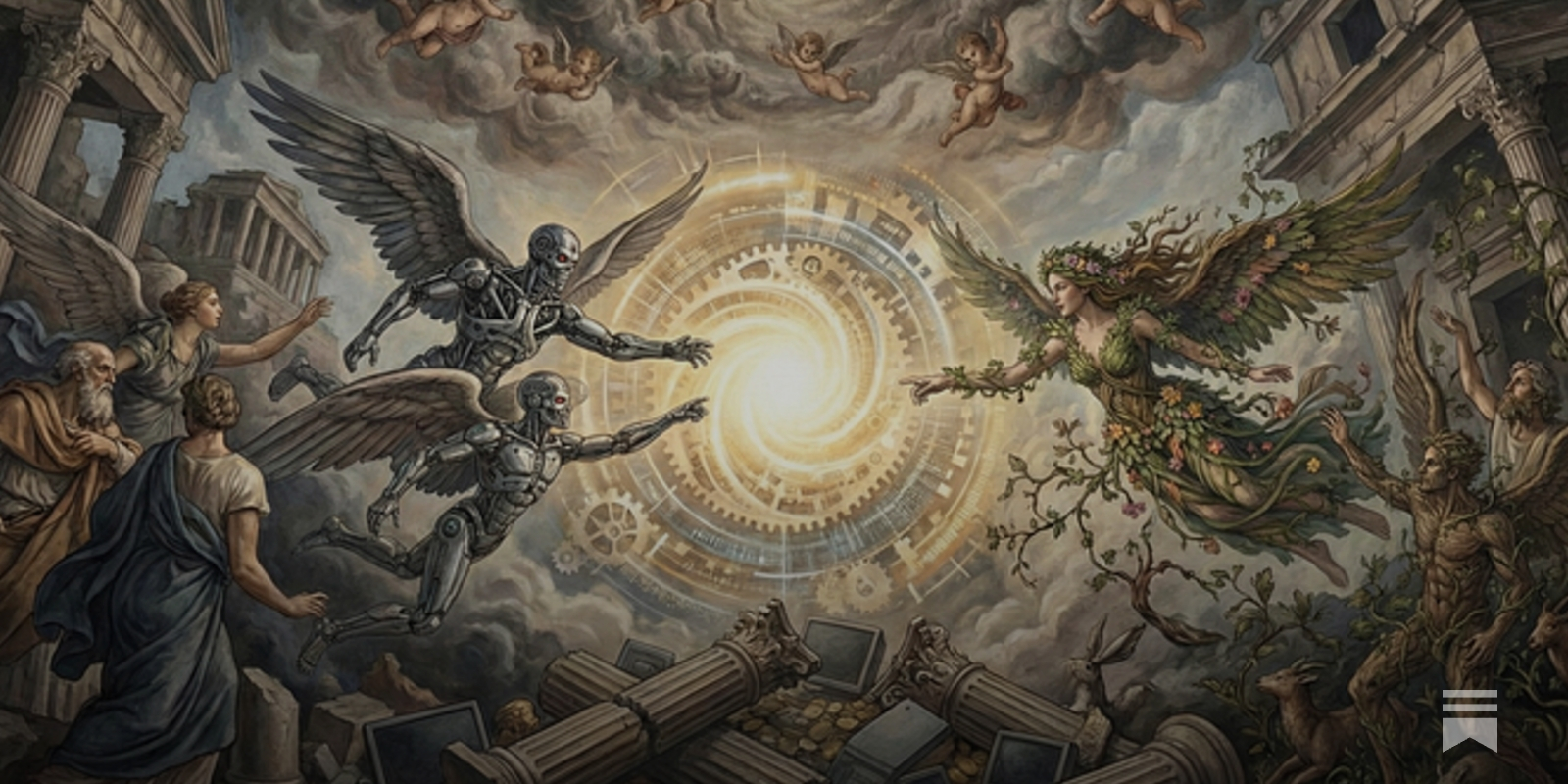
A Regenerative Accelerationist Manifesto
Navigating the Technocapitalist Endgame
Sources of the Self — Harvard University Press
“Taylor has taken on the most delicate and exacting of philosophical questions, the question of who we are and how we should live…and he has made this an adventure of self-discovery for his reader.” —Martha Nussbaum, New RepublicIn this extensive inquiry into the sources of modern selfhood, Charles Taylor demonstrates just how rich and precious those resources are. The modern turn to subjectivity, with its attendant rejection of an objective order of reason, has led—it seems to many—to mere subjectivism at the mildest and to sheer nihilism at the worst. Many critics believe that the modern order has no moral backbone and has proved corrosive to all that might foster human good. Taylor rejects this view. He argues that, properly understood, our modern notion of the self provides a framework that more than compensates for the abandonment of substantive notions of rationality.The major insight of Sources of the Self is that modern subjectivity, in all its epistemological, aesthetic, and political ramifications, has its roots in ideas of human good. After first arguing that contemporary philosophers have ignored how self and good connect, the author defines the modern identity by describing its genesis. His effort to uncover and map our moral sources leads to novel interpretations of most of the figures and movements in the modern tradition. Taylor shows that the modern turn inward is not disastrous but is in fact the result of our long efforts to define and reach the good. At the heart of this definition he finds what he calls the affirmation of ordinary life, a value which has decisively if not completely replaced an older conception of reason as connected to a hierarchy based on birth and wealth. In telling the story of a revolution whose proponents have been Augustine, Montaigne, Luther, and a host of others, Taylor’s goal is in part to make sure we do not lose sight of their goal and endanger all that has been achieved. Sources of the Self provides a decisive defense of the modern order and a sharp rebuff to its critics.
The platform metaphor, revisited – Culture Digitally
This is cross-posted from the HIIG Science Blog, and is part of a series on metaphors and digital society hosted by Christian Katzenbach and Stefan Larsson. I recommend the other essays as well: Nik John on sharing, Noam Tirosh on revolution, and Christian Djeffal on artificial intelligence.

Nick Bostrom, Longtermism, and the Eternal Return of Eugenics
The techno-utopian ideology gets its fuel, in part, from scientific racism.

Nick Bostrom, Longtermism, and the Eternal Return of Eugenics
The techno-utopian ideology gets its fuel, in part, from scientific racism.
A revolution in our sense of self | Nick Chater
Psychologists have tried to plumb the depths of human motivation to make sense of our behaviour. But our inner mental world is a fiction, sustained by constant improvisation

Nick Gerakines
Nick Gerakines is a software engineer, swing dancer, author, and technology enthusiast in Dayton, Ohio.
Cognitive Autonomous Zones: against “framework fundamentalism” — Belshaw Brain Archive
In my previous post on the “cash value” of truth, I explored how Pragmatist philosophy offers a way to test beliefs through their practical consequences. Is something, as William James would put it, “