

Political commentator Matthew Yglesias wrote that "Warren's plan starts from the premise that corporations that claim the legal rights of personhood should be legally required to accept the moral obligations of personhood."[2] The New York Times columnist David Leonhardt called the proposal "the most intriguing policy idea to come out of the early 2020 campaign".[3]
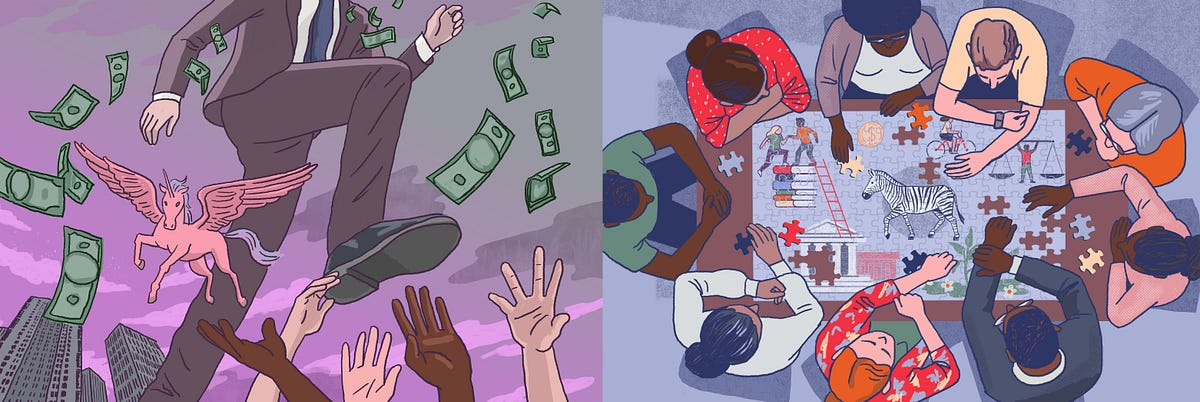
Pivot to People: It’s Time to Build the New Economy
Today’s calls for ethical, humane, responsible, regulated and beneficial technology, compounded with venture capital’s virtue signaling in…
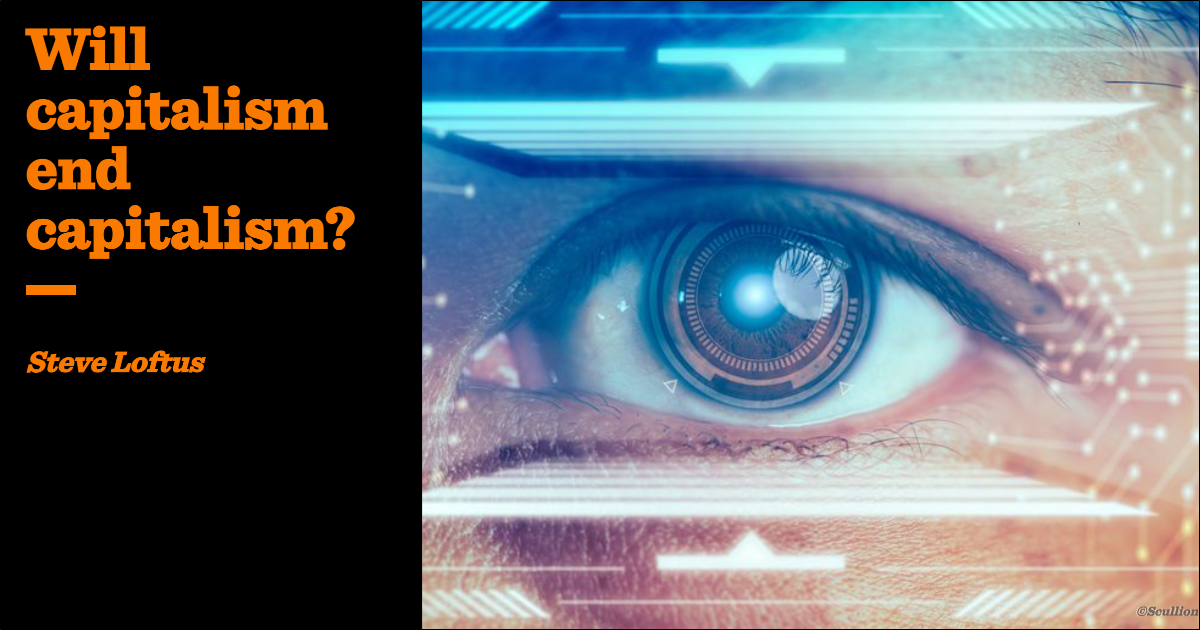
Will capitalism end capitalism? | Steve Loftus | The Critic Magazine
Imagine waking up one morning to discover your job still exists, but your services are no longer required. The work is being done, just not by you, not by anybody. Somewhere, a machine is doing it…
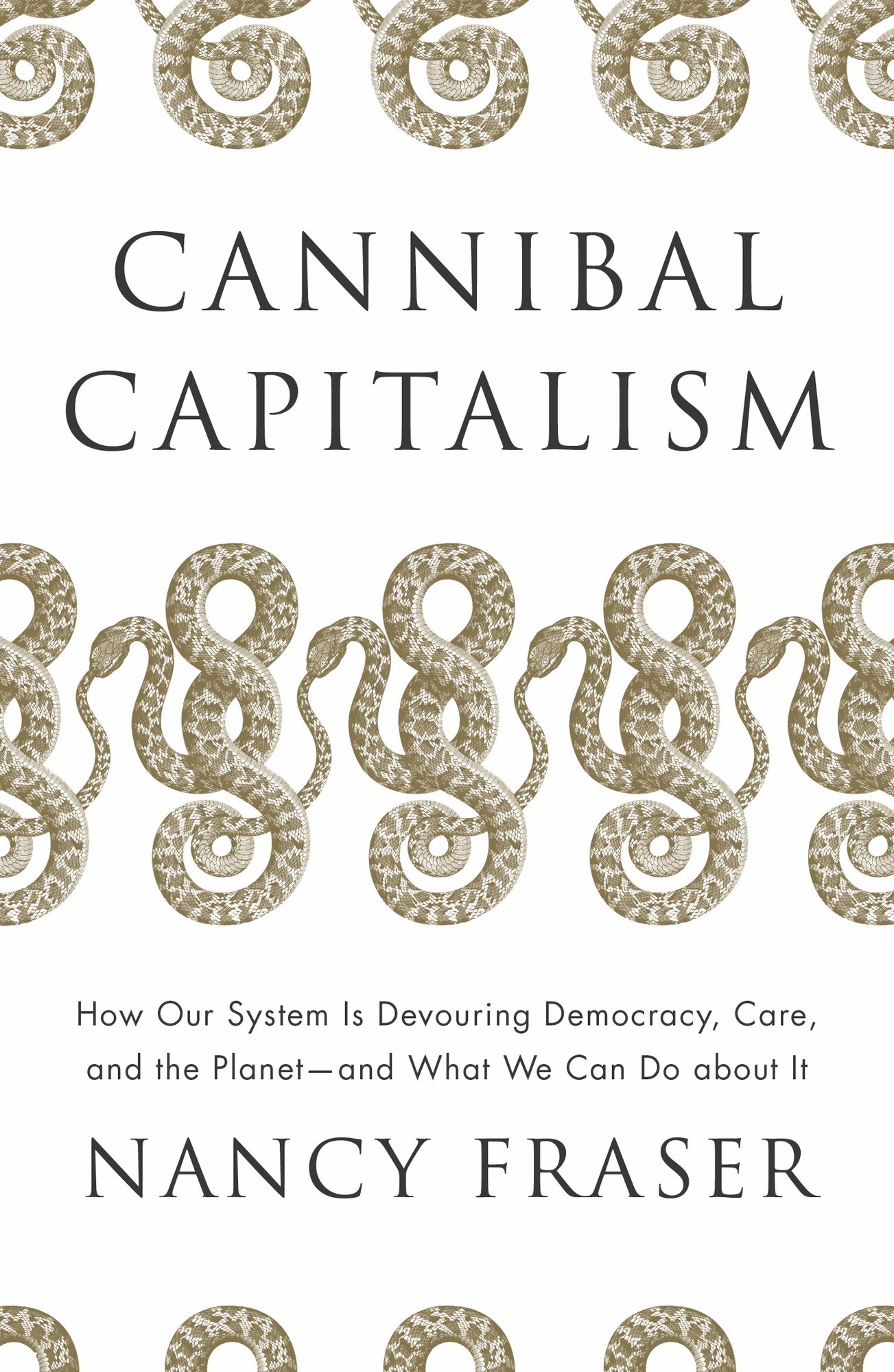
Cannibal Capitalism
Shortlisted for the Deutscher Memorial Prize 2023 Capital is currently cannibalizing every sphere of life-guzzling wealth from nature and racialized populations, sucking up our ability to care for each other, and gutting the practice of politics. In this tightly argued and urgent volume, leading Marxist feminist theorist Nancy Fraser charts the voracious appetite of capital, tracking it from crisis point to crisis point, from ecological devastation to the collapse of democracy, from racial violence to the devaluing of care work. These crisis points all come to a head in Covid-19, which Fraser argues can help us envision the resistance we need to end the feeding frenzy. What we need, she argues, is a wide-ranging socialist movement that can recognize the rapaciousness of capital - and starve it to death.
The Corporation’s Neoliberal Soul? | Human Rights after Corporate Personhood
Human Rights after Corporate Personhood offers a rich overview of current debates, and seeks to transcend the "outrage response" often found in public discourse and corporate legal theory. Through ...

AI and the Dangerous Fiction of ‘All Lawful Use’
Dunstan Allison-Hope and Iain Levine argue that human rights commitments are essential for all companies selling their products to governments worldwide.

We must not grant AI agents legal personhood
What kind of sanctions could keep a non-human corporation in check?

Mel Andrews on Twitter / X
Whether predictive systems can be ethically—or even functionally—used in socially sensitive contexts depends on their epistemic credentials. I am delighted to see my work inform policy recommendations in a new report from Amnesty International. https://t.co/NbQBM31N5M pic.twitter.com/EXPgxXgszF— Mel Andrews (@bayesianboy) June 11, 2026

The Myth of Capitalism Exposed
We need a revolution to cast off monopolies and restore entrepreneurial freedom. First of two excerpts from “The Myth of Capitalism.”

Capitalist Realism: Is There No Alternative?
It is easier to imagine the end of the world than the end of capitalism. After 1989, capitalism has successfully presented itself as the only realistic political-economic system - a situation that the bank crisis of 2008, far from ending, actually compounded. The book analyses the development and principal features of this capitalist realism as a lived ideological framework. Using examples from politics, film (Children Of Men, Jason Bourne, Supernanny), fiction (Le Guin and Kafka), work and education, it argues that capitalist realism colors all areas of contemporary experience, is anything but realistic and asks how capitalism and its inconsistencies can be challenged. It is a sharp analysis of the post-ideological malaise that suggests that the economics and politics of free market neo-liberalism are givens rather than constructions. New Edition includes:Forward by Zoe Fisher, Mark’s wife, talking about Mark as a personIntroduction by Alex Niven, his friend and colleague, talking about the political significance of the book thirteen years after it was writtenAfterword by Tariq Goddard, the original editor and publisher, describing the writing and editing of the book, its original reception, and Mark’s own view of it"A quick and entertaining read." Socialist Standard "A provocative and necessary read...for anyone wanting to talk seriously about the politics of education today. " Times Higher Educational Supplement
The Unaccountability Machine, by Dan Davies
I read an online excerpt of this book and was immediately intrigued by the idea of an “accountability sink”, which is a mechanism by which “The communication between the decision-maker and the decided-upon has been broken – they have created a handy sink into which negative feedback can be poured without any danger of it affecting anything.” This lack of accountability where people shrug their shoulders and ask “What else could we do?” really frustrates me, as I believe that we should take responsibility for our actions and their consequences. So I bought the book and inhaled it in a few days.
Cognitive Capitalism - Public Seminar
There are broadly three ways of thinking historically about capitalism. One draws on Marx’s value theory and pretty much treats...Read More

Hope in Common
We seem to have reached an impasse. Capitalism as we know it appears to be coming apart. But as financial institutions stagger and crumble, there is no obvious alternative. Organized resistance appears scattered and incoherent; the global justice movement a shadow of its former self. There is good reason to believe that, in a generation […]

Apr 2023 Issue
We need better economic models, but we also need Congress to free itself from the self-imposed constraints of modeling on the policymaking process.

Review of <i>The Ethics of Public Health Paternalism</i>
Martin Wilkinson’s book The Ethics of Public Health Paternalism is a normative analysis of paternalistic governmental policies within liberal democracies that …
